
Swollen legs on a plane are common. Prolonged immobility can cause blood to pool and lead to edema in the feet, ankles, and legs, which Mayo Clinic describes as common on long trips. (mayoclinic.org)
The good news is that it usually improves with simple measures: moving around, staying hydrated, and, depending on your risk profile, considering graduated compression. If the swelling appears in only one leg, hurts, is warm, or is accompanied by shortness of breath or chest pain, it's no longer wise to assume it's just travel fatigue. (medlineplus.gov)
Pressotherapy at home
End the day with light legs
★★★★★ 4,8/5 · rated by verified customers
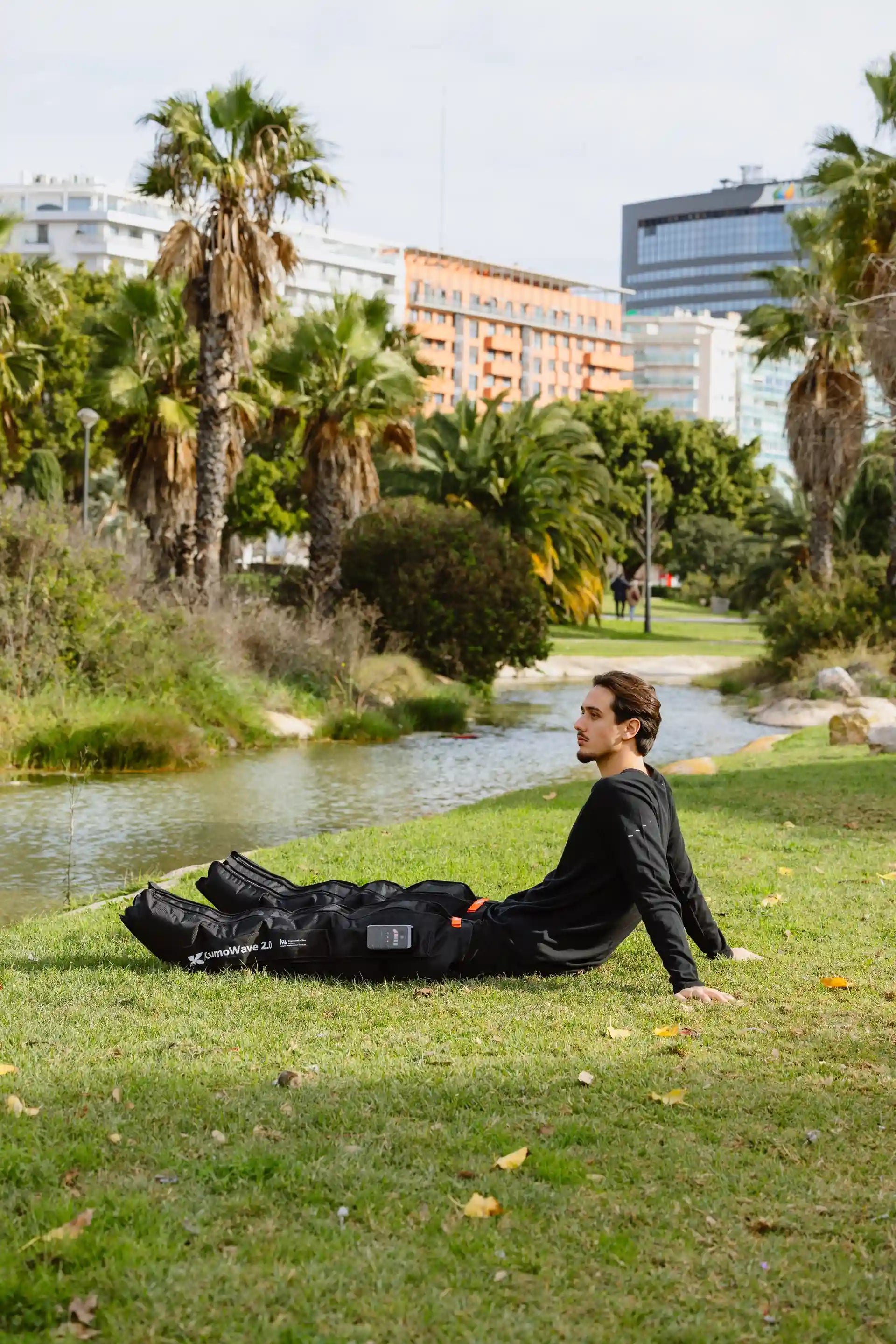
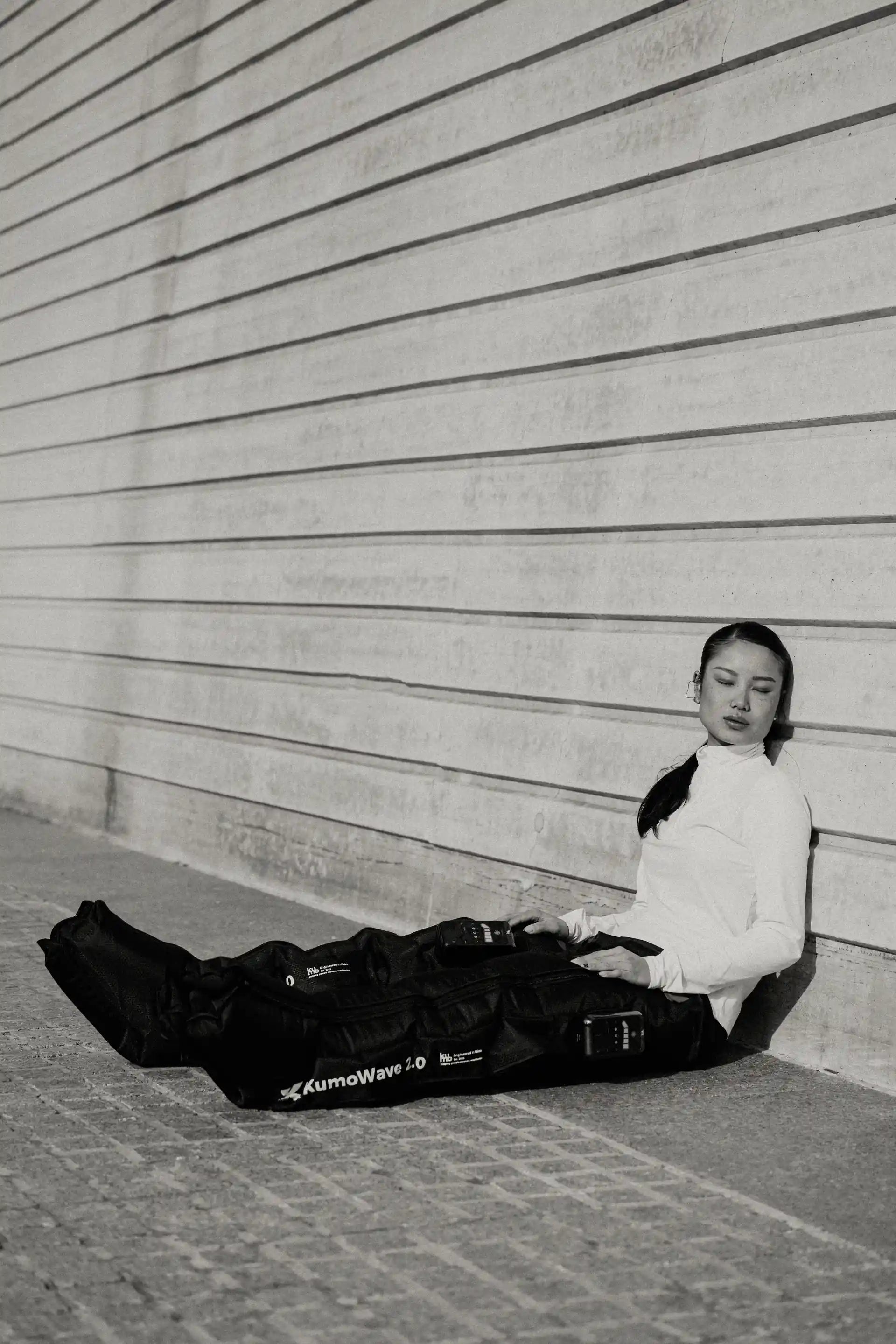
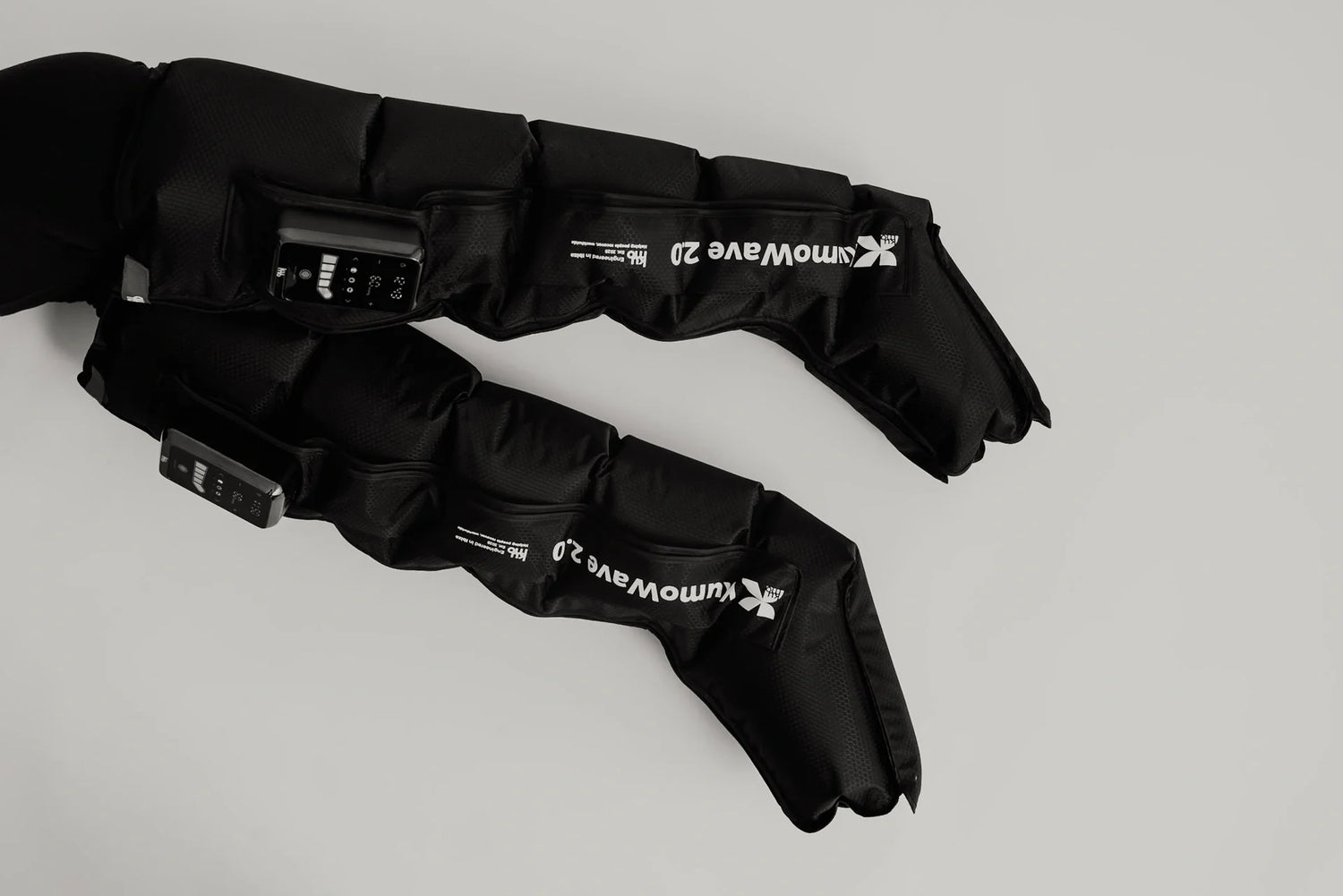
KumoWave pressotherapy boosts circulation and helps drain fluid with sequential compression, in 20-minute sessions at home.
- Boosts circulation and helps drain fluid
- Chamber-based compression, adjustable to you
- Sequential compression that mimics manual drainage
€799,00€999,00
−10% on your 1st order when you subscribe to the newsletter

Why legs swell on a long flight
The main problem is spending too much time sitting. When the legs remain still, venous return works less efficiently, and fluid accumulates more easily in the lower body. Mayo Clinic links this to edema in the feet and ankles, while the CDC reminds us that prolonged immobility also increases the risk of venous thrombosis in certain travelers.
Not everyone has the same risk. The CDC identifies a history of DVT, recent surgery, pregnancy, estrogen use, certain cancers, obesity, and reduced mobility as important factors; additionally, in studies of flights longer than 8 hours, the overall incidence of VTE in low-to-moderate risk travelers was 0.5%. (cdc.gov)
Personalized protocol · included with your purchase
Want us to tell you how to use it in your case?
With your purchase, our experts prepare a personalized usage protocol for your case: sport, circulation, fluid retention, pregnancy or lipedema.
Message us on WhatsAppOur experts reply · no obligation
Is it just swelling or something more?
Typical flight-related swelling is usually bilateral, soft, and temporary. In contrast, DVT often causes pain, warmth, tenderness, or a change in color in only one leg. The distinction matters because mild discomfort can improve with movement, but a unilateral or progressive sign warrants further investigation. (mayoclinic.org)
What to do before, during, and after the flight
These measures summarize what Mayo Clinic, MedlinePlus, and the CDC recommend: break immobility, hydrate, and, for selected individuals, consider compression stockings.
Quick guide for less leg heaviness when traveling
| Time | What to do | Goal |
|---|---|---|
| Before boarding | Make the trip more comfortable with loose clothing, good hydration, and, if your doctor deems it appropriate, graduated compression stockings. | Arrive at the plane with less pressure on your legs. |
| During the flight | Flex your ankles, move your feet, change positions, and get up when it's safe to do so. | Promote venous return and prevent blood from pooling for too long. |
| Upon landing | Walk for a few minutes, resume gentle movement, and elevate your legs when you reach your destination. | Help the edema subside faster and reduce the feeling of heaviness. |
In practice, the best antidote to swelling is to break up long periods of immobility. MedlinePlus recommends walking or stretching your legs and drinking fluids on long trips, and the CDC emphasizes that frequent mobility is a central part of prevention.
on your first order when you join the newsletter
We send you the code instantly. No spam.
- Make micro-movements every now and then: rotating ankles, raising and lowering your toes, and contracting calves helps activate the leg muscle pump.
- Get up when the cabin allows: walking down the aisle for a few minutes breaks the immobility that causes heaviness. (wwwnc.cdc.gov)
- Hydrate regularly: drinking water helps prevent dehydration from adding to an already long journey.
- Avoid maintaining the same posture for hours: do not cross your legs for too long and change positions frequently. (cdc.gov)
- If you have risk factors, personalize your trip: a history of thrombosis, pregnancy, cancer, or hormonal treatment makes it more prudent to seek medical advice before flying.
If the heaviness persists after landing, it's a good idea to consider a recovery routine and not just "wait for it to pass." You can read the post-long flight pressotherapy routine, see how to use pressotherapy at home step by step, or better understand why pressotherapy in legs relieves heaviness and improves circulation to organize your post-flight with ease.
Do compression stockings work?
Yes, they can help, especially if your main problem is swelling. Mayo Clinic mentions them as a useful measure to reduce edema in the feet and legs on long flights, and the American Heart Association summarizes that their preventive benefit seems clearer in people at higher risk than in healthy low-risk travelers. In other words, they are not mandatory for everyone, but they can be a good idea if you have a history or predisposing factors. (mayoclinic.org)
If you don't know if they're right for you, the prudent rule is simple: decide based on your medical history, not just the duration of the flight. Effective prevention isn't about buying more things, but about choosing what fits your case. (heart.org)
When to consult without delay
There are signs that should not be normalized. The CDC and Mayo Clinic point to swelling in only one leg, pain or tenderness in the calf, local warmth, redness or discoloration, and also shortness of breath, chest pain, or fainting after the flight as warning signs.
- Significant swelling in only one leg.
- Pain, warmth, or tenderness when touching the calf.
- Red, purple, or visibly discolored skin.
- Shortness of breath, chest pain, coughing up blood, or fainting after the trip.
If you want to know more about the difference between temporary discomfort and a condition that requires consultation, the guide on warning signs of leg swelling will help you review the key symptoms.
Frequently asked questions about swollen legs on a plane
Why do legs swell during long flights and what can be done to prevent it?
Because you spend a lot of time sitting and blood circulates less effectively in the lower body. Mayo Clinic explains that immobility promotes edema in the feet, ankles, and legs, and the CDC adds that the risk of thrombosis also increases with travel duration and personal factors. To prevent it, the most helpful things are to move around, drink water, and avoid staying still for hours.
Do compression stockings work to prevent thrombosis on long flights?
They can help, but they are not a universal solution. The American Heart Association indicates that their preventive effect appears clearer in people at higher risk, while in healthy low-risk travelers the benefit is less evident. Mayo Clinic, however, mentions them as a useful measure to reduce swelling on long flights. If you have a history of blood clots, pregnancy, or recent surgery, it's worth consulting a doctor before traveling.
How to prevent leg swelling during an airplane trip?
The basic recipe is simple: hydrate, move your legs frequently, get up when you can, and avoid staying immobile throughout the journey. MedlinePlus recommends walking or stretching your legs and drinking plenty of fluids on long trips, and the CDC emphasizes that frequent mobility and personal risk assessment are key. If you already know you tend to retain fluid, prepare for the flight in advance.
What warning signs would indicate deep vein thrombosis after a long flight?
The most typical signs are swelling in only one leg, pain or tenderness in the area, warmth, redness, and, in more concerning cases, shortness of breath or chest pain. Mayo Clinic and the CDC remind us that these symptoms can correspond to DVT or a pulmonary embolism, so it's not advisable to wait to see if it "just goes away."
What simple exercises and movements help prevent swelling on the plane?
The most useful are repeated micro-movements: flexing ankles, raising toes and heels, moving feet in circles, changing position, and walking down the aisle when possible. MedlinePlus and the CDC emphasize that breaks to walk and stretch the legs reduce prolonged immobility, which is precisely what promotes swelling. A complex routine is not necessary; consistency during the flight is.
What now?
If you want to make travel recovery a simple habit, visit Kumo Balance and explore the home pressotherapy collection to integrate a comfortable recovery routine after your long flights.
KumoWave pressotherapy
Choose your at-home pressotherapy
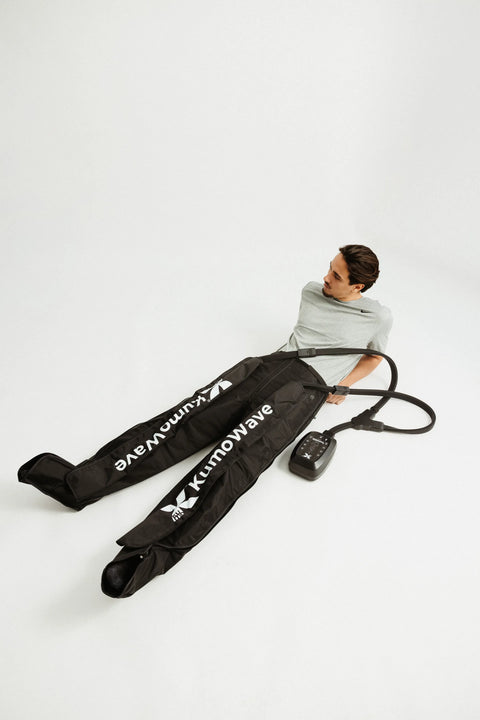
KumoWave Elite – Pressotherapy Pants
Full-coverage trousers. Ideal for lipedema, fluid retention and intensive use.
€799,00 €999,00
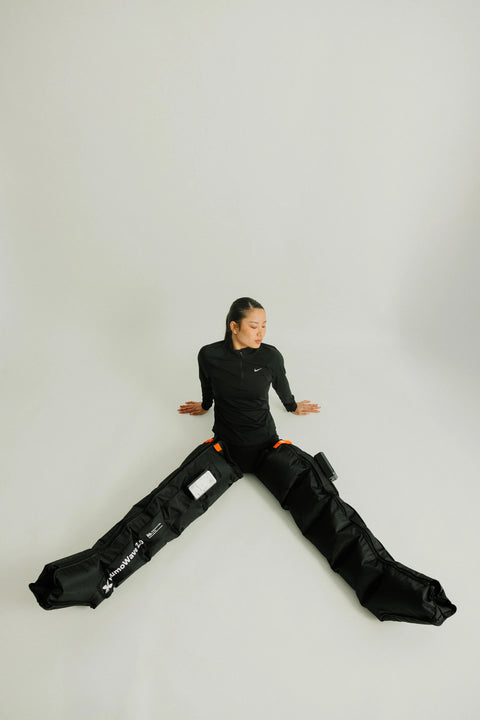
KumoWave 2.0 - Wireless Pressotherapy
Wireless, lightweight boots. Perfect for daily use and recovery.
€499,00 €599,00