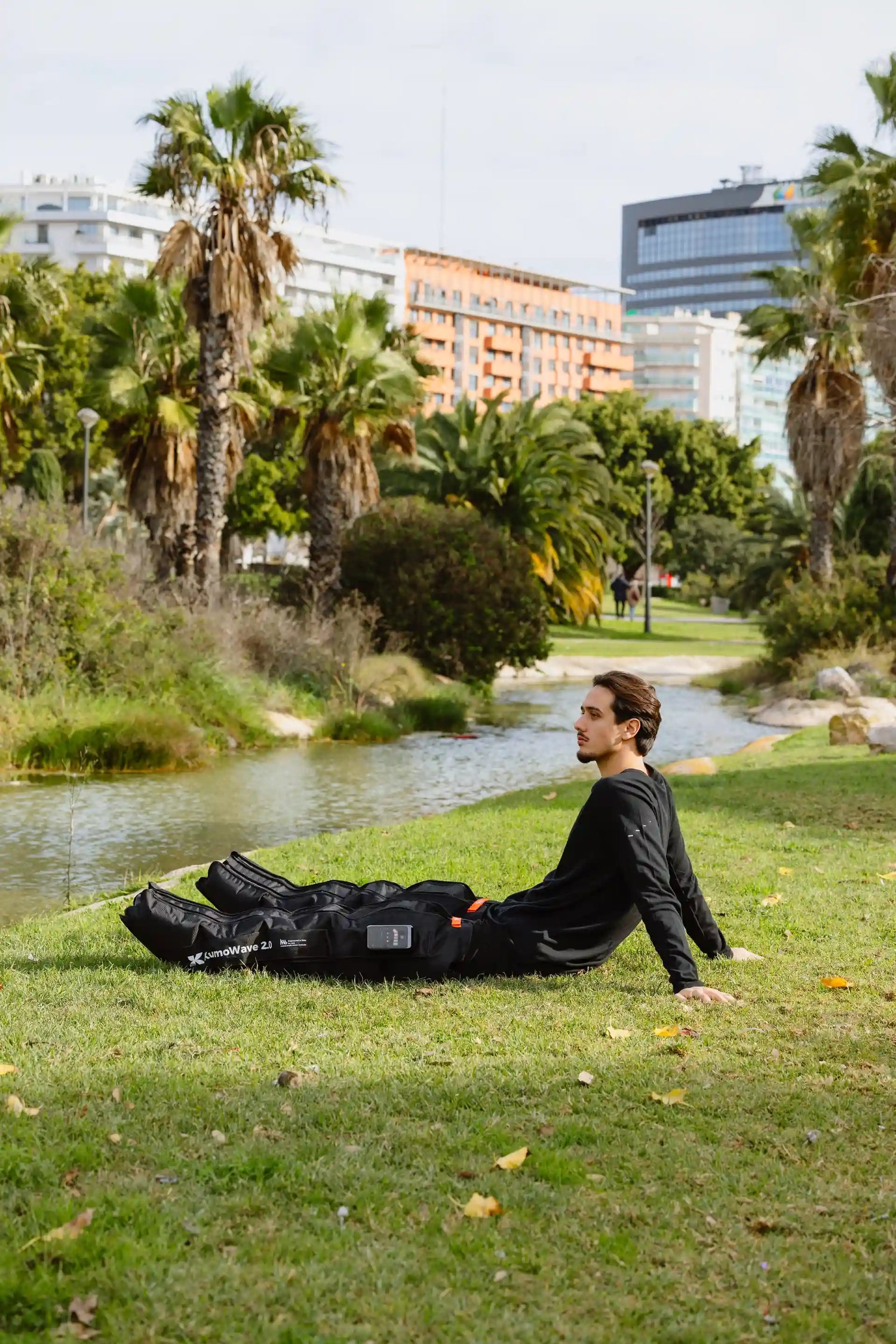
Tired legs in summer are usually worsened by a very specific combination: heat, more time spent standing or sitting, and slower venous return. The result is heaviness, tightness, and sometimes swelling at the end of the day. In many cases, small daily changes are enough to notice relief. (medlineplus.gov)
The key is to understand if the discomfort fits with mild heat-related edema or a recurring circulatory problem. The difference matters, because the first situation usually improves with simple habits, while the second may require a more comprehensive strategy.
Pressotherapy at home
End the day with light legs
★★★★★ 4,8/5 · rated by verified customers
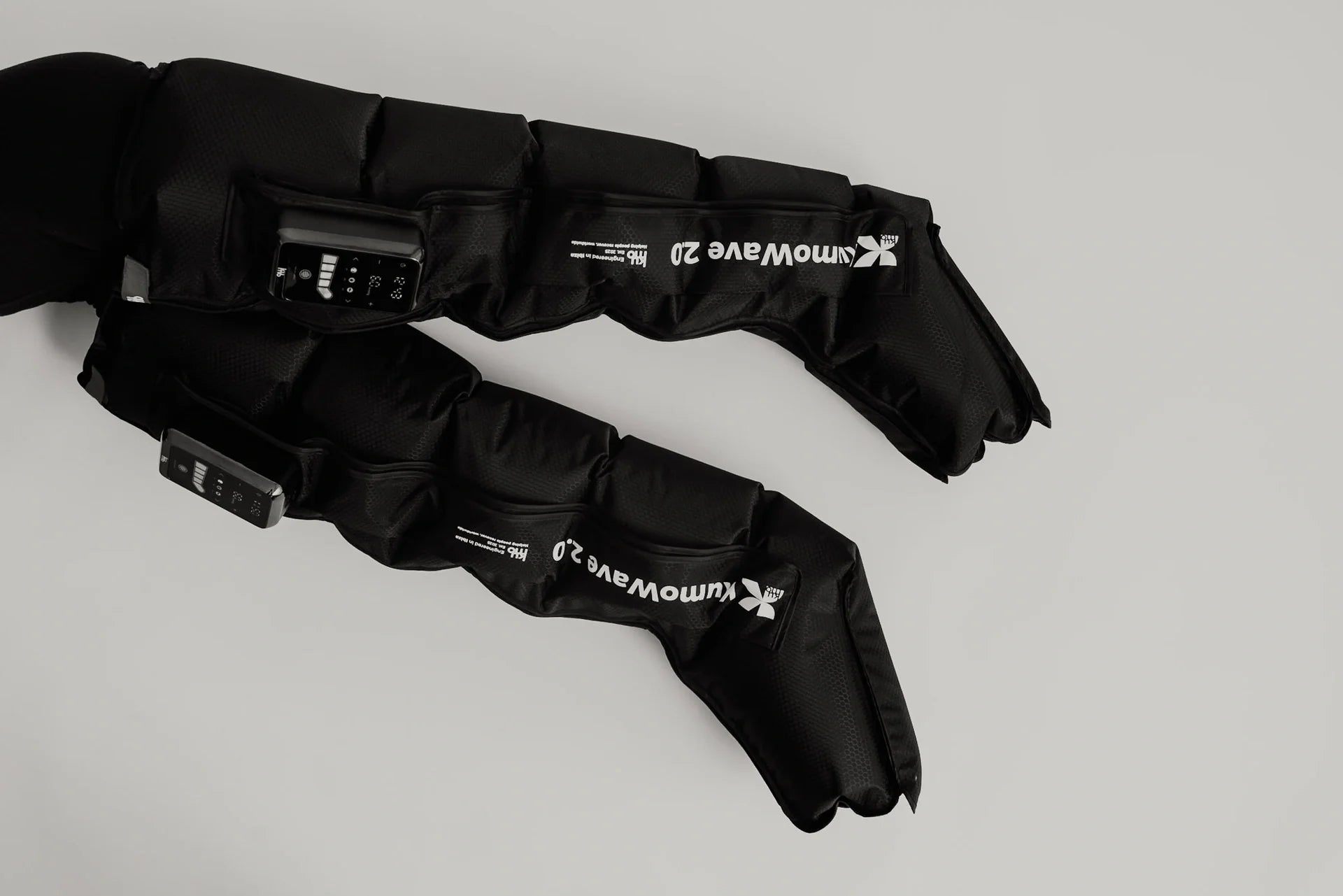
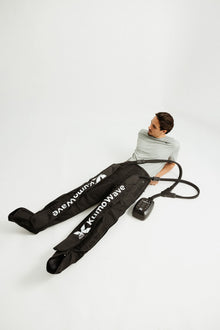
KumoWave pressotherapy boosts circulation and helps drain fluid with sequential compression, in 20-minute sessions at home.
- Boosts circulation and helps drain fluid
- Chamber-based compression, adjustable to you
- Sequential compression that mimics manual drainage
€799,00€999,00
−10% on your 1st order when you subscribe to the newsletter

“Standing or sitting for long periods in hot weather” summarizes one of the most common triggers for summer swelling.
Why heat worsens leg heaviness
In summer, heat causes blood vessels to dilate and can make fluid accumulate more easily in the feet, ankles, and legs. MedlinePlus notes that edema is swelling due to fluid accumulation and that standing or sitting for long periods in hot weather is a frequent cause. The NIH adds that summer heat can swell arms or legs if you've been immobile for a while.
Personalized protocol · included with your purchase
Want us to tell you how to use it in your case?
With your purchase, our experts prepare a personalized usage protocol for your case: sport, circulation, fluid retention, pregnancy or lipedema.
Message us on WhatsAppOur experts reply · no obligation
If there is also venous insufficiency, the problem is more noticeable because the valves in the veins do not properly push blood back to the heart, and blood stagnates in the lower legs. A 2026 clinical review estimates that chronic venous insufficiency affects approximately 10%–35% of adults in the United States, and its frequency increases with age. (ncbi.nlm.nih.gov)
Therefore, heaviness doesn't always mean "normal fatigue." When the feeling of pressure recurs in the late afternoon, appears around the ankles, or significantly improves when elevating the legs, the pattern strongly matches a problem with venous return or heat-related edema. (mayoclinic.org)
What you can do today to relieve the feeling of heat and swelling
The first line of relief is usually simple and very effective if applied consistently. It's not about doing everything at once, but about combining breaks, gentle movement, and leg rest throughout the day. (nhs.uk)
on your first order when you join the newsletter
We send you the code instantly. No spam.
- Elevate your legs above heart level for 15 to 20 minutes when you can, as this position facilitates the return of accumulated fluid.
- Walk for a few minutes or move your ankles and calves frequently, as gentle exercise helps blood flow and the calf muscle pump.
- Reduce excess salt and prioritize light meals if you notice fluid retention, as high sodium intake can worsen edema.
- Avoid remaining motionless for many hours; if you work sitting or standing, introduce brief breaks to activate circulation. (wsh.nhs.uk)
- If you have already been recommended stockings or compression, use them consistently, as they can help reduce the feeling of heaviness and swelling.
If you want to turn these measures into a realistic routine, you might find it helpful to read a daily self-care routine to relieve heaviness and also review how to adjust pressotherapy in hot weather.
Practical summary for the heaviest days
| Situation | What to do first | What usually helps |
|---|---|---|
| Mild swelling at the end of the day | Elevate legs and walk for a few minutes | Improves the feeling of pressure and facilitates drainage. |
| Long day standing or sitting | Take breaks and move ankles every so often | Reduces the stagnation of blood and fluid in the lower legs. (newsinhealth.nih.gov) |
| Recurring heaviness in summer | Review salt intake, hydration, and compression if applicable | Helps control heat-related edema and poor venous return. |
| Discomfort that does not improve or worsens | Consider a medical consultation | It may hide venous insufficiency, thrombosis, or another cause that should be investigated. (medlineplus.gov) |
When the feeling of heaviness recurs almost daily, many people find it helpful to complement these habits with leg pressotherapy to improve circulation, especially as recovery and relief support at the end of the day.
Habits that make a difference during the summer
Beyond immediate relief, what usually changes the landscape is the daily repetition of simple actions. The goal is to prevent fluid from staying down too long and to keep the legs from accumulating a feeling of heat, tension, and fatigue.
- Take short breaks every so often if you work sitting or standing, as prolonged immobility promotes swelling.
- Choose comfortable clothing and footwear that don't constrict the ankle or calf area.
- Maintain regular hydration and avoid very salty meals when you notice fluid retention.
- Use movement as prevention: walking, climbing stairs in moderation, and flexing ankles activates the calf muscle pump.
- If heat triggers your discomfort, try to spend the hottest hours in cool environments with your legs elevated occasionally.
When to consult a professional
Not all summer swelling is harmless. If the discomfort persists, worsens, or appears with striking signs, it should be evaluated to rule out causes beyond heat.
- Consult if a single leg swells newly or suddenly.
- Seek attention if the area is red, hot, very painful, or the swelling is significant.
- Get an evaluation if the swelling does not improve after a few days of home care.
- Act urgently if there is shortness of breath, chest pain, or coughing up blood, as these could indicate a blood clot in the lungs.
If heaviness appears frequently for weeks, it is worth considering possible chronic venous insufficiency or another circulatory cause, especially if you already notice varicose veins, skin changes, or clear relief when elevating your legs.
To delve deeper into the topic, you might also be interested in why tired legs appear and how to relieve them effectively.
FAQ about tired legs in summer
Tired legs in summer? How to relieve heaviness and swelling?
The most useful combination is usually simple: elevate your legs, walk a little several times a day, reduce salt, and avoid being immobile for long periods. If you notice that heat worsens your condition, look for cool moments to rest and use compression if it has already been recommended to you. MedlinePlus and the NHS agree that these changes help reduce edema and improve blood return.
What causes leg heaviness in summer?
Most commonly, it involves heat, prolonged standing or sitting, and less efficient venous circulation. Heat promotes fluid accumulation in the lower body, and if the venous valves do not close properly, blood remains in the legs and ankles longer. Mayo Clinic explains that this situation can cause pain, heaviness, and swelling that worsens throughout the day.
How to prevent swollen legs in summer?
Prevention works best when it's daily: take breaks to move your ankles and walk, elevate your legs when resting, control excess salt, and avoid long hours without moving. If you spend a lot of time working standing or sitting, small repeated changes have more impact than a single, one-off action. The NHS and MedlinePlus specifically highlight gentle movement and elevation as basic measures.
When should I consult a doctor for swollen legs in summer?
You should consult if the swelling appears in only one leg, if it is sudden, if it is red or hot, or if it does not improve after several days of self-care. You should also seek urgent help if you notice shortness of breath, chest pain, or coughing up blood. These signs do not fit with simple summer heaviness and require medical evaluation to rule out a more serious problem.
What exercises help improve venous return during the summer?
The most useful are usually gentle and repeated: walking, flexing and extending the ankles, raising the heels, and taking active breaks if you work sitting or standing. The idea is to activate the calf muscle pump, which helps push blood upwards. In people with venous insufficiency, these actions, along with elevation and compression, are part of the most recommended conservative approach.
Et maintenant ?
If this summer you want to go from discomfort to real relief, start with a simple and consistent routine: review your daily life, adjust your breaks, and explore the at-home pressotherapy collection to see what best fits your recovery needs. And if you want to know the complete proposal, return to the Kumo Balance homepage to continue advancing with a more comfortable and technological recovery.
KumoWave pressotherapy
Choose your at-home pressotherapy
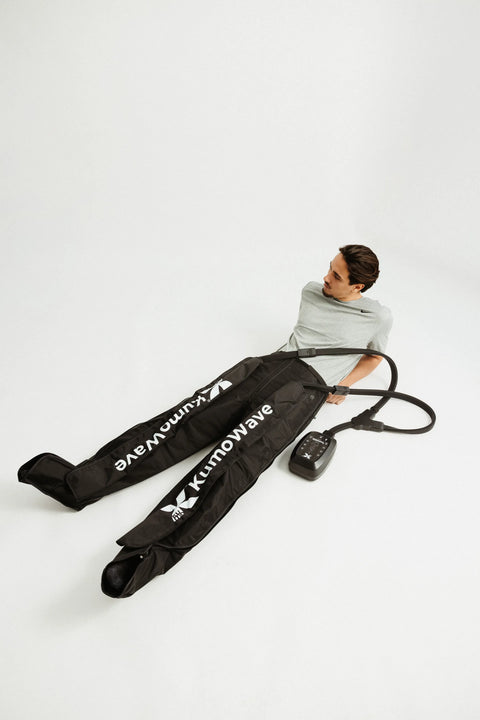
KumoWave Elite – Pressotherapy Pants
Full-coverage trousers. Ideal for lipedema, fluid retention and intensive use.
€799,00 €999,00
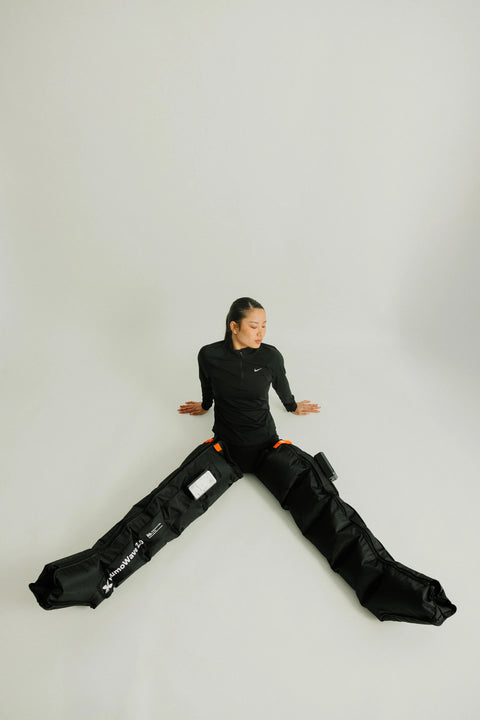
KumoWave 2.0 - Wireless Pressotherapy
Wireless, lightweight boots. Perfect for daily use and recovery.
€499,00 €599,00