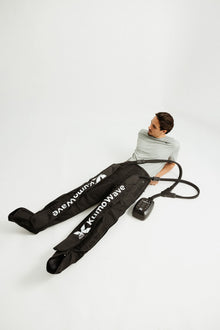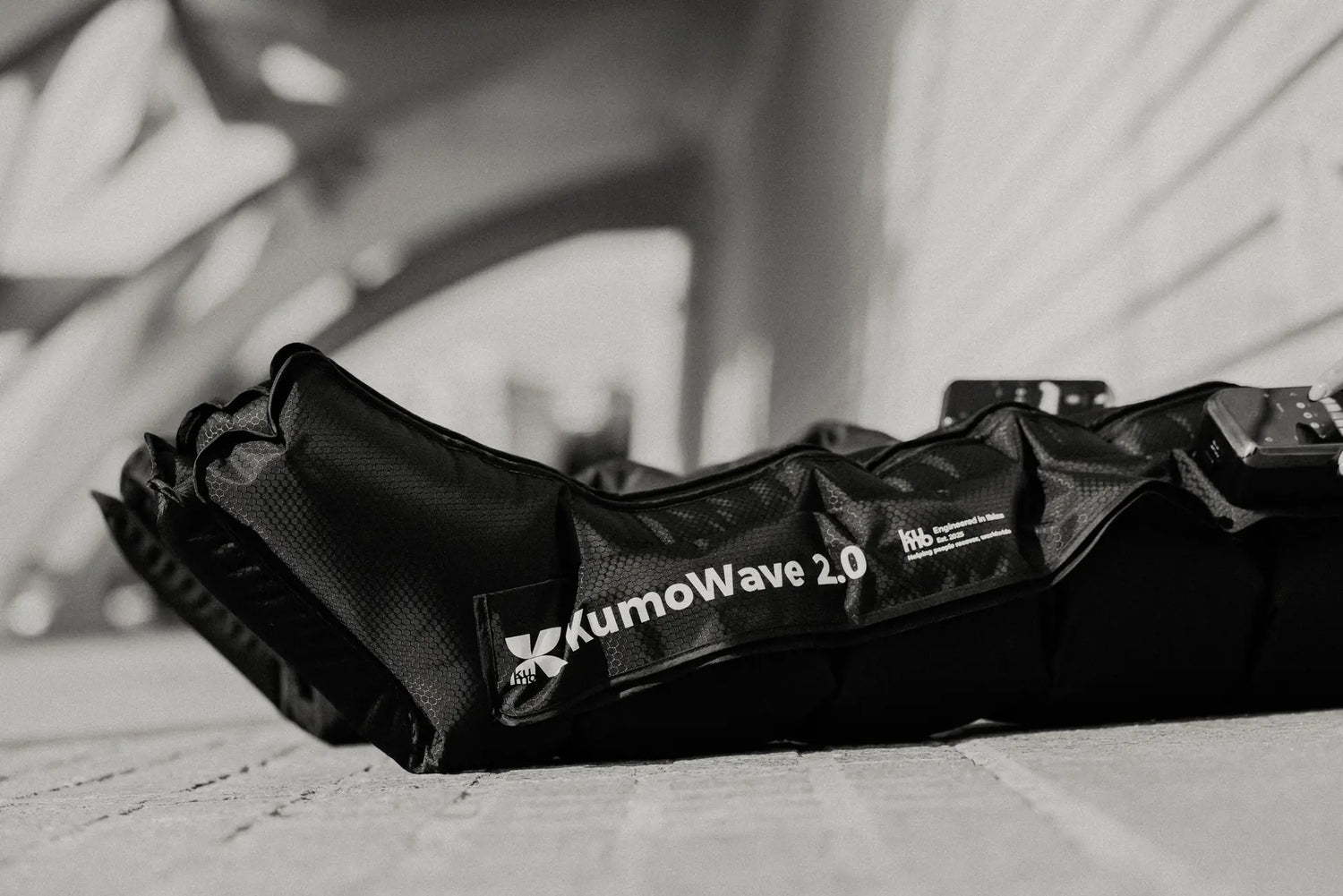
You land, and your legs don't feel the same.
Swelling after a long flight (heavy legs, "inflated" ankles, a feeling of pressure) is common and, in most cases, is due to sitting for many hours. Pressotherapy (intermittent pneumatic compression) can be a practical tool to reactivate circulation and promote fluid drainage when you arrive at your destination, provided there are no alarm signs.
Pressotherapy at home
End the day with light legs
★★★★★ 4,8/5 · rated by verified customers
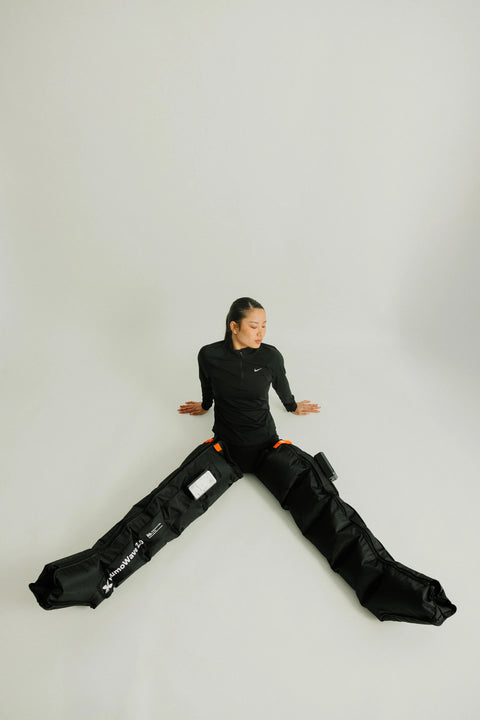
KumoWave pressotherapy boosts circulation and helps drain fluid with sequential compression, in 20-minute sessions at home.
- Boosts circulation and helps drain fluid
- Chamber-based compression, adjustable to you
- Sequential compression that mimics manual drainage
€799,00€999,00
−10% on your 1st order when you subscribe to the newsletter

In this guide, from the Kumo recovery approach, you have a clear guideline (before, during, and after the flight) for reducing swelling with common sense, based on evidence and health recommendations.
Key idea: for typical post-flight swelling, combine movement + elevation + hydration, and use pressotherapy as a recovery "accelerator." If the swelling is in only one leg, accompanied by intense pain, warmth, redness, or shortness of breath, do not normalize it and consult a doctor.
Personalized protocol · included with your purchase
Want us to tell you how to use it in your case?
With your purchase, our experts prepare a personalized usage protocol for your case: sport, circulation, fluid retention, pregnancy or lipedema.
Message us on WhatsAppOur experts reply · no obligation
Why your legs swell after flying
Venous stasis: what happens when you don't move
When you remain seated for many hours, blood tends to accumulate in the veins of your legs. This "stasis" is favored by bent knees, reduced space, and, in some cases, pressure from the edge of the seat behind the knee. This situation can increase the feeling of heaviness and promote fluid leakage into the tissues (edema).
Post-flight edema: there is measured data (and it lasts longer than you think)
It's not just a perception. In a study conducted under real conditions (a 9-hour flight), leg volume increased from 8242 mL to 8496 mL after the flight (approx. +3.1%), and tissue thickness in the tibia increased and remained so for up to 1 day afterward. In other words: swelling can persist, even hours after you've landed.
Swelling or thrombosis? Differences that matter
The vast majority of swelling after flying is benign, but there is a serious condition that should be known: deep vein thrombosis (DVT), which can be complicated by a pulmonary embolism. Health authorities indicate that the absolute risk in healthy people is low, but it increases with long journeys and individual factors.
on your first order when you join the newsletter
We send you the code instantly. No spam.
Warning signs for which you should seek medical attention (especially if they appear after a long journey):
- Swelling of only one leg that does not go down.
- Pain, marked tenderness, warmth, or redness in the leg.
- Shortness of breath, chest pain, palpitations, dizziness, or coughing up blood (emergency).
These signs appear in clinical guidelines and recommendations from organizations such as the CDC and NHS.
What is pressotherapy and why it can help after a long flight
Pressotherapy = intermittent pneumatic compression (IPC)
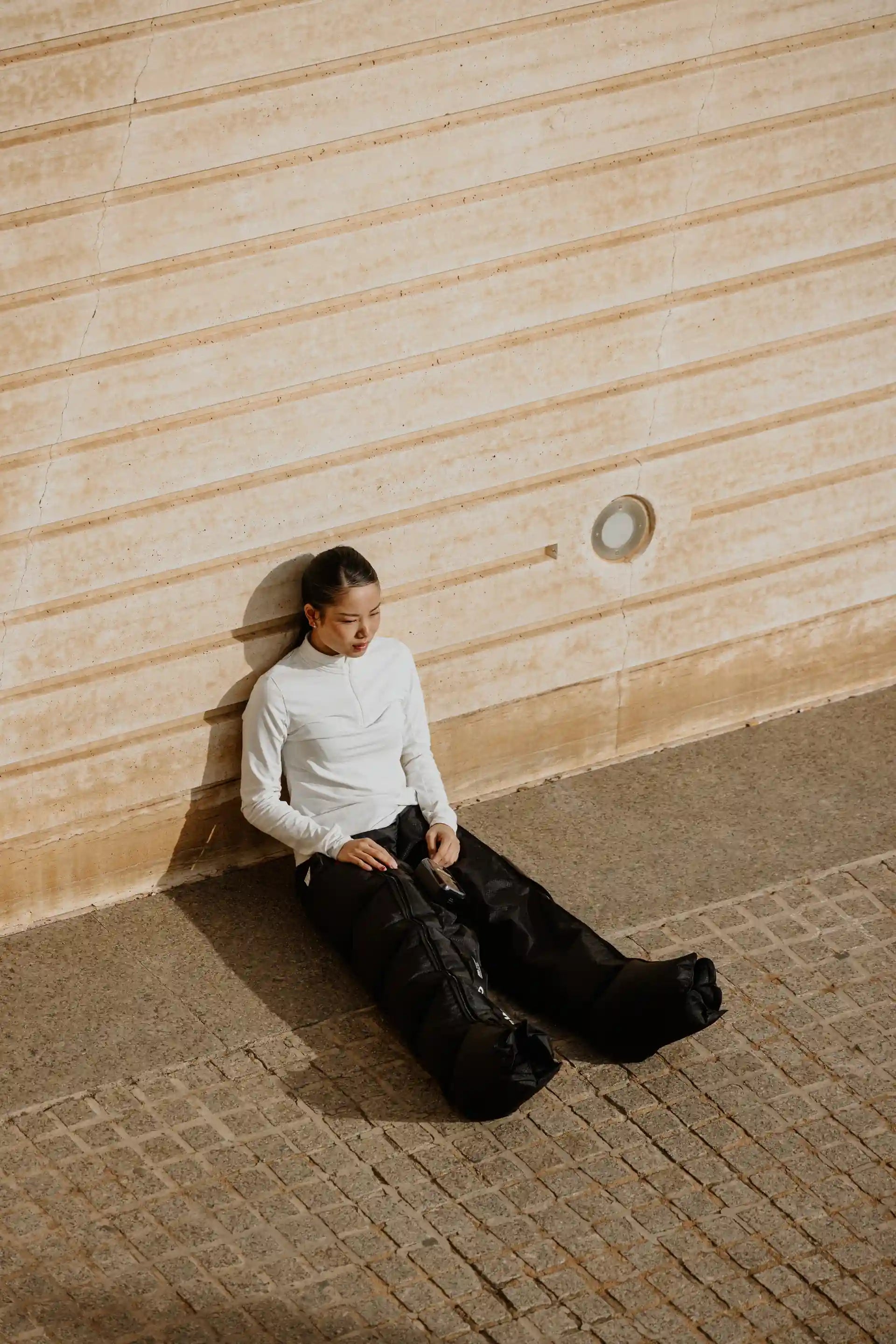
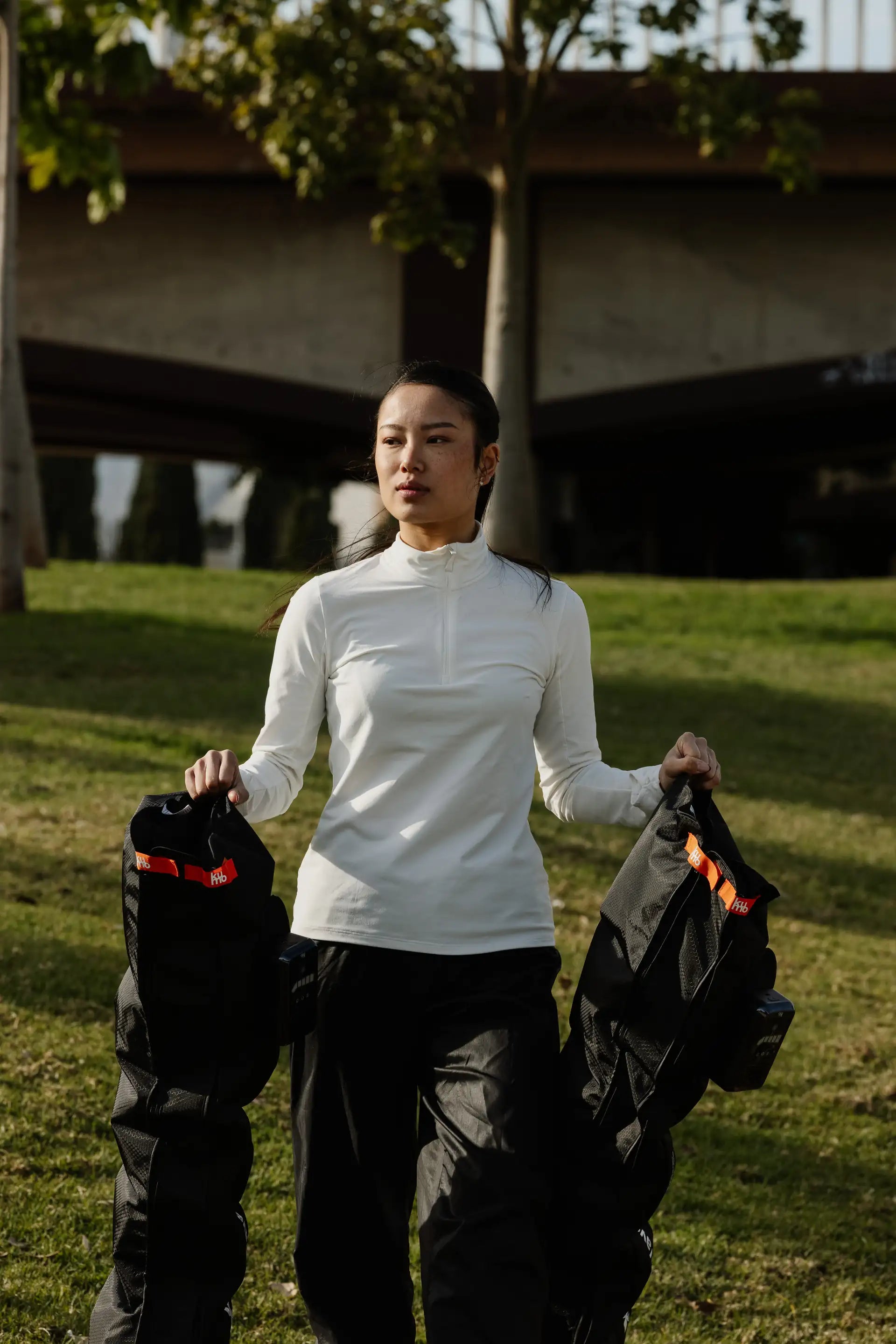
Pressotherapy is based on boots or sleeves with air chambers that inflate and deflate sequentially. This "pulsed" compression aims to promote venous return and the upward movement of fluids, similar to a mechanical "drainage massage."
In healthcare settings, intermittent pneumatic compression is also used to help prevent clots in people with reduced mobility, precisely because it improves blood flow in the legs.
What you can expect (and what you can't) after a flight
In a healthy person with typical travel-related swelling, pressotherapy can primarily help to:
- Reduce the sensation of heavy legs.
- Improve comfort and "lightness" when walking.
- Support the drainage of fluid accumulated from sitting.
But it's important to be honest about the state of the evidence: for conditions like lymphedema, there are recent systematic reviews that find improvements in limb volume and patient-reported outcomes with advanced pneumatic compression devices; for specific post-flight swelling in the general population, direct evidence is scarcer and usually relies on physiology, experience, and indirect studies.
What pressotherapy should NOT do: if you suspect DVT, do not use compression boots "to see if it goes away." Prioritize medical evaluation.
Guideline for reducing swelling: pressotherapy before, during, and after the flight
Before takeoff (from 24 hours before)
- Reduce salt intake spikes (very salty foods promote fluid retention in some people).
- Hydrate constantly (water spread throughout the day).
- Plan for mobility: if possible, choose an aisle seat to get up more easily.
- If you have risk factors (history of DVT, pregnancy, postpartum, recent surgery, cancer, several combined factors), consult your doctor before flying: some guidelines consider specific measures such as compression stockings or pharmacological prophylaxis in selected cases.
During the flight (what changes the outcome the most)
If you could only do two things during the flight, they would be: move your ankles/calves and get up regularly.
- Get up or walk in the aisle every 2–3 hours if possible.
- Exercises in your seat (1–2 min, several times): raise and lower heels, raise and lower toes, contract/relax legs.
- Do not cross your legs for too long and loosen very tight clothing.
- If you use compression stockings, make sure they are the correct size. Evidence shows that they reduce asymptomatic DVT events and can decrease edema on long flights, although "serious" outcomes are rare in trials.
24-hour plan to reduce swelling (with practical table)
| Time | Goal | What to do | Approximate duration |
|---|---|---|---|
| At the airport (0–30 min) | Reactivate "muscle pump" | Walk at a comfortable pace, go up/down stairs if it feels good, ankle mobility | 10–20 min |
| Upon arrival (0–2 h) | Relieve congestion and heaviness | Leg elevation + first pressotherapy session at mild–moderate intensity (as tolerated) | 15–25 min |
| Evening/night (2–12 h) | Consolidate drainage | Short walk + regular hydration + optional second session if you are still swollen | 10–30 min walk + 15–20 min pressotherapy |
| Next day (12–24 h) | Normalize | Frequent movement (micro-breaks) + pressotherapy if you notice tightness or sock marks | 1 session 15–20 min (if needed) |
How to use pressotherapy wisely (without "overdoing it")
A safe and reasonable guideline for typical post-flight swelling is usually:
- Start gently (the sensation should be pleasant pressure, not pain).
- Avoid endless sessions: a short, well-tolerated session is preferable to a long one that leaves your leg "sensitive."
- Observe your response: if you feel relief and lightness afterward, you're on the right track; if strange pain, numbness, or intense discomfort appears, stop.
- Combine it with movement: pressotherapy works better when you follow it with a few minutes of gentle walking.
If you are looking for boots for this routine, in Kumo's pressotherapy collection you will find options aimed at home recovery (without the need to turn your living room into a clinic). The important thing here is consistency and intelligent use: "post-flight" and "post-long day," not "stronger always."
How much swelling is "normal" and when to worry
Normal (common) after flying
- Bilateral swelling (both legs/ankles).
- Sock marks, feeling of tight skin, heaviness at the end of the day.
- Improves with walking, elevating legs, or by the next day.
Consult a doctor (especially if it occurs after the flight)
- Swelling of only one leg that does not go down or appears noticeably.
- Calf or thigh pain, warmth, redness.
- Respiratory symptoms (shortness of breath, chest pain, dizziness): emergency.
Mayo Clinic also recommends checking with a professional if swelling in one leg does not go away or appears within 2 weeks after a long flight.
How to boost results: Kumo recovery beyond pressotherapy
1) Elevation + breathing (the simple combo)
After landing, lie down and elevate your legs (e.g., on a firm suitcase or pillow). Accompany this with slow breathing for 3–5 minutes. It's simple, but it reduces the feeling of "full legs" and prepares the body for pressotherapy.
2) Localized muscle release (without aggressive treatment)
If, in addition to swelling, you notice tight calves or tense tibial fascia (common after hours in a fixed posture), a gentle release can help. One option is a localized, low-intensity massage, avoiding areas with acute pain or abnormal warmth.
For this, you can use a self-massage tool like KumoPulse Air, prioritizing short, controlled passes, more aimed at "loosening" than "pounding."
3) Red light/LED for well-being and rest
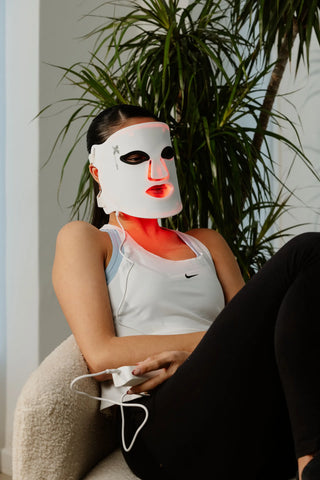
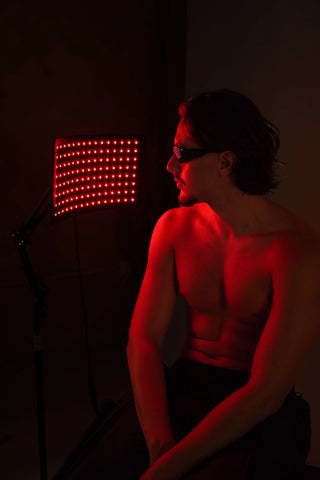
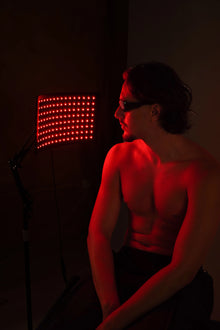
When travel involves jet lag, the goal also becomes sleeping better and recovering from travel stress. In this context, LED light therapy can fit as a wellness ritual (skin/relaxation), while you take care of the mechanical aspects (mobility + pressotherapy) for your legs.
Safety: contraindications and common mistakes with pressotherapy
Common mistakes (and how to avoid them)
- Using it as a substitute for movement: pressotherapy helps, but walking and activating your calves are still the main things.
- Increasing intensity "to make it work": more pressure does not always equal more relief.
- Ignoring one leg being different from the other: marked asymmetry = attention.
When NOT to use it and seek medical advice
In clinical protocols for mechanical compression, precautions are considered for known or suspected DVT/embolism, and caution is also recommended for peripheral vascular problems or skin lesions. If you have doubts (especially after a flight), consult a healthcare professional before applying compression at home.
Quick checklist (to save before your next flight)
- Aisle seat if you can + get up every 2–3 hours.
- Ankle/calf exercises in your seat.
- Regular hydration and comfortable clothing.
- Upon arrival: walk 10–20 min + elevate legs.
- Pressotherapy: 15–25 min mild–moderate, and repeat only if you need it.
- If it's only one leg or there's unusual pain/shortness of breath: consult a doctor.
FAQ: pressotherapy and long flights (Kumo)
How long after landing can I use Kumo pressotherapy boots?
For typical post-flight swelling, you can use pressotherapy upon arrival when you are in a comfortable place and have walked a bit (e.g., 10–20 minutes between the airport and your destination). The idea is to first reactivate the calf "pump" and then have a gentle session to promote fluid return. Avoid using it if you notice intense pain, localized warmth or redness, or if the swelling is clearly in only one leg: in that case, prioritize medical evaluation.
Does pressotherapy help with fluid retention after traveling, or is it only for athletes?
It's not "only for athletes." Fluid retention after traveling is related to sitting for many hours and venous pressure in the legs. Pressotherapy (intermittent pneumatic compression) is used in different contexts because it promotes return blood flow. That said, for the general population post-flight, direct evidence is less than for other situations; that's why it works best as part of a plan: movement, elevation, and hydration. If you fly often, making it a short and consistent routine is usually more useful than doing sporadic long sessions.
Can I combine Kumo pressotherapy and a massage gun on the same day as the flight?
Yes, as long as you do it with a clear objective: pressotherapy to relieve heaviness and support drainage, and self-massage to release muscle tension from fixed posture (calves, soleus, tibialis anterior). First, take a gentle walk, then pressotherapy (15–25 min), and if you feel like it, a very controlled and short massage. Avoid aggressive massage on areas with "sharp" pain, abnormal warmth, or marked tenderness. And if your priority is to sleep after jet lag, keep everything at gentle intensities so as not to "activate" too much.
What should I do if I have varicose veins and want to use Kumo pressotherapy after a long flight?
Varicose veins can increase the feeling of heaviness, and many people find relief with measures that promote venous return (mobility, elevation, compression). However, if you have significant venous problems, a history of thrombosis, or are on anticoagulant medication, it is prudent to seek professional advice before applying pneumatic compression at home. On long journeys, guidelines often emphasize movement and, for high-risk profiles, evaluating compression stockings or other measures. Use pressotherapy at a low intensity, without pain, and observe your response.
What now?
If you want to turn flights (and days of heavy legs) into a more manageable recovery routine, explore pressotherapy boots for home and supplement with release tools like KumoPulse Air or LED light therapy sessions as part of your wellness ritual. And if you need guidance on which approach best suits your case, you can contact the team.
- – DVT/PE , WHO – WRIGHT (
- J Travel Med (
- – Edema on long flights , Mayo Clinic (rev
- – Swelling of feet when flying
KumoWave pressotherapy
Choose your at-home pressotherapy
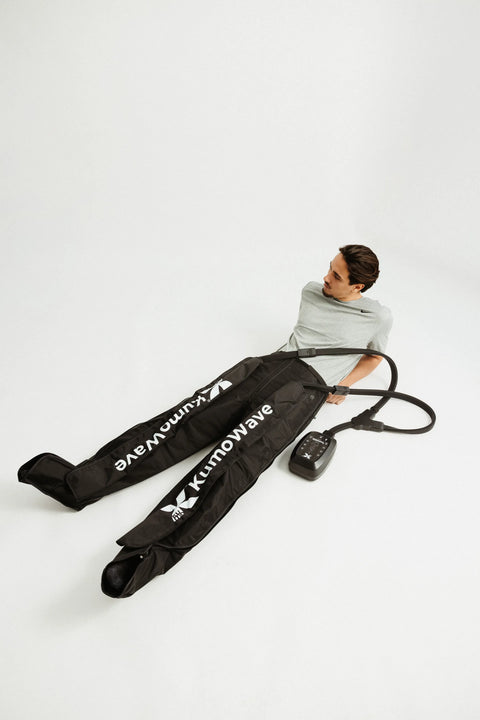
KumoWave Elite – Pressotherapy Pants
Full-coverage trousers. Ideal for lipedema, fluid retention and intensive use.
€799,00 €999,00
KumoWave 2.0 - Wireless Pressotherapy
Wireless, lightweight boots. Perfect for daily use and recovery.
€499,00 €599,00