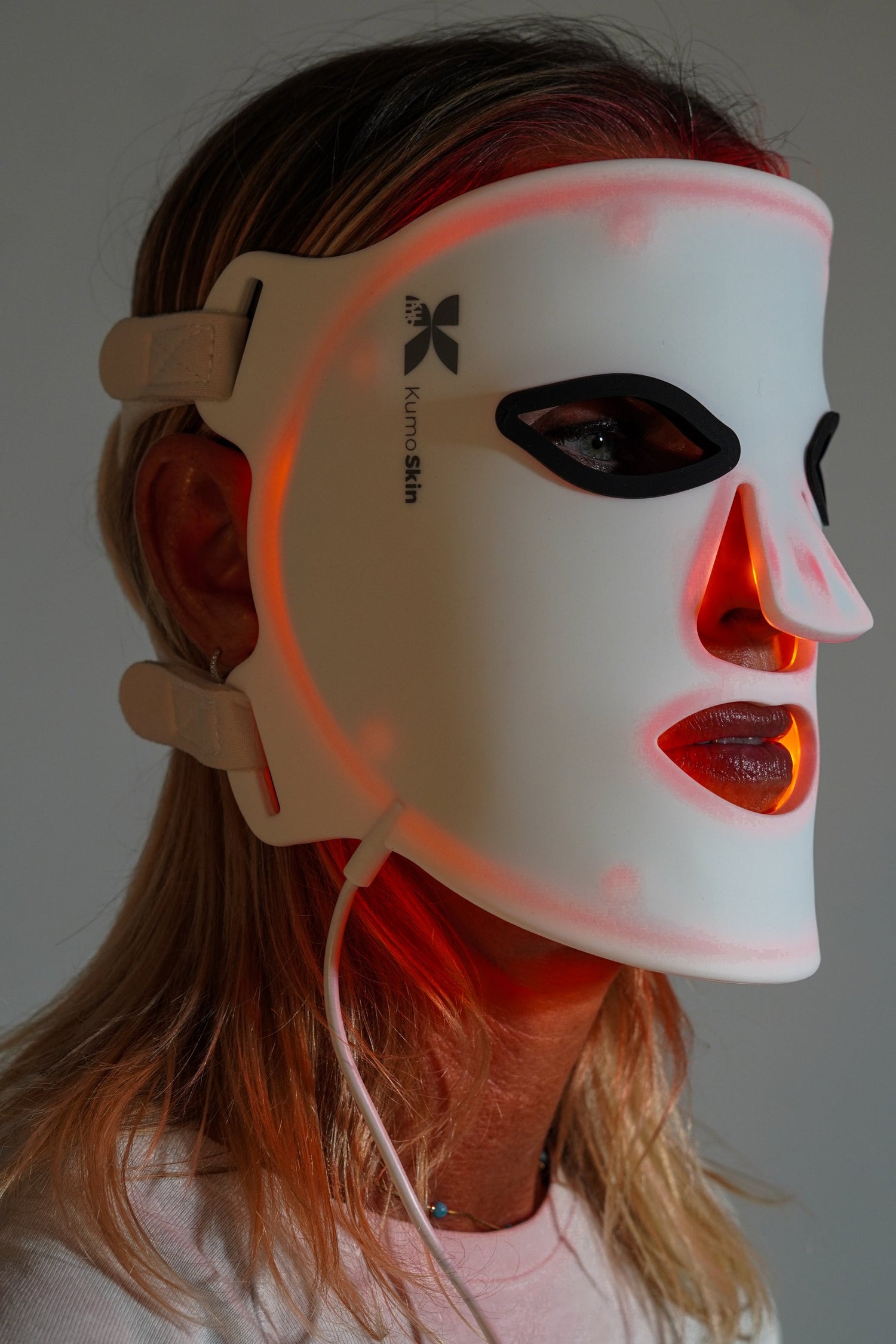
Your skin can regain its radiance. When your face looks dull, it's often due to a combination of a weakened skin barrier, dehydration, accumulated sun exposure, and daily habits that diminish the skin's freshness. (health.clevelandclinic.org)
You don't need an endless routine. With gentle cleansing, adequate hydration, daily sun protection, and some lifestyle adjustments, your skin tone can appear more even, rested, and healthy.
Red & infrared light
Recover faster, at home
★★★★★ 4,8/5 · rated by verified customers
The KumoLux panel supports muscle recovery with full-body red and infrared light.
- 660 nm red + 850 nm infrared light
- Full-body muscle recovery
- Clinically validated biohacking protocols
€399,00€499,00
−10% on your 1st order when you subscribe to the newsletter

It's not about doing more, but about doing better: less aggression, more consistency, and more protection.
Why skin looks dull
Skin has a barrier that helps retain water and defend against external aggressors. When this barrier is compromised, tightness, roughness, flaking, and irritation can appear, and the face may look duller. (nih.gov)
Personalized protocol · included with your purchase
Want us to tell you how to use it in your case?
With your purchase, our experts set up your red and infrared light sessions for your sport and goal.
Message us on WhatsAppOur experts reply · no obligation
- Harsh washing, excessively hot water, or constant scrubbing can weaken the skin barrier and make skin more sensitive.
- Not using a moisturizer regularly promotes water loss and worsens a dry or dull appearance.
- Accumulated sun exposure accelerates visible aging and can lead to uneven and less luminous skin tone. (my.clevelandclinic.org)
- Lack of rest, smoking, and excessive alcohol also reflect on the skin and can make it look more tired.
- A diet poor in fruits and vegetables, coupled with an excess of sugar and refined flours, does not help the complexion look fresh.
Practical table: what typically dulls the skin and what to do first
| Common situation | How it usually looks | First useful adjustment |
|---|---|---|
| Compromised skin barrier | Tightness, roughness, and flaking | Gentle cleanser and cream with ceramides or emollients |
| Accumulated sun exposure | Uneven tone and tired appearance | Broad-spectrum sunscreen every day |
| Excessive exfoliation | Burning, redness, and sensitivity | Reduce friction and return to gentler exfoliation |
| Insufficient rest | Paleness and more visible dark circles | Improve sleep and recovery habits |
| Low antioxidant intake | Skin with less visual freshness | Prioritize fruits, vegetables, and vitamin C |
These priorities align with recommendations from the AAD, Harvard Health, NIH, NHS, and Cleveland Clinic regarding skin barrier, hydration, sun protection, rest, and nutrition.
A routine to restore radiance to your face
The best routine for regaining radiance is simple, repeatable, and gentle. If a product stings, dries, or irritates, the problem isn't your consistency: it's the intensity of the step you're using.
In the morning
- Wash your face with a gentle cleanser and lukewarm water. Friction and very hot water can worsen dryness and sensitivity.
- Apply a moisturizer suited to your skin type; ingredients like ceramides and hyaluronic acid are especially helpful for strengthening the barrier. You can expand on this with the AAD's guide to choosing a moisturizer.
- Finish with broad-spectrum sunscreen. The AAD recommends SPF 30 or higher, and daily sun protection is one of the most effective measures to prevent skin from losing radiance over time. (aad.org)
In the evening
- Remove makeup, sweat, and sunscreen with gentle cleansing, without rubbing or overdoing it.
- If using active ingredients, start with just one and observe your skin's tolerance before adding more steps. Harvard Health emphasizes that aggressive treatments can increase irritation and reduce comfort.
- Apply a reparative moisturizer again to help the skin retain water overnight. (nhs.uk)
- If you're interested in complementary support, here you can read how a facial LED mask works and who facial LED therapy is for. (aad.org)
Once or twice a week
If the skin is dull due to dead skin cell buildup, gentle chemical exfoliation is usually kinder than physical exfoliation. Harvard Health notes that, to care for skin and reduce irritation, it's advisable to prioritize less abrasive options and stop if sensitivity appears. If you want to delve deeper, Harvard's skin care guide explains this logic well.
on your first order when you join the newsletter
We send you the code instantly. No spam.
Where does LED technology fit in?
LED phototherapy doesn't replace cleansing, moisturizing, or sunscreen, but it can provide complementary support when you're looking to improve your skin's overall appearance with a consistent routine. The AAD explains that some visible light LED devices for home use have been authorized by the FDA for acne and that red light is also used for cosmetic concerns such as wrinkles; a 2024 review in PubMed summarizes recent evidence on photobiomodulation in dermatology. (aad.org)
If you want to better understand the rationale behind this technology, you can read about yellow light in LED masks for dull and sensitive skin and the difference between 660 nm and 850 nm. When the goal is to maintain a short and sustainable routine, this type of information helps to prioritize consistency over complexity.
When to seek medical help
If dullness appears suddenly, is accompanied by itching, burning, spots, or persistent flaking, it's advisable to consult a professional. Cleveland Clinic and the AAD remind us that persistent dryness or repeated irritation can reflect a damaged barrier or an underlying condition that requires a different approach. (my.clevelandclinic.org)
- Skin often itches, burns, or hurts and doesn't calm down with a gentle routine. (nhs.uk)
- There are cracks, significant flaking, or a burning sensation when applying normal products.
- Changes do not improve with basic habits of hydration, rest, and sun protection.
- You notice new sensitivity, breakouts, or color changes you didn't have before. (aad.org)
Frequently asked questions
How to naturally and lastingly brighten a dull complexion?
The most stable way is to combine three basics: gentle cleansing, daily hydration, and sunscreen every day. From there, better sleep, drinking enough water, and eating more fruits and vegetables help the skin look less tired. If you want to add an active ingredient, topical vitamin C can be helpful, but it doesn't replace the basics. What makes the biggest difference in the long term is consistency and avoiding repeated irritation.
Which products and active ingredients help restore radiance to dull skin?
Gentle cleansers, creams with ceramides or hyaluronic acid, antioxidants like vitamin C, and gentle chemical exfoliants usually work best. Harvard Health and the AAD emphasize that an overly aggressive formula can worsen dryness and a dull appearance. If your skin is sensitive, start with just one new product and use it cautiously. The goal is not to "feel a lot," but to improve texture, comfort, and uniformity without irritating.
What daily habits can make skin look more radiant all day long?
The most effective habits are simple: getting enough sleep, cleansing without rubbing, moisturizing after showering or cleansing, using sunscreen, and maintaining a diet rich in fruits and vegetables. Cleveland Clinic reminds us that sleep and nutrition influence the visible quality of the skin, and the NIH points out that dehydration can be noticeable in the skin. Small, repeated actions often yield better results than changing everything at once.
How to exfoliate and moisturize skin to restore its glow without irritation?
Start less frequently than you might imagine and avoid exfoliating if you already notice burning, redness, or tightness. Gentle chemical exfoliation is usually kinder than physical exfoliation, especially for dull but sensitive skin. Afterwards, apply a reparative cream to reduce water loss and support the skin barrier. If a product leaves your skin feeling tighter or prickly, you're not seeing "results": you're seeing irritation.
What diet or nutrition promotes brighter and more even skin?
What helps most is a varied diet rich in fruits, vegetables, sufficient protein, and good quality fats. Harvard highlights that a diet with many fruits and vegetables is associated with better overall health, and also underscores the role of vitamin C in collagen formation and antioxidant protection. Rather than looking for "miracle foods," it's advisable to reduce excess ultra-processed foods and maintain adequate hydration. (nutritionsource.hsph.harvard.edu)
What now?
Start with the essentials: gentle cleansing, hydration, sunscreen, and a routine you can sustain effortlessly. If you want to take the next step, you can explore the KumoSkin Mask and continue browsing Kumo Balance to integrate LED technology at home with discernment.

Red & infrared light
KumoLux Panel – Red and Infrared LED Panel
★★★★★ 4,8/5 · rated by verified customers
- 660 nm red + 850 nm infrared light
- Full-body muscle recovery
- Clinically validated biohacking protocols
€399,00€499,00· pay in installments with seQura or Klarna