

Not every pain means an injury. When it shows up after training, the key is to look at three things: where it hurts, when it started and what happens when you move the area. Guidelines reviewed in 2025 and 2026 agree that muscle pain from overload usually appears after the effort, while joint pain more often comes with swelling, stiffness, warmth or trouble bearing weight. (my.clevelandclinic.org)
As a quick guide, if the discomfort affects a specific muscle, showed up during or one to three days after an intense effort and improves within a few days, it fits muscle pain better. If the area is a joint and you notice inflammation, warmth, limited movement or pain when walking or loading weight, it is better to slow down and look into the cause before you keep training.
Pressotherapy at home
End the day with light legs
★★★★★ 4,8/5 · rated by verified customers
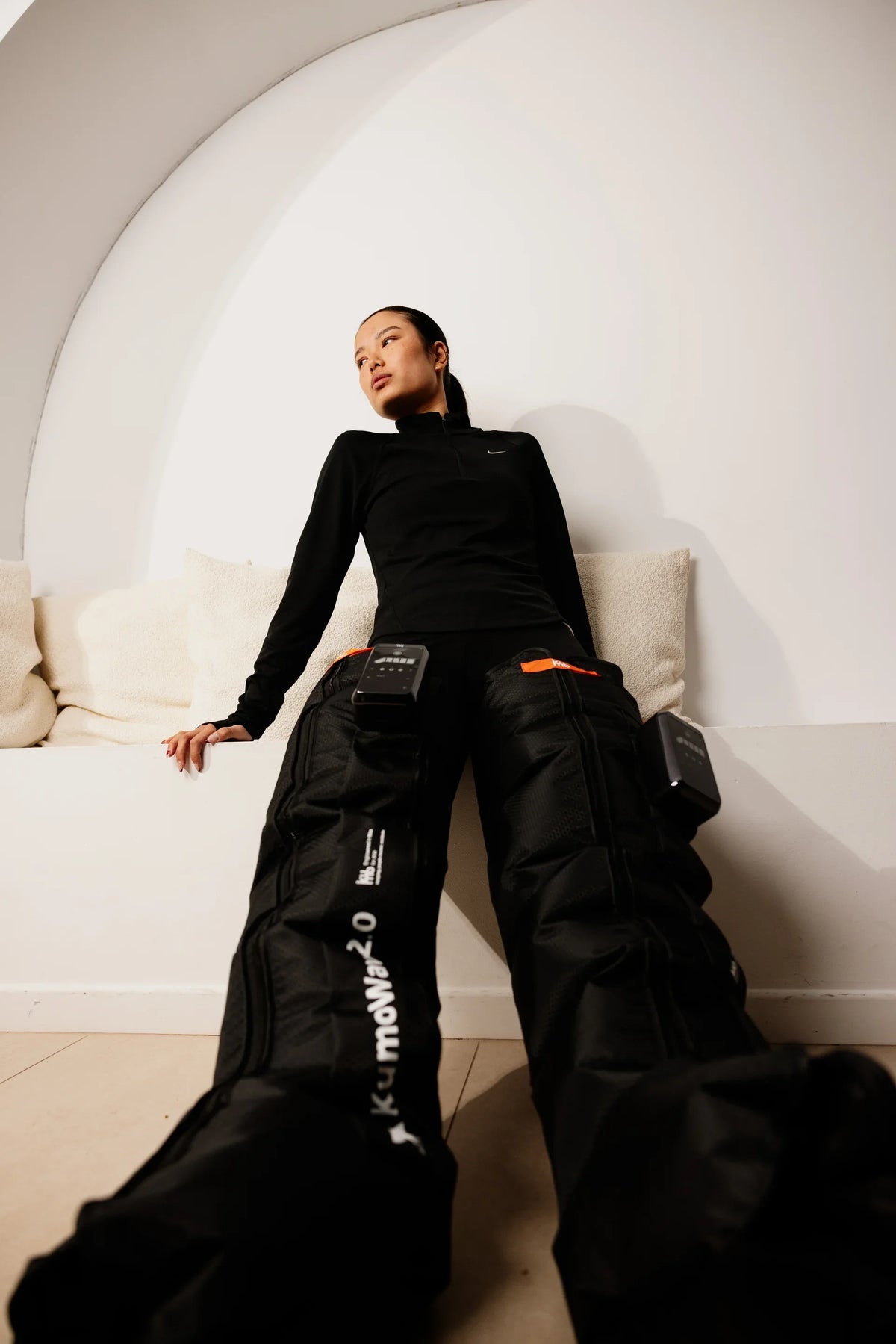
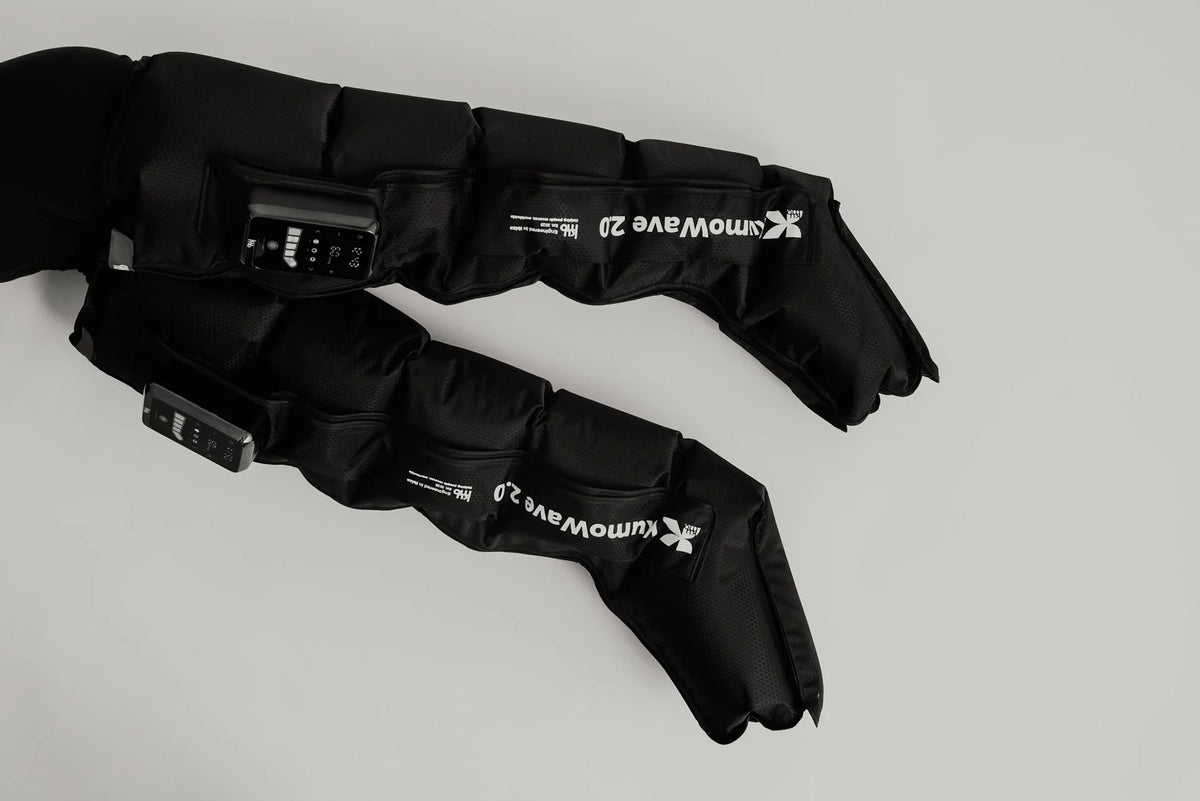
KumoWave pressotherapy boosts circulation and helps drain fluid with sequential compression, in 20-minute sessions at home.
- Boosts circulation and helps drain fluid
- Chamber-based compression, adjustable to you
- Sequential compression that mimics manual drainage
€799,00€999,00
−10% on your 1st order when you subscribe to the newsletter

The difference in three simple questions
Ask yourself these questions before deciding whether to continue. The first is whether the pain sits in the belly of the muscle or in a joint. The second is whether it appeared right away or with a delay. The third is whether you can move the area normally. MedlinePlus notes that muscle pain from overuse usually starts during or right after the activity, while delayed onset muscle soreness, known as DOMS, usually shows up between 1 and 3 days after an intense workout. (medlineplus.gov)
- If a specific muscle hurts, the discomfort usually sits in the quadriceps, calves, glutes, shoulder or back and is more noticeable when you touch or contract that area.
- If a joint hurts, the sensation usually centers on the knee, shoulder, hip, ankle, wrist or fingers, and it can get worse when you bear weight, twist or bend. (nhs.uk)
- If there is swelling, warmth or bruising, think more about an injury to the joint or the surrounding tissue than about simple soreness.
- If the pain keeps you from using the area normally, do not keep pushing. That deserves a pause and an assessment, especially if it gets worse.
When it looks like muscle pain
Muscle pain from a new workout or one that is more intense than usual is usually felt in specific muscles, with tenderness to the touch, stiffness or a slight sense of weakness. Cleveland Clinic describes DOMS as discomfort that shows up one to three days after the intense effort and usually goes away within a few days.
Personalized protocol · included with your purchase
Want us to tell you how to use it in your case?
With your purchase, our experts prepare a personalized usage protocol for your case: sport, circulation, fluid retention, pregnancy or lipedema.
Message us on WhatsAppOur experts reply · no obligation
That fits the day after a leg session, a new strength class or a change in technique. It does not automatically mean you did something wrong. But it is telling you that the load was higher than what your body could handle that day. If you want to organize your recovery without improvising, you can look through a practical guide to muscle recovery after sports.
For this type of pain, MedlinePlus recommends warming up before you train, cooling down at the end, stretching sensibly and increasing the load gradually. It also notes that muscle pain that lasts more than three days, is severe or comes with signs of infection deserves a medical visit.
What you can do if it looks muscular
- Lower the intensity or cut the volume of your next session so you do not add more stress to the same muscle group.
- Keep moving gently if it does not increase the pain, because stiffness usually improves better with light activity than with complete rest.
- Watch how it develops over 24 to 72 hours. If the pain stays the same or gets worse, it no longer looks like a simple normal response to effort.
- If you notice accumulated fatigue, worse sleep or a drop in performance across several workouts, you may not need to push harder but to deload. A deload week can be more sensible than insisting. (medlineplus.gov)
When it looks like joint pain
Joint pain does not behave like soreness. The NHS notes that it can come with swelling, bruising, warmth, stiffness or pain when walking, and that the cause can be an overload, a sprain, a strain, arthritis or even a joint infection.
on your first order when you join the newsletter
We send you the code instantly. No spam.
The most typical joints are the knee, shoulder, hip, ankle, wrist, fingers and back. If the pain appears when you twist, bear weight or climb stairs, and you also feel that the area is locked, inflamed or unstable, it is better to stop training and look into the cause.
In these situations, training on as if nothing happened raises the risk of irritating the area further. If you want to better understand how back problems that are not purely muscular differ, a useful companion read is lower back pain and pain of nerve origin.
Signs that you should stop
- The joint is warm, swollen or very painful when you move it.
- You cannot bear weight, walk or use the area normally.
- The pain comes with fever, chills or a general feeling of being unwell.
- There is deformity, a sudden pop, numbness or loss of sensation after an injury. (medlineplus.gov)
What to do before you keep training
The best decision is not always complete rest, nor is it carrying on out of habit. The useful rule is this: if the pain is in a muscle, is mild, does not change your technique and eases with the warm-up or as the hours pass, you can adjust the load. If it is in a joint, changes the way you move or forces you to compensate, stop and reassess.
MedlinePlus stresses that warming up prepares the body, cooling down helps you return to normal and gradual progression lowers the risk of overuse. It also recalls that if any muscle or joint pain does not go away with self-care, it is time to get it checked.
Quick table to guide you
| What you notice | More likely | What to do |
|---|---|---|
| Pain shows up 24 to 72 hours after an intense session | Muscle pain | Lower the intensity and watch how it develops. |
| Pain in the knee, shoulder or hip with swelling | Joint pain | Stop the impact and get it assessed if it does not ease. |
| Pain with fever, warmth or inability to bear weight | Warning sign | Seek medical care. |
The table sums up patterns described by Cleveland Clinic, the NHS and MedlinePlus.
If it helps you organize a simple routine outside the gym, you can also look at how to build an at-home recovery routine and adapt what you do to the type of pain.
Common mistakes worth avoiding
- Continuing to load a joint that is already swollen or unstable.
- Mistaking the temporary relief you feel while warming up for real recovery.
- Going back to the same training volume while the pain still limits your technique.
When it is worth seeing a health professional
Get help if muscle pain lasts more than three days, if joint pain does not improve after two weeks of self-care, if the problem keeps you from sleeping or doing normal activities, or if the area is warm, very swollen or comes with fever.
It is also worth getting checked if you notice marked weakness, trouble moving a body part, pain that started after a change in medication, or symptoms of overtraining such as persistent tiredness, worse performance and disrupted sleep. In those cases, pushing harder is usually not the best strategy.
FAQ about muscle pain and joint pain
How do you tell muscle pain from joint pain?
Muscle pain usually shows up in a specific muscle, often during or 1 to 3 days after the effort, and is noticeable when you touch or contract the area. Joint pain centers on a joint and usually comes with swelling, warmth, stiffness or trouble bearing weight. If there is fever, deformity or an inability to walk, do not read it as simple training discomfort.
What should I do if it hurts after training?
If the discomfort looks muscular and mild, lower the load, warm up better, do gentle recovery work and watch whether it improves in 24 to 72 hours. If the pain is in a joint, there is swelling or it makes you change your technique, stop the exercise and avoid impact until you understand the cause. MedlinePlus and the NHS recommend getting it checked if it does not improve with self-care.
Can I keep training if the pain goes away once I warm up?
If the pain goes away once you warm up, do not take it as an automatic green light. Mild muscle discomfort can feel less intense with movement, but if it comes back as soon as the load goes up, changes your technique or shows up in a joint, you should lower the intensity. MedlinePlus recommends progressing gradually and stopping the exercise when there is real pain during the activity. When the signal is clear, adjusting in time is usually better than insisting.
When should I definitely get it checked?
Get it checked if the pain lasts more than three days in a muscle, does not improve after two weeks in a joint, or comes with fever, local warmth, marked swelling, an inability to bear weight, numbness or deformity. Those signs no longer fit simple post-workout discomfort and need a professional assessment.
What's next?
If you have any of the warning signs, see a health professional before you go back to training. If there are none and the picture looks like mild muscle overload, the Kumo Balance home page gathers recovery resources that can help you plan a gradual return with more judgment.
KumoWave pressotherapy
Choose your at-home pressotherapy
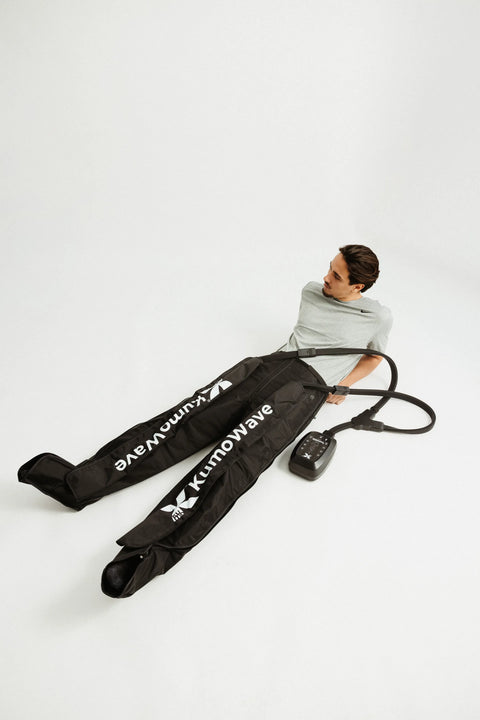
KumoWave Elite – Pressotherapy Pants
Full-coverage trousers. Ideal for lipedema, fluid retention and intensive use.
€799,00 €999,00
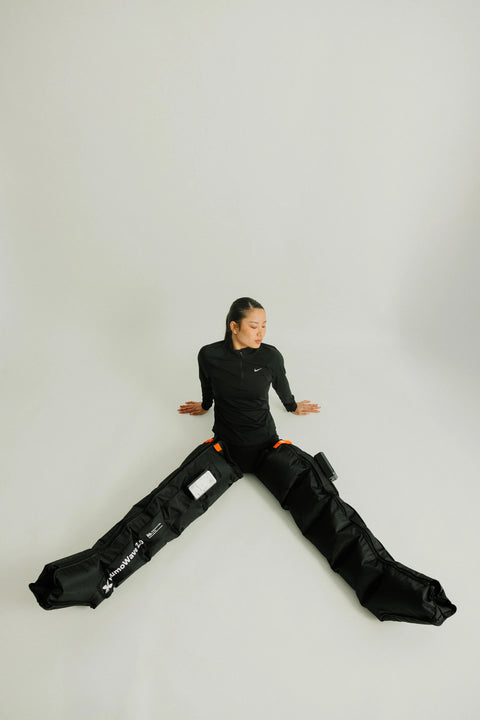
KumoWave 2.0 - Wireless Pressotherapy
Wireless, lightweight boots. Perfect for daily use and recovery.
€499,00 €599,00