


Recovering well makes all the difference.
After training, the body doesn't just need to stop: it needs to repair tissue, replenish glycogen, rehydrate, and get good sleep to perform again. Muscle recovery works best when basic habits are combined with specific tools, and not when a single magical solution is sought. (pubmed.ncbi.nlm.nih.gov)
Red & infrared light
Recover faster, at home
★★★★★ 4,8/5 · rated by verified customers
The KumoLux panel supports muscle recovery with full-body red and infrared light.
- 660 nm red + 850 nm infrared light
- Full-body muscle recovery
- Clinically validated biohacking protocols
€399,00€499,00
−10% on your 1st order when you subscribe to the newsletter

In recovery, the sum of sleep, energy, hydration, and load management outweighs any isolated shortcut.
What actually happens in the muscle after exertion
Delayed onset muscle soreness, known as DOMS, usually appears 24 to 48 hours after intense exertion, especially if there is eccentric work or a new load for the body. The current explanation points more to micro-injuries, inflammation, and connective tissue damage than to the old idea that "it's all lactic acid." (pubmed.ncbi.nlm.nih.gov)
Personalized protocol · included with your purchase
Want us to tell you how to use it in your case?
With your purchase, our experts set up your red and infrared light sessions for your sport and goal.
Message us on WhatsAppOur experts reply · no obligation
The keys that most improve muscle recovery
- Sleep: prioritize a regular and sufficient routine; the consensus on sleep in athletes insists on individualization, because a single number does not fit everyone equally. consensus on sleep in athletes
- Protein and carbohydrates: the ISSN position on protein and exercise sets the daily total at 1.4-2.0 g/kg/day and suggests 20-40 g high-quality servings every 3-4 hours; if you need to recover quickly between sessions, carbohydrates gain importance. ISSN position on protein and exercise (pubmed.ncbi.nlm.nih.gov)
- Hydration: if you sweat a lot, rehydrating is not just about drinking water; it's advisable to pay attention to sodium and electrolytes, and as a reference, losing more than 2% of body weight during exercise can compromise performance. (pubmed.ncbi.nlm.nih.gov)
- Mobility and stretching: they can help you feel less stiff, but a meta-analysis on post-exercise stretching found no relevant reduction in DOMS compared to passive rest. meta-analysis on post-exercise stretching
- Massage, pressotherapy, and red light: they can be good complements to reduce perceived pain; massage, pressotherapy, and photobiomodulation show modest or variable benefits depending on the protocol. If you are interested in exploring this part, you can review the review on pressotherapy and the recent meta-analysis on photobiomodulation. (pubmed.ncbi.nlm.nih.gov)
How to put it into practice without complicating things
If you want to go a step further, this guide on sports recovery in 2026 gives you the general framework, and the use of red light therapy after training can make sense as a complement when the priority is already covered. Photobiomodulation does not replace sleep, food, or hydration, but it can add value in certain protocols.
Practical summary of priorities
| Priority | What to do | What it provides | Evidence base |
|---|---|---|---|
| Sleep | Aim for regularity and sufficient duration. | Helps sustain performance, recovery, and load tolerance. | The 2021 consensus in athletes emphasizes individualization and notes that short sleep is common. |
| Nutrition | Distribute protein and add carbohydrates if there's another session coming up. | Promotes tissue repair and glycogen replenishment. | The ISSN recommends 1.4-2.0 g/kg/day and 20-40 g servings; nutrient timing supports combining with carbohydrates when urgent energy replenishment is needed. |
| Hydration | Replace fluids and sodium lost in sweat. | Helps restore fluid balance and arrive better at the next session. | Fluid replacement guidelines recommend sodium to retain fluid, and the ACSM uses 2% body weight loss as a warning reference. |
| Active recovery | Use gentle movement to reduce stiffness if it feels good. | Can improve subjective sensation, although it doesn't change DOMS much on its own. | Cool-down did not show a clear effect on DOMS, and evidence for stretching is weak. (pubmed.ncbi.nlm.nih.gov) |
| Complementary tools | Massage, pressotherapy, or photobiomodulation as support. | They can reduce perceived pain in some contexts, with modest and variable effects. | In 2022, the pressotherapy review observed modest benefits on pain, and the 2025 photobiomodulation meta-analysis found improvements in pain and strength with heterogeneous evidence. (pubmed.ncbi.nlm.nih.gov) |
Simple protocol for the first 24 hours
- Do a brief gentle movement or walk if it makes you feel better, but don't expect a cool-down alone to significantly change DOMS.
- Eat a combination of protein and carbohydrates if you're going to train again that day or the next.
- Rehydrate with attention to sodium when sweating has been high, because water alone is not always enough to restore fluid balance.
- Use gentle stretches only if they relieve you, without expecting them to clearly reduce DOMS.
- Protect your sleep that night with a regular schedule, less screen time, and less late caffeine.
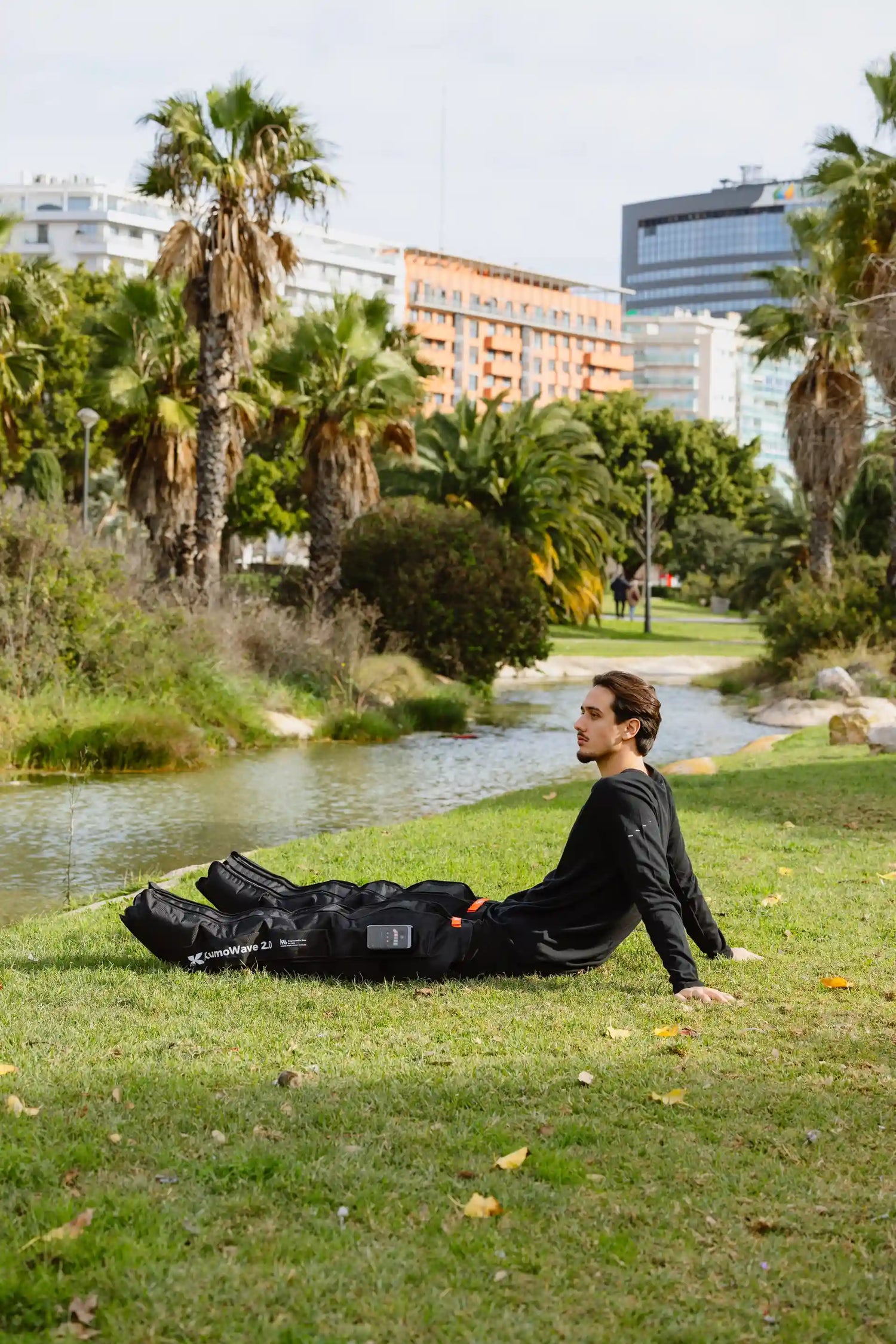
Later, if your goal is to combine compression and mobility, how to combine pressotherapy and stretching to accelerate recovery helps you bring that idea into a simple routine. The review on pressotherapy found modest benefits on pain, and massage can also reduce the perception of DOMS; both fit better as a complement than as a sole strategy.
Common mistakes that hinder recovery
- Believing that pain is synonymous with progress: DOMS can last several days and should not become your primary metric of training quality.
- Relying solely on stretching: meta-analyses do not give it a strong role in reducing DOMS or restoring strength.
- Leaving the basics for "when there's time": sleeping little, eating late, or poor hydration usually subtracts more than any tool adds.
FAQ about muscle recovery
What are the best keys for fast muscle recovery after training?
The strongest foundations are getting enough sleep, eating protein and carbohydrates thoughtfully, and hydrating well. Then you can add active recovery, massage, or compression if you find them helpful. The consensus on sleep in athletes emphasizes that there is no perfect universal number and that context matters; the ISSN, for its part, sets daily protein at 1.4-2.0 g/kg and distributions of 20-40 g every 3-4 hours. If you train twice in less than 24 hours, energy and fluid replenishment becomes even more important.
on your first order when you join the newsletter
We send you the code instantly. No spam.
What foods and supplements promote muscle recovery after exercise?
The most useful foods are those rich in complete protein and carbohydrates: eggs, Greek yogurt, milk, fish, meat, legumes, tofu, rice, potatoes, or fruit. As a supplement, whey protein or casein are practical options when you can't get enough from food. BCAAs may help somewhat in some studies, but they do not replace a complete protein, and antioxidants like vitamins C and E have not consistently been shown to reduce DOMS. If you want something simple, think real food first and use supplements only to fill gaps.
How long does the anabolic window last and how to optimize it for muscle recovery?
The anabolic window is not an exact minute-by-minute clock. Protein synthesis remains elevated for at least 24 hours after exercise, so the important thing is not to go hours and hours without eating. In practice, taking high-quality protein within 2 hours afterward and continuing to spread servings every 3-4 hours works very well. If you train again soon, add carbohydrates to speed up glycogen replenishment. In other words, "when" matters, but "how much per day" remains the basis.
What stretches or cool-down methods help reduce post-workout muscle soreness?
Gentle stretching can be good for mobility, but meta-analyses do not show a clear reduction in muscle soreness or a superior strength recovery compared to passive rest. Nor has cool-down alone been shown to significantly change DOMS. If you want to relieve sensations, early application of heat or cold can reduce pain in the first 24 hours in some trials, and very gentle movement can help loosen up. Use them for comfort and not as primary treatment.