
Acne marks can indeed be faded.
However, not all marks respond the same way: LED light primarily helps when there is inflammation, redness, and active breakouts, whereas indented scars usually require a different approach to truly improve their texture.
Facial red light
Bring your skin back to life
★★★★★ 4,8/5 · rated by verified customers
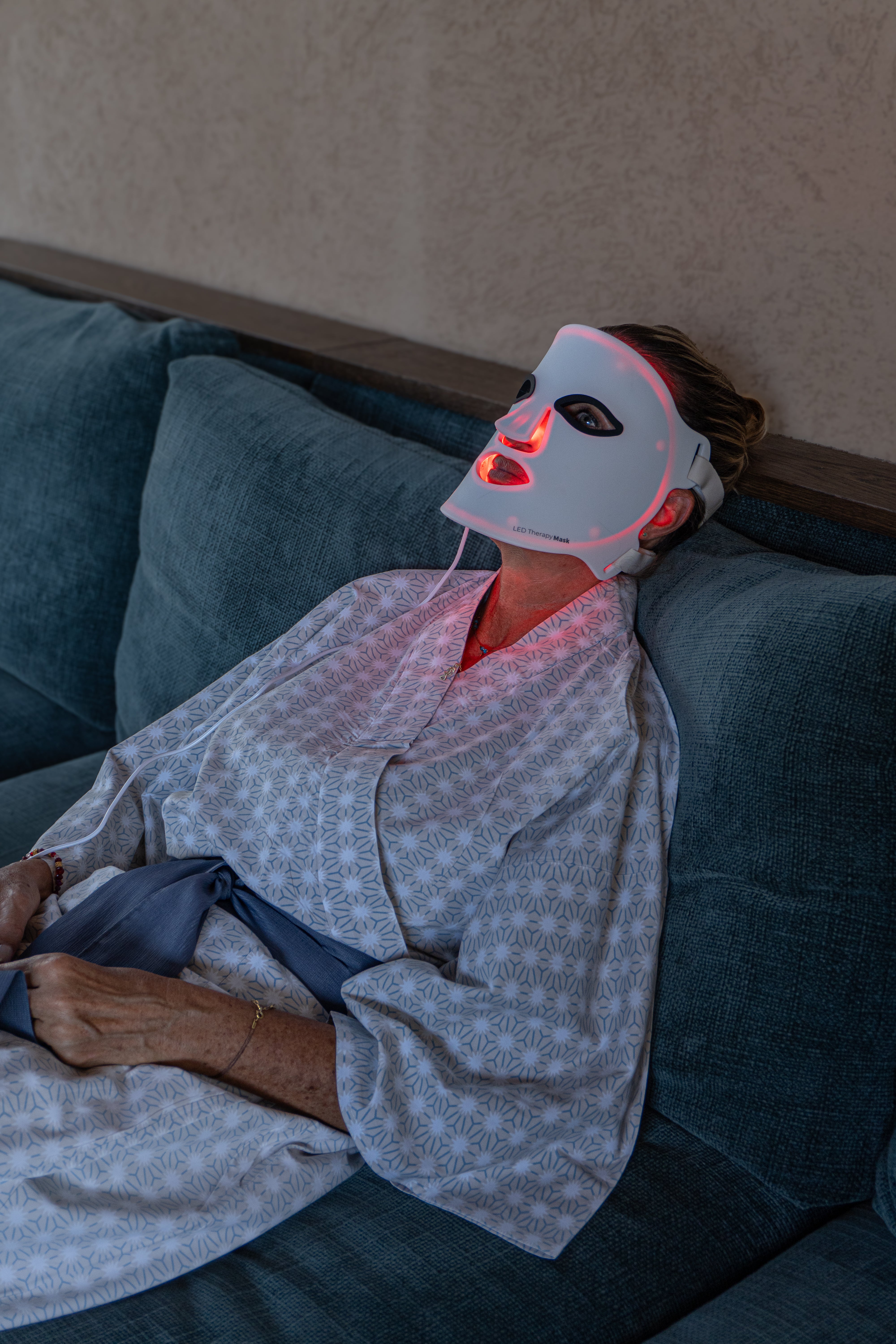
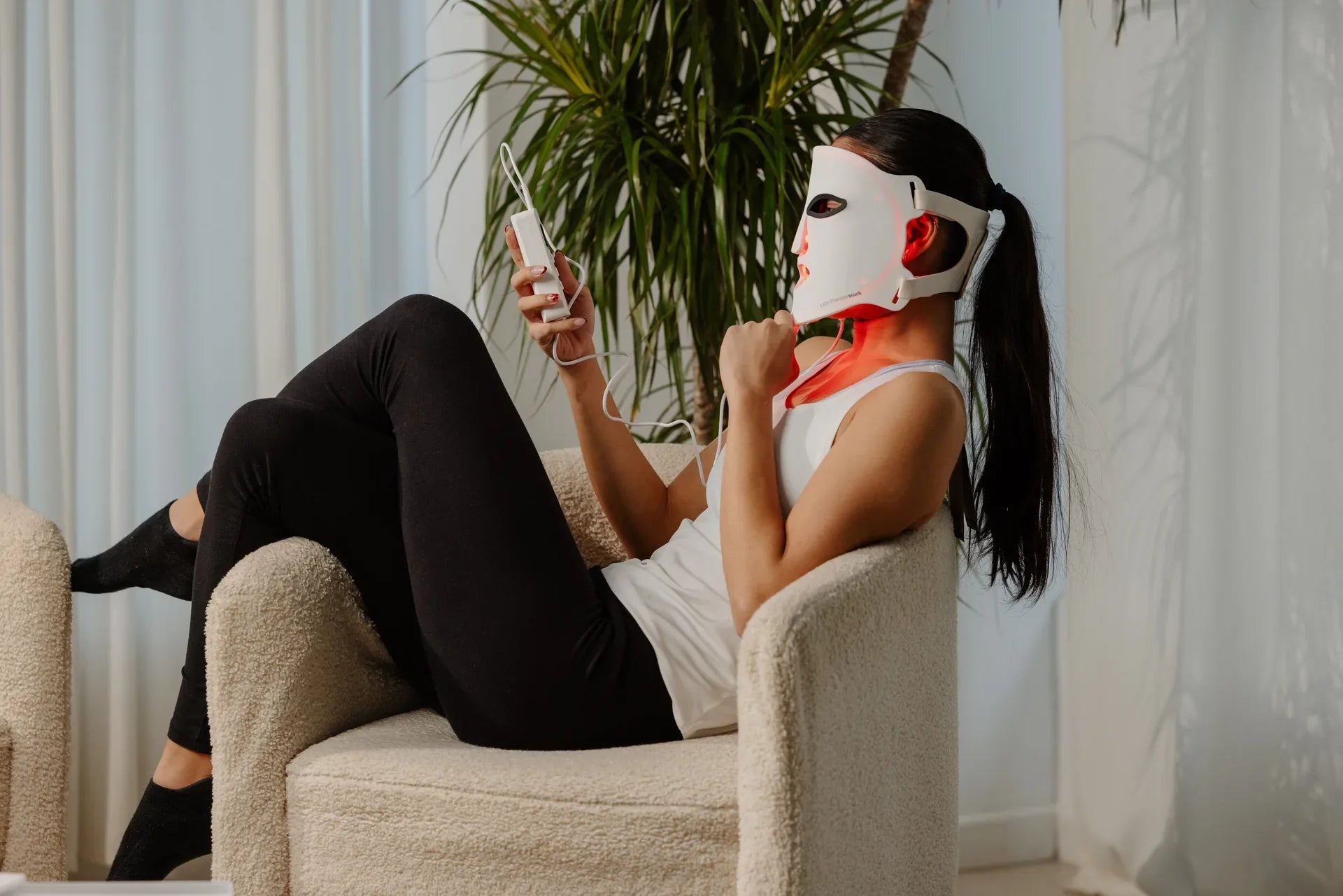
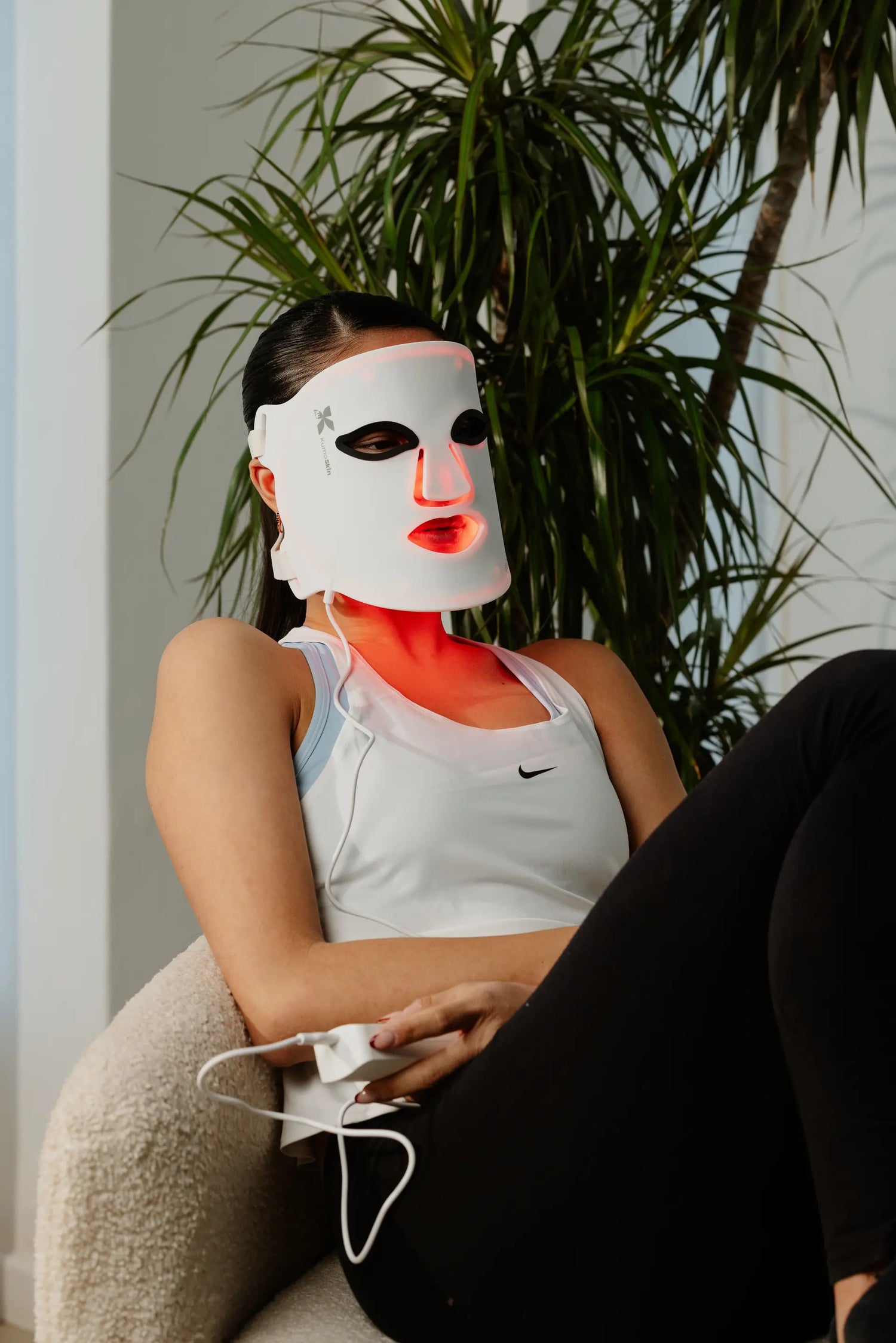
The KumoSkin LED mask helps repair and calm your skin in short sessions at home.
- 250 LEDs in flexible medical silicone
- Red light to boost collagen and glow
- 4 lights: red, infrared, blue and yellow
€299,00€429,00
−10% on your 1st order when you subscribe to the newsletter

What LED light can actually do for acne marks
Red marks, dark spots, and indented scars are not the same
Before considering an LED mask or panel, it's worth distinguishing between three scenarios. Post-acne erythema is the redness that can last for months; post-inflammatory hyperpigmentation is a flat, brown or grayish spot; and atrophic scarring is an indentation or loss of volume. This distinction completely changes what you can expect from light therapy. (pubmed.ncbi.nlm.nih.gov)
- Post-acne erythema: often appears as persistent redness after a breakout. Reviews on light and laser therapy consider it a reasonable target for energy-based treatments, as the main issues are inflammation and microvascular dilation.
- Post-inflammatory spots: these are flat marks, not scars. In this case, the priority is to reduce skin irritation and prevent the color from setting in for longer. (aad.org)
- Indented scars: occur when there is a lack of collagen or the tissue has reorganized irregularly. They usually respond better to microneedling, fractional laser, or other remodeling techniques.
Visible light primarily treats active breakouts.
Personalized protocol · included with your purchase
Want us to tell you how to use it in your case?
With your purchase, our experts prepare the ideal LED protocol for your skin type and goal (acne, wrinkles, dark spots...).
Message us on WhatsAppOur experts reply · no obligation
That's the key idea: if your goal is to "erase" an already formed pockmark, LED alone falls short. If you want to reduce inflammatory activity, calm redness, and help the skin look more even, then incorporating it as support makes sense.
How LED works: blue, red, and near-infrared
Blue light is primarily used for its relationship with Cutibacterium acnes: it activates bacterial porphyrins and promotes the production of reactive species that reduce the inflammatory load. Red light, on the other hand, is more associated with modulating inflammation and supporting tissue recovery. Some reviews also cite near-infrared as part of the photobiomodulation landscape for its role in repair and rejuvenation. (pmc.ncbi.nlm.nih.gov)
The AAD guide to lights and lasers for acne notes that visible blue, red, or combined light can help with pimples, but not with blackheads, whiteheads, cysts, or nodules. It also reminds us that home devices are less powerful than in-office ones.
on your first order when you join the newsletter
We send you the code instantly. No spam.
A 2025 systematic review and meta-analysis on home-use LEDs for acne gathered six studies and reinforces the idea that there is real clinical interest, though with heterogeneous results among devices, protocols, and skin profiles.
In other words, not all LED masks do the same thing, nor do all cases need the same wavelength. That's why it's helpful to understand the exact goal: reduce inflammation, improve tone, aid recovery, or complement other treatments. (aad.org)
What to expect depending on the type of mark
Quick summary in a table
| Type of mark | What it looks like | Real role of LED | What usually works better |
|---|---|---|---|
| Active breakouts | Pimples, redness, inflammation | Can help reduce inflammatory lesions and calm the skin. | Acne treatment adapted to the type of lesion. |
| Red post-acne marks | Persistent reddish tone | Can be a useful complement to reduce residual redness and inflammation. | In-office light or laser therapies when the case requires it. |
| Dark spots | Flat brown or gray color | Can accompany tone recovery, but results depend heavily on skin type and the cause of the mark. | Breakout control, photoprotection, and individualized follow-up. |
| Indented scars | Irregular texture or depressions | LED alone is usually insufficient to remodel this texture. | Microneedling, fractional laser, or other remodeling techniques. (pubmed.ncbi.nlm.nih.gov) |
If you want to better understand why red light often comes up in discussions about redness, repair, and skin appearance, reading about how to fade acne scars with red LED light helps to focus on the most visible marks. If you prefer to broaden the context, there's also an article on benefits and uses of red light in 2025.
How to use it at home without getting frustrated
Reasonable routine and realistic expectations
If you choose a home device, think about consistency, not quick miracles. The AAD indicates that some home visible light devices are used twice a day, for 30 to 60 minutes per session, for 4 to 5 weeks. It also emphasizes that there's no way to know in advance who will respond best.
- Start with clean, dry skin for uniform light action.
- Follow the manufacturer's exact time, distance, and frequency, as home devices are less powerful than in-office ones.
- Wear eye protection if the device recommends it; do not substitute the indicated glasses with makeshift accessories.
- Perform a cautious test if your skin is sensitive and stop use if persistent irritation, pain, or discoloration appears.
- Evaluate changes with comparable photos every two weeks to see if redness, texture, or overall radiance improves.
If you're interested in the more practical side of the format, the complete guide to home use explains how to integrate an LED routine intelligently. And if you want to see an example of a facial format designed for regular use, a medical silicone LED face mask demonstrates this approach very well.
When to consult before starting
Red light and visible light are generally well tolerated in the short term, but the AAD recommends caution if you have a condition that increases light sensitivity, if you are taking photosensitizing medication, or if your skin tone pigments easily. In darker skin tones, hyperpigmentation can be more intense and longer-lasting.
Therefore, if the primary goal is indented scars, or if acne is still very active, the best move is not to think of LED as a substitute for the rest of the plan. It can be a useful complement, but it doesn't replace a well-chosen dermatological strategy.
If you want to continue exploring the home approach, you can also review the explanation of how an LED face mask works to understand the logic behind each session.
Which treatments usually have better support for indented scars
When the mark is already an atrophic scar, recent reviews place procedures like microneedling and fractional CO2 laser among the options with the best remodeling capacity. They don't mean "immediate results," but they do work where LED has less scope: on collagen architecture and texture.
The review on post-acne erythema also reminds us that light and laser therapies can reduce residual redness and accompany the improvement of active lesions and some atrophic scars, but this does not mean that any home LED mask will have the same effect.
In practice, the best strategy is usually stepped: first control the acne that continues to leave marks, then address the color, and, if necessary, treat the texture with more powerful techniques. This order prevents chasing new scars while trying to fade old ones.
FAQ about LED light and acne marks
Can red and blue LED light at home fade acne scars and reduce their appearance long-term?
It can help improve the overall appearance of the skin, especially if there is still inflammation, redness, or active breakouts, but it doesn't usually erase an indented scar on its own. The AAD clarifies that visible light primarily targets active pimples and that home devices are less powerful than in-office ones. Therefore, long-term, it usually serves more as a complement than as a sole treatment.
Which LED wavelength is most effective for treating mild to moderate acne scars and how long does it take to see results?
There is no "magic" wavelength for true scars. For inflammatory acne, blue-red combinations, around 415 nm and 633-660 nm, are the most studied. The AAD indicates that some home devices are used for 4 to 5 weeks, and a 2025 review of home LEDs gathered six studies with variable results. If the mark is an indented scar, the response is usually slower and less complete.
Is it safe to use home LED devices to treat acne scars without irritating sensitive skin?
In general, red light appears safe in the short term, and side effects are usually mild, such as temporary irritation. Still, the AAD warns that people with darker skin tones may develop more intense and long-lasting hyperpigmentation, and that some diseases or medications make the skin more sensitive to light. If your skin reacts easily, it's worth consulting first and following the manual to the letter.
How long does an LED light treatment for acne scars typically last and how many sessions are recommended?
For acne treated with visible light at home, the AAD mentions protocols of two sessions a day, 30 to 60 minutes, for 4 to 5 weeks. For scars as such, there is no universal LED protocol because the response depends on the type of mark and the skin's condition. If the main problem is texture, in-office treatments are usually considered more than an isolated LED regimen.
Can LED completely eliminate post-acne marks or only improve their tone and texture?
The most realistic expectation is an improvement in tone, redness, and superficial texture, not a complete erasure. The AAD explains that acne scars rarely disappear completely on their own, and that a flat spot of color upon acne resolution is usually PIH rather than a scar. LED can accompany the process, but the complete elimination of an indented scar usually requires other techniques.
What now?
If you want to move forward with a clearer strategy, start by visiting the Kumo Balance website and also review the Advanced Home LED Therapy or the KumoSkin Mask to see which format best suits your routine and the type of mark you want to fade. If your case involves red marks or residual redness, reading about acne scars and red light might be the next logical step.

Facial red light
KumoSkin Mask – LED Facial Mask
★★★★★ 4,8/5 · rated by verified customers
- 250 LEDs in flexible medical silicone
- Red light to boost collagen and glow
- 4 lights: red, infrared, blue and yellow
€299,00€429,00· pay in installments with seQura or Klarna