

Acne scars can be faded. (pubmed.ncbi.nlm.nih.gov)
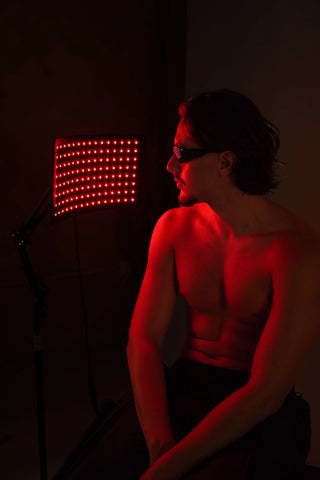
Red LED light doesn't erase them on its own, but it can help calm inflammation, promote skin repair, and soften the appearance of some recent marks when used as support within a well-chosen plan. The key is to understand what type of lesion you have: a recent red mark is not the same as a deep pit or an old, stable scar.
Facial red light
Bring your skin back to life
★★★★★ 4,8/5 · rated by verified customers
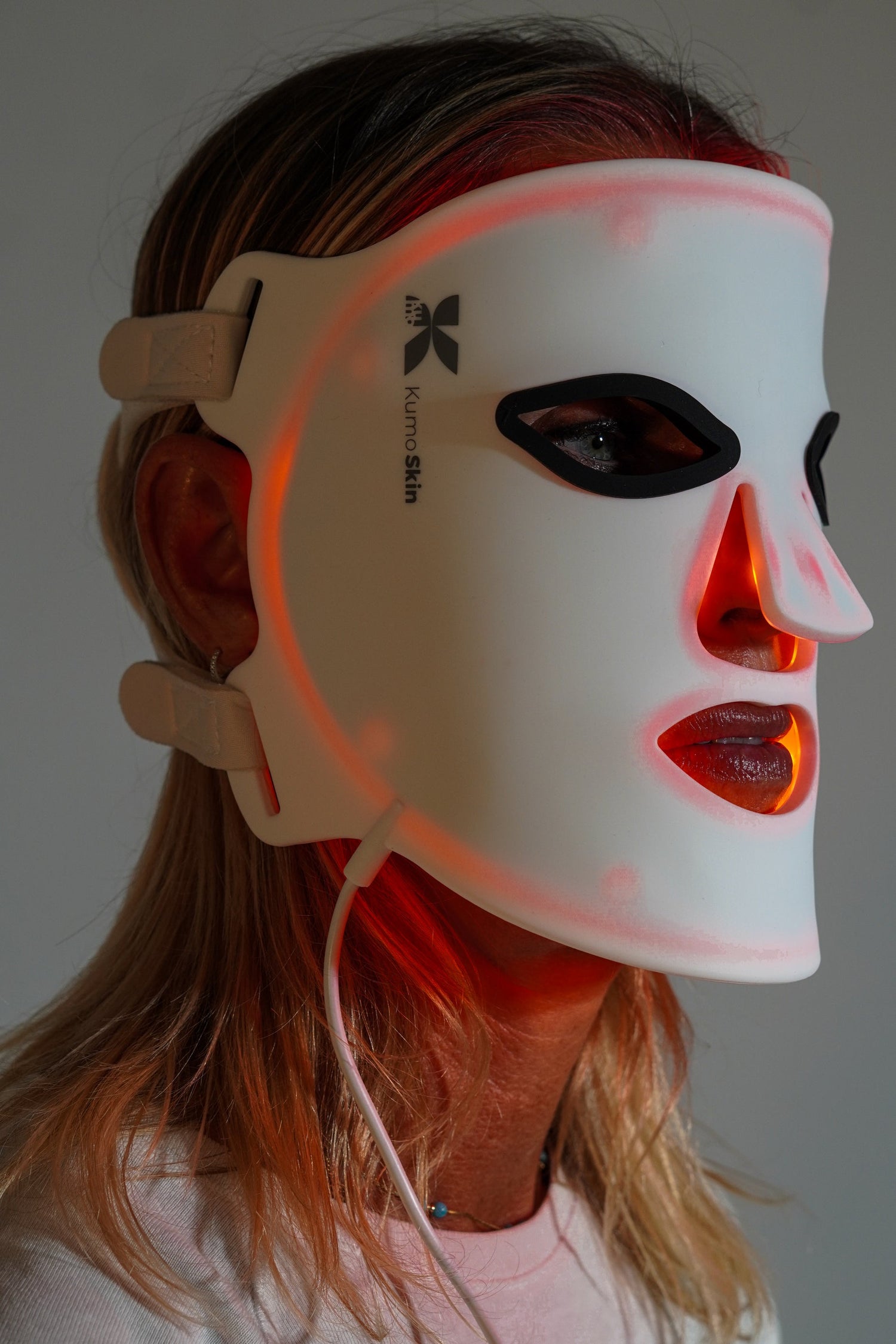
The KumoSkin LED mask helps repair and calm your skin in short sessions at home.
- 250 LEDs in flexible medical silicone
- Red light to boost collagen and glow
- 4 lights: red, infrared, blue and yellow
€299,00€429,00
−10% on your 1st order when you subscribe to the newsletter

What red LED light can do for acne scars
The AAD guide on red light presents it as a non-invasive and complementary therapy; it also notes that data is still lacking to establish the ideal dose and optimal duration for many dermatological uses.
If your main concern is marks left by breakouts, you can broaden your understanding with red light therapy for acne and scars, because the treatment logic changes significantly when acne is still active.
Personalized protocol · included with your purchase
Want us to tell you how to use it in your case?
With your purchase, our experts prepare the ideal LED protocol for your skin type and goal (acne, wrinkles, dark spots...).
Message us on WhatsAppOur experts reply · no obligation
Which type of lesion may respond best
| Type of lesion | What red LED light can do | What usually works better |
|---|---|---|
| Recent red marks | This is the scenario where red LED light may make the most sense as support, because the plausible improvement lies in inflammation and residual redness. | It can be useful if the lesion is still “active” and reactive. (pubmed.ncbi.nlm.nih.gov) |
| Atrophic or pitted scars | Red light can accompany treatment, but rarely remodels the skin's texture on its own. | Microneedling, fractional lasers, and radiofrequency often offer more change. |
| Post-inflammatory brown spots | This is not its main objective, and on darker skin, visible light can promote hyperpigmentation. | Photoprotection and depigmenting active ingredients usually have a greater impact on the result. |
| Hypertrophic or keloid scars | It is not usually the first option. | Dermatological evaluation is recommended to choose a specific strategy. |
The updated AAD guidelines on acne reinforce an important idea: the evidence was insufficient to formally recommend light and laser devices in acne management, so red LED should be understood as a complementary tool.
How it works on the skin
In photobiomodulation, red or near-infrared light interacts with cells and can influence cytochrome c oxidase, nitric oxide, and mitochondrial energy production. Reviews on the topic also describe less inflammation, increased fibroblast proliferation, angiogenesis, and greater collagen synthesis in tissue repair models. The mechanistic review on photobiomodulation summarizes this biological framework well.
The most prudent inference is that red light can help damaged skin reorganize better, but it does not replace treatments that "reconstruct" a pitted scar. This difference is key to avoiding unrealistic expectations.
on your first order when you join the newsletter
We send you the code instantly. No spam.
If you want to understand the device more calmly, the basis is in our guide on what red light therapy is and how it works.
How to use a red LED mask or device at home
The AAD recommends checking if the treatment suits your skin, following the device instructions, and wearing eye protection when required by the manufacturer. It also warns that visible light can cause more intense and lasting hyperpigmentation in darker skin, and that therapy may not be suitable if you take photosensitizing drugs or live with a light-sensitive condition, such as lupus.
- Use a device designed for your goal and, if available, verify that it is listed as FDA cleared.
- Follow the manufacturer's time and frequency, as the optimal dose is not established for all cases.
- If the manual calls for protective eyewear, always use it and do not substitute it with sunglasses.
- Discontinue use if you notice persistent irritation, darkening of spots, or worsening light sensitivity.
As an example of research—not as a universal protocol for acne—one trial on post-surgical scars applied red LED three times a week for 3 weeks, and another home photobiomodulation study on thyroid scars showed better satisfaction and improved scar scales at 6 months after 4 weeks of use. (pubmed.ncbi.nlm.nih.gov)
What results can you expect
- In the short term, the most realistic expectation is less redness, somewhat calmer skin, and a more comfortable sensation of recovery.
- In the medium term, if red light is part of a plan that reduces active breakouts, fewer new marks may appear.
- In the long term, superficial or recent marks may appear softer, but pitted scars usually require specific procedures.
In practice, red light is more useful for “improving the terrain” than for erasing an already established texture. If the scar is pitted, the quality leap usually comes from tissue remodeling treatments.
When red light is not enough
If the scar is pitted, ice pick, or has an irregular texture, systematic reviews indicate more benefit from microneedling, fractional lasers, and radiofrequency than from isolated light therapy. The FDA and microneedling devices cleared for facial acne scars are a good example that there are options more specifically targeted at skin texture.
Therefore, a good strategy is often to combine treatments: first control active acne and inflammation, and then evaluate texture procedures once new breakouts are no longer appearing.
Frequently asked questions
Does red light therapy for acne really fade scars and for what type of scars is it most effective?
Yes, but mainly for recent marks, post-inflammatory redness, and still reactive skin. For deep atrophic scars, improvement is usually limited because red light does not "fill in" the tissue. Its main value lies in reducing inflammation and aiding recovery. When the problem is texture, reviews continue to give more weight to microneedling, fractional laser, and radiofrequency.
How should a red LED light mask or device be used to fade acne scars without damaging the skin?
The golden rule is simple: use only devices designed for that purpose, follow the time indicated by the manufacturer, and do not improvise longer sessions "to speed up" results. The AAD emphasizes eye protection when the manual requires it and consulting beforehand if there is light sensitivity, use of photosensitizing drugs, or skin types highly prone to hyperpigmentation. If something irritates or darkens the skin, discontinue use.
What are the expected short-term and long-term results when combining red light with treatments for acne scars?
In the short term, the most common is to notice less redness and calmer skin. In the long term, the combination can be useful for keeping acne more controlled and preventing new marks, while texture-targeted procedures work on existing scars. In scar studies, photobiomodulation has been used for several weeks and has shown signs of improvement, but there is no universal protocol for all patients.
Is it safe to use red LED light at home for acne scars and what precautions should be taken?
In general, the AAD considers home LED devices safe in the short term, with usually mild side effects such as temporary irritation. However, long-term effects are not well understood, and caution is advised if you have sensitive skin, lupus, spots that darken easily, or if you take photosensitizing medication. Safety is greatly improved when an appropriate device is used and instructions are followed.
How many red LED light sessions are recommended to see visible improvements in acne scars and how long does it take?
There is no universal number. The AAD notes that data is still lacking to define optimal dose and duration, and studies use different schedules depending on the objective and device. As a reference, one study on post-surgical scars applied sessions three times a week for 3 weeks, while other home protocols extend for several weeks. In practice, improvements are usually gradual and require consistency.
What's next?
If you want to delve deeper, start with the guide to key benefits and uses of red light therapy, review the basic explanation of how it works, and return to the Kumo Balance homepage to explore the rest of the content.

Facial red light
KumoSkin Mask – LED Facial Mask
★★★★★ 4,8/5 · rated by verified customers
- 250 LEDs in flexible medical silicone
- Red light to boost collagen and glow
- 4 lights: red, infrared, blue and yellow
€299,00€429,00· pay in installments with seQura or Klarna