
Hydration shapes your recovery.
If you train already dehydrated, you perform worse, you tolerate heat less well and the next day you may feel more fatigue than DOMS. The good news is that you do not need to drink blindly: you just have to match your fluid to your sweat, your weight and the length of the effort.
Red & infrared light
Recover faster, at home
★★★★★ 4,8/5 · rated by verified customers
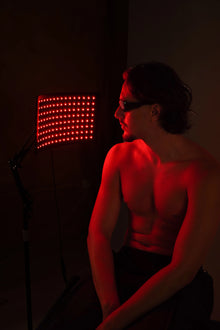
The KumoLux panel supports muscle recovery with full-body red and infrared light.
- 660 nm red + 850 nm infrared light
- Full-body muscle recovery
- Clinically validated biohacking protocols
€399,00€499,00
−10% on your 1st order when you subscribe to the newsletter

What hydrating for real recovery actually means
Hydration does not only replace water. It also helps maintain plasma volume, thermoregulation and nutrient transport, three pieces that shape how you feel during and after training. Post-workout recovery is part of a wider system that includes sleep, food and a fluid strategy, as a recent review on nutritional recovery sums up.
If you want to go deeper into the practical side of that approach, you can connect it with a read on recovering better after sport, because hydration only works well when it fits with the rest of the plan.
Personalized protocol · included with your purchase
Want us to tell you how to use it in your case?
With your purchase, our experts set up your red and infrared light sessions for your sport and goal.
Message us on WhatsAppOur experts reply · no obligation
- Losing more than 2% of body weight can reduce aerobic performance and cognitive performance in a hot environment.
- Dehydration also raises cardiovascular strain and heat load, which shows up more the hotter it gets.
- In intense or prolonged efforts, the feeling of fatigue arrives sooner if you do not replace fluid and sodium sensibly.
How much water you really need
For a healthy adult, the general daily reference is about 2.7 liters of total water for women and 3.7 liters for men, counting drinks and food. In everyday life, thirst can work as a reasonable guide, but not as your only strategy if you train hard or in the heat.
The National Academies report on water, salt and potassium makes that general framework clear, but in athletes the need changes a lot depending on sweat, environment and duration.
That is why, if your goal is to train with less fatigue and more consistency, the energy expenditure and recovery side matters too, as we explain in this guide to training with more energy. (nationalacademies.org)
on your first order when you join the newsletter
We send you the code instantly. No spam.
In active people, fluid turnover can climb easily. The National Academies document itself notes that, with more intense activity of over 60 minutes a day and in a temperate climate, men may need around 3.0 to 4.5 liters of total water per day.
How to calculate your real need
The most useful way to stop guessing is to measure. Weigh yourself before and after training, preferably with as little clothing as possible and after using the bathroom. Each kilo lost is roughly equivalent to one liter of sweat or net fluid lost.
- Weigh yourself before the session and again when you finish. A difference of 0.8 kg equals about 800 ml of fluid lost.
- Rehydrate with 1.25 to 1.5 liters per kilo lost if you want to recover with a margin, not just get back to the starting point.
- Watch your urine and your morning weight over several days, because a single isolated measurement can mislead you.
The core idea is simple: if you lose 1 kg during training, replacing exactly 1 liter of water is not enough. The sensible move is to drink a bit more and add sodium when sweat loss has been high, because part of what you take in leaves again through urine.
If you want to tie this metric to a wider view of health, rest and sporting consistency, this guide to muscle health and resilience may interest you.
What to drink before, during and after training
Before training
As a simple reference, take around 500 ml about 2 hours before you start, or 5 to 7 ml per kilo of body weight about 4 hours before. The idea is to arrive hydrated, but with enough time to pass the excess and not start off heavy.
The ACSM position stand on exercise and fluid replacement sums up this guideline well, and also reminds you that the plan has to be adjusted if your sweat rate is high or you train in the heat.
During training
During the effort, it helps to start drinking early and regularly, trying to replace what you sweat or, at the very least, everything you can tolerate without stomach discomfort. For long marathon-type efforts, ACSM mentions approximate ranges of 0.4 to 0.8 liters per hour, although the real figure has to be adapted to your size, your pace and the ambient heat.
In sessions of up to 60 minutes, once you start well hydrated, water is often enough. The German sports nutrition society notes that, in endurance efforts of up to 60 minutes, intake during exercise may not be necessary, while over longer durations a drink with carbohydrates and electrolytes starts to make sense.
The DGE guidelines on fluid replacement in sport help put a limit on the idea that you always need a special drink.
Drinking too much does not help either, because an excess of water, especially in long efforts, raises the risk of hyponatremia. That is why the smart strategy is not the largest possible amount, but the amount that genuinely matches your sweat rate.
After training
If you finished with weight loss, replace between 1.25 and 1.5 liters per kilo lost, ideally spread out over time and paired with sodium in your meal or drink when sweat loss has been high. This detail improves water retention and lowers the risk of falling short again a few hours later.
When dehydration is severe, when there is vomiting or diarrhea, or when the person cannot drink, ACSM considers the intravenous route only in a medical setting. If you also notice marked weakness or a feeling of faintness, stop the session and seek care.
If it helps you to think of recovery as a simple, repeatable protocol, you can read an at home recovery routine and align hydration, sleep and rest with the same logic.
Quick summary by session
| Situation | What to do | Quick reference |
|---|---|---|
| Everyday life | Use thirst as a guide and remember the total includes food and drinks. | 2.7 L for women and 3.7 L for men as a general reference. |
| Short session | Water is usually enough if you start well hydrated. | Up to 60 min may not require intake during exercise. |
| Long session or heat | Water plus sodium, and carbohydrates if the session runs very long. | ACSM and NATA recommend individualizing by sweat loss and duration. |
| After sweating heavily | Replace the fluid lost with a margin and add sodium. | 1.25 to 1.5 L per kilo lost. |
Do you need a sports drink?
Not for everyone. If your session lasts under 60 minutes and you start well hydrated, water is usually enough. When the effort runs long, when it is hot or when you lose a lot of sweat, a drink with sodium and carbohydrates can help you drink more, hold fluid better and sustain performance.
The composition of the fluid matters, and a recent review on post-workout recovery insists that hydration strategies include electrolyte solutions and, in some contexts, milk-based drinks. The narrative review on nutrition and recovery after exercise sums it up well.
If a long session leaves you very empty, a systematic review on rehydration drinks concluded that skim or low-fat milk can improve some hydration markers compared with water after exercise-induced dehydration, although digestive tolerance and individual preferences always have to be considered. The review on alternatives to carbohydrate electrolyte drinks points in the same direction.
To organize all of that into a habit that is easy to repeat, you can also lean on a weekly recovery protocol.
Signs that you are falling short
- Very dark urine or very little of it over the course of the day. (pmc.ncbi.nlm.nih.gov)
- Dizziness, weakness or a feeling of faintness, especially in the heat. (cdc.gov)
- Muscle cramps that show up earlier than usual or alongside unusual fatigue.
- Visible weight loss at the end of the session, above all if you repeat workouts on the same day.
If you notice these signs, stop, find a cool place and do not keep pushing. The CDC recommends immediate medical care if there are symptoms of heat illness, and its guidance insists on drinking more water than usual when it is hot, without waiting until you feel thirsty.
If you are pregnant, have a cardiovascular condition, a chronic illness or a medical fluid restriction, do not copy a standard guideline without validating it with a professional.
FAQ on hydration and muscle recovery
How much water should you drink to recover after a weight training session?
The useful reference is not a fixed number, but what you have lost. If you finish 1 kg below your previous weight, think of around 1.25 to 1.5 liters of replacement spread out after the session, above all if you sweated a lot. In a short, cool session, less may be enough; in the heat or with two workouts a day, you will need more. The key is not to stop at the first glass.
Does hydration affect muscle recovery after effort, and how do you measure it?
Yes, because dehydration alters blood volume, raises heat load and makes it harder to sustain quality work in the next session. The most practical way to measure it is to weigh yourself before and after, watch the color of your urine and notice how you turn up the next day. If your weight drops repeatedly and your urine is very dark, you probably need more fluid and better spacing across the day.
How much water should you take before, during and after training to avoid dehydration?
As a starting point, take about 500 ml roughly 2 hours before or 5 to 7 ml per kilo roughly 4 hours before. During the session, drink regularly and steer the amount by your sweat rate, with references of 0.4 to 0.8 liters per hour only as an approximate frame for long efforts. Afterwards, replace 1.25 to 1.5 liters per kilo lost and pair it with sodium if you sweat heavily.
Are sports drinks necessary to recover after muscle training, and why?
They are not mandatory in most sessions under 60 minutes. Their role appears when the effort runs long, when it is hot or when you lose a lot of sweat, because they provide sodium and sometimes carbohydrates, which can improve fluid retention and exercise tolerance. Even so, water is still a valid option in many cases, and the choice depends on duration, heat and how much you sweat.
How does hydration affect performance and muscle growth in beginners?
In people who are starting out, correct hydration usually shows up in the quality of the session before it shows up on the scale. Arriving well hydrated helps you hold reps, tolerate heat better and recover so you can train again with less fatigue. It does not build muscle on its own, because growth depends on load, rest, total energy and protein, but it does stop you losing quality in the work that actually drives adaptation.
So what now?
If you want to turn all of this into a habit, start with a single metric, your weight before and after, and a single rule, never turn up to train already dry. Then adjust the rest of your routine with rest, food and consistency. If you feel like carrying on with that process, you can look at how to set up a recovery zone at home and go back to the Kumo Balance homepage to explore more content on wellbeing and recovery. If you have a medical condition, are pregnant or notice warning symptoms, prioritize an assessment from a health professional before changing your hydration.
To go further: Red light therapy and muscle recovery, Red light therapy for muscle recovery and Pressotherapy at home and muscle recovery 2025.

Red & infrared light
KumoLux Panel – Red and Infrared LED Panel
★★★★★ 4,8/5 · rated by verified customers
- 660 nm red + 850 nm infrared light
- Full-body muscle recovery
- Clinically validated biohacking protocols
€399,00€499,00· pay in installments with seQura or Klarna