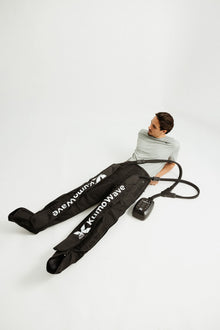
Red light therapy is changing the way muscles recover.
If you train frequently or suffer from muscle discomfort, this guide clearly explains how it can help you, what the science says, and how to safely integrate it into your recovery routine.
Photobiomodulation , or LED light therapy in the red and near-infrared ranges, is used to reduce delayed onset muscle soreness (DOMS), accelerate functional recovery, and improve performance between sessions. Clinical and home devices are now available to facilitate daily use, such as those found in KUMO's LED light therapy collection .
Red & infrared light
Recover faster, at home
★★★★★ 4,8/5 · rated by verified customers
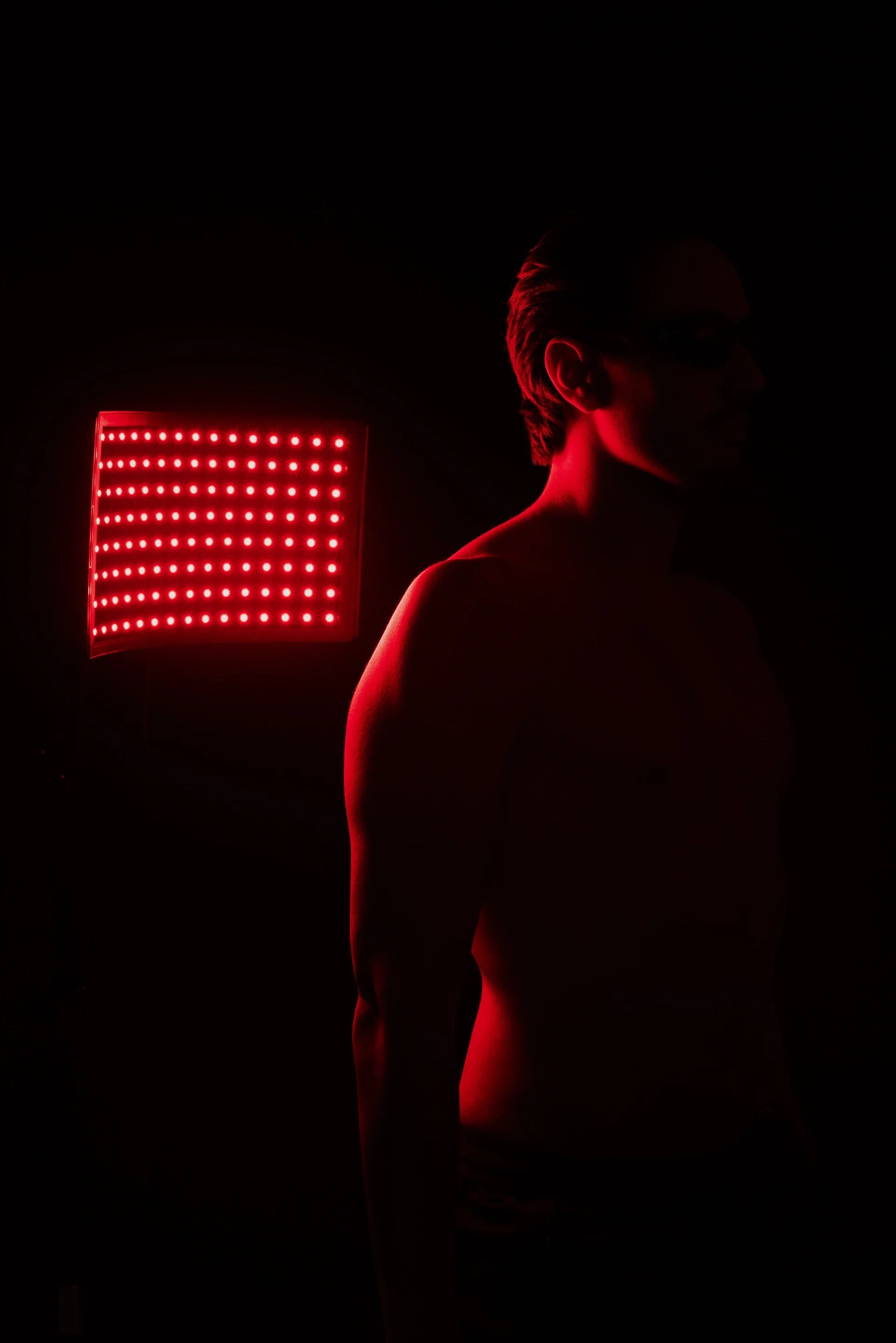
The KumoLux panel supports muscle recovery with full-body red and infrared light.
- 660 nm red + 850 nm infrared light
- Full-body muscle recovery
- Clinically validated biohacking protocols
€399,00€499,00
−10% on your 1st order when you subscribe to the newsletter

What exactly is red light therapy?
Red light therapy uses specific wavelengths of visible (red) light and often near-infrared (NIR) light to stimulate biological processes without heating or damaging tissues. It is not UV radiation, does not tan the skin, and is not ionizing.
In scientific literature it is also known as:
Personalized protocol · included with your purchase
Want us to tell you how to use it in your case?
With your purchase, our experts set up your red and infrared light sessions for your sport and goal.
Message us on WhatsAppOur experts reply · no obligation
- Photobiomodulation (PBM)
- Low-Level Light Therapy (LLLT)
- Low-intensity laser or LED therapy
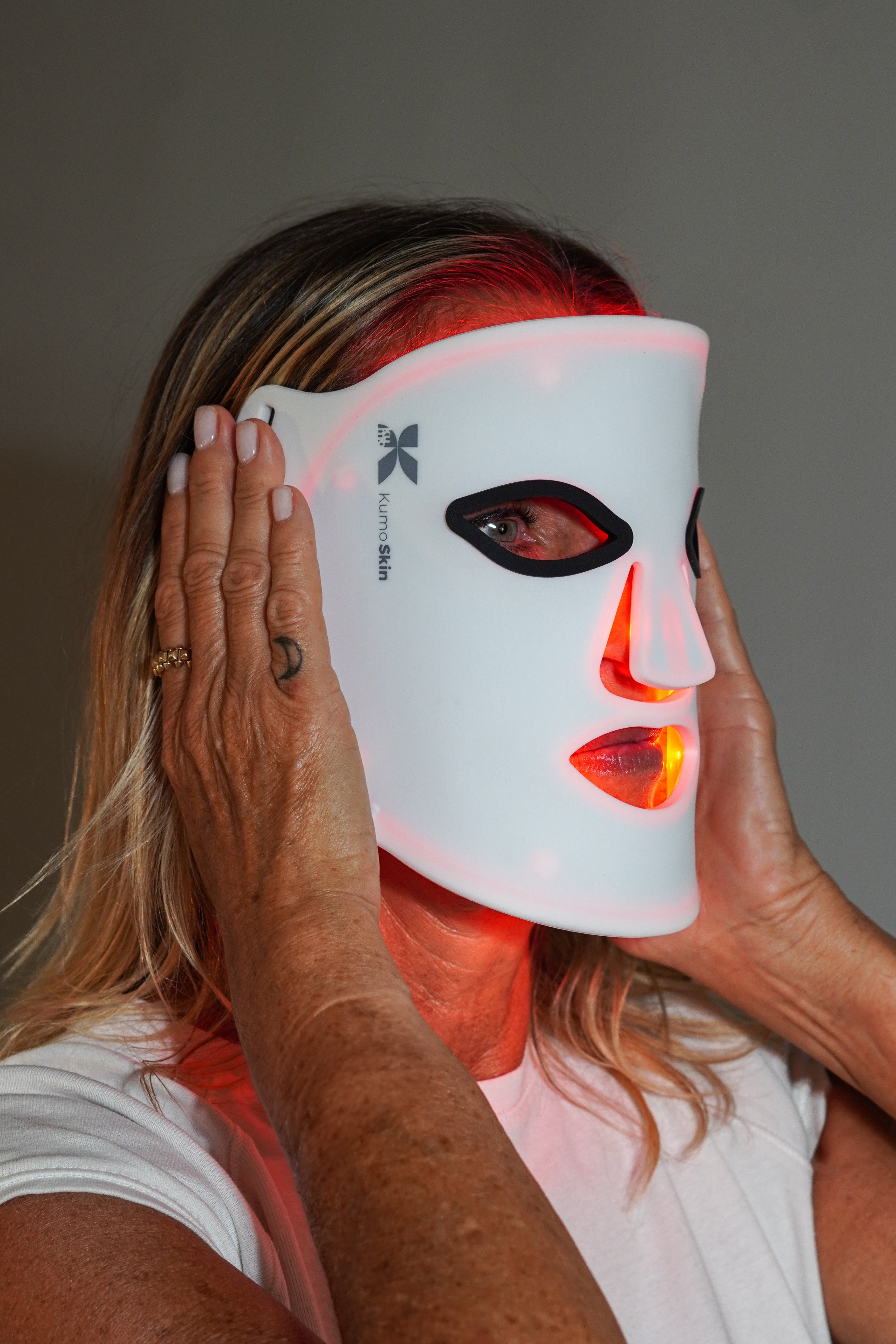
The devices can be panels, light banks, flexible pads, or smaller, localized equipment. In the context of muscle recovery, they are applied to the muscle group that has been worked (quadriceps, hamstrings, back, shoulders, etc.).
Red light vs near-infrared: depth of action
A key idea for understanding its effect on the muscle is the depth of penetration:
-
Red light (approx. 630–660 nm)
It primarily reaches superficial layers: skin and subcutaneous tissue. It is widely used for skin regeneration and wound healing. -
Near-infrared light (approx. 800–900+ nm)
It penetrates more deeply, reaching muscles, tendons, and joints . That's why it's the most studied for sports recovery and pain relief. ( sciencearray.com )
Many devices combine both (red + NIR) to act at different tissue levels in a complementary way.
on your first order when you join the newsletter
We send you the code instantly. No spam.
How does red light therapy help muscle recovery?
Proposed physiological mechanisms
Although the research is still in development, there are several plausible mechanisms supported by studies:
-
Increased cellular energy (ATP)
Red and near-infrared (NIR) light interact with mitochondrial enzymes, such as cytochrome c oxidase, promoting ATP production. More cellular energy can translate into more efficient repair and regeneration . -
Improved microcirculation
Slight vasodilation and improvement of local blood flow have been observed, which facilitates the supply of oxygen and nutrients, and the elimination of metabolites associated with fatigue. -
Modulation of inflammation
Several studies indicate a reduction in inflammatory markers and muscle damage, such as creatine kinase, following low-intensity light protocols. ( pubmed.ncbi.nlm.nih.gov ) -
Analgesic effect
PBM can influence pain transmission and the release of mediators, helping to reduce the perception of discomfort after intense exercise.
These combined effects explain why red light therapy is being explored for both delayed onset muscle soreness and minor sports injuries.
What does science say about muscle pain and damage?
In recent years, systematic reviews and meta-analyses have been published that help to provide a broader perspective:
- A 2025 systematic review and meta-analysis on photomodulation in DOMS analyzed 14 controlled studies.
With wavelengths between 660 and 950 nm , he found: - Moderate reduction in pain at 72 and 96 hours after exercise
-
Significant improvement in muscle strength at 24 and 48 hours
The authors conclude that the therapy can be an effective tool for managing muscle soreness and regaining strength, although they emphasize the variability in dosage and protocols. ( mdpi.com ) - A 2022 meta-analysis in Sports Health reviewed 24 trials in athletes and found that applying low-intensity laser/light therapy before exercise improved lower limb strength at 24- to 96-hour follow-ups and was associated with less pain and lower creatine kinase levels . ( pubmed.ncbi.nlm.nih.gov )
At the same time, there are individual studies with null results, especially when:
- Poorly optimized parameters are used (dose, time, frequency)
- The sample is small or poorly trained
- Areas that have not been worked on are being irradiated.
For example, a trial in untrained young women found no improvements in performance or DOMS after an acute 808 nm laser protocol applied to the biceps. ( pubmed.ncbi.nlm.nih.gov )
Practical conclusion: the evidence in 2025 is generally promising, but heterogeneous. Red light therapy may aid muscle recovery, especially when:
- Appropriate parameters are used
- The specific muscle that has worked is irradiated.
- It is integrated into a comprehensive recovery strategy (sleep, nutrition, mobility, etc.)
Potential benefits for athletes and active people
Reduction of muscle soreness and post-workout discomfort
Muscle soreness (DOMS) typically appears between 24 and 72 hours after unusual exertion. The cited studies show that photobiomodulation:
- It significantly reduces pain scores on visual scales compared to placebo, especially between 48 and 96 hours. ( mdpi.com )
- It can reduce stiffness and the feeling of muscle "load" during periods of increased inflammation.
It's not an "instant pain reliever," but it is a tool to make muscle soreness more bearable and help it resolve faster .
Functional recovery between sessions
Beyond the pain, what matters is what happens to performance:
- In athletes, red light applied before exertion has been associated with:
- Highest number of repetitions until failure
- Less force decline in repeated sessions
- Faster recovery of isometric and explosive strength ( pubmed.ncbi.nlm.nih.gov )
For those who train several times a week, this translates into being able to maintain the quality of the sessions and limit the accumulation of fatigue.
Support during intense routines and prevention of overload
Red light therapy is not a substitute for rest or smart scheduling, but it can help with:
- To better tolerate high volume or intensity blocks
- Reduce the need for occasional painkillers
- To allow highly used muscles (such as quadriceps, glutes, lower back) to recover in time for the next session
As part of a broader recovery culture — which is KUMO 's focus — red light therapy is added to tools such as pressotherapy, percussion massage, and mobility work.
How to use red light therapy for muscle recovery
Important: Always follow the specific instructions for your device and, if you have any medical concerns, consult a healthcare professional. The following are general guidelines.
Where and how to apply the light
-
Identify the key muscle group
For example: - Legs: quadriceps, hamstrings, calves - Upper body: chest, deltoids, upper back - Lumbar region: spinal erectors -
Place the device at the distance recommended by the manufacturer.
They are usually between 10 and 30 cm for LED panels, or in light contact for flexible pads. -
It radiates the area directly
The light works best when it hits the fabric perpendicular to the surface. Avoid wearing thick clothing between the device and your skin. -
Respect timing and frequency
Most studies use sessions of just a few minutes per muscle group, with carefully calculated doses; more is not always better. ( mdpi.com )
Before or after training?
Both options make sense, with nuances:
- Before training
- It can improve acute performance and reduce subsequent muscle damage in athletes.
- It is usually applied 15–60 minutes before exercise.
- After training
- It focuses on alleviating pain and accelerating repair .
- Usual within 2 hours after and/or in the following days of DOMS.
If you are a beginner, it is reasonable to start with post-workout use, which is easier to integrate, and then adjust according to how you feel and professional advice.
Table: Examples of indicative use of red light in muscle recovery
| Main objective | Application area | Recommended moment | Approximate duration* |
|---|---|---|---|
| Reduce leg muscle soreness | Quadriceps and hamstrings | 1–2 hours post-workout and day +1 | 5–15 min per zone |
| Regain strength in upper body | Chest, shoulders, upper back | Pre-workout (15–45 min before) | 5–10 min per zone |
| Lower back relief | Lumbar region | Day of rest or light | 10–15 min |
| Prepare high-volume sessions | Key muscle group of the day | Before the session | 5–10 min |
| Support in endurance sports | Main groups used (legs) | Post-workout and loading days | 5–15 min per zone |
*Time ranges are approximate and depend on the power, area, and design of the device . Always follow the manufacturer's recommendations or those of your healthcare professional.
Integrate red light into a 360º recovery routine
Red light therapy yields better results when combined with other proven strategies:
-
Sufficient and quality sleep
It is the cornerstone of muscle and hormonal regeneration. -
Proper nutrition
Sufficient supply of protein, carbohydrates and micronutrients to repair tissue. -
Mobility and gentle stretching
They promote blood flow and functional recovery. - Pressotherapy and percussion massage
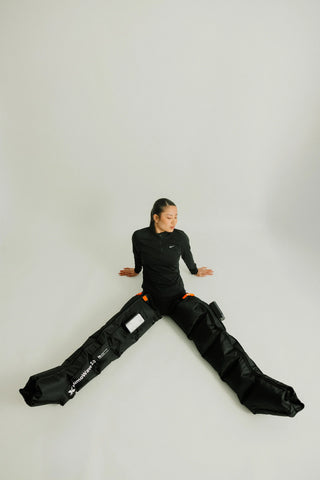
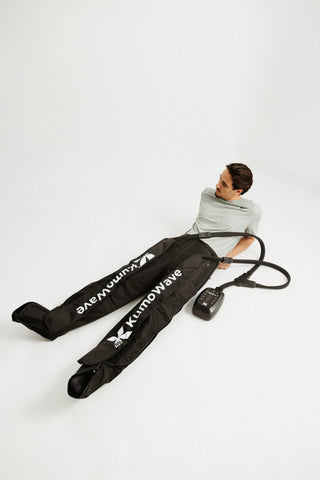
- Pressotherapy boots help drain fluids and improve circulation in tired legs.
- A massage gun allows you to work on specific tension points after training.
-
Smart planning
Alternate intensities, include recovery days, and listen to your body's fatigue signals.
In KUMO's philosophy, the red light is one more piece of an ecosystem of recovery technologies that seek to make body care a daily habit, not just a reaction to injury.
Safety, contraindications and good practices
Is red light therapy safe?
Dermatological organizations indicate that low-intensity red light is generally safe in the short term , does not use UV radiation, and has not been linked to skin cancer. ( aad.org )
Nevertheless:
- Mild redness, irritation, or a temporary feeling of warmth may occur.
- The light is very bright; in applications close to the face , adequate eye protection is usually recommended.
- Excessive use or use with very powerful devices, without following instructions, can increase the risk of irritation.
Who should take special precautions?
It is advisable to consult a healthcare professional before using red light therapy if:
- You have photosensitivity disorders (for example, lupus) or you take photosensitizing medication.
- You are pregnant (solid evidence is lacking in certain areas and stages).
- Have you had skin cancer or suspicious skin lesions?
- You suffer from epilepsy sensitive to flashing lights.
- You have significant eye diseases.
The American Academy of Dermatology, for example, recommends assessing these factors and strictly following the device's instructions for use. ( aad.org )
Frequently asked questions about red light therapy and muscle recovery
How long does it take to notice the effect of red light therapy on the muscles?
It depends on your activity level, the protocol, and consistency. In clinical studies on DOMS, changes in pain and strength are typically observed between 24 and 96 hours after exercise when using red or infrared light compared to a placebo. ( mdpi.com )
In practice, many people first notice a decrease in the feeling of muscle soreness and an increased ease in resuming training. Like any recovery tool, its effect is cumulative: using it regularly for weeks is usually more effective than very sporadic, isolated sessions.
Is it better to use red light therapy before or after training?
Both options are scientifically supported, but with different nuances. Applying it before exercise can improve acute performance and reduce muscle damage in athletes, while using it afterward focuses on reducing muscle soreness and supporting repair. ( pubmed.ncbi.nlm.nih.gov )
If you're just starting out, it's usually easier to incorporate it right after training or when you get home, applying it to the muscle group you worked. Over time, you could experiment with pre-workout applications on high-intensity days, always paying attention to how you feel and coordinating with your trainer or physiotherapist.
Is red light therapy effective for all types of muscle pain?
No. The evidence is stronger for delayed onset muscle soreness (DOMS) after intense or novel exercise, and for certain situations of muscle fatigue in athletes. ( mdpi.com )
Chronic muscle pain, radiating pain, or pain associated with joint, nerve, or systemic problems can have very different causes (herniated disc, neuropathies, rheumatic diseases, etc.). In these cases, red light therapy can be a complement, but it does not replace a medical evaluation or specific treatment . If the pain is intense, radiates, worsens over time, or is accompanied by other symptoms, it is essential to consult a professional.
Can I safely use red light therapy at home?
Yes, many household LED lighting devices are designed to be safe and easy to use , provided the instructions are followed. The American Academy of Dermatology emphasizes: choosing devices with relevant certifications, adhering to recommended times and distances, and protecting your eyes when necessary. ( aad.org )
At home, start with shorter sessions , observe how your skin and muscles react, and avoid increasing the dose aggressively. If you have a medical condition or are taking photosensitizing medication, consult your doctor or physical therapist beforehand.
How often should I use it to improve recovery and performance?
Studies employ a wide variety of protocols, but it is common to see 2 to 5 weekly sessions on the most frequently used muscle groups, adjusting the duration according to the power and area of the device. ( mdpi.com )
As a rule of thumb:
- Start at the low end of the frequency and duration recommended by the manufacturer.
- Maintain this protocol for 3–4 weeks , checking your sensations of pain, stiffness, and performance.
- Adjust gradually (never abruptly) based on the response and, if possible, with the support of an exercise or physical therapy professional.
So, what's next?
If you want to incorporate red light therapy into your routine, the next step is to choose a suitable device and design a protocol that aligns with your activity level. At KUMO, you'll find a carefully curated collection of LED light therapy devices designed to integrate seamlessly into your daily life, along with pressotherapy and percussion massage solutions to complement your recovery strategy.
If you have specific questions about which tool best suits your goals or how to combine it with your training, you can contact us through our contact page . We'd be happy to help you make recovery a new way of life.

Red & infrared light
KumoLux Panel – Red and Infrared LED Panel
★★★★★ 4,8/5 · rated by verified customers
- 660 nm red + 850 nm infrared light
- Full-body muscle recovery
- Clinically validated biohacking protocols
€399,00€499,00· pay in installments with seQura or Klarna