

Pubalgia hurts in the groin. It usually shows up as discomfort that appears when you run, turn, kick or cough, and it is not something to normalize if it keeps coming back or limits your movement. (medlineplus.gov)
It is not always just muscular overload. Groin pain can also come from a strain, from an inguinal hernia or from other causes, so the context matters more than a quick label.
Pressotherapy at home
End the day with light legs
★★★★★ 4,8/5 · rated by verified customers
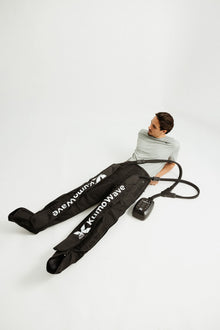
KumoWave pressotherapy boosts circulation and helps drain fluid with sequential compression, in 20-minute sessions at home.
- Boosts circulation and helps drain fluid
- Chamber-based compression, adjustable to you
- Sequential compression that mimics manual drainage
€799,00€999,00
−10% on your 1st order when you subscribe to the newsletter

What pubalgia is and why the pain appears
In practice, athletic pubalgia describes pain at the junction between the lower abdomen, the adductors, the pubic bone and, sometimes, the hip. The MedlinePlus encyclopedia entry on groin pain explains that this pain sits where the abdomen ends and the legs begin, and that it is often confused with the so-called sports hernia, which is not a true hernia.
That is why pubalgia is poorly understood if you only look at the symptom. The usual picture is a combination of repeated overload, changes of direction, weakness or imbalance between muscle groups and, in some cases, irritation of tissues near the pubic bone.
Personalized protocol · included with your purchase
Want us to tell you how to use it in your case?
With your purchase, our experts prepare a personalized usage protocol for your case: sport, circulation, fluid retention, pregnancy or lipedema.
Message us on WhatsAppOur experts reply · no obligation
What it usually feels like
- Pain when running, braking or turning: it tends to appear when the area is overloaded by repeated movements and explosive efforts.
- Discomfort when coughing, laughing or lifting: this may suggest that the abdominal wall or the groin are irritated and need assessment. (mayoclinic.org)
- Stiffness when getting up or starting cold: the pain is often more noticeable in the first minutes of activity and then returns once the effort is over.
- A pulling or stabbing sensation in the lower abdomen or the inner thigh: this fits muscle and tendon problems of the groin.
- Pain that comes back when you return to sport: it deserves special attention if it does not improve after a few days of reduced load or if every attempt to return brings it back.
Signs that help you place it
| Sign | What it may suggest | What to do |
|---|---|---|
| Pain that appears when kicking, changing direction or accelerating. | May fit overload of the adductors or of the lower abdominal wall. | Lower the load and get it assessed if it repeats. |
| A lump or bulge in the groin, especially when coughing or lifting. | May point to an inguinal hernia and not only to pubalgia. | See a professional without delay. |
| Sudden, severe pain in the testicle, with nausea or fever. | This is a warning sign that requires prompt attention. | Seek urgent medical care. |
| Pain that does not improve within a few days or that worsens with normal activity. | Calls for reviewing the cause instead of training on out of habit. | Ask for a medical assessment and adjust the effort. |
When to see a doctor: signs that require medical assessment
Seek medical care immediately if you have the following.
The Mayo Clinic guide on when to see a doctor for groin pain recommends asking for help without delay if the pain comes with back, abdominal or chest pain, if the testicular pain is sudden and severe, or if there is fever, vomiting or swelling of the testicle. A lump in the groin or blood in the urine should also be checked.
If you notice a painful bulge in the groin, an inguinal hernia is a possibility that a professional should examine.
on your first order when you join the newsletter
We send you the code instantly. No spam.
How groin pain is assessed
The first assessment usually includes a clinical history and a physical examination, with questions about the onset, the type of effort, the accompanying symptoms and the changes in activity. Blood tests, urine tests and an ultrasound or another imaging test may then be requested depending on the case.
In persistent sports-related pain, MRI can help identify injuries of the adductors, the rectus abdominis or the pubic bone. The PubMed review on the presentation and treatment of athletic pubalgia sums up that the clinical examination remains central and that imaging is used to pinpoint the origin of the pain and rule out other causes.
What you can do at home without making it worse
- Temporarily cut back the movements that trigger the pain, especially running, jumping, changes of direction and intense abdominal work.
- If the professional considers it appropriate, relative rest and physical therapy aimed at the adductors, the abdomen and lumbopelvic control are usually the initial basis.
- If it helps you keep a gentle routine going, you can lean on a weekly at-home recovery protocol to organize timing, rest and consistency.
- Once an acute injury has been ruled out, safe exercises to start today can serve as a reference for getting moving again gradually.
- If the pain builds tension or you find it hard to wind down, the breathing and recovery guide can help you organize your breathing and your rest.
If you decide to use pressotherapy or mechanical massage as wellness support, do not apply it to a painful groin without a diagnosis, and stop if there is a lump, local heat, fever, a hematoma, suspected thrombosis or a recent acute injury. Cleveland Clinic notes that massage and lymphatic drainage may not be appropriate with clots, acute injury, open wounds or very recent surgery. (my.clevelandclinic.org)
Treatment and recovery
When pubalgia is confirmed, treatment usually starts with relative rest, load management and specific physical therapy. The 2020 review on athletic pubalgia indicates that, if conservative therapy does not allow a return to activity, surgical techniques may be considered in selected cases.
A systematic review published in 2022, with 468 participants, found that surgery may be associated with an earlier return to sport than conservative management in some cases, but its authors stress that conservative treatment should be considered before surgery is indicated. A 2026 clinical review proposes considering surgery after two to three months without response in specific scenarios.
FAQ
What is pubalgia and when should I see a doctor for groin pain?
Pubalgia is a clinical term used to describe pain in the area of the groin, the pubic bone or the lower abdomen, especially when it is linked to sport or repeated overload. You should see a doctor if the pain lasts more than a few days, if it returns every time you train or if it comes with a lump, fever, nausea, blood in the urine or severe testicular pain. The idea is not to put up with it, but to understand where it comes from as soon as possible.
Which tests can help diagnose pubalgia?
The assessment almost always starts with a physical examination and a good clinical history. Then, depending on what the professional finds, blood tests, urine tests and imaging such as ultrasound may be requested. In persistent or more complex sports-related pain, MRI can help locate injuries in the adductors, the rectus abdominis or the pubic bone and rule out other problems. Not everyone needs the same tests, because the workup adapts to each case.
How do you tell pubalgia apart from a muscle strain or an inguinal hernia?
A muscle strain usually appears after a sudden movement or an excessive stretch and improves with rest, ice and a gradual return to activity. An inguinal hernia, on the other hand, can produce a visible or palpable lump in the groin, more obvious when coughing or lifting. Pubalgia tends to be linked more to repeated movements, changes of direction and pain that comes back when you return to sport. If there is any doubt, the medical examination is what decides. (medlineplus.gov)
When is surgery considered instead of physical therapy?
Physical therapy and load management are usually the first option. Surgery is reserved for selected cases, especially when the pain persists despite well-run conservative treatment and limits function or the return to sport. A 2022 systematic review observed that surgery may bring forward the return for some athletes, but it also stressed that conservative management should be tried first. In any case, the final decision should be made by a specialist after assessing the whole picture.
What now?
If the pain persists, make the medical assessment your priority and, with professional approval, organize a gradual return to activity with an evening ritual that winds you down without screens and with the Kumo Balance home page as a starting point for learning more about wellness and recovery at home.
KumoWave pressotherapy
Choose your at-home pressotherapy
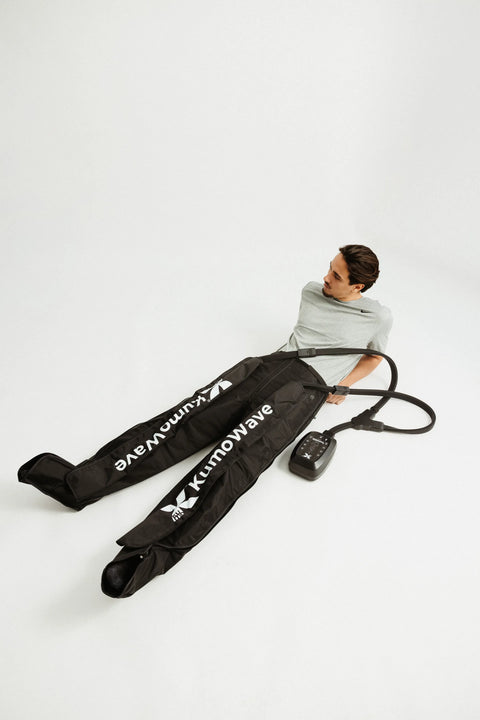
KumoWave Elite – Pressotherapy Pants
Full-coverage trousers. Ideal for lipedema, fluid retention and intensive use.
€799,00 €999,00
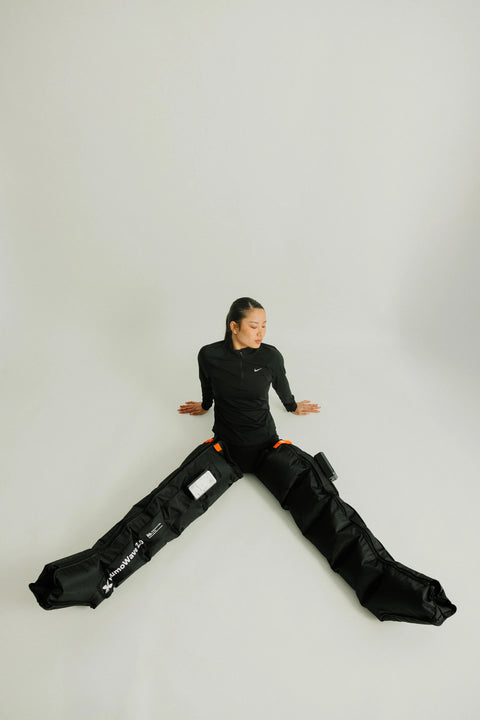
KumoWave 2.0 - Wireless Pressotherapy
Wireless, lightweight boots. Perfect for daily use and recovery.
€499,00 €599,00