Your night doesn't have to end in a rush.
If the day's stress lingers and you end up in bed with your phone, a screen-free nighttime ritual can be the simplest (and most effective) way to slow down your nervous system , fall asleep more easily, and wake up feeling refreshed. In this guide, I propose a clear, realistic, and adaptable method, with concrete ideas and recovery technology options from Kumo that don't rely on looking at a screen.
Red & infrared light
Recover faster, at home
★★★★★ 4,8/5 · rated by verified customers
The KumoLux panel supports muscle recovery with full-body red and infrared light.
- 660 nm red + 850 nm infrared light
- Full-body muscle recovery
- Clinically validated biohacking protocols
€399,00€499,00
−10% on your 1st order when you subscribe to the newsletter

To learn more about the brand's approach, you can visit Kumo .
Why screens at night "raise your spirits"
The problem is not just willpower: at night , light + mental stimulation + automatic habits combine.
Personalized protocol · included with your purchase
Want us to tell you how to use it in your case?
With your purchase, our experts set up your red and infrared light sessions for your sport and goal.
Message us on WhatsAppOur experts reply · no obligation
1) Night light and biological clock: the brain interprets "it is still daytime"
Light (especially blue wavelengths) can suppress melatonin and disrupt the circadian rhythm. Harvard Health explains that blue light at night can suppress melatonin more than other wavelengths and recommends avoiding bright screens 2–3 hours before bedtime when possible and prioritizing dim, warm/reddish lighting at night.(Harvard Health, 2024)
Furthermore, recent research published by Harvard suggests an association between exposure to light at night and an increased risk of cardiovascular disease (observational data, not proven causality), reinforcing the idea of protecting sleep through darkness . Source (Harvard Gazette, 2025) .
2) Cognitive stimulus: “only 5 minutes” becomes 45
Messages, short videos, news, unfinished work: all of these trigger attention, emotion, and planning. The typical result is longer sleep latency (it takes you longer to fall asleep) and a more abrupt transition to bed.
on your first order when you join the newsletter
We send you the code instantly. No spam.
3) A piece of information that provides context (without dramatizing)
In the US, the CDC reported that more than a third of adults don't get enough sleep on a regular basis (reference based on 2014 BRFSS data; 2016 press release). Source (CDC, 2016) . This doesn't mean it's all "the fault of mobile phones," but small changes at night can have a big impact on well-being and daily performance.
Golden rule: it's not about "doing more things" at night, but about removing stimuli and creating a gradual decrease in intensity.
Principles of a nighttime ritual that works (and that you can maintain)
Principle 1: Design friction against the moving part
- Out of the bedroom or, at the very least, out of sight (high drawer/shelf).
- Airplane mode or notifications turned off 60–90 minutes before.
- If you use an alarm: an analog alarm clock or a dedicated device.
As a practical recommendation, the Sleep Foundation suggests avoiding technology use at least one hour before bedtime, and reducing the number of devices in the bedroom when it's not possible to eliminate them entirely. Source (Sleep Foundation) .
Principle 2: Dim the lights, slow down the pace
- Soft , warm lighting (ideally below "office" level).
- Avoid bright lights from the ceiling; side lamps are better.
- Prioritize "mental airplane mode" activities: repetitive, slow, without screens.
Principle 3: Ritual is a bridge, not a to-do list
Your ritual should feel like a landing : a few steps, always the same, with room for challenging days. If it requires too much discipline, it will only last a week.
The 3-2-1 method (simple, flexible and screen-free)
Think of it in three blocks: body , mind , and environment .
3 actions for the body (physical sign of “it’s time to stop performing”)
- Warm shower or slow face washing (deliberate pace).
- Gentle mobility (cervical spine, hips, ankles) 5–8 minutes.
- Localized muscle release , without pain and without intensity.
2 actions for the mind (empty open “tabs”)
- Closing journaling : 3 lines of "I'll pick it up again tomorrow" + 1 specific gratitude.
- Paperback reading (easy, nothing that will hook you like a thriller).
1. Adjusting the environment (let the bedroom do the work for you)
- Cool, dark and quiet room ; if that is not possible, sleep mask and/or white noise.
The AASM (American Academy of Sleep Medicine), through Sleep Education, includes the following as healthy habits: a relaxing routine, limiting bright light in the evening and at night, and turning off electronic devices at least 30 minutes before bedtime. (Source: AASM/Sleep Education, updated 2020) .
A 60-minute nighttime ritual (ready-to-copy example)
Table: Example of a screen-free routine (60 minutes before bed)
| Minutes | What are you doing | Aim | Optional with Kumo (without screens) |
|---|---|---|---|
| 60–45 | Turn off notifications, leave your phone outside, dim the lights | Friction + closing signal | Prepare space and materials (without apps) |
| 45–30 | Warm shower + slow self-care | Lower physiological activation | LED therapy mask for skin (if your routine includes it) |
| 30–15 | Gentle movement + breathing (5 min) | Activate “rest mode” | Brief recovery-oriented red/LED light session (as indicated) |
| 15–5 | Reading on paper or journaling | Empty mind without stimulation | — |
| 5–0 | In bed: darkness, silence, slow breathing | Transition to sleep | If needed: gentle leg release (early session) or very light massage |
Breathing exercises to reduce stress in 5 minutes (no mystique)
Breathing is a direct tool for reducing arousal. A remote randomized study (2023) compared daily 5-minute breathing exercises with meditation, observing improvements in mood and a reduction in physiological arousal, with particularly good results for prolonged exhalation breathing (“cyclic sighing”). Source (Cell Reports Medicine, 2023; Stanford Health Care fact sheet) .
Quick exercise: “long exhalation” (5 minutes)
- Inhale through your nose for 3–4 seconds (gently, without forcing).
- Exhale through your nose or mouth for 6–8 seconds (longer than the inhalation).
- Repeat 20–30 cycles, keeping shoulders relaxed.
A sign that you're doing well: you're not trying to get dizzy or "do it perfectly"; you're trying to let your body know that it's time to stop performing.
How Kumo recovery technology fits into a screen-free night
The idea isn't to replace your phone with "another stimulus," but rather to use tools that facilitate recovery and help you maintain your routine without relying on digital content. Kumo works with technologies designed to integrate into real habits: aesthetics, performance, and consistency.
LED light therapy / red light: a “low friction” option
- and Source (PubMed, review)
If you're interested in exploring these solutions within a calm nighttime routine, you can view Kumo's LED light therapy collection. Keep the environment dim and always follow the usage instructions (duration, distance, eye safety).
LED face mask: self-care that doesn't overwhelm the mind
In aesthetic dermatology, there are clinical trials and reviews on LED therapy for photoaging and skin rejuvenation. A randomized, double-blind clinical trial (2007) evaluated parameters using wavelengths such as 633 nm and 830 nm on facial wrinkles. Source (J Photochem Photobiol B, 2007; PubMed) . There are also subsequent reviews describing the use of LED therapy for skin aging and its underlying principles. Source (J Drugs Dermatol, 2020; PubMed) .
For a screen-free nighttime routine, this is a great fit because it's passive : you can use it while doing breathing exercises or reading on paper. Discover options in Kumo's LED collection .
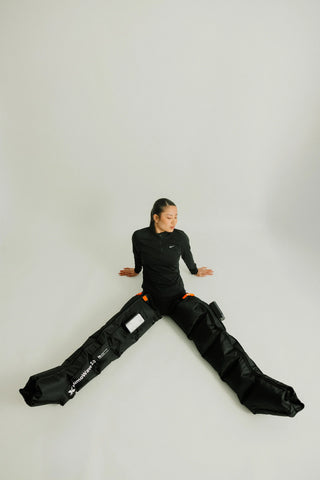
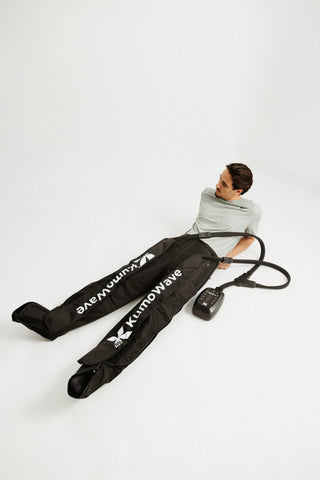
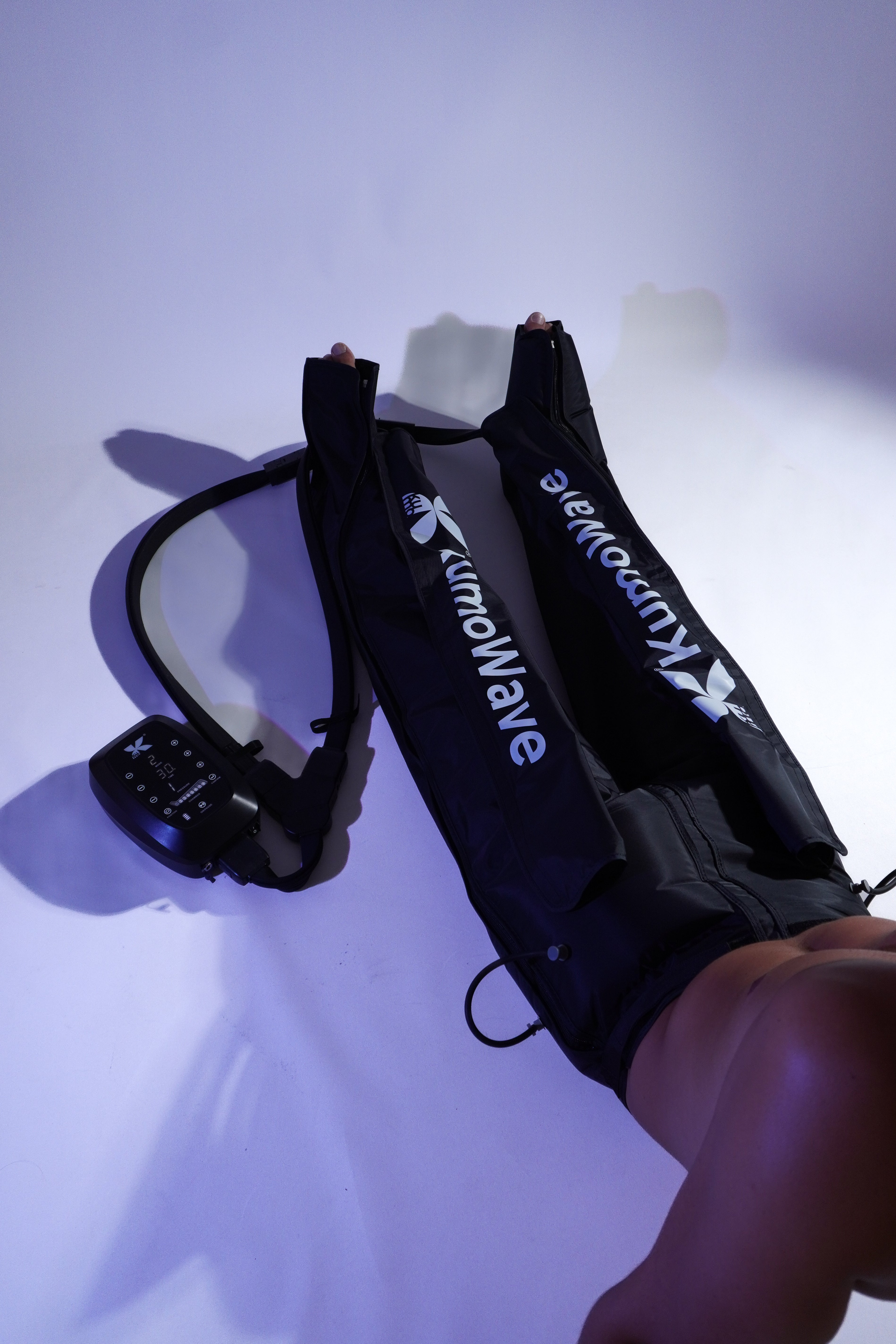
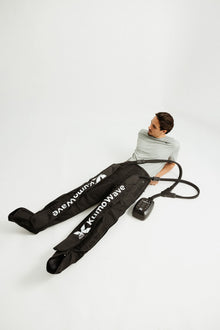
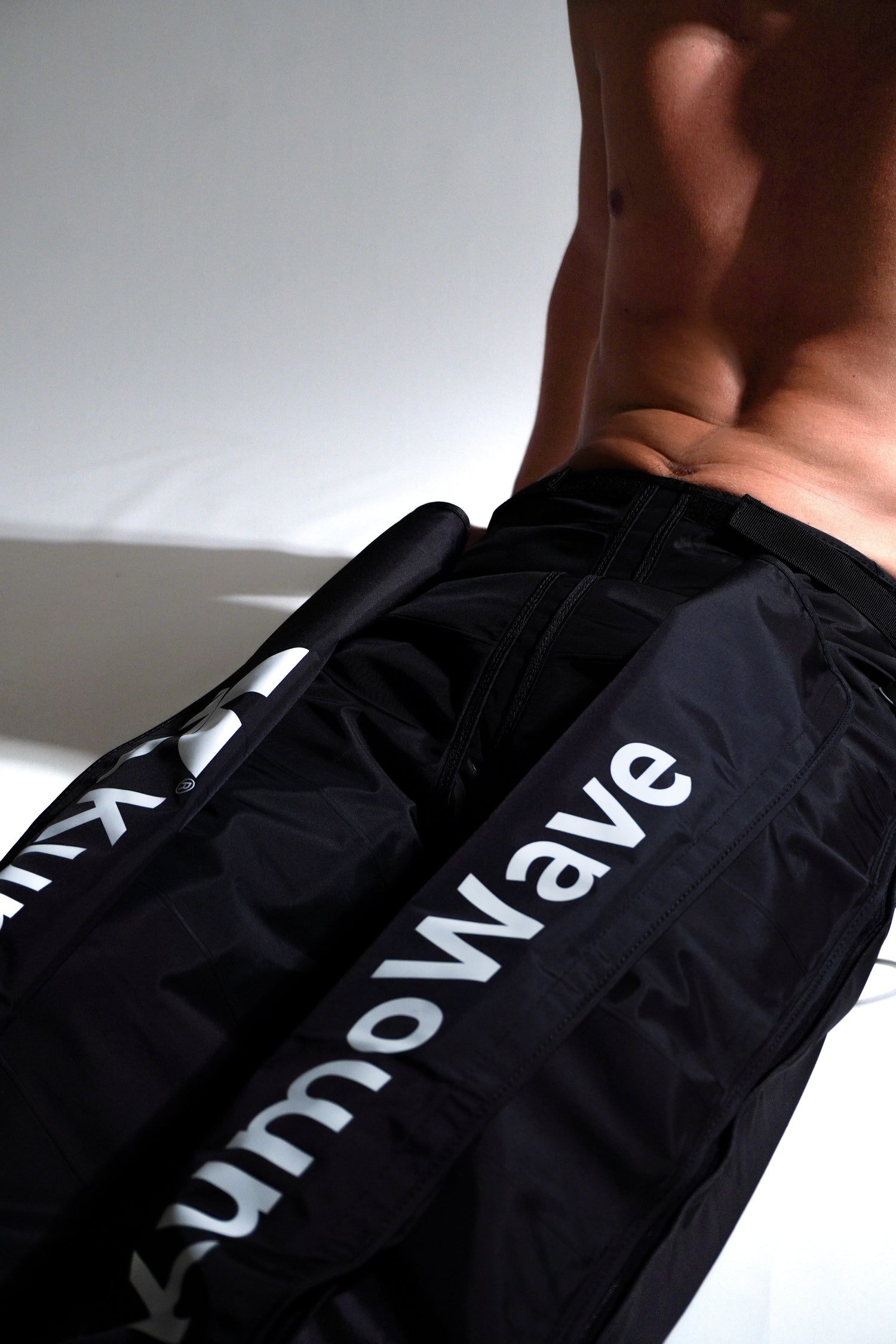
Pressotherapy: lighter legs as part of the “landing”
Intermittent pneumatic compression therapy is used in circulatory and rehabilitation settings. A recent review on pneumatic compression as a post-exercise recovery method indicates that the available evidence is limited to establish clear superiority over other methods, partly due to the small number of studies and heterogeneous protocols. Source (J Bodyw Mov Ther, 2025; PubMed) .
In everyday practice, many people incorporate it for the subjective feeling of relief and release after days of standing, traveling, or training. If you'd like to see these types of solutions, visit Kumo's pressotherapy collection . Tip: Use it early in your routine (for example, 60–30 minutes before bed), not as the last "activating" action.
Massage gun: when to use it and when not to before bed
Percussion may help some people experience less stiffness, but the evidence regarding its effects on performance and recovery is mixed and depends on timing and intensity. Systematic reviews indicate limited evidence and a lack of consensus on parameters (frequency, duration). (Source: Systematic Review, 2023; PMC) . Studies also recommend caution when applying percussion immediately after intense exercise, as it may not improve immediate physical recovery and could even increase the perception of discomfort in the short term. (Source: 2024; PMC) .
In a nightly massage routine, the key is gentleness : 1–2 areas, light pressure, 30–90 seconds per muscle group, focusing on relaxation, not overdoing it. If you'd like to learn more about Kumo's device, you can check out KumoPulse Air .
Typical mistakes that break the ritual (and how to fix them)
-
Error: “I only look at my phone in bed.”
Arrangement: mobile phone outside the bedroom + alternative alarm. -
Error: bright lights until the last minute.
Setup: Low lighting 60–90 min before; use warm/reddish light. -
Mistake: making the ritual too long and demanding.
Arrangement: “minimum viable” version of 10–15 min (breathing + reading). -
Mistake: turning recovery into training.
Arrangement: everything should feel 3–4/10 intensity at most.
Signs that your nightly ritual is working
- You feel sleepy before you get to bed (not just tired).
- You go to bed with less urgency to "check something."
- Micro-wake-ups due to notifications decrease.
- You wake up with a feeling of less strain on your legs (if you were very tense).
FAQ: Frequently asked questions about Kumo, stress, and screen-free nighttime rituals
Can I use Kumo devices if my goal is to sleep better without screens?
Yes, as long as you use them as part of a calm and consistent routine. The key is that the tool doesn't push you to "optimize everything," but rather facilitates winding down: dim lighting, breathing exercises, self-care, and clear signals that the day is ending. Prioritize short, simple sessions, without apps or extra stimuli. If you have a persistent sleep problem (chronic insomnia, heavy snoring, daytime sleepiness), it's best to consult a healthcare professional.
Is Kumo LED light therapy a good idea at night?
It can be a good fit if the session doesn't involve screens and if you keep the environment softly lit. There is extensive evidence on photobiomodulation in recovery, and it's also being studied in various other areas, but the effects depend on the timing, dose, and objective . As a precaution, avoid any exposure that you find overly stimulating and follow the manufacturer's instructions (especially regarding eye safety). If you notice it's energizing, try using it earlier in the day (for example, in the afternoon).
How can I integrate Kumo pressotherapy into a nighttime ritual without it "waking me up"?
Use it as a transitional step, not as the final step. A good time to use it is 30–60 minutes before bed, with dim lighting, slow breathing, or reading. Keep the session at a comfortable level: if the compression is too intense, reduce the intensity or shorten the time. Pressotherapy is often chosen for its comfort and the subjective feeling of relief; if you have vascular disease or unusual pain, consult a professional beforehand.
How long should I use KumoPulse Air before going to bed?
For a nighttime massage, less is often more: 5–8 minutes total, spread across 1–2 areas (for example, trapezius muscles or calves), with gentle pressure. Research on massage guns shows mixed results and a lack of consensus on parameters; therefore, it's best to avoid intense sessions or those immediately following strenuous workouts if your goal is to "switch off." If it relaxes you, great; if it leaves you feeling more sensitive or energized, move it to another time of day.
What do I do if I relapse and go back to looking at screens every night?
Reframe your goal: it's not "zero screens forever," it's about gaining 30–60 minutes of downtime without distractions. Keep it simple: leave your charger outside the bedroom, put your phone on airplane mode, prepare a visible alternative (book, notebook, eye mask), and dim the lights. If you need a "substitute," use screen-free audio (soft music) and a 5-minute breathing exercise. Imperfect consistency beats one-off perfection.
What now? (Next step with Kumo)
If you want to turn your nighttime ritual into a sustainable habit, rely on tools that reduce friction and encourage you to slow down. You can explore LED light therapy , pressotherapy , or KumoPulse Air as part of your screen-free routine. And if you need guidance in choosing the option that best aligns with your recovery goals, you can contact us.

Red & infrared light
KumoLux Panel – Red and Infrared LED Panel
★★★★★ 4,8/5 · rated by verified customers
- 660 nm red + 850 nm infrared light
- Full-body muscle recovery
- Clinically validated biohacking protocols
€399,00€499,00· pay in installments with seQura or Klarna