Breathing better means recovering better.
If you're looking for simple techniques to feel lighter, sleep better, and accelerate your post-workout recovery, breathing is the most accessible and (when applied correctly) most powerful starting point. In this practical guide, you'll learn easy breathing protocols , how to integrate them into a home recovery routine , and how to combine them with Kumo 's wellness technologies to create a sustainable habit.
Why breathing can change your recovery (in minutes)
Your breathing is one of the few automatic bodily functions that you can also control voluntarily. This "lever" influences the balance between activation and calm (autonomic nervous system) and stress-related markers, such as heart rate variability (HRV) and subjective perception of tension.
In fact, a systematic review and meta-analysis (randomized controlled trials) found that breathwork interventions were associated with stress reductions compared to controls (12 trials, 785 participants; small-to-moderate effect). ( pmc.ncbi.nlm.nih.gov )
The key idea: less effort, more calming signal
During recovery, "more intensity" isn't always the best approach. Often, what helps most is sending the body consistent safety signals: longer exhalations, a slow pace, a comfortable posture, and a relaxed environment.
Before you begin: prepare your session (2 minutes)
- Posture : Sitting with back supported or lying down with a low pillow. Jaw relaxed.
- Breathe through your nose if it feels comfortable (it reduces the urge to hyperventilate).
- Shoulders still : look for movement in the abdomen and side ribs (not in the neck).
- Golden rule : If dizziness, tingling, or anxiety occurs, return to normal breathing and slow down.
Simple breathing techniques (step by step)
1) Diaphragmatic breathing (the basis for everything)
When to use it : to wind down when you get home, after training, before using any recovery tool.
- Place one hand on your chest and the other on your abdomen.
- Inhale gently (3–4 s) bringing the air “towards the hand of the abdomen”.
- Exhale more slowly (4–6 s) as if you were fogging a glass with your mouth closed (gently).
- Repeat for 3–5 minutes.
If you have trouble "feeling" your diaphragm: exhale a little longer than you inhale and lower the volume of air (less is more).
2) Slow breathing at ~6 breaths/min (coherence / resonance)
Objective : To activate a measurable calming response (many people notice a decrease in tension and a feeling of "centering"). A rate close to 6 breaths per minute is frequently used in research and is associated with changes in HRV, blood pressure, and mood. ( frontiersin.org )
- Set a timer for 5 minutes.
- Inhale for 5 seconds, exhale for 5 seconds (without forcing).
- If 5/5 is difficult for you, try 4/6 (longer exhalation).
A study in healthy adults observed immediate decreases in heart rate and blood pressure after 5 minutes of slow breathing (6 breaths/min). ( jcdronline.org )
3) Box breathing (4-4-4-4) for mental clarity
When : before a mobility or stretching session, or when your mind is "noisy".
- Inhale for 4 seconds
- 4s retainer (no tension)
- Exhale for 4 seconds
- Retainer 4 s
Do 4 cycles. If it overwhelms you, eliminate the retentions (4-0-6-0).
4) Physiological sigh (2 inhalations + long exhalation)
When : to cut a spike in stress or before going to sleep if you feel a "knot" in your chest.
- Inhale through your nose.
- Without exhaling, take a second mini-inhalation.
- Exhale deeply through your mouth.
- Repeat 2–4 times (no more at first).
How to integrate breathing + recovery technology at home (Kumo method)
Breathing acts as a bridge : it prepares the body so that the rest of your routine (light, pressure, massage) feels better and is easier to sustain. At Kumo, we like to think of sessions as short, consistent, and aesthetically pleasing: sessions that you'll look forward to.
After training (12–25 min): muscle “noise” decreases
- 3–5 min slow breathing (4/6 or 5/5).
- 5–10 min localized release with a KumoPulse Air massage gun (gentle, without “squashing” the pain): calves, quadriceps, gluteus medius, latissimus dorsi.
- Optional 8–12 min light for a moment of pause: explore LED light therapy as a wellness ritual (skin/relaxation) or as part of your recovery routine.
The evidence on percussive massage with massage guns is mixed: 2023 reviews suggest short-term improvements in range of motion/flexibility and some recovery outcomes, but it does not always improve performance and is highly dependent on dosage and context. ( pubmed.ncbi.nlm.nih.gov )
Leg day or feeling of heaviness (20–40 min): circulation and relief
- 5 min diaphragmatic breathing to activate the “parasympathetic” part.
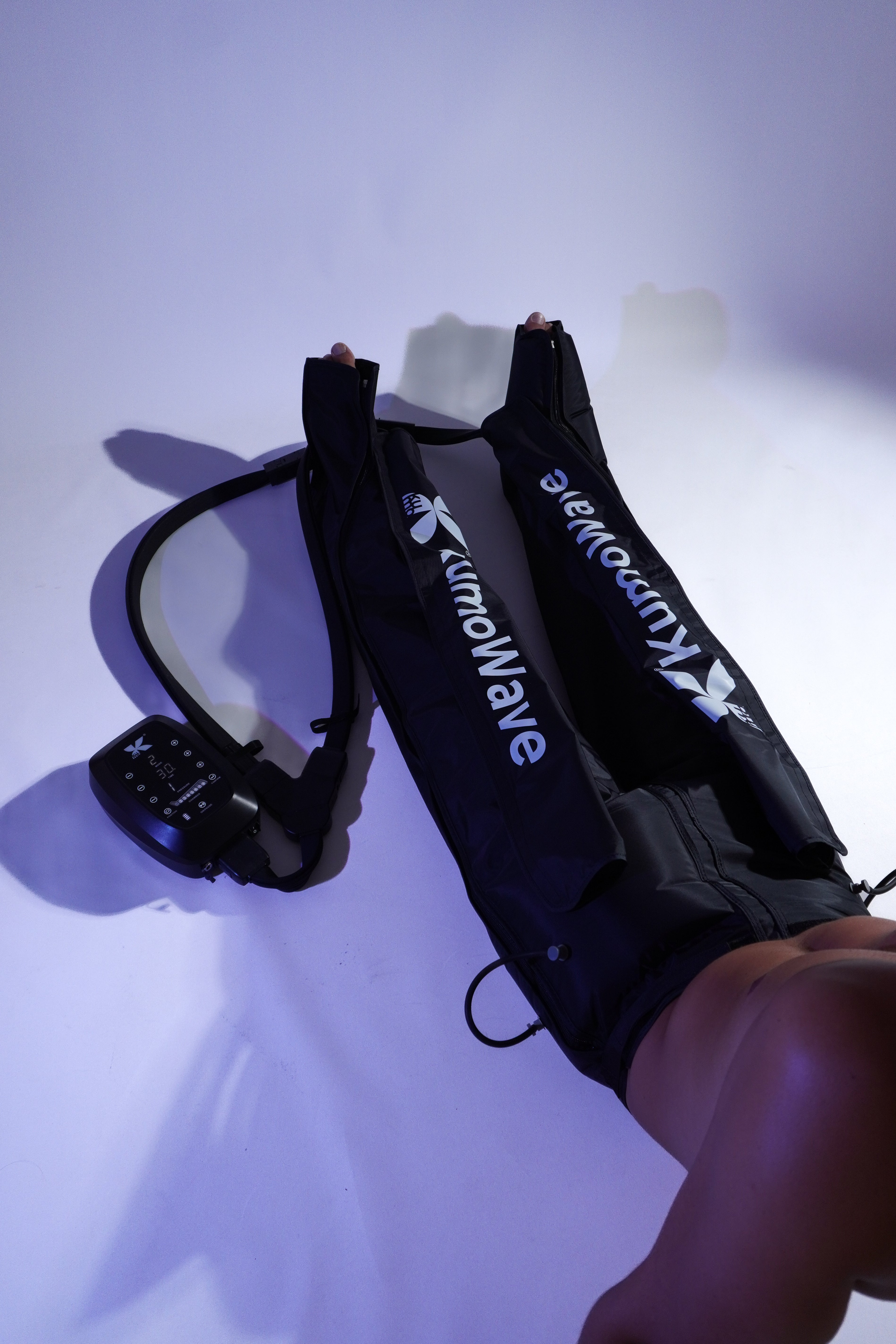
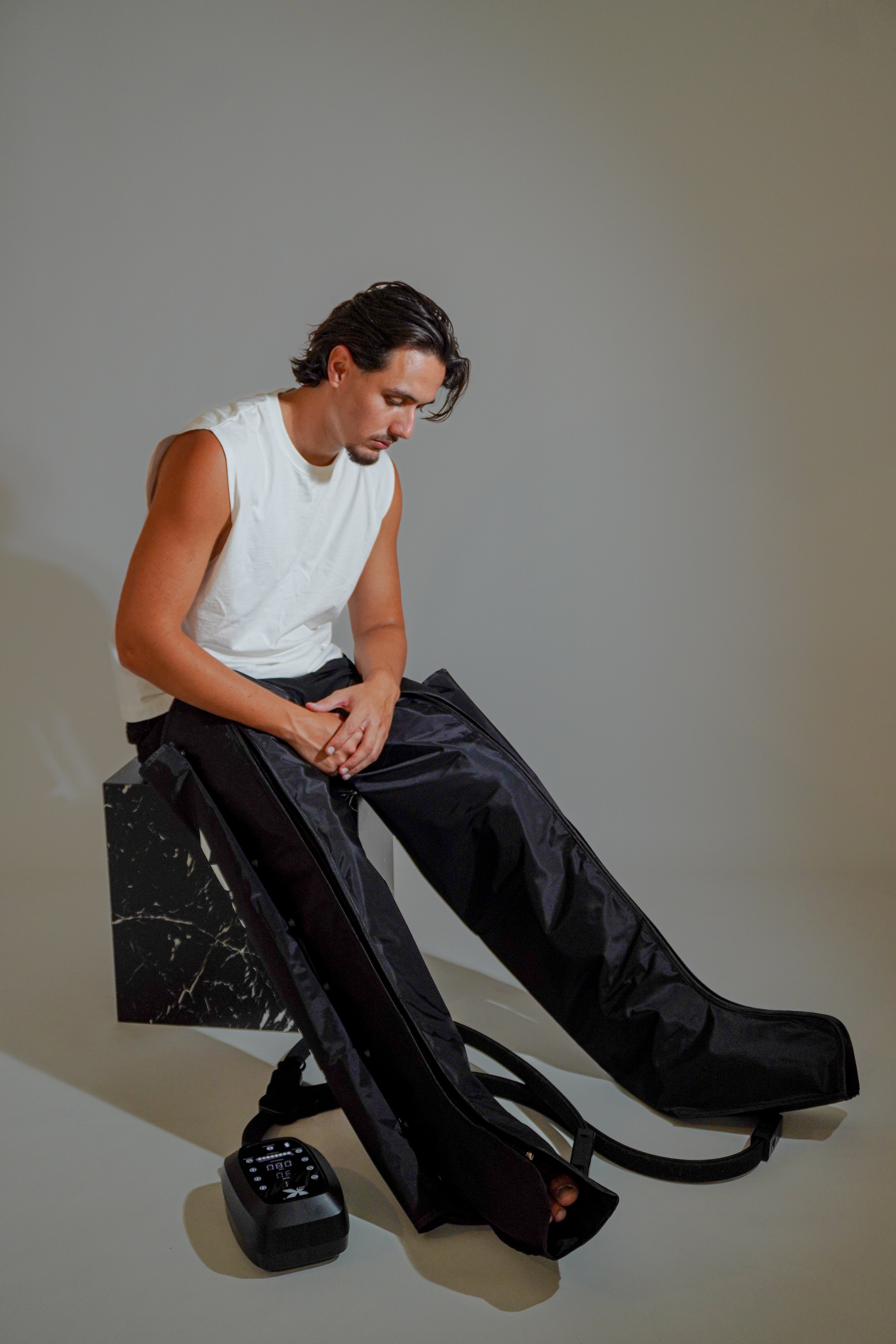
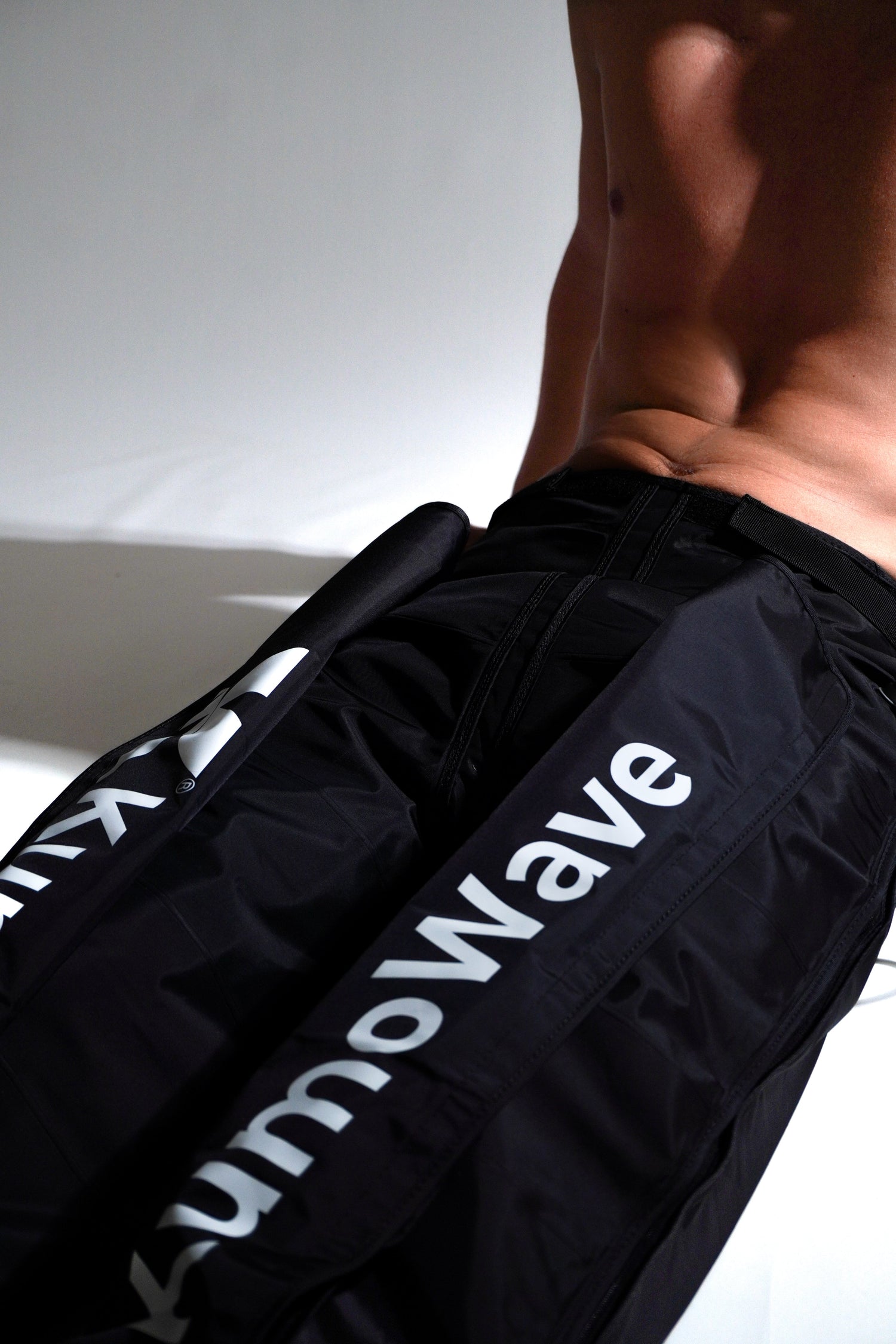
- 20–30 min pressotherapy routine at home: ideal when your legs feel heavy or after sitting for a long time.
In endurance athletes, a critical review (2021) found that intermittent pneumatic compression (IPC) may provide short-term relief from muscle soreness, but showed no sustained improvements in markers of exercise-induced muscle damage in trained athletes. Use it for comfort and habit support, not as a "magic bullet." ( pubmed.ncbi.nlm.nih.gov )
Before bed (8–20 min): “gradual shutdown” routine
- 5 min slow breathing (4/6) with low light and screen off.
- 10–12 min self-care ritual: for example, a mask moment with LED technology if it helps you maintain consistency (relaxation + self-care).
Regarding light and sleep: the circadian response depends on wavelength and intensity. Recent studies comparing red vs. blue LED exposure have observed that blue light tends to suppress melatonin more markedly, while red light is less disruptive in that experimental context. ( pmc.ncbi.nlm.nih.gov )
Furthermore, in athletes, a 2012 trial investigated the use of red light and reported improvements in sleep quality measures in female basketball players (specific context, specific protocol). This does not mean that any device or routine will produce the same effect, but it does support the idea that the lighting environment can be part of the plan. ( pubmed.ncbi.nlm.nih.gov )
Ready-to-use routines (no filler, with real times)
Table: 4 “plug & play” sessions (breathing + recovery)
| Aim | Breathing (time) | Home recovery (time) | When to use it |
|---|---|---|---|
| Calm the system and release general tension | Diaphragmatic breathing (5 min) | Gentle mobility (5–10 min) | Upon arriving home / after a busy day |
| Fast post-workout recovery | ~6/min (5 min) | Gentle percussion with massage (5–8 min) | Right after training |
| Light legs and a feeling of "reset" | 4/6 (5 min) | Pressotherapy (20–30 min) | Leg day / travel / sedentary lifestyle |
| Prepare for sleep | 4/6 or physiological sigh (5–8 min) | Light ritual/skin-care without screens (10–12 min) | 30–60 min before going to bed |
Common mistakes (and how to correct them)
- Forcing too much air in causes hyperventilation (dizziness). Correct this by lowering the "volume" of inhalation.
- Always wanting immediate results : breathing helps quickly, but recovery is cumulative (sleep, consistency, training load).
- Using strong massage on acute pain : If there is sharp pain, visible swelling, or suspected injury, pause and consult a professional.
- Turning routine into a punishment : if you don't feel like it, lower the dose (5 minutes is enough).
Precautions
If you have poorly controlled asthma, COPD, heart problems, uncontrolled hypertension, pregnancy with specific indications, or a history of panic attacks, avoid techniques involving long breath-holds or hyperventilation and consult a healthcare professional to adapt the protocol.
How to measure your progress (without mandatory gadgets)
- Recovery scale (0–10) : Rate each night “how I feel” and “how I slept.” Look for trends, not daily perfection.
- Quieter breathing : a practical sign of less tension (fewer involuntary "big sighs").
- Pace : If at first 5/5 is difficult for you and in 2 weeks it becomes natural, you're doing well.
- If you use HRV : compare similar weeks (same day/time). HRV fluctuates a lot: the pattern is what's useful.
Breathing + skin: an extra that does add up (when you're consistent)
Recovery is also sensory : when your routine feels good, you repeat it. If facial care is part of your well-being, you can incorporate an LED ritual with slow breathing to make it a truly relaxing moment.
In dermatology, evidence on at-home LED devices for acne continues to grow: in 2025, researchers published a systematic review and meta-analysis on at-home LED devices for acne (6 trials, 216 participants), describing favorable results in lesion reduction and an overall positive safety profile in those studies. ( massgeneralbrigham.org )
Recommended sources (for further reading)
- Meta-analysis on breathwork and stress (Scientific Reports, 2023)
- Resonance frequency breathing and HRV (Frontiers in Public Health, 2017)
- Photomodulation and muscle soreness (review and meta-analysis, 2025)
- IPC/intermittent pneumatic compression in endurance athletes (J Sport Rehabil, 2021)
- At-home LED therapy for acne (JAMA Dermatology, 2025; PubMed registration)
FAQ: Frequently Asked Questions about Breathing and Recovery with Kumo
How long should I breathe slowly to notice a real effect?
For most people, 5 minutes is enough to notice changes (greater calmness, less tension in the shoulders/jaw). If you do it at a steady pace (for example, 5 seconds to inhale and 5 seconds to exhale), the effect is usually more pronounced. If you're feeling particularly energetic one day, start with 2–3 minutes and repeat later. The key is consistency: 5 minutes a day for 2 weeks is generally more effective than a single, longer session.
Can I combine breathing exercises and pressotherapy in the same session?
Yes. In fact, it's a very comfortable combination: 3–5 minutes of slow breathing before putting on your boots helps make the session feel more relaxing. During the pressotherapy, maintain calm breathing (without holding your breath). If your goal is "light legs," prioritize a calm environment and avoid doing it right after caffeine or with screens. You can see options in Kumo's pressotherapy collection.
Does the massage gun go before or after breathing?
If your system is highly activated, start with breathing exercises (3–5 minutes) and then use the massage gun: you'll notice better tolerance and less tendency to tense up. If you've just finished a workout and are in a hurry, you can do 1 minute of slow breathing and then move on to 5–8 minutes of massage. Keep the pressure moderate and avoid areas of acute pain. For a tool designed for home use, check out the KumoPulse Air .
Does LED light also help with recovery or is it only for the skin?
It depends on the goal and the protocol. At home, many people use it as a wellness ritual (to reduce stress, improve consistency, and for self-care), and in the case of skin, there is clinical evidence for specific indications (for example, acne in certain studies with at-home LED devices). For muscle recovery and sleep, photobiomodulation is a broad field with results that vary depending on wavelength, dosage, and the individual. If you're interested in incorporating light into your routine, explore Kumo's LED therapy collection .
What Kumo routine do you recommend for someone who trains 3-4 times a week?
- Post-workout: 5 minutes of slow breathing + 5–8 minutes of localized massage; (
- 2–3 times per week: pressotherapy on leg days or when you notice heaviness; (
- Before bed: 5–8 minutes of long exhalations + a screen-free ritual (low light, self-care). If you'd like to tailor your routine to your lifestyle, you can contact us through the contact page.
And now?
If you want to make these techniques a habit, start today with a 5-minute slow breathing session and choose a recovery tool to complement it. At Kumo, you'll find wellness technologies designed for easy integration into your home (LED lighting, pressotherapy, and massage). And if you need guidance in creating your recovery routine, we're just a message away.