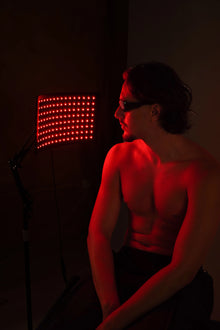

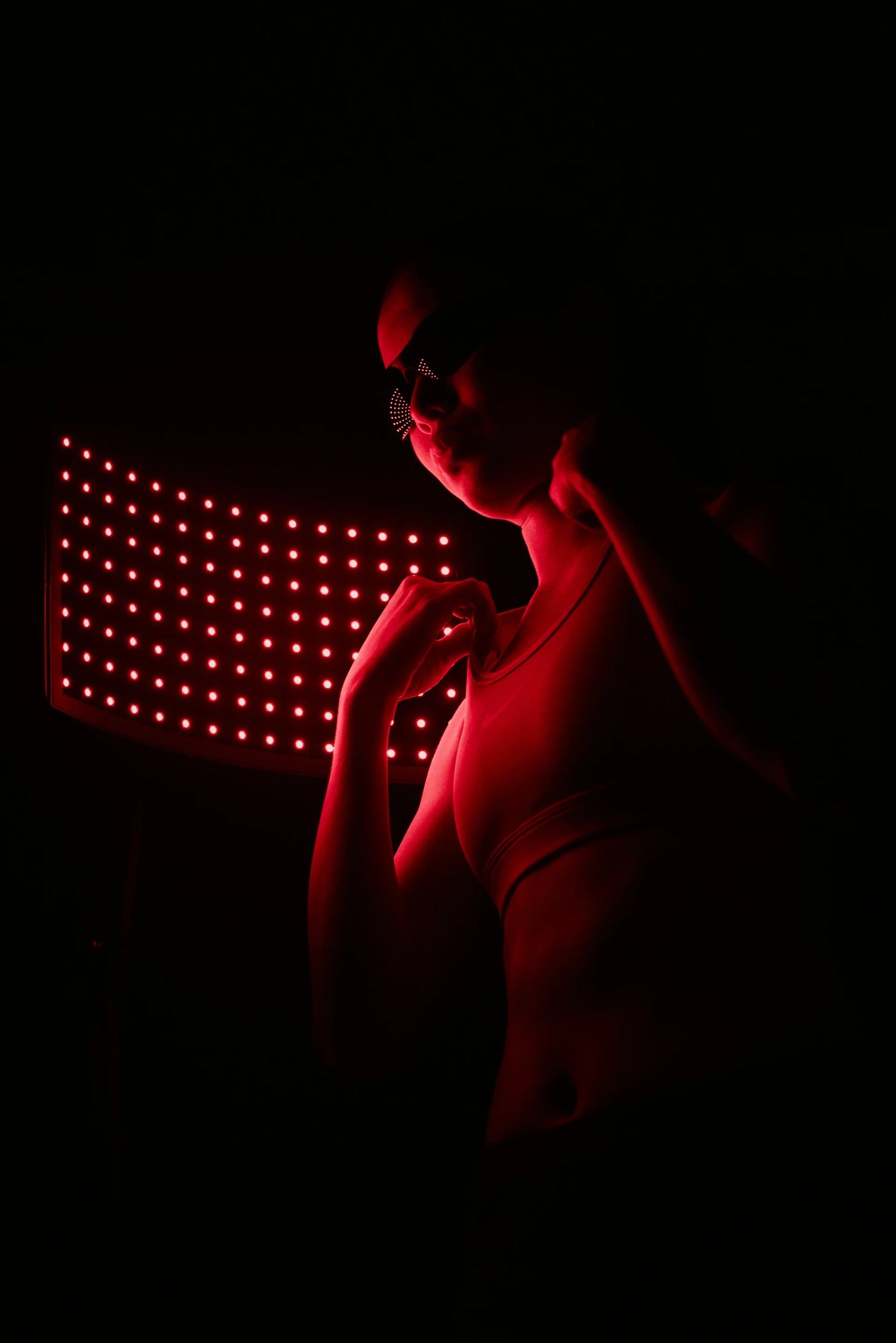
LED panels raise understandable questions. The key is to separate the light they emit from the electromagnetic fields that come with the electrical system powering them. (who.int)
Under normal conditions of use, official guidelines do not describe LED lighting as a source of EMF risk for healthy people, but they do point out that frequency, intensity, distance and each person's sensitivity all matter.
Red & infrared light
Recover faster, at home
★★★★★ 4,8/5 · rated by verified customers
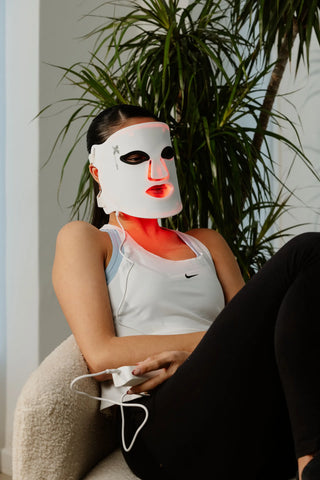
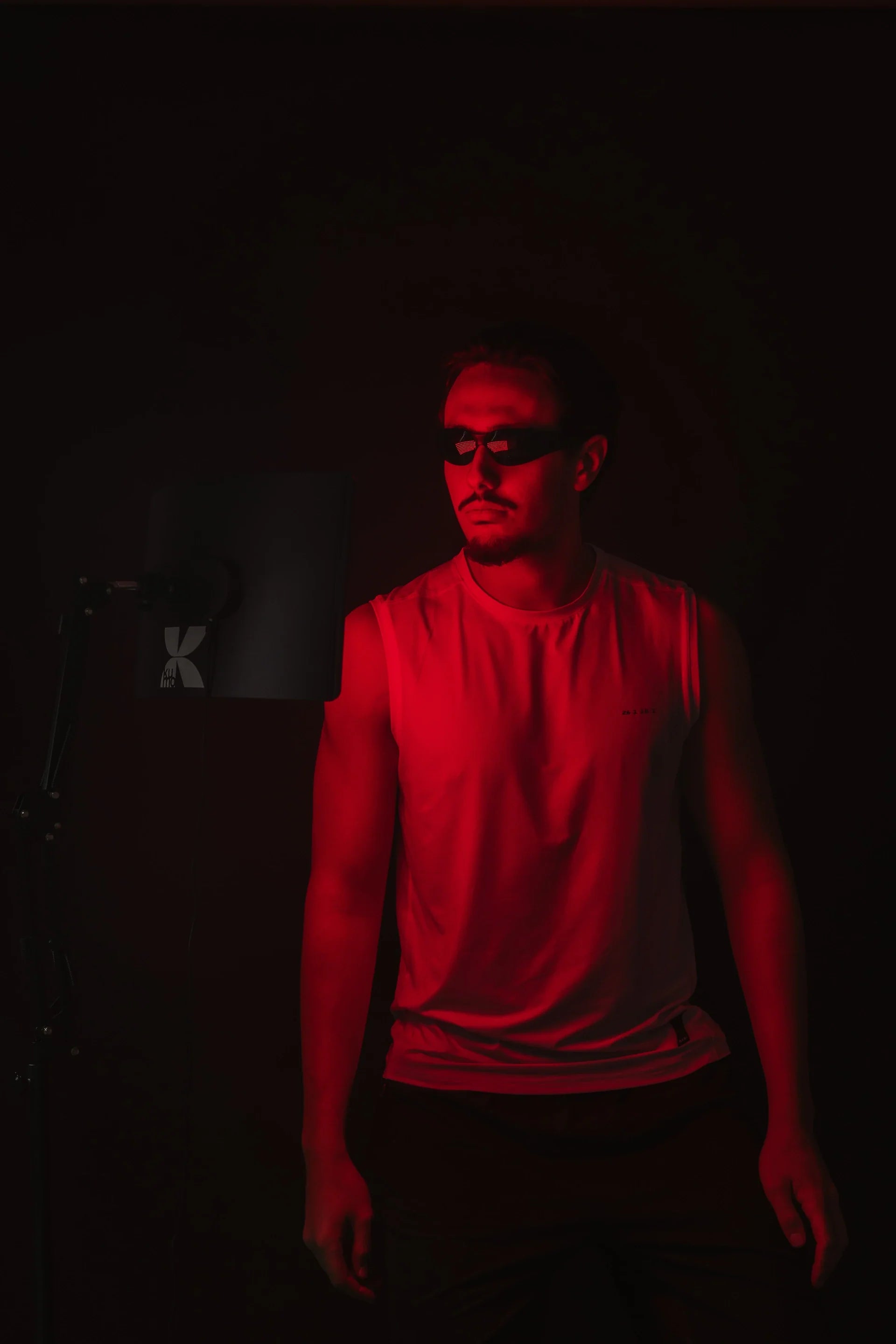
The KumoLux panel supports muscle recovery with full-body red and infrared light.
- 660 nm red + 850 nm infrared light
- Full-body muscle recovery
- Clinically validated biohacking protocols
€399,00€499,00
−10% on your 1st order when you subscribe to the newsletter

What electromagnetic fields are and why they matter
An electric field is created by voltage, even when no current is flowing. A magnetic field appears when current does flow. That is why any electrically powered device can generate both types of field to a greater or lesser extent. Frequency matters too, because fields of different frequencies interact with the body in different ways.
INSST summarizes that varying electromagnetic fields are produced when there is alternating current and that their effects depend mainly on frequency and intensity. That is the basis for understanding why two seemingly similar LED devices can behave differently. (insst.es)
Personalized protocol · included with your purchase
Want us to tell you how to use it in your case?
With your purchase, our experts set up your red and infrared light sessions for your sport and goal.
Message us on WhatsAppOur experts reply · no obligation
Why an LED panel can be associated with EMF
In practice, the field is not generated by the light on its own but by the device's whole electrical assembly, with its power supply, electronics and wiring. So when talking about LED panels, it makes sense to think about the complete device and not just the light-emitting diodes.
Distance matters as well. In a study with real measurements of household appliances, field levels in the home were generally low, but using certain devices at short range, such as 20 cm, could increase exposure. In addition, moving away clearly reduced the field strength of the light fixtures measured.
If you want to better understand how the energy of red and infrared light is distributed, it may help to read about the practical differences between 660 nm and 850 nm. It is not an EMF question, but it is about how the light emitted by the panel behaves.
on your first order when you join the newsletter
We send you the code instantly. No spam.
Don't confuse EMF with blue light, optical radiation and flicker
LED safety is not just about electromagnetic fields. The European Commission, through its SCHEER committee, focuses much of its assessment on optical radiation, blue light, glare and flicker. In its opinion it concludes that there is no evidence of direct adverse effects from LED emissions in normal use in the healthy population, although it warns of possible effects of nighttime light on the circadian rhythm. (health.ec.europa.eu)
SCHEER adds that some LEDs may raise concern because of the temporal modulation of light, that is, flicker, especially from 100 Hz. This does not mean every panel is problematic, but it does mean the design and quality of the device matter.
If your main question is what each wavelength does for body or facial use, check out the guide on how to use LED panels on your back, abdomen and legs. And if you want to place the technology within a broader wellness approach, the our technology section will help you sort out the concepts.
What official sources say about low-intensity electromagnetic fields
The WHO points out that, at low levels, there is no evidence to conclude that exposure to electromagnetic fields is harmful to health, and that limits are based on current scientific knowledge.
INSST also states that in typical offices or shops, ordinary electrical equipment does not usually pose a risk of dangerous EMF exposure. In Spain, the reference for the workplace is Real Decreto 299/2016, which sets action levels and limit values.
Red Eléctrica summarizes that, at 50 Hz and at the intensities commonly found, experimental studies do not indicate harmful effects. This reference is useful because many household and power grid sources operate precisely in that frequency range. (ree.es)
Practical summary in a table
| Element | What you should know | Practical implication |
|---|---|---|
| Electric field | Created by voltage and can exist even when no current flows. Usually expressed in V/m. | The device's power supply, design and distance from the user all matter. |
| Magnetic field | Appears when current flows. Can be expressed in A/m or, depending on context, in μT. | Strength depends heavily on the electrical load and the distance from the device. |
| Blue light and flicker | They are not EMF, but they are part of the safety of any LED system. SCHEER points to possible effects of nighttime use and flicker. | It is worth watching evening exposure and following the manufacturer's instructions. |
| Distance from the panel | The shorter the distance, the higher the potential exposure for many electrical devices. | Using it close to the body is not the same as placing it farther away. |
How to use an LED panel with common sense
The most useful advice is simple: respect the distance, the usage time and the manufacturer's guidelines. The FDA explains that low-level photobiomodulation typically uses LED lamps or panels placed close to the body, with very low doses of visible light that do not heat the skin or fat. (fda.gov)
With this type of device, the goal is not to "force" the body but to support a wellness routine in a gentle, consistent way. If you want to better understand that approach, you may find it useful to review the technical overview of using LED panels on the body.
- Check the recommended distance and time, because moving away usually reduces exposure.
- Avoid extending sessions for no reason, especially if you use the device at the end of the day. SCHEER notes that nighttime LED exposure can affect the circadian rhythm.
- Wear eye protection if the manufacturer recommends it, since light-based therapies can injure the eyes.
- If the device is part of a broader recovery routine, it is worth first understanding its technological basis in our technology.
When to seek medical advice and which precautions to keep in mind
It is a good idea to seek professional advice if the light causes eye pain, blurred vision, severe headache, dizziness, persistent redness or a skin reaction that does not go away. The FDA notes that light-based procedures can injure the eyes and that some people need to be especially careful, such as those with photosensitivity disorders, photosensitizing medication, pregnancy, active implants or active skin lesions.
In addition, WHO and INSST point out that EMF guidelines are not designed to protect against interference with implanted electromedical devices, such as some pacemakers. If you have an implant or relevant medical concerns, don't improvise with a wellness LED panel.
The sensible approach is simple: understand what the device is for, follow the instructions and stop if an unexpected reaction occurs. A wellness device should not be presented as a medical device or replace a professional assessment.
FAQ about electromagnetic fields and LED panels
Do LED panels emit electromagnetic fields that are dangerous to health?
In normal use, official sources do not describe LED panels as a dangerous source of EMF for healthy people. The WHO states that there is no evidence to conclude that exposure to low-intensity electromagnetic fields is harmful, and the European Commission found no direct adverse effects from LED emissions in normal use. Even so, it is wise to keep an eye on distance, duration and individual sensitivity.
What is the difference between electric and magnetic fields in LED lighting, and how are they measured?
The electric field is created by voltage, even without current, while the magnetic field appears when current flows. In measurements, the electric field is usually expressed in V/m and the magnetic field in A/m or, depending on context, in μT. In an LED fixture, the whole assembly matters: power supply, electronics, wiring and distance from the user.
How does exposure to 50 Hz electromagnetic fields affect homes with LED lighting?
The 50 Hz reference is useful because many household power grids operate at that frequency. Red Eléctrica summarizes that, at the intensities commonly found, experimental studies do not indicate harmful effects. In addition, measurements in homes show that intermediate frequency (IF) levels are usually low, although some appliances can increase exposure when used very close. In practice, distance and device quality remain key.
Are LED screens and light fixtures safe in the workplace in terms of EMF, and which regulations apply?
INSST states that the usual electrical equipment in offices or shops does not typically pose a risk of dangerous EMF exposure. In Spain, the workplace reference is Real Decreto 299/2016, and at European level Directive 2013/35/EU applies. If action levels could be exceeded, or if implants such as pacemakers are involved, a specific assessment is needed.
What do official bodies say about the safety of LED lighting with regard to EMF?
The WHO and the European Commission point in the same direction: low-intensity EMF has not been shown to cause harm under normal conditions, and for LEDs the safety focus is more on optical radiation, flicker and nighttime use. That does not mean letting your guard down, but using the device sensibly, at a proper distance and in line with the instructions.
What's next?
If you want to keep learning and see how this technology fits into a well-planned wellness routine, start with the Kumo Balance homepage and take a look at our technology. It will help you bring LED light, recovery and responsible use together in a single framework.

Red & infrared light
KumoLux Panel – Red and Infrared LED Panel
★★★★★ 4,8/5 · rated by verified customers
- 660 nm red + 850 nm infrared light
- Full-body muscle recovery
- Clinically validated biohacking protocols
€399,00€499,00· pay in installments with seQura or Klarna