Your internal clock doesn't reset all at once.
When the clocks change and you move forward or back an hour, your brain keeps following the light, the darkness and the routine of the day before. That's why, even if the shift seems small, your body can take several days to reorganize sleep, energy and appetite. The CDC explains that the time change disrupts circadian synchronization and that adapting can take about a week.
Red & infrared light
Recover faster, at home
★★★★★ 4,8/5 · rated by verified customers
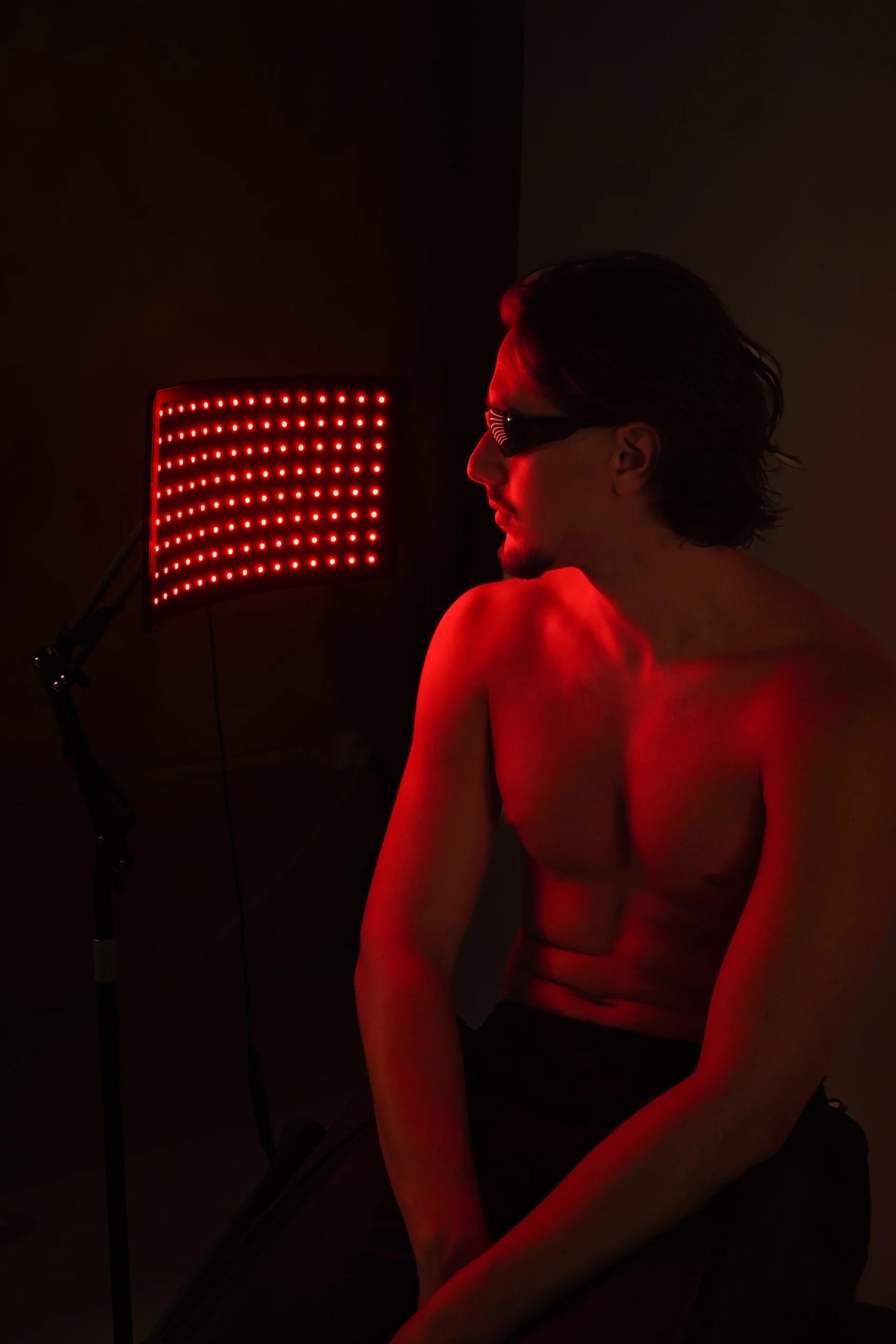
The KumoLux panel supports muscle recovery with full-body red and infrared light.
- 660 nm red + 850 nm infrared light
- Full-body muscle recovery
- Clinically validated biohacking protocols
€399,00€499,00
−10% on your 1st order when you subscribe to the newsletter

Why your body takes several days to adjust
The circadian system runs on cycles of roughly 24 hours and uses light as its strongest signal. The NHLBI on the sleep-wake cycle notes that light and darkness help coordinate when to be awake and when to wind down for rest, and that artificial light late in the day can interfere with melatonin. When you change the time abruptly, that coordination is thrown off and your brain needs time to line it back up.
In a 2016 note for workers on adjusting to daylight saving time, the CDC said the body can take close to a week to adjust sleep, meals and activity, and recommended easing demanding workloads during the readjustment. In practice, that means it's not only harder to fall asleep or wake up; you may also notice less mental clarity and more tiredness during the day.
Personalized protocol · included with your purchase
Want us to tell you how to use it in your case?
With your purchase, our experts set up your red and infrared light sessions for your sport and goal.
Message us on WhatsAppOur experts reply · no obligation
Common symptoms and how long they can last
The most common are light sleep, trouble falling asleep, waking too early, tiredness, irritability and reduced ability to concentrate. For travel-related jet lag, Mayo Clinic adds digestive discomfort and a general feeling of being unwell, which closely resembles what happens when social clock time shifts suddenly.
Quick summary of symptoms and signs of the mismatch
| Sign | What's usually going on | What helps most |
|---|---|---|
| Daytime sleepiness | Your internal clock hasn't caught up with the new schedule yet. | Get natural light when you wake up and avoid stretching the evening out with screens. (cdc.gov) |
| Waking up early | Your brain reads that it's already daytime too soon. | Get up at a similar time every day and avoid long naps. |
| Lower concentration | Sleep debt and desynchronization take their toll. | Lighten your mental load that day and prioritize simple tasks. |
| More irritability | Your nervous system feels the change in routine and light. | Give your body some slack and avoid forcing an overly intense day. |
What makes adjusting harder
Some people feel it more than others. It tends to happen if you're already short on sleep, work shifts, spend long hours under artificial light or get little natural light in winter. That combination weakens the signals your brain uses to tell day from night. If this sounds familiar, you may want to look at how this mechanism relates to the lack of light in winter and to night work and rotating shifts.
If you're also traveling, the problem looks a lot like jet lag. The Mayo Clinic overview of jet lag notes that the more time zones you cross, the longer symptoms last, and that it often takes about one day per time zone to get back into rhythm. That's why light, bedtime and morning exposure matter so much.
on your first order when you join the newsletter
We send you the code instantly. No spam.
How to help your body get back into rhythm
The best strategy is simple: strengthen daytime signals and soften nighttime ones. The NHLBI on treating circadian rhythm disorders recommends keeping a regular routine, sticking to stable sleep and wake times, moving during the day and limiting caffeine, alcohol and nicotine close to bedtime.
Habits that really help
- Go outside in the morning. The NICHD on sleep and circadian rhythms notes that sunlight helps reset the internal clock and that morning exposure can be especially useful when sleep is a struggle.
- Dim the lights in the evening. The CDC explains that more light late in the day tends to delay sleep, while morning light helps wake the body up.
- Keep similar times for dinner and bed. Regularity helps more than trying to make up for the change with abrupt jumps.
- Move during the day. Walking, light training or running errands sends a clear activity signal and helps you better separate active time from rest.
- Skip long naps. If you need to rest, keep it short and early so you don't steal sleep from the night.
If you want to turn light into a more structured habit, you can lean on a morning routine with red light therapy as a complement to your schedule, not a substitute for rest. The idea is simple: open the day with clear signals and close the evening with less stimulation.
If you use red light therapy, do it carefully
Red light therapy can fit into a wellness routine, but it's not a miracle fix and it doesn't replace natural light or sleep. The AAD on red light therapy safety points out that some people taking photosensitizing medication may not be good candidates and that you should follow the instructions for use and eye protection. If you notice discomfort, redness, eye pain or unusual sensitivity to light, stop using it and seek advice.
When to see a doctor: signs that need medical attention
The time change is usually temporary, but it's worth getting checked if insomnia, intense sleepiness or feeling unwell don't improve after a few days, get worse instead of better, or last more than a week. Mayo Clinic advises seeing a doctor when jet lag symptoms persist more than a week after a trip, and the CDC notes that adjusting to the clock change usually takes about that long.
It's also a good idea to pause and rethink your approach if you use any wellness device and notice persistent discomfort, eye irritation or an unusual reaction to light. In those cases, stop using it and get professional guidance.
Frequently asked questions about the clocks changing
Why does my body take almost a week to adjust when the clocks change, and what factors play a role?
Because your biological clock doesn't adjust at the same pace as the clock on the wall. The circadian system depends mostly on light, regular schedules and how much sleep you've built up. If you go into the change with sleep debt, work shifts, sleep little or get little morning light, readjusting usually takes longer. The CDC says adapting can take about a week.
What can I do to speed up how my biological clock adapts to the new time?
The most useful approach is to give clear day and night signals. Get natural light when you wake up, dim lights and screens at night, keep similar times for sleeping and eating, and save exercise for the active hours of the day. The NHLBI and the CDC agree that regularity, the right light exposure and limiting nighttime stimulation help reset sleep.
What are the most common jet lag symptoms and how long do they last?
The most common are light sleep, trouble sleeping, waking early, tiredness, irritability and reduced concentration. On long trips, digestive discomfort and a general feeling of being unwell can also appear. It usually improves within a few days, but it can last up to a week if the shift is large or your routine was already off track. Mayo Clinic stresses that symptoms tend to be worse the more time zones you cross.
How long does jet lag last when traveling across time zones, and how can you prevent it?
As a rough guide, it can take about one day per time zone crossed, although recovery isn't identical everywhere or for everyone. To prevent it, it helps to adjust your sleep schedule a few days before the trip, get light exposure at the right time and not overdo naps when you arrive. Jet lag tends to be more noticeable when traveling east.
Is it better to shift your bedtime before traveling to minimize jet lag?
Yes, it usually helps, especially when the trip involves many time zones or when you already know you're sensitive to changes. Mayo Clinic recommends gradually adjusting your bedtime and wake-up time before leaving, rather than making an abrupt jump on the same day. The idea is to bring your schedule closer to your destination's little by little so the transition is less jarring for your internal clock.
What's next?
If you want to get through the next clock change with less friction, start with a brighter morning, a calmer evening and more regular hours. At Kumo Balance you can keep exploring our approach to wellness and recovery, and if you're looking for a concrete routine, check out the nighttime protocol with a red light panel.

Red & infrared light
KumoLux Panel – Red and Infrared LED Panel
★★★★★ 4,8/5 · rated by verified customers
- 660 nm red + 850 nm infrared light
- Full-body muscle recovery
- Clinically validated biohacking protocols
€399,00€499,00· pay in installments with seQura or Klarna