
Your back complains early. After birth, back pain, neck pain or joint pain is common and can be linked to muscular overload, abdominal weakness and hormonal changes; and if you also string together night wakings, resting and moving freely becomes much harder. (acog.org)
The key is not to endure more, but to adjust better: a well-positioned carry, feeds with more support and a recovery routine that is simpler than it is ambitious. When the same movements repeat many times a day, small changes make a huge difference.
Pressotherapy at home
End the day with light legs
★★★★★ 4,8/5 · rated by verified customers
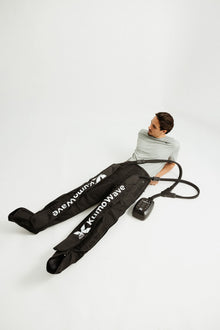
KumoWave pressotherapy boosts circulation and helps drain fluid with sequential compression, in 20-minute sessions at home.
- Boosts circulation and helps drain fluid
- Chamber-based compression, adjustable to you
- Sequential compression that mimics manual drainage
€799,00€999,00
−10% on your 1st order when you subscribe to the newsletter

Why the back takes so much load at this stage
After birth, the lower back and neck usually feel several factors adding up at once: more time with the baby in your arms, less rest and muscles that are still resettling. ACOG explains that this pain can come from tension in the back muscles, abdominal weakness and the hormonal changes of pregnancy and the postpartum period.
If you feed your baby often, posture matters even more. When you lean forward again and again, the neck and shoulders work too hard. That is why looking for support for your back and your arms is not a luxury, but a practical way to take care of your day-to-day.
Personalized protocol · included with your purchase
Want us to tell you how to use it in your case?
With your purchase, our experts prepare a personalized usage protocol for your case: sport, circulation, fluid retention, pregnancy or lipedema.
Message us on WhatsAppOur experts reply · no obligation
If you recognize a lower back or neck knot, it may help you to relieve and prevent pain from muscle knots in the back, because the pattern is usually the same: less twisting, fewer raised shoulders and more support through the trunk.
Carrying that spreads the weight instead of adding to it
A comfortable baby carrier is not only the one that holds, but the one that spreads the weight and lets the back breathe. The American Academy of Pediatrics and the International Hip Dysplasia Institute insist that the baby's face must stay visible, the neck straight and the chin away from the chest, with the thighs supported and a healthy hip position. (healthychildren.org)
Adjustments that unload the back without complicating your day
| Situation | What helps | What to avoid |
|---|---|---|
| Daily carrying | Place the baby high and close to your body, with the face visible and the neck straight, so that breathing is not compromised. | Do not let the baby hang low or with the chin pressed to the chest. |
| Hip support | Look for a healthy hip position, with the thighs supported and the legs open naturally, because it helps spread the load better. (hipdysplasia.org) | Do not choose a fit that leaves the legs unsupported or the body too compressed. |
| Premature babies or breathing problems | Ask for professional guidance before using upright baby carriers. | Do not improvise with a wrap or a soft-structured carrier if you still have safety doubts. |
If carrying leaves you with a localized pulling sensation, you do not have to tolerate it as if it were normal. The idea is to adjust before the overload shows up, not once you have already spent hours compensating with your back.
on your first order when you join the newsletter
We send you the code instantly. No spam.
Broken nights: how to rest without straining your back further
When the baby wakes several times, it is worth simplifying the night and not the safety. The AAP recommends that the baby sleeps on the back, alone in a crib or bassinet, on a firm surface and without pillows, soft toys or loose blankets; the CDC adds that sharing a room helps, but bed sharing is not recommended. (healthychildren.org)
To feed with less tension, lean on pillows, keep your shoulders relaxed and use a firm backrest. HealthyChildren also suggests the side-lying position when it feels more comfortable and you need to unload the lower back. (healthychildren.org)
If you are also looking for a gentler routine for the first weeks, you can read pressotherapy at home for postpartum recovery as support for organizing your day-to-day, always keeping in mind that sleeping and moving better come first.
A short routine so your back does not pile up more load
Daily recovery works better with short breaks than with heroics. If you spend many hours standing or with the baby in your arms, the goal is for your posture to change before the discomfort sets in.
- Check the fit of the baby carrier every time you change position, because a loose buckle forces you to compensate with your back.
- During feeds, bring the baby closer to you with cushions so you do not end up leaning forward.
- Take micro-breaks and switch sides when possible, before the discomfort turns stiff. (mayoclinic.org)
- If you end up with heavy legs after many hours on your feet, you may be interested in pressotherapy for heavy legs at the end of the day as part of a comfort routine at home.
If the discomfort feels more like a muscle knot than passing tiredness, the priority is to cut the repeated movement, not to keep adding load. A gentle, short and consistent approach is usually more useful than trying to fix everything at once.
Recovery technology at home: support, not a shortcut
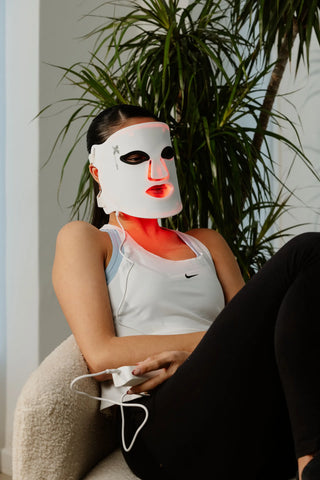
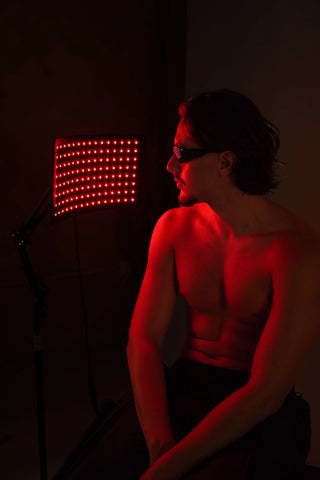
If wellness technology interests you, think of it as support, not as a medical solution. The FDA warns that photobiomodulation or LED light is not recommended for people with photodermatosis, on photosensitizing medication, with active implants, with skin cancer in the area, with open wounds or active injuries, or during pregnancy or while trying to conceive; you also need to protect your eyes. (fda.gov)
In the case of pressotherapy or pneumatic compression, the FDA lists contraindications such as suspected or active deep vein thrombosis, active infection, ischemic vascular disease and severe congestive heart failure. (accessdata.fda.gov)
That is why it is worth reviewing pressotherapy at home, benefits and contraindications before adding it to a postpartum routine, and not using any wellness device to mask warning signs or delay a medical assessment.
When to seek care: signs that call for a medical assessment
Not every case of back pain after birth is simple overload. Mayo Clinic recommends an assessment if the pain lasts several weeks, worsens despite basic care, travels down one leg, causes weakness, tingling or numbness, or appears with fever, bladder or bowel changes, or after a fall or a blow.
- See a professional if the pain does not improve in a few weeks or gets worse, even when you rest and adjust your posture.
- Seek an assessment if it appears with fever or after a fall, a blow or a sudden twist.
- Ask for medical help if it travels down your leg with tingling, weakness or numbness.
- Do not normalize bladder or bowel changes, because at that point we are no longer talking about simple tiredness.
And if you have just given birth and the pain keeps you from caring for yourself or your baby normally, it deserves a check before you keep pushing through the carrying or the feeds.
Frequently asked questions
How can a first-time mother carry a newborn without back pain?
Start with the fit, not with the time. The baby should stay high, close to your body, with the face visible and the neck straight, and the carrier has to support the thighs well. If the weight drops downward or onto a single shoulder, your back compensates and tires sooner. When you use it for short trips, check the tension of the straps and avoid leaning forward as you walk.
Which ergonomic baby carriers spread the weight and reduce the load on a first-time mother's back?
More than a specific brand, the design is what matters: that it spreads the load between shoulders and waist, that it keeps the baby high and that it allows a healthy hip position, with the thighs supported. Models that leave the chin pressed to the chest or the body too curved are not a good idea. If the baby was born premature or has breathing problems, ask for advice before using an upright carrier.
Which carrying positions avoid back tension when the baby cries during the night?
The most useful position is usually the one that forces you to twist the least. Keep your trunk straight, bring the baby close to your body and avoid turning only at the waist while you soothe them. If sleep comes after carrying, remember that the baby should go back to the crib or bassinet, on the back and with no loose bedding. That reduces risks and also keeps you from ending up asleep in a bad position out of sheer exhaustion.
Is it safe to carry my baby if I have back pain or a history of a herniated disk?
It depends on what that pain is like. Mild muscular discomfort can improve with good support, but if the pain travels down your leg, with tingling, weakness, fever or bladder or bowel changes, a medical assessment is needed. With a history of a herniated disk, it is not a good idea to prolong carrying if you notice that your posture forces you to compensate. Mayo Clinic recommends seeking care if the pain persists or worsens.
What can you do when nights are broken and long carrying sessions worsen back pain?
Lower the bar as much as you can. Share shifts with someone else if you are able to, use shorter carrying sessions, check the fit several times a day and support your back while feeding. If the discomfort does not improve in a few weeks or starts to change shape, do not keep adding load out of habit. The goal is not to do it perfectly, but to keep nighttime tiredness from turning into persistent pain. (cdc.gov)
What now?
If you can only take one step today, check the fit of the baby carrier, place the pillows better during feeds and choose a short routine that does not leave you more tired than you were. If you want to keep fine-tuning your wellbeing at home, go back to pressotherapy at home for postpartum recovery or visit the Kumo Balance home page to keep organizing your routine calmly.
KumoWave pressotherapy
Choose your at-home pressotherapy
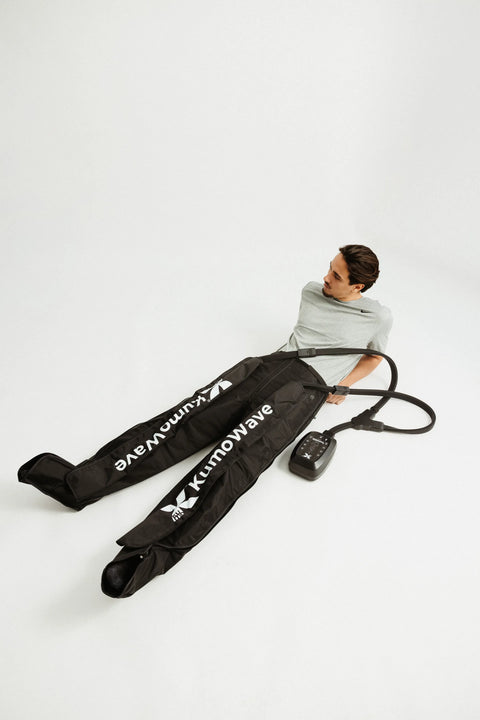
KumoWave Elite – Pressotherapy Pants
Full-coverage trousers. Ideal for lipedema, fluid retention and intensive use.
€799,00 €999,00
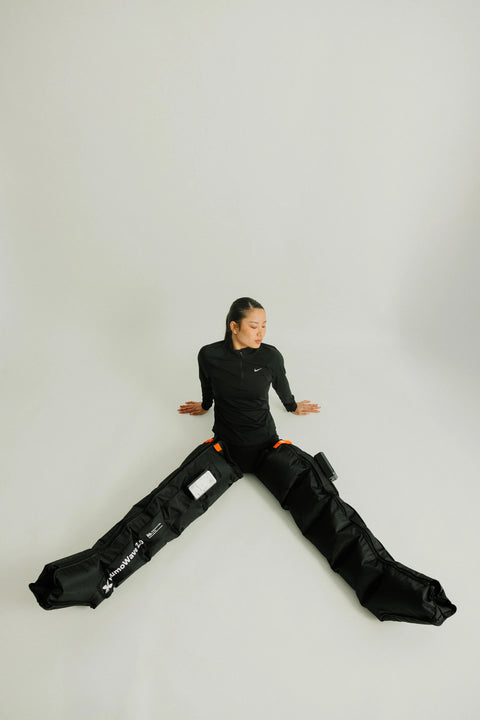
KumoWave 2.0 - Wireless Pressotherapy
Wireless, lightweight boots. Perfect for daily use and recovery.
€499,00 €599,00