

Telling them apart in time matters. In a teenage girl who trains, pain can be simple overload, muscle soreness from effort or a sign that the body needs to ease off, but it can also point to an injury that is better not ignored. (publications.aap.org)
The key is the pattern: typical growing pains show up more in childhood, usually affect both legs, are felt at the end of the day or at night and improve in the morning; by contrast, pain that appears during sport, causes a limp, sits in one spot or comes with fever, weight loss or neurological symptoms deserves a medical assessment. (healthychildren.org)
Pressotherapy at home
End the day with light legs
★★★★★ 4,8/5 · rated by verified customers
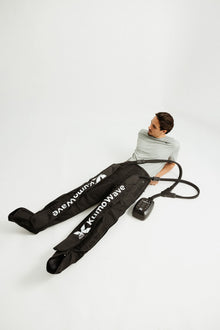
KumoWave pressotherapy boosts circulation and helps drain fluid with sequential compression, in 20-minute sessions at home.
- Boosts circulation and helps drain fluid
- Chamber-based compression, adjustable to you
- Sequential compression that mimics manual drainage
€799,00€999,00
−10% on your 1st order when you subscribe to the newsletter

Growing pains or overload: the difference that matters most
So-called growing pains do not mean that growing hurts. Pediatric literature describes them as benign discomfort, more common in active children, that tends to appear after an intense day, affect both legs and disappear on waking; if the pain is one-sided, appears in the morning, causes a limp or comes with swelling, redness, warmth or fever, it no longer fits that classic pattern.
In a teenage athlete, pain that starts while running, jumping or changing direction makes overload, apophysitis or a stress injury more likely than "growing pains." The AAP notes that many overuse injuries show neither bruising nor swelling at first, and that the risk rises when training load exceeds the capacity to recover.
Personalized protocol · included with your purchase
Want us to tell you how to use it in your case?
With your purchase, our experts prepare a personalized usage protocol for your case: sport, circulation, fluid retention, pregnancy or lipedema.
Message us on WhatsAppOur experts reply · no obligation
What useful recovery looks like in a teenage athlete
Recovery starts with load. For young athletes, the AAP recommends avoiding too much concentrated organized practice, not specializing too early in a single discipline and setting aside at least one full day a week free of organized sport to support physical and mental recovery. When training stops improving performance and starts taking away from it, we are no longer talking about progress, but about excess.
Sleep is part of training too. The NIH, through the NHLBI, explains that during sleep the body supports physical health, and the AAP sums recovery up as a combination of good nutrition, adequate sleep and rest from the physical and mental stress of competition. In a teenager, sleeping too little or at very irregular hours can worsen fatigue and stretch out the return to normal. (nhlbi.nih.gov)
Eating enough energy matters as much as training. Recovery is worse when diet does not match the sporting load, and if irregular or absent periods, persistent fatigue or repeated injuries also appear, it is wise to ask for a medical assessment, because there may be low energy availability or a menstrual disorder that needs attention. (publications.aap.org)
on your first order when you join the newsletter
We send you the code instantly. No spam.
Complementary tools, used with judgment
If a family wants to understand how some non-invasive recovery tools are organized, they can look at Kumo Balance recovery technology and the guide to pressotherapy at home for athletes. As a reference for caution, the literature on medical compression is a reminder that these techniques have contraindications and must be assessed case by case, especially when there is unexplained pain, vascular disease, suspected thrombosis or a complex clinical situation. In minors, any use should be discussed with a health professional. (pmc.ncbi.nlm.nih.gov)
A quick read of the symptoms
The table below sums up patterns that help you get your bearings before deciding whether lowering the load is enough or a medical review is needed. It does not replace an examination, but it helps avoid normalizing signals that do not fit simple tiredness.
Pain patterns and first response
| Pattern | What it usually suggests | Sensible response |
|---|---|---|
| Pain in both legs, at the end of the day or at night, improving in the morning | Fits better with benign growing pains | Watch how it evolves and lower the load if the day was very intense. |
| Pain that appears during training, is very localized or gets worse when jumping and running | Overload or stress injury, sometimes with a stress fracture | Stop the impact and seek assessment if it persists. (healthychildren.org) |
| Pain with swelling, redness, local warmth, bruising or fever | Does not look like typical growing pains | See pediatrics or sports medicine promptly. |
| Low back pain with tingling, weakness, a change in gait or trouble controlling the bowel or bladder | A red flag that calls for medical review | Stop training and seek an evaluation the same day. (healthychildren.org) |
Warning signs that should not be ignored
- Pain in only one leg or in a very specific spot, especially if it increases with running, jumping or changes of support.
- A limp, a change in gait or difficulty walking normally.
- Swelling, warmth, redness or bruising with no clear explanation.
- Fever, weight loss, poor appetite or striking tiredness.
- Low back pain with numbness, tingling, weakness or changes in bladder or bowel control.
- Periods that become irregular or stop, especially if fatigue and repeated injuries are added to the picture. (medlineplus.gov)
If any of these signs appear, the priority is not to "hold on a little longer," but to stop, review the load and ask for a clinical assessment. In youth sport, training on through unresolved pain usually delays recovery and makes the problem worse.
FAQ on recovery, growing pains and red flags in teenage athletes
How do you recognize growing discomfort in a teenage athlete, and when should you seek advice?
The typical pattern is not that of a sports injury. Classic growing pains are usually bilateral, appear at the end of the day or at night and improve the next day. If the pain occurs during sport, is one-sided, causes a limp or comes with swelling, fever or weight loss, it is no longer safe to assume it is "normal" and the sensible move is to seek advice. In teenagers, you also need to think hard about overload, not just growth.
Which warning signs point to an injury in a teenage girl doing intense sport?
The most useful signals are focal pain that increases with impact, a limp, limits on walking or training, swelling, local warmth, bruising, fever and pain that does not improve with rest. The AAP points out that some overuse injuries do not look "very bad" at first, so the absence of a bruise does not rule out a problem. If pain changes the way she runs or puts weight on a foot, it is time to stop and assess.
How can recovery after effort be optimized in teenagers who are still growing?
The basics are simple and powerful: lower the load when needed, sleep well, eat enough and leave real gaps for rest. The AAP recommends at least one weekly rest day from organized sport in young people, and its review on recovery stresses the importance of nutrition, sleep and physical and mental rest. If fatigue piles up week after week, training needs adjusting, not more pressure.
When should low back pain in a young female athlete be a concern?
It is a concern if low back pain appears after a blow, limits movement, or comes with tingling, weakness, fever, weight loss, a change in posture or trouble controlling the bladder or bowel. The AAP lists several of these signs as reasons for medical review in children and teenagers. In sports involving hyperextension, such as gymnastics or certain jumps, persistent low back pain also deserves close attention.
How do you tell overtraining fatigue from normal fatigue?
Normal fatigue improves with rest and does not change performance in a lasting way. Overtraining, by contrast, leaves a sense of exhaustion that does not lift, lowers performance, affects mood and can come with repeated aches or poor sleep quality. The AAP warns that when recovery is no longer enough to offset the load, the athlete enters a spiral of worse performance and more load, exactly the opposite of what she needs.
So what now?
If the pain keeps coming back, if the way she walks changes or if warning signs appear, the priority is a medical assessment. And if you want to keep organizing recovery with good judgment, you can start with the Kumo Balance home page and the guide to ideal pressotherapy frequency and session times at home, always as complementary reading and never as a substitute for professional advice.
KumoWave pressotherapy
Choose your at-home pressotherapy
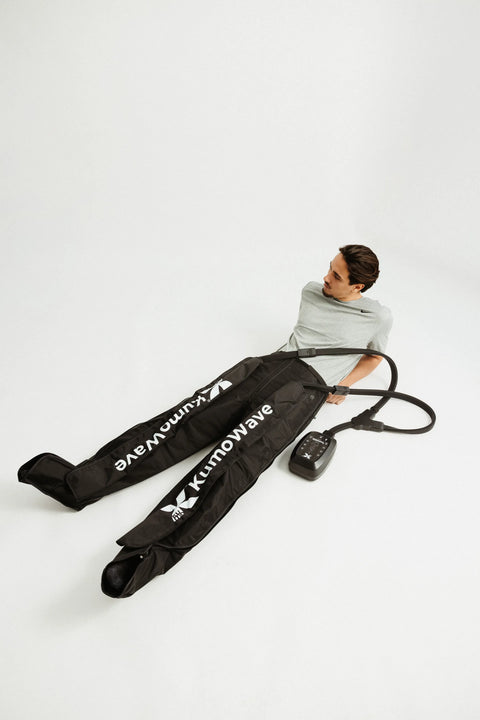
KumoWave Elite – Pressotherapy Pants
Full-coverage trousers. Ideal for lipedema, fluid retention and intensive use.
€799,00 €999,00
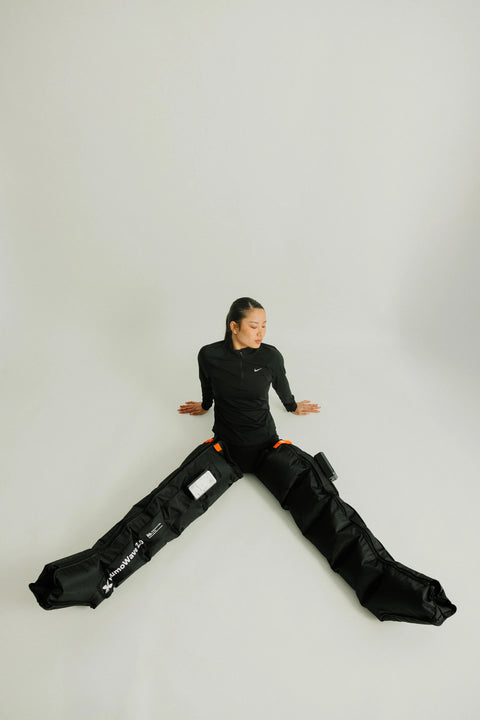
KumoWave 2.0 - Wireless Pressotherapy
Wireless, lightweight boots. Perfect for daily use and recovery.
€499,00 €599,00