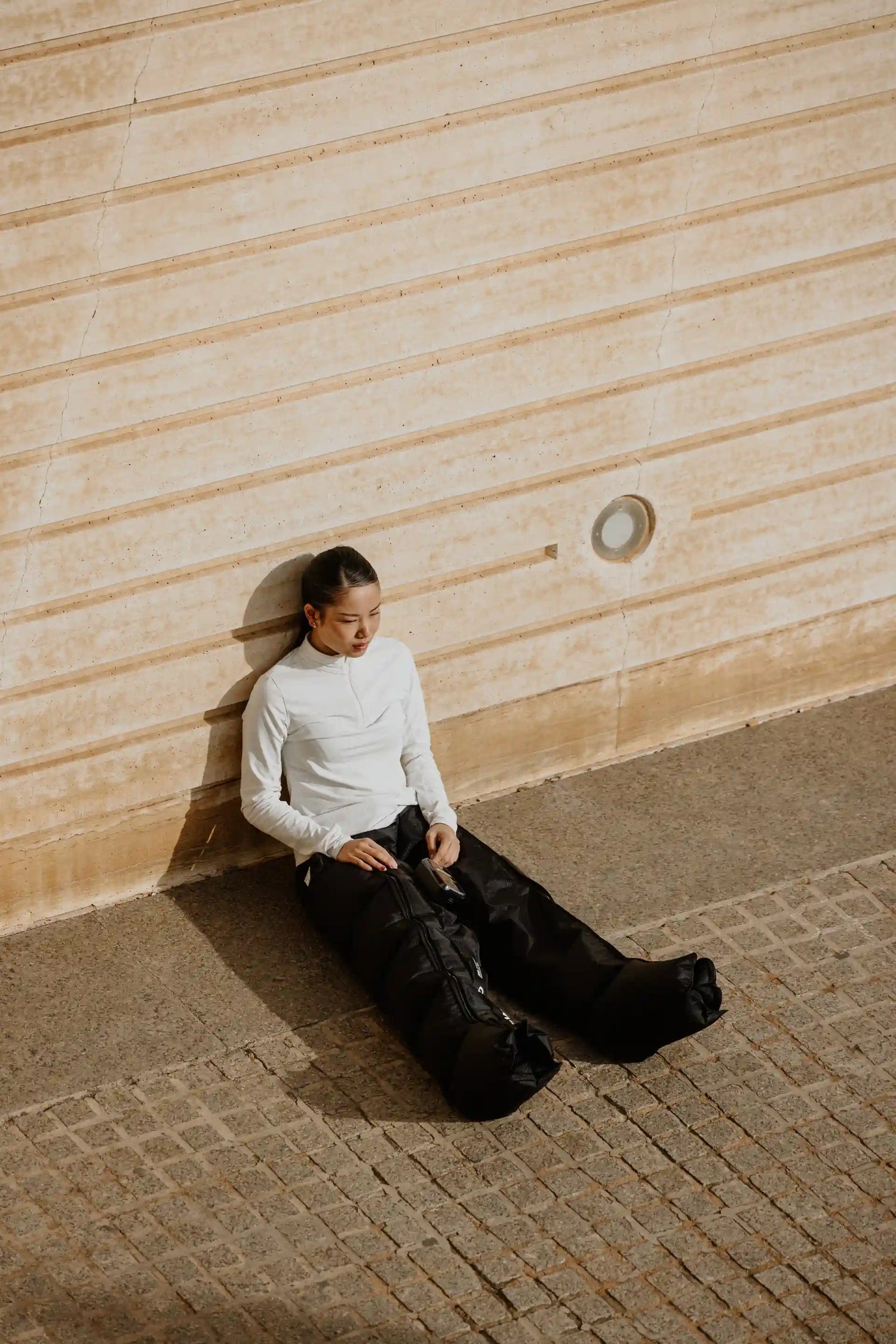
Spending hours on your feet takes a toll. Evidence on prolonged standing links it to back and leg pain, fatigue, and general discomfort, especially when posture barely changes. (pubmed.ncbi.nlm.nih.gov)
In customer-facing roles and jobs requiring standing, fatigue often builds up quickly, which is why it's worth treating the workday as a sequence of loading and recovery.
Pressotherapy at home
End the day with light legs
★★★★★ 4,8/5 · rated by verified customers
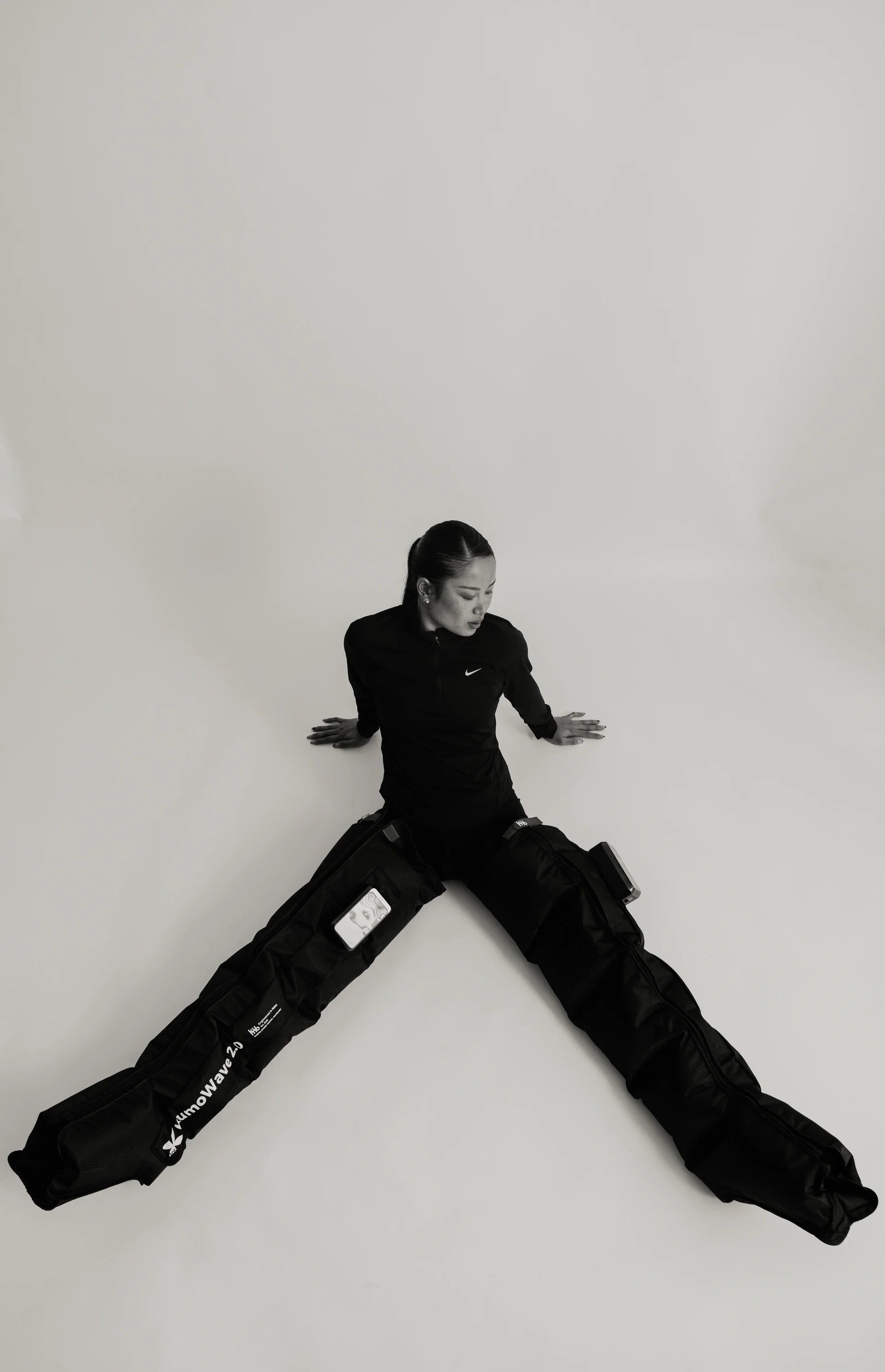
KumoWave pressotherapy boosts circulation and helps drain fluid with sequential compression, in 20-minute sessions at home.
- Boosts circulation and helps drain fluid
- Chamber-based compression, adjustable to you
- Sequential compression that mimics manual drainage
€829,00€999,00
−10% on your 1st order when you subscribe to the newsletter

Why legs get so tired in standing jobs
The CDC describes that many health, service, and retail positions require long hours of standing and that this exposure is associated with leg and foot pain, varicose veins, and chronic venous insufficiency. It also notes that in retail and healthcare, workers spend more than four hours a day standing, which helps explain why healthcare professionals, hairdressers, and retailers end their shifts with that heavy leg feeling. (stacks.cdc.gov)
OSHA adds a key insight: continuously staying in the same position causes muscle fatigue, promotes blood pooling in the lower limbs, and makes standing on hard floors painful. In other words, it's not just about how long you work, but how long you stay still. (osha.gov)
Personalized protocol · included with your purchase
Want us to tell you how to use it in your case?
With your purchase, our experts prepare a personalized usage protocol for your case: sport, circulation, fluid retention, pregnancy or lipedema.
Message us on WhatsAppOur experts reply · no obligation
The key is to change posture before fatigue turns into pain.
Quick summary by job role
| Job Role | What usually happens | What to prioritize |
|---|---|---|
| Healthcare Professionals | Many periods of standing, short displacements, and little time to sit. | Alternate weight-bearing, take advantage of short breaks, and relieve leg pressure at the end of the shift. |
| Hairdressers | Fixed postures in front of clients and very repetitive standing. | Reduce postural rigidity, shift weight between both legs, and mind your base of support. |
| Retail Workers | Hours at the cash register, counter, or stocking with little change of position. | Intercalate movement, elevate one foot when possible, and avoid back-to-back blocks without a break. |
The goal is not to "endure better," but to prevent the body from staying in static mode for too long.
What to do during the workday to feel better at the end
An experimental study observed that after about 30 minutes of standing, briefly moving ankles and hips helped reduce discomfort in the lower limbs. This is the simplest and most useful logic: small interruptions of static posture before heaviness appears. (pubmed.ncbi.nlm.nih.gov)
on your first order when you join the newsletter
We send you the code instantly. No spam.
- Change your support frequently. Shift your weight from one leg to the other, elevate one foot if your job allows, and don't stay "planted" in the same spot for too long.
- Take real micro-breaks. If you can sit for a moment or walk a few steps, do it before you feel pain, not after.
- Reduce environmental impact. A hard floor and a fixed posture make the shift harder, so it's wise to look for solutions that distribute the load better.
With this approach, fatigue accumulates less, and recovery after work becomes much easier.
Pressotherapy as recovery support
If you want to start from the basics, understanding how pressotherapy works will help you see it as a recovery supplement, not an isolated solution.
As a clinical reference, intermittent pneumatic compression is used to help blood circulate in the legs when a person is less active; therefore, sequential compression makes sense as support after a very static day, although it does not replace a medical evaluation. (my.clevelandclinic.org)
Afterward, you can delve into how to support venous return and what a session designed for tired legs provides.
At home, KumoWave 2.0 is a good fit when you're looking for a wireless option that's easy to incorporate at the end of the day.
Recovery after your shift
When the workday ends, the goal changes: lower pressure and facilitate return. Mayo Clinic recommends elevating your legs, wearing elastic compression stockings, and taking frequent breaks to move if you have to sit or stand for long periods. It's a simple way to help the body switch out of load mode. (mayoclinic.org)
If the day has been particularly hard, don't try to compensate with passive rest alone. Combining elevation, gentle movement, and a recovery routine is often more practical than waiting for the heaviness to disappear on its own.
Frequently asked questions
How long should I stand to avoid putting too much strain on my legs?
There isn't a universal number, but a review of studies on prolonged standing suggested avoiding long periods over 40 minutes if you want to reduce the onset of symptoms. In practice, this doesn't mean you have to stop every half hour rigidly; it means you should break up static periods with posture changes, short walks, or alternating support before fatigue turns into pain. (pubmed.ncbi.nlm.nih.gov)
Do compression stockings help when I work many hours standing?
Yes, they can be a useful support, especially if you end up with heavy legs or swollen ankles. The NHS explains that graduated compression stockings improve circulation, reduce swelling and pain, and can slow the worsening of varicose veins. Ideally, they should be seen as part of a broader set of measures: breaks, movement, better support during the shift, and recovery at the end of the day. (esht.nhs.uk)
When does swelling stop seeming like simple fatigue?
If swelling appears suddenly, affects only one leg, or is accompanied by pain, pallor, or a feeling of warmth, it's advisable to consult a doctor as soon as possible. Mayo Clinic also warns of emergencies if swelling is accompanied by shortness of breath, chest pain, dizziness, or coughing up blood, as it could be something more serious than work-related strain. When symptoms change patterns, it's not worth normalizing them. (mayoclinic.org)
What's next?
If you want to move from theory to a real routine, explore the home pressotherapy collection and return to the Kumo Balance homepage to choose the approach that best fits your shifts and the recovery you need at the end of the day.
KumoWave pressotherapy
Choose your at-home pressotherapy
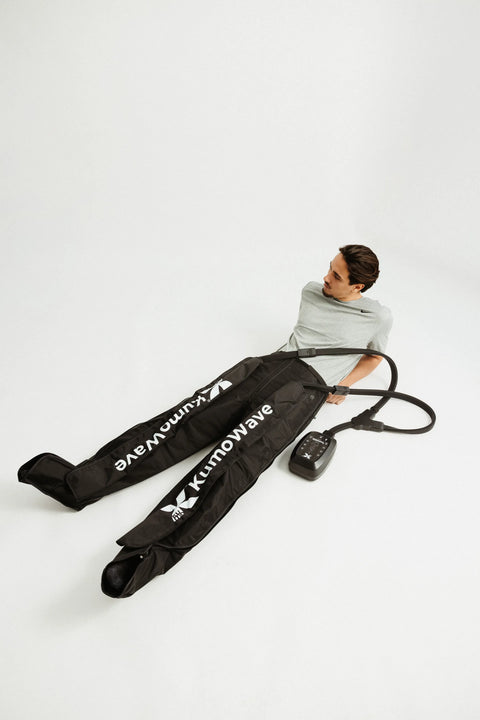
KumoWave Elite – Pressotherapy Pants
Full-coverage trousers. Ideal for lipedema, fluid retention and intensive use.
€829,00 €999,00
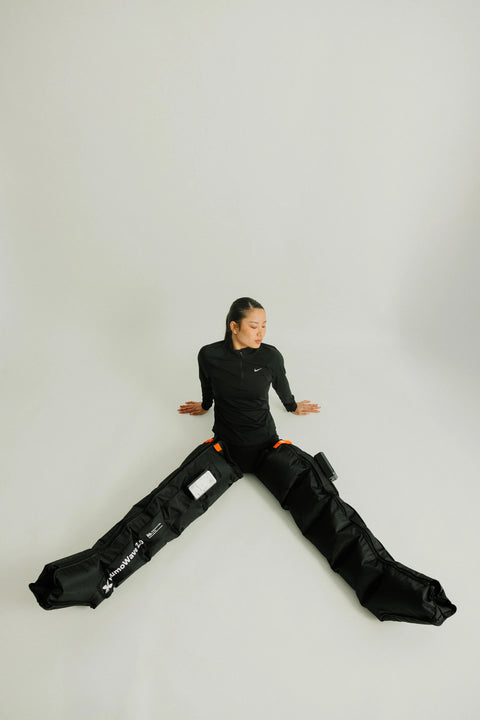
KumoWave 2.0 - Wireless Pressotherapy
Wireless, lightweight boots. Perfect for daily use and recovery.
€499,00 €599,00