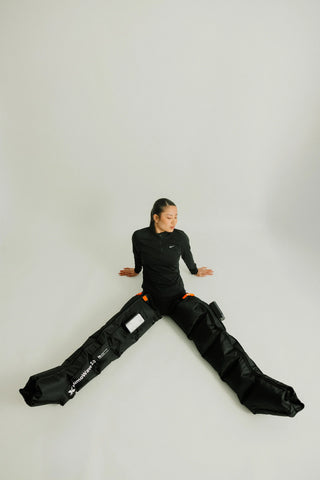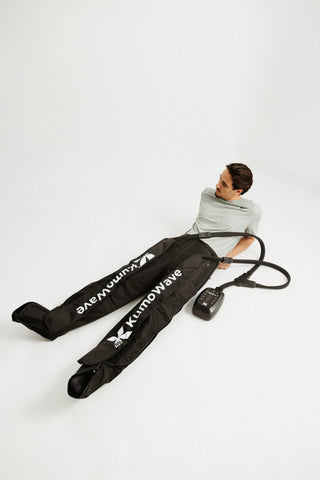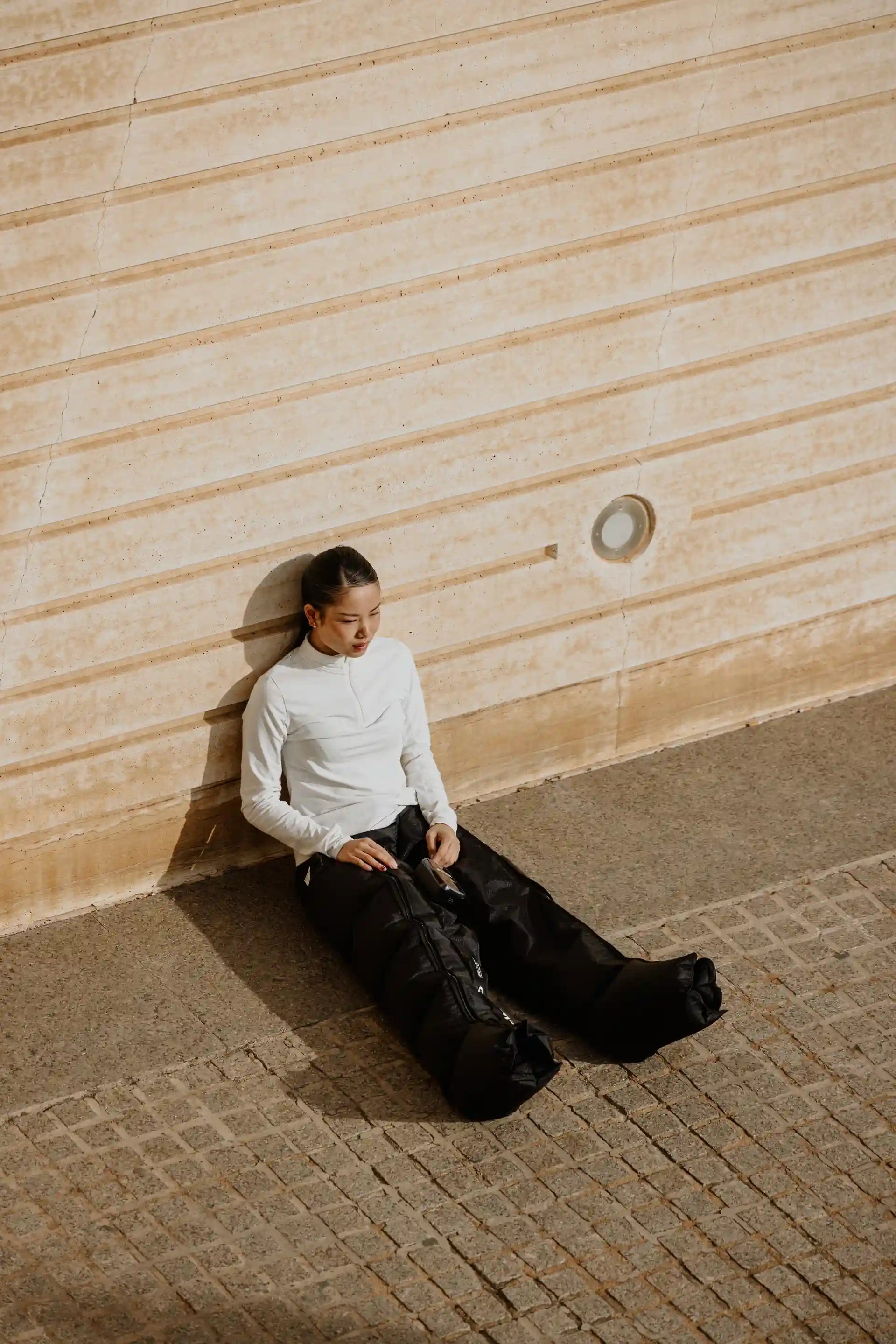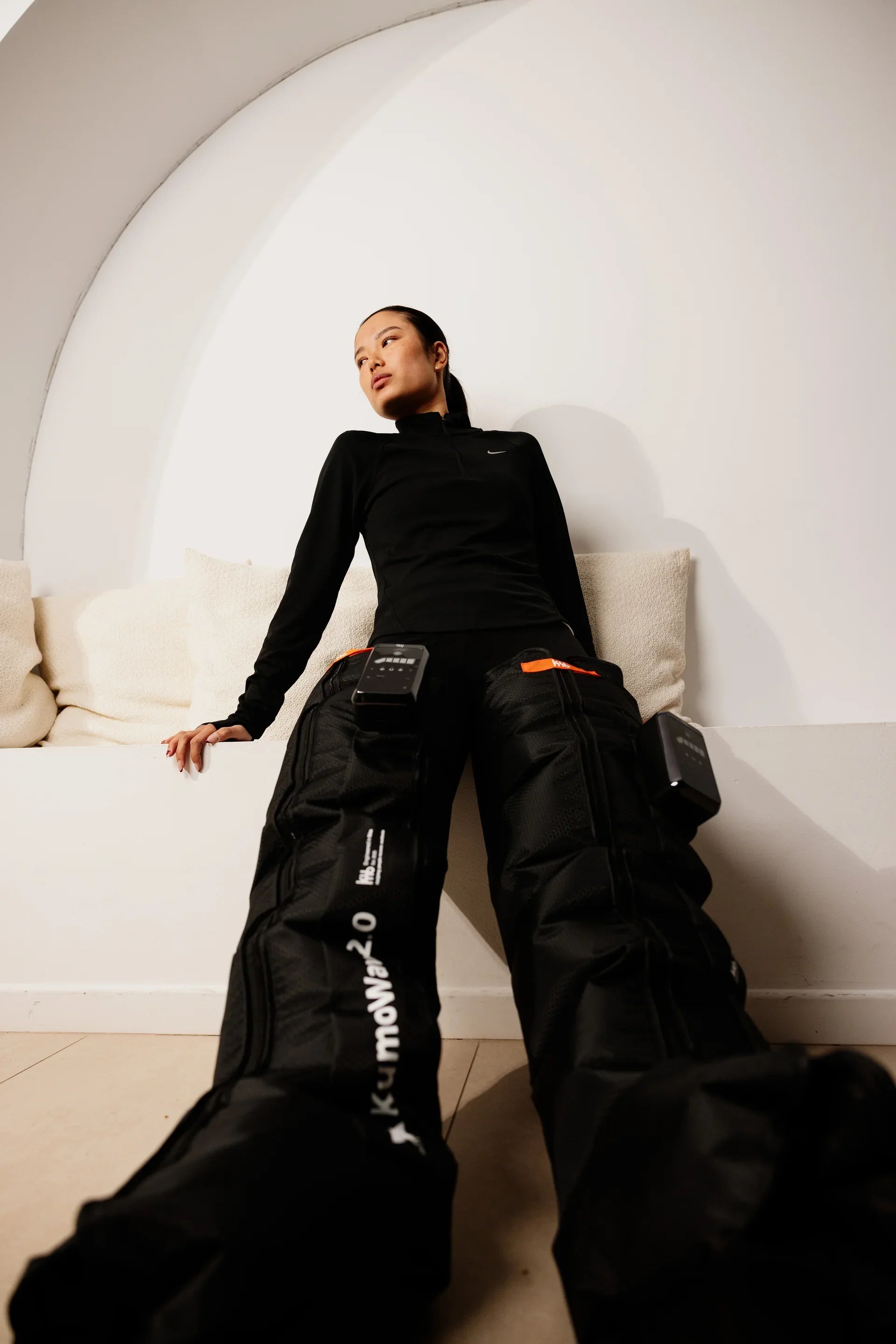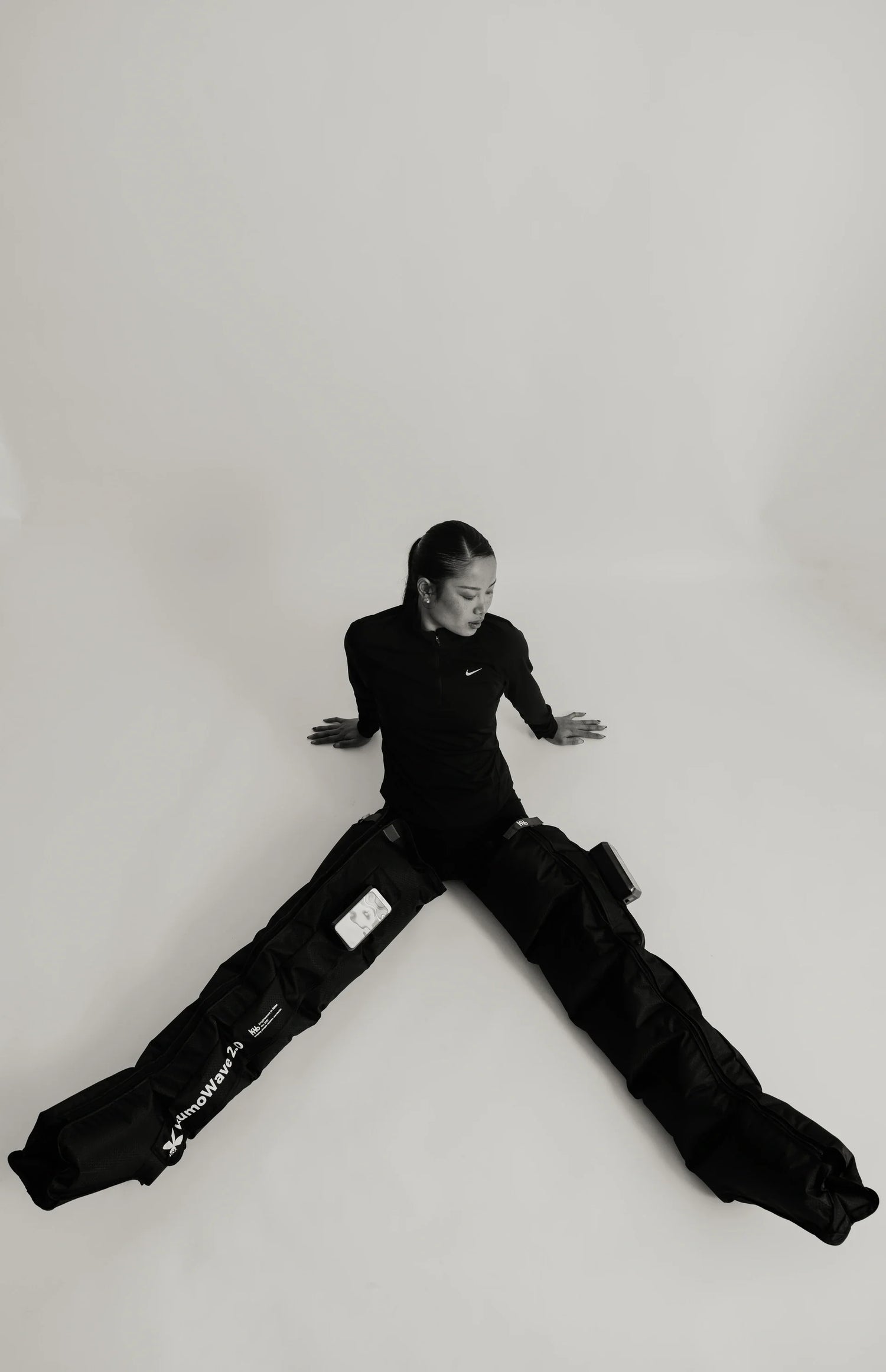
Legs are trained and recover.
If you do trail running or long-distance events, simply logging miles isn't enough: you need to prepare your muscles for elevation changes, accumulated fatigue, and the eccentric work of descents, which are associated with more muscle damage and poorer neuromuscular function in the days that follow. (pubmed.ncbi.nlm.nih.gov)
Red & infrared light
Recover faster, at home
★★★★★ 4,8/5 · rated by verified customers
The KumoLux panel supports muscle recovery with full-body red and infrared light.
- 660 nm red + 850 nm infrared light
- Full-body muscle recovery
- Clinically validated biohacking protocols
€399,00€499,00
−10% on your 1st order when you subscribe to the newsletter

Why trail and long-distance running hit your legs harder
In a mountain race or a long outing, the load isn't linear: the terrain, posture, cadence, and type of muscle contraction all change. Descending, in particular, requires eccentric contractions, and the literature on downhill running describes muscle damage, temporary loss of strength, and soreness for several days. (pubmed.ncbi.nlm.nih.gov)
In addition to mechanical impact, long outings deplete glycogen stores and increase overall fatigue. The joint position of the ACSM, the Academy of Nutrition and Dietetics, and Dietitians of Canada (2009) emphasizes that performance and recovery improve when energy, carbohydrates, protein, and fluids are adequately covered. (pubmed.ncbi.nlm.nih.gov)
Personalized protocol · included with your purchase
Want us to tell you how to use it in your case?
With your purchase, our experts set up your red and infrared light sessions for your sport and goal.
Message us on WhatsAppOur experts reply · no obligation
How to prepare your legs before running
Build a base of strength and eccentric tolerance
The best prevention isn't absolute rest, but progressive preparation. Reviews on downhill running show that prior exposure, eccentric training, and preconditioning strategies can reduce muscle damage and the sensation of soreness after descents. (pubmed.ncbi.nlm.nih.gov)
- Work your quadriceps, glutes, hamstrings, and calves with strength and eccentric control exercises so they can better absorb impact.
- Introduce descents progressively and repeat them in different weeks, as tolerance to downhill running improves with practice. (pubmed.ncbi.nlm.nih.gov)
- Pay attention to your technique on descents: a more relaxed stride and better foot placement help distribute the load.
- Don't try everything new at once in the key week; adapting to eccentric damage requires repetition and leeway.
Arrive with sufficient fuel and fluids
For endurance efforts, the ISSN (2019) proposes a periodized approach: around 5-8 g/kg/day of carbohydrates and about 1.6 g/kg/day of protein during demanding training, with intakes during the event that can be around 30-50 g/h of carbohydrates and 5-10 g/h of protein depending on tolerance and duration. (pubmed.ncbi.nlm.nih.gov)
If the outing lasts many hours or the elevation gain is high, the practical reference is not to deplete your stores. The ultra-endurance literature also describes carbohydrate intakes of 30-110 g/h during competition, always adjusted to digestive tolerance. (pubmed.ncbi.nlm.nih.gov)
on your first order when you join the newsletter
We send you the code instantly. No spam.
Quick table: before, during, and after
| Timing | Goal | Practical example |
|---|---|---|
| 48-24 h before | Arrive with energy and good hydration. | Prioritize carbohydrates, distribute protein intake, and don't cut back on fluids. |
| During the outing | Avoid depleting stores and losing pace. | In long sessions, use carbohydrates and electrolyte drinks according to tolerance. (pubmed.ncbi.nlm.nih.gov) |
| 0-4 h after | Facilitate glycogen replenishment and repair. | If you need to recover quickly, combine carbohydrates and protein from the very beginning. |
| The following night | Promote repair and a fresher leg sensation. | Make sleep a priority; adults need at least 7 hours. (cdc.gov) |
What to do in the hours and days after
Soreness typically appears between 12 and 24 hours after unaccustomed exertion and peaks between 24 and 72 hours; in trail running, if there was significant elevation change or long descents, the feeling of heavy legs can last a bit longer. (content.sph.harvard.edu)
Replenish, hydrate, and sleep
As soon as you finish, replenishing carbohydrates and protein makes more sense than obsessing over a single recovery technique. The ACSM emphasizes that exercise and recovery benefit from adequate nutrition before, during, and after exertion, and the ISSN indicates that if you need to quickly restore glycogen, combining carbohydrates and protein accelerates replenishment.
Sleep also matters: the CDC recommends at least 7 hours per night for adults, and a systematic review in athletes concluded that sleep plays an important role in some aspects of performance and recovery.
If you want a guide designed for the days after a long run, the runner's recovery after a long run summarizes well what to prioritize without wasting time.
What can pressotherapy, massage, and red light contribute
This is where complementary resources come in. Evidence on intermittent pneumatic leg compression points to small but real benefits in muscle function and perception of pain or soreness, although biological markers vary greatly from study to study. (pubmed.ncbi.nlm.nih.gov)
Massage also shows a reduction in muscle discomfort after intense exercise, and photobiomodulation or red light can help in some contexts, although overall certainty remains low. The key is to understand them as support, not as a substitute for sleeping, eating, and hydrating well. (pubmed.ncbi.nlm.nih.gov)
To better integrate these resources into a logical sequence, the athlete's complete recovery routine and the article on pressotherapy and massage gun: in what order to use them after sport help organize the process.
Warning signs: when it's more than just soreness
Normal trail discomfort should not be accompanied by marked weakness, significant swelling, pain that worsens at rest, or dark urine. MedlinePlus warns that rhabdomyolysis can appear after severe exertion and describes red, brown, or cola-colored urine, decreased urination, and muscle weakness as warning signs. (medlineplus.gov)
If the pain lasts longer than expected, limits walking, or forces you to change your technique, don't minimize it. When the symptoms don't follow the typical pattern of soreness or worsen, it's advisable to seek medical evaluation. (mayoclinic.org)
Frequently Asked Questions
How many days does it take for legs to recover after a long trail run?
Soreness typically appears between 12 and 24 hours after unaccustomed exertion and peaks between 24 and 72 hours. In trail running, if there was significant elevation change or long descents, the feeling of heavy legs can last a bit longer. The important thing is that the pain decreases and you regain normal gait. If it worsens, severely limits you, or changes your running form, don't treat it as simple fatigue. (content.sph.harvard.edu)
What to eat after a long trail run?
Think about three things: carbohydrates, protein, and fluids. The ACSM and sports nutrition guidelines indicate that performance and recovery improve when intake is well-planned before, during, and after exertion. If you need to recover quickly for another session in less than 4 hours, the ISSN suggests combining carbohydrates and protein; otherwise, a complete meal with both macronutrients is usually sufficient.
Are pressotherapy boots useful for recovering trail running legs?
As a complement, they can help. A review and meta-analysis on intermittent pneumatic compression found small benefits in muscle function and small to moderate effects on pain and soreness, although biological markers were variable. This means they can provide a sense of relief, but they don't replace sleep, food, and hydration. Use them as part of a routine, not as a magic shortcut.
Is massage, red light, or stretching better after running?
Massage has a reasonable basis for reducing the perception of muscle pain after intense exercise, and photobiomodulation or red light can help in some contexts, although overall certainty remains low. In contrast, the evidence for stretching to reduce soreness or accelerate recovery is weak. If it helps you feel better and keeps you consistent, it can have a place; if you're looking for the biggest impact, prioritize nutrition, sleep, and well-planned load.
When should I consult about leg pain that doesn't seem normal?
Seek evaluation if dark urine appears, urination significantly decreases, you notice marked weakness, significant swelling, or pain that doesn't fit the usual soreness pattern. MedlinePlus describes these symptoms as compatible with rhabdomyolysis, a condition that can damage the kidneys and should be addressed promptly. Pain that worsens instead of improving or prevents you from walking normally also deserves attention.
What now?
If you want to turn all this into a simple routine, start with progressive preparation and well-ordered recovery. You can explore at-home pressotherapy with KumoWave and return to Kumo Balance to further refine your recovery strategy.

Red & infrared light
KumoLux Panel – Red and Infrared LED Panel
★★★★★ 4,8/5 · rated by verified customers
- 660 nm red + 850 nm infrared light
- Full-body muscle recovery
- Clinically validated biohacking protocols
€399,00€499,00· pay in installments with seQura or Klarna