
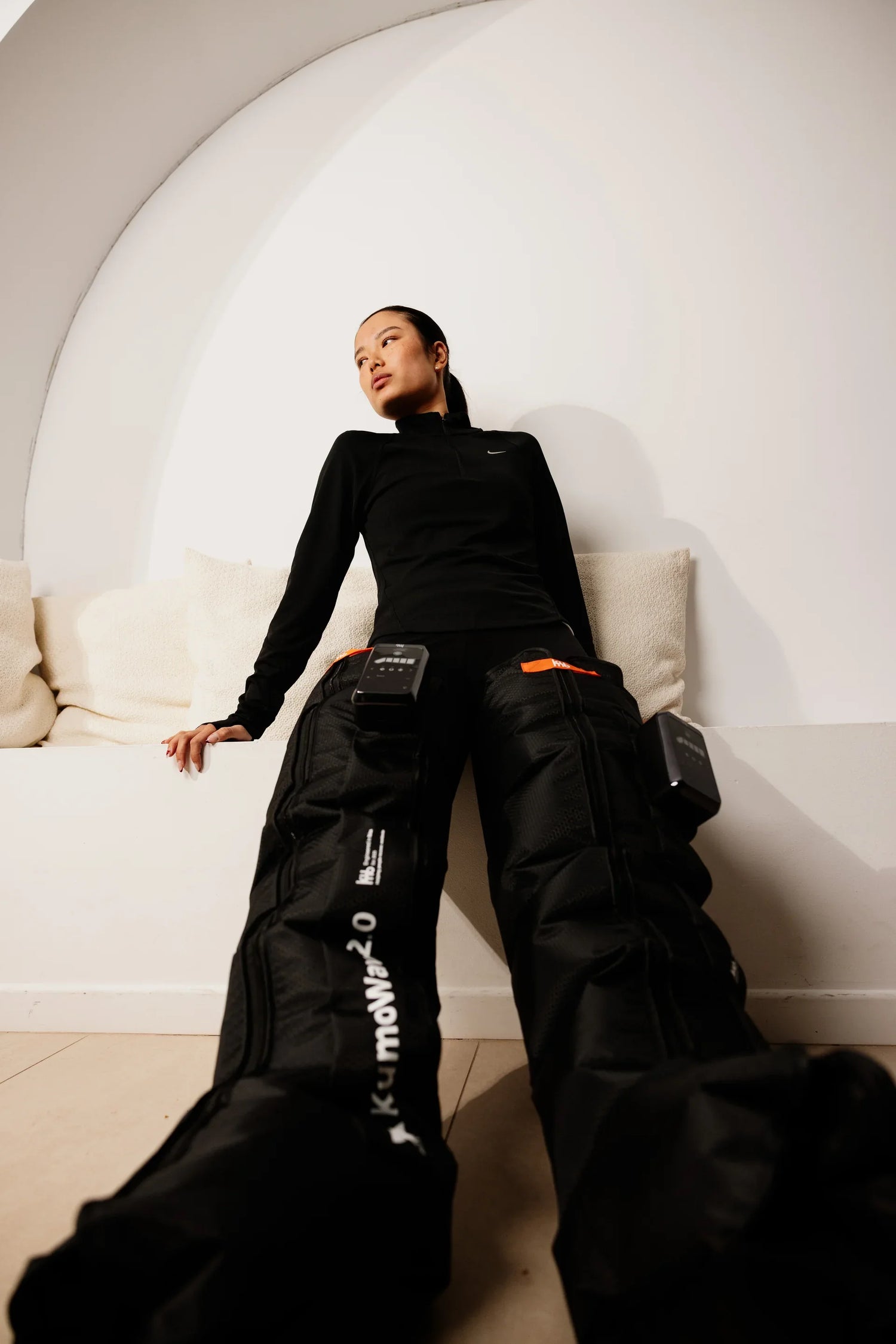
Tired legs are not a minor detail.
When heaviness, swelling, or itching appear at the end of the day, there is often a venous problem behind it: the valves in the veins do not push blood properly, and it accumulates in the legs. The NHS guide on varicose veins and Mayo Clinic agree that walking, elevating the legs, and using compression, when indicated, are common measures to relieve symptoms.
Pressotherapy at home
End the day with light legs
★★★★★ 4,8/5 · rated by verified customers
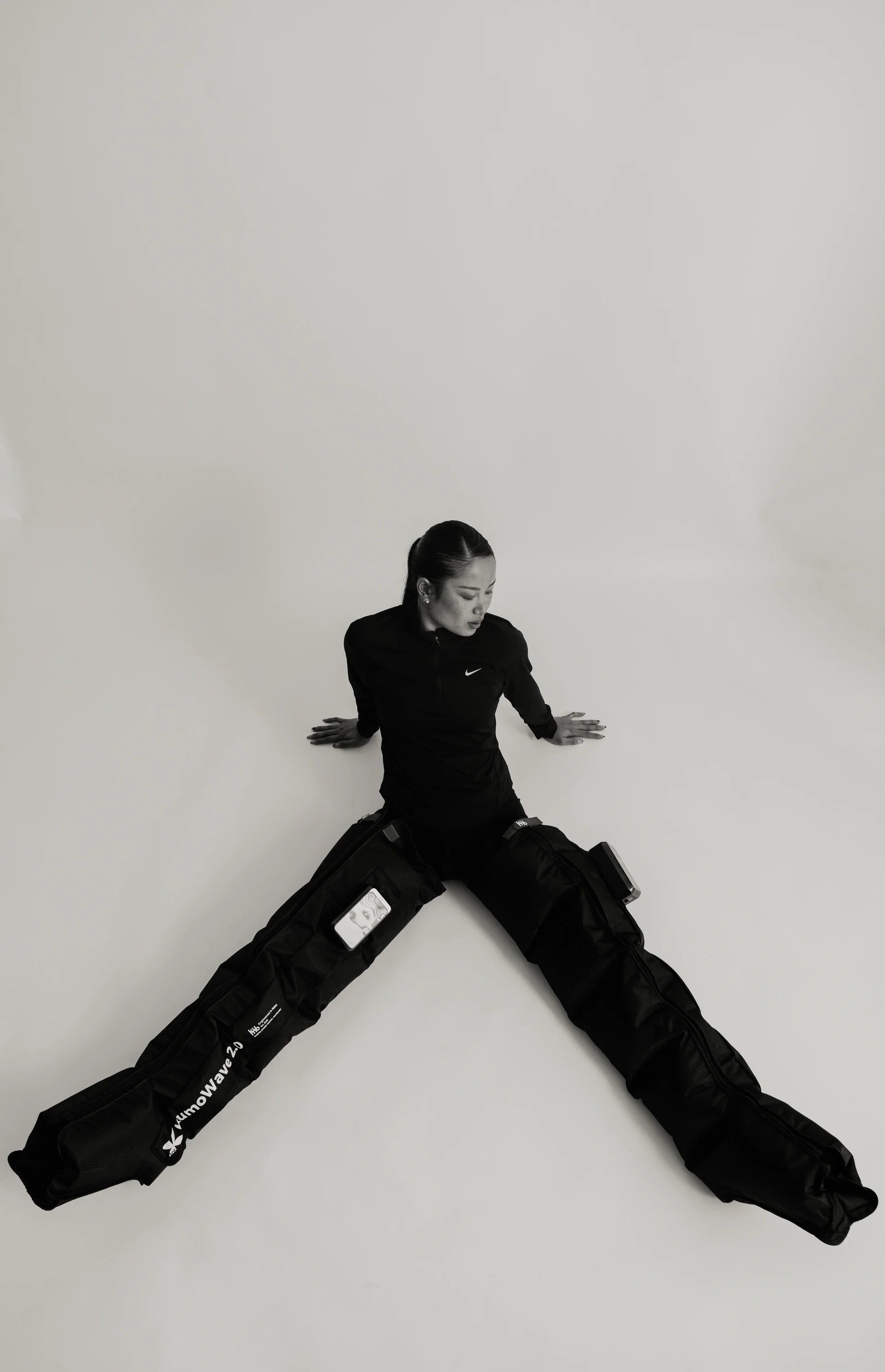
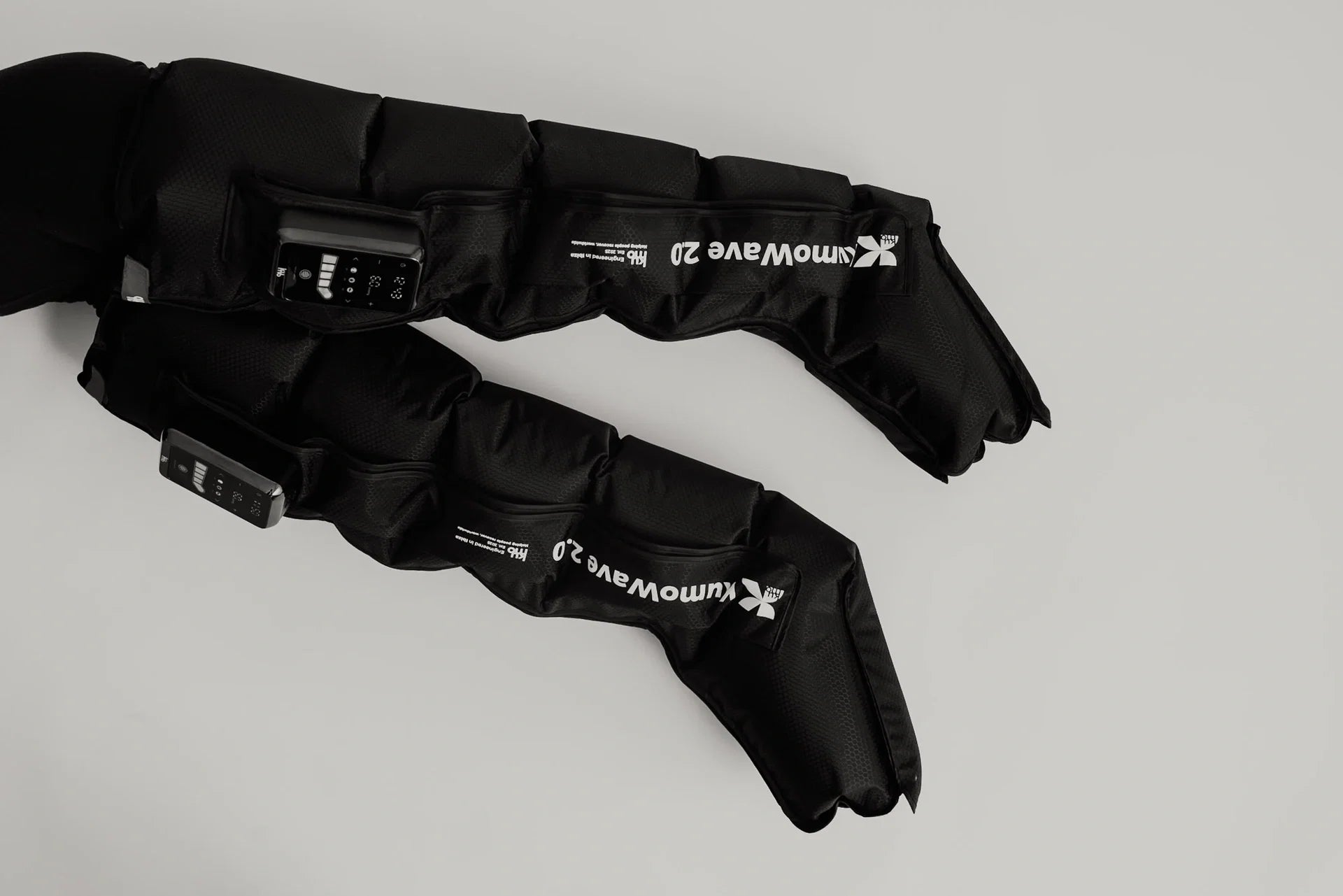
KumoWave pressotherapy boosts circulation and helps drain fluid with sequential compression, in 20-minute sessions at home.
- Boosts circulation and helps drain fluid
- Chamber-based compression, adjustable to you
- Sequential compression that mimics manual drainage
€829,00€999,00
−10% on your 1st order when you subscribe to the newsletter

The key is twofold: to relieve daily discomfort without worsening the condition and to know when discomfort is no longer "normal." MedlinePlus reminds us that lack of exercise, age, obesity, and family history increase the risk, while discomfort can range from a simple feeling of heaviness to pain, swelling, or skin changes.
What are varicose veins and why do they cause heavy legs?
Varicose veins appear when superficial leg veins dilate because their valves no longer close properly. This promotes blood reflux, increases venous pressure, and is felt as heaviness, dull pain, tightness, swelling, or itching. Age, pregnancy, family history, being overweight, and spending many hours sitting or standing increase the risk.
Personalized protocol · included with your purchase
Want us to tell you how to use it in your case?
With your purchase, our experts prepare a personalized usage protocol for your case: sport, circulation, fluid retention, pregnancy or lipedema.
Message us on WhatsAppOur experts reply · no obligation
Furthermore, it's not just about aesthetics. The NICE introduction on varicose veins indicates that between 3% and 6% of people with varicose veins will develop venous ulcers over their lifetime, so it's advisable to monitor their evolution and not let symptoms become chronic.
What you can do daily to relieve symptoms
The most useful changes are often simple but consistent. Mayo Clinic recommends exercise, leg elevation, and compression as the basis for symptomatic relief; MedlinePlus adds that moving, losing weight if necessary, elevating legs, and not crossing them when sitting can help prevent worsening. Mayo Clinic summarizes these relief measures.
- Walk daily or, if you can't do it continuously, distribute movement into brief blocks to activate the calf muscle pump.
- Elevate your legs when resting, ideally above heart level, to facilitate venous return.
- Avoid spending long periods motionless and break up sitting or standing time with small pauses to move your ankles and calves.
- Do not cross your legs for long periods if you notice that the heaviness worsens.
- If excess weight is part of the problem, gradual weight loss can help reduce pressure on the veins.
If these measures fall short, it may be useful to better understand the option of home compression. Therapeutic compression—including intermittent pneumatic compression—can help reduce edema and feelings of heaviness in selected cases; a PubMed review on compression and venous edema places it among the available modalities for venous disease and limb edema.
on your first order when you join the newsletter
We send you the code instantly. No spam.
If you are considering using it at home, it's best to start with what pressotherapy is and how it works, then see a step-by-step guide for home use, review how often to do it and for how long per session, and understand how to adjust the pressure in mmHg without overdoing it. If you also want to review practical limits, also keep these basic home precautions in mind.
Important: compression is not a good idea if there is suspicion of peripheral arterial disease or compromised inflow circulation. The NHS warns that it is not safe to apply compression when ankle pressures are low; by analogy, the same caution should be applied to home pressotherapy if there is a suddenly swollen leg, unilateral pain, or signs of poor perfusion. the NHS safety criterion on compression and arterial circulation.
Warning signs not to normalize
Seek medical help immediately if fatigue changes pattern and appears unilaterally, intensely, or abruptly. Mayo Clinic and MedlinePlus point to swelling or pain in only one leg, local heat, tenderness to the touch, or sudden worsening as worrying signs; the NHS adds that chest pain, shortness of breath, or coughing up blood are signs of urgency. MedlinePlus summarizes the signs not to normalize and the NHS details urgent signs of pulmonary embolism. (mayoclinic.org)
- One leg is more swollen, hot, or red than the other.
- Pain that doesn't subside, increases with walking, or appears when touching the calf.
- Persistent color changes, hard skin, bleeding, or an ulcer that doesn't improve. (medlineplus.gov)
- Shortness of breath, chest pain, or coughing up blood, because at that point we're talking about an emergency.
Quick table of symptoms, decisions, and precautions
| Situation | What usually helps | What not to do / when to seek help |
|---|---|---|
| Heaviness, tightness, or fatigue at the end of the day | Walking, elevating legs, and taking movement breaks. | Do not remain immobile for hours. |
| Visible varicose veins with mild discomfort | Compression can help if it has been indicated and there are no contraindications. | Do not use it without ruling out an arterial problem or suspected thrombosis. |
| One leg more swollen, red, or hot | Seek medical evaluation the same day. | Do not attribute the change solely to fatigue. |
| Skin changes, ulcer, or bleeding | Requires clinical evaluation and skin care. | Do not delay the consultation, as the evolution can become complicated. (nhs.uk) |
FAQ
Does walking help with varicose veins and tired legs?
Yes, walking usually helps. Movement activates the calf muscle pump, which pushes blood upwards and relieves the feeling of heaviness. The NHS and Mayo Clinic recommend regular exercise as part of self-care for varicose veins, and MedlinePlus adds that lack of activity promotes worsening. The most useful approach is not to do a lot at once, but to move frequently throughout the day and avoid spending too many hours still.
Is it safe to use pressotherapy at home if I have varicose veins?
It can be in selected individuals, but it's not something to start "blindly." Intermittent pneumatic compression is part of compression therapy and can help with edema and heaviness; however, if there is a unilaterally swollen leg, intense pain, color changes, or suspicion of peripheral arterial disease, medical evaluation is required first. Pressotherapy can be a support, not a universal solution.
How do I know if what I have is just fatigue or something more serious?
Venous fatigue usually worsens at the end of the day and improves somewhat with rest or leg elevation. In contrast, one leg being more swollen than the other, heat, redness, pain when touching the calf, or symptoms such as shortness of breath and chest pain, do not fit with simple "fatigue." In that scenario, the recommendation is to seek medical attention without delay.
Are compression stockings and pressotherapy the same thing?
No. Compression stockings exert graduated pressure continuously, while pressotherapy uses air chambers or intermittent pneumatic compression. Both aim to promote venous return and reduce swelling, but they do not work the same way nor do they substitute one another. The MedlinePlus guide on compression stockings explains the role of graduated pressure, and literature on venous compression also describes pneumatic devices as another possible modality.
What's next?
If you want to turn these guidelines into a more complete recovery routine, explore the home pressotherapy collection and return to the Kumo Balance homepage to see how it fits into your daily life.
KumoWave pressotherapy
Choose your at-home pressotherapy
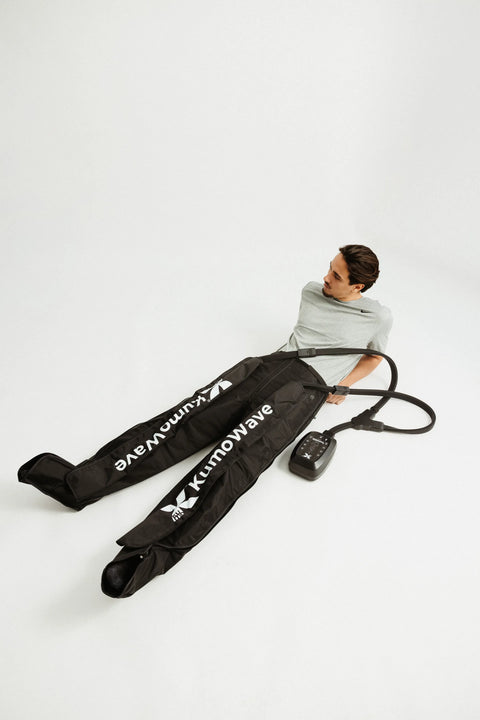
KumoWave Elite – Pressotherapy Pants
Full-coverage trousers. Ideal for lipedema, fluid retention and intensive use.
€829,00 €999,00
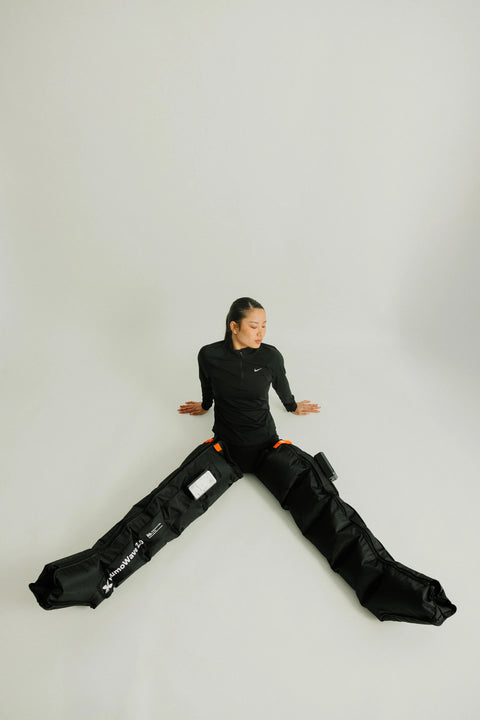
KumoWave 2.0 - Wireless Pressotherapy
Wireless, lightweight boots. Perfect for daily use and recovery.
€499,00 €599,00