Recovering well between sprints changes a session. If the rest is too short, speed drops and technique falls apart, because repeated efforts of under 10 seconds with brief recoveries pile up fatigue fast.
There is no magic rest. The ideal length depends on whether you are after pure speed, repeated efforts or a bigger metabolic load, and the literature shows a lot of variability in real repeated-sprint protocols.
Pressotherapy at home
End the day with light legs
★★★★★ 4,8/5 · rated by verified customers
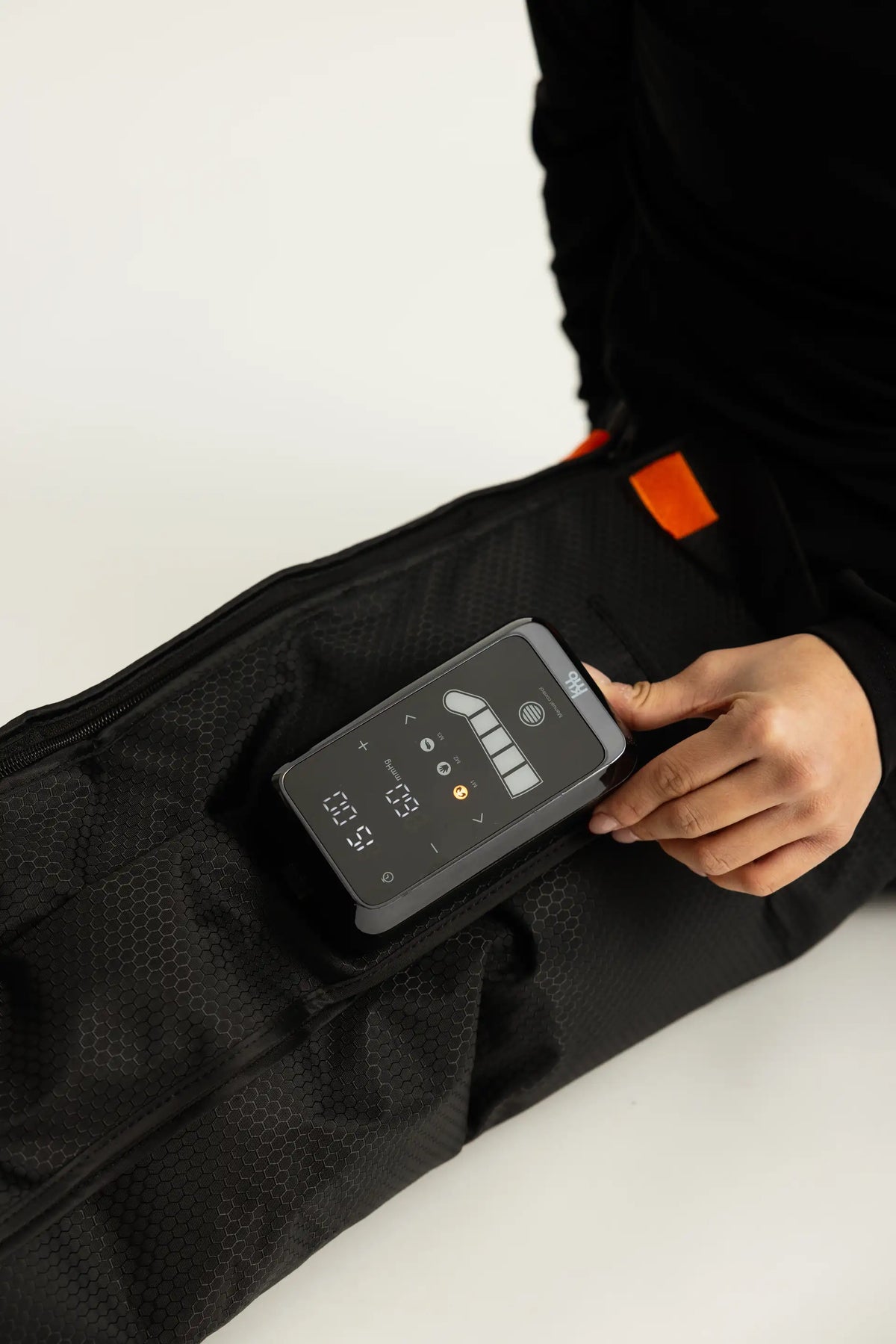
KumoWave pressotherapy boosts circulation and helps drain fluid with sequential compression, in 20-minute sessions at home.
- Boosts circulation and helps drain fluid
- Chamber-based compression, adjustable to you
- Sequential compression that mimics manual drainage
€799,00€999,00
−10% on your 1st order when you subscribe to the newsletter

What happens in the body when you repeat sprints
In short sprints, energy comes mostly from phosphocreatine and fast glycolysis. During recovery, oxygen uptake stays elevated to restore phosphocreatine and help normalize the muscle environment. That is why two minutes of rest can bring back part of your power, but does not guarantee the second sprint will look like the first.
Guideline rest periods by goal
Quick guide to rest between reps and sets
| Goal | Guideline rest | What to prioritize |
|---|---|---|
| Maximum speed | 2 to 5 minutes between reps, 3 to 6 minutes between sets | Look for technical quality, explosive starts and consistent times. This guideline rests on the incomplete recovery of phosphocreatine at 2 minutes and on the fact that, even at 6 minutes, recovery is still partial in repeated efforts. |
| Repeated-sprint resistance | 15 to 30 seconds of passive recovery | Passive recovery reduced physiological stress, perceived effort and the drop in performance in studies on repeated running. |
| Metabolic overload | 15 to 30 seconds of very easy active recovery | Active recovery raises physiological stress more and can work as a loading stimulus if that is the goal of the day. |
Important: these numbers are guidelines. Research on repeated-sprint tests uses distances of 20 to 40 meters, rests of 10 to 60 seconds and very different work-to-rest ratios, so the best rest always fits the goal and the athlete.
Personalized protocol · included with your purchase
Want us to tell you how to use it in your case?
With your purchase, our experts prepare a personalized usage protocol for your case: sport, circulation, fluid retention, pregnancy or lipedema.
Message us on WhatsAppOur experts reply · no obligation
Active or passive recovery between reps
If your priority is repeating speed as cleanly as possible, passive recovery is usually the better choice in repeated running. The 2019 systematic review found less physiological stress, less perceived effort and a smaller drop in performance with passive recovery in running studies, while active recovery looked more useful as an overload strategy.
In practice, that means a very easy walk or a minimal jog can make sense in loading sessions, but should not turn into another hard block if what you want is to keep your peak speed. That reading is consistent with the available evidence on repeated sprinting and recovery between efforts.
How to organize a session that holds its quality
- Decide before you start whether the session is aiming at maximum speed, effort tolerance or a mix of both.
- Use longer passive rests if the priority is keeping technical quality and acceleration.
- Shorten the rest only when the goal is to build controlled fatigue and raise the physiological load.
- End the set if mechanics break down or times clearly get worse, because at that point you are training fatigue rather than useful speed.
- If you have an injury, persistent pain or a medical condition, individualize the load with a health professional before changing your routine.
When you want to carry that logic into the work you do after training, the guide to pressotherapy at home, the red light therapy for muscle recovery and the at-home recovery protocol with pressotherapy, red light and massage show how to order a complementary routine without losing sight of what matters: rest, technique and load programming.
on your first order when you join the newsletter
We send you the code instantly. No spam.
If you would rather see the technical approach behind those solutions, you can look at our recovery technology and the pressotherapy collection as a starting point on the site. These tools can support a routine, but they do not replace sleep, training planning or a professional assessment when there is pain or injury.
What factors change the rest you need
- Sprint duration matters a lot, because you do not recover the same way after 6 seconds as after 20 seconds of maximal effort.
- The number of reps also weighs in, since accumulated fatigue makes the next rep's performance depend more on the recovery available.
- Session structure changes the response, because a linear test is not the same as a protocol with changes of direction or with sets of different distances.
- The goal of the day rules: preserving speed, tolerating lactate or creating metabolic overload do not call for the same rest.
- The athlete's general condition, technique and prior fatigue determine how much rest is really needed to produce useful speed again.
How to improve recovery between sprints over the medium term
Recovery between sets does not improve by resting more alone. Over the medium term, the evidence recommends combining traditional sprint work, strength and power training, and high-intensity interval training to improve the ability to recover between efforts. A classic review on repeated sprint ability pointed to exactly those two big levers, and a later synthesis confirmed improvements in 10- and 20-meter times, VO2max, repeated performance, change of direction and vertical jump in trained athletes.
That does not mean more reps, more sets or more meters is always better. In fact, the 2023 meta-analysis found that manipulating frequency, volume or distance did not produce substantial benefits consistently compared with the reference program, so it pays to progress with judgment and record the real times of every session.
If you want to go deeper into how a complementary routine fits in off the track, you can also look at the at-home recovery routine with pressotherapy, red light and massage or the KumoWave 2.0 page, always as support and never as a substitute for good training planning.
FAQ on recovery between sprints
What is the best recovery between sprint sets in track and field?
It depends on the goal. If you want to preserve speed and technique, passive recovery usually works better in repeated running. If you are after a bigger physiological load, a very easy active rest can serve as overload. The key is fitting the rest to sprint distance, number of reps and the athlete's level, not copying a single format for every session.
How do you calculate recovery time between speed intervals?
Start with the goal of the session. Then watch how much your time drops from one rep to the next. In the repeated-sprint literature there are protocols with rests of 10 to 60 seconds, and one review proposed 6 x 30 meters with 15 seconds of active recovery as a demanding reference. If your priority is maximum quality, you usually need more time between sets.
Is active or passive recovery better between sprint reps?
To keep sprint quality, passive recovery is usually preferable. The 2019 systematic review found less physiological stress, less perceived effort and a smaller drop in running performance with passive recovery. Active recovery can make sense when you are looking for an overload stimulus, but then the goal of the session is no longer repeating maximum speed with the same freshness.
How many minutes of rest between maximal sprint sets are recommended?
As a practical rule, 2 to 5 minutes can work for short efforts, but if maximum speed is the priority, many sessions need 3 to 6 minutes or more. A classic study showed that after 2 minutes phosphocreatine was not fully restored, and another observed that at 6 minutes recovery was still partial. So the best reference is not a fixed number, but the quality of the next rep.
What factors influence recovery between sprints?
Sprint duration, number of reps, distance, changes of direction, prior fatigue level and type of rest all play a part. The general context counts too: hydration, nutrition, rest and accumulated training load. ACSM frames recovery as a process that includes exercise, nutrition, hydration and rest, so the pause between sprints is only one piece of the puzzle.
What now?
If you want to move from theory to a fuller routine, start with the Kumo Balance site and look at the KumoWave 2.0 to see how pneumatic compression fits into a well-organized recovery plan. The idea is simple: better rest, better rep, better session.
KumoWave pressotherapy
Choose your at-home pressotherapy
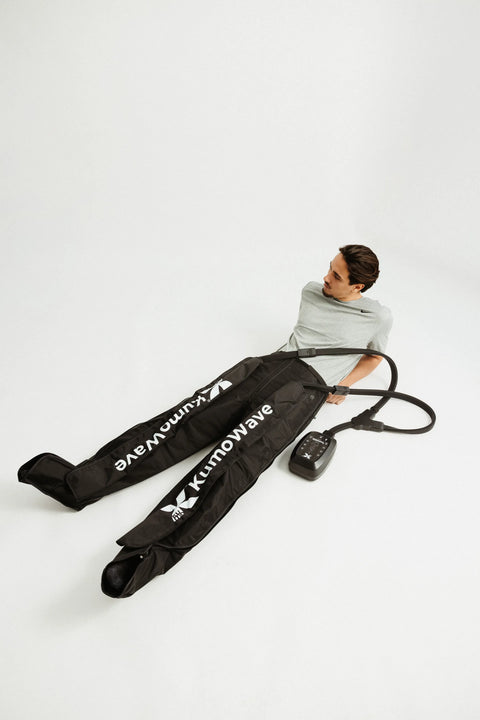
KumoWave Elite – Pressotherapy Pants
Full-coverage trousers. Ideal for lipedema, fluid retention and intensive use.
€799,00 €999,00
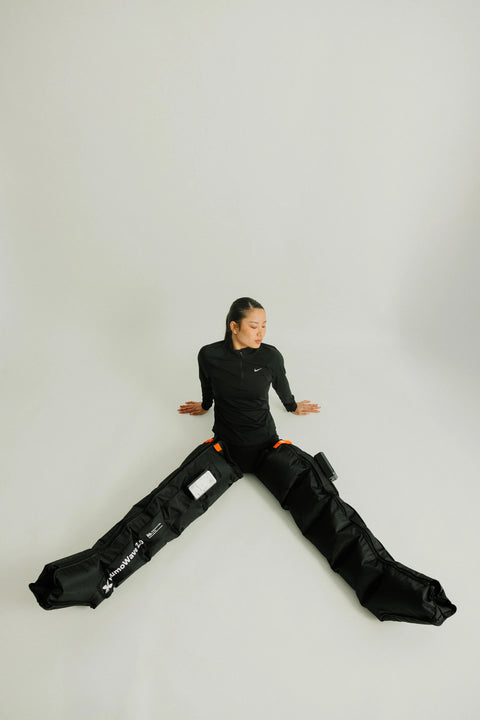
KumoWave 2.0 - Wireless Pressotherapy
Wireless, lightweight boots. Perfect for daily use and recovery.
€499,00 €599,00