


Sarcopenia is not inevitable. It is the progressive loss of muscle mass and strength that becomes more common with age and can affect mobility, balance, and independence.
It is not just an aesthetic issue or simple tiredness. When strength declines, walking speed, the ability to get out of a chair, and tolerance for daily tasks also tend to worsen, which is why it is important to detect it early. (pubmed.ncbi.nlm.nih.gov)
Pressotherapy at home
End the day with light legs
★★★★★ 4,8/5 · rated by verified customers
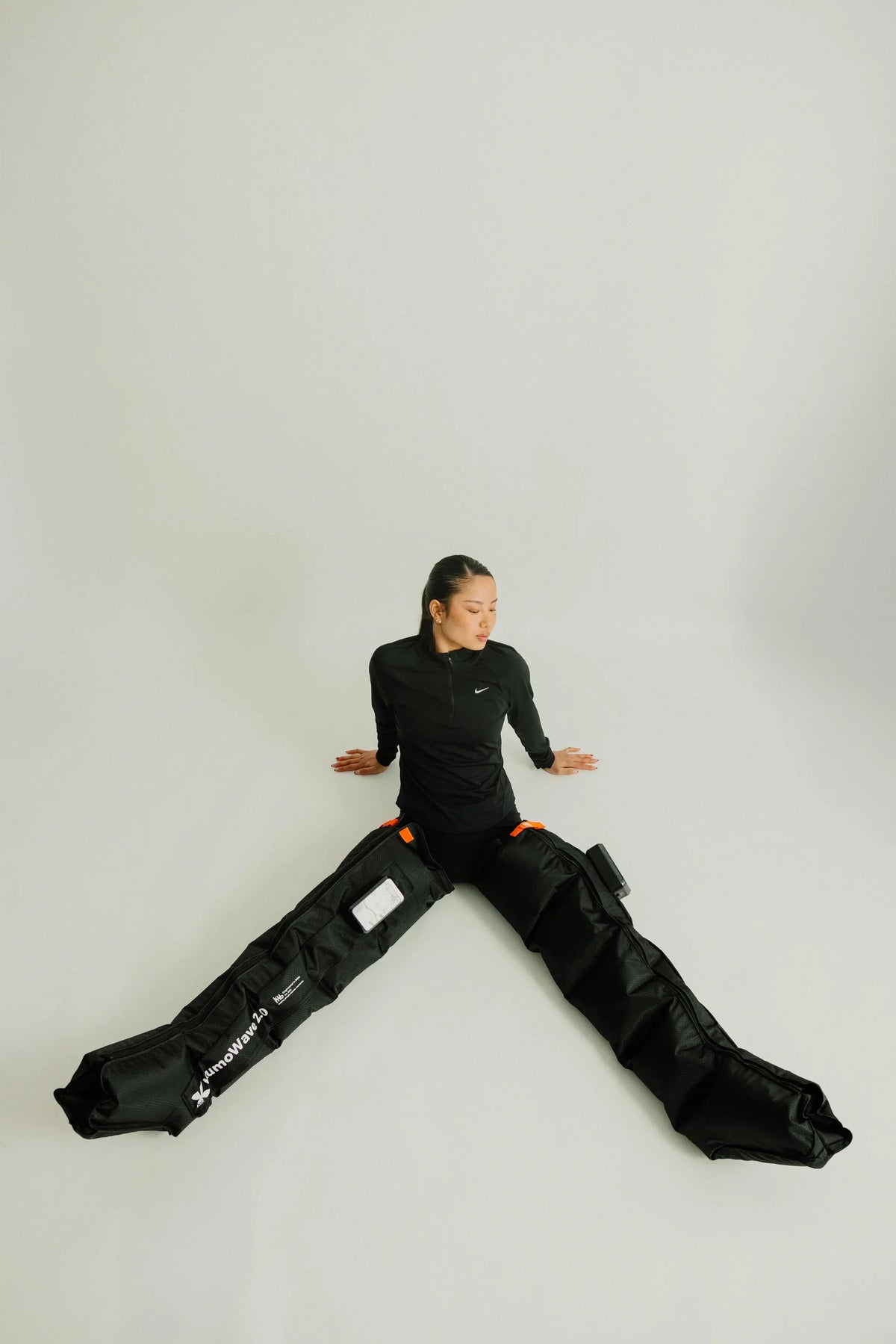
KumoWave pressotherapy boosts circulation and helps drain fluid with sequential compression, in 20-minute sessions at home.
- Boosts circulation and helps drain fluid
- Chamber-based compression, adjustable to you
- Sequential compression that mimics manual drainage
€799,00€999,00
−10% on your 1st order when you subscribe to the newsletter

What is sarcopenia?
The 2019 EWGSOP2 European consensus placed muscle strength at the center of the diagnosis: first, it is suspected due to low strength, then confirmed by a reduced amount or quality of muscle, and, if physical performance also declines, it is considered a more severe form. A 2024 Nature Reviews Disease Primers review describes it as an accelerated loss of skeletal muscle associated, above all, with aging, although not exclusively.
Why muscle is lost with age
Biological changes that favor it
With age, muscle does not only lose size. Innervation also changes, anabolic resistance increases, meaning the muscle responds less effectively to the stimulus of food and exercise, low-grade inflammation increases, and muscle tissue quality worsens, with more fat and fibrosis within the muscle itself. In simple terms, the body responds less effectively to movement and to usual nutrition. (nature.com)
Personalized protocol · included with your purchase
Want us to tell you how to use it in your case?
With your purchase, our experts prepare a personalized usage protocol for your case: sport, circulation, fluid retention, pregnancy or lipedema.
Message us on WhatsAppOur experts reply · no obligation
Factors that accelerate it
There are situations that accelerate this process, especially these.
- Reduced movement or sedentary lifestyle.
- Periods of immobilization, convalescence, or hospitalization.
- Insufficient energy intake due to poor appetite or very restrictive diets.
- Chronic diseases and persistent inflammatory processes.
- Difficulties chewing, cooking, or eating regularly.
When several of these factors combine, muscle loss usually progresses more quickly and daily function is affected sooner.
Signs that should not be ignored
How it is usually noticed in daily life
Signs do not always appear all at once. It is common to notice more difficulty getting out of a chair, climbing stairs, carrying bags, maintaining balance, or walking at the same pace as before. Handgrip strength also often declines.
on your first order when you join the newsletter
We send you the code instantly. No spam.
If several of these signs persist for weeks, it is reasonable to seek a professional assessment. Sarcopenia is better identified through a comprehensive assessment than by a single visual impression.
Common tests in the clinic
A 2025 review of diagnostic criteria reminds us that the most commonly used functional measures are still handgrip strength and walking speed, along with simple tests such as standing up and sitting down several times. (pubmed.ncbi.nlm.nih.gov)
| Element | What it usually shows | What it provides to the professional |
|---|---|---|
| Getting out of a chair | It is harder than before or requires several attempts | Provides information on leg strength and function |
| Handgrip strength | The hand grips with less firmness | Provides a quick indication of overall strength |
| Walking speed | The pace is slower or less steady | Helps assess physical performance |
| Body composition with DXA or bioimpedance | Reduced muscle mass or quality | Confirms the clinical suspicion |
| Balance and physical performance tests | Early fatigue or poorer stability | Completes the functional assessment |
The diagnosis is not decided solely by muscle size. The combination of strength, mass, and physical performance is what guides the clinical interpretation.
What can help preserve muscle mass
Recent guidelines continue to place strength training as a foundation of the non-pharmacological approach, always adapted to each person's level. The 2025 exercise guideline for sarcopenia insists that the prescription must be individualized. (pubmed.ncbi.nlm.nih.gov)
If you want to learn more about daily habits that support muscle tissue, this daily muscle health guide summarizes practical ideas to better organize your routine.
Eating enough is also important. The 2024 review on dietary protein and exercise highlights that the useful approach is comprehensive, with sufficient energy, adequate protein, and strength-based physical activity, always with individual adjustments.
If there is kidney, liver, or heart disease, pregnancy, breastfeeding, childhood or adolescence, or ongoing treatments, any major change in diet or exercise must be individualized with a doctor or pharmacist.
To better organize a sustainable routine, these muscle recovery keys can also be useful.
Frequently asked questions about sarcopenia
What is sarcopenia and how does it manifest in older adults?
Sarcopenia is the progressive loss of muscle mass and strength that becomes more common with age. It is not only noticeable in muscle size, but also in the ability to get up, walk safely, or carry out daily tasks. When it is suspected, the professional first assesses strength, then muscle amount or quality, and finally overall physical performance.
Why is muscle lost with age and what factors worsen this muscle loss?
Over the years, muscle responds less effectively to the stimulus of movement and food. Factors include reduced physical activity, anabolic resistance, neuromuscular changes, chronic low-grade inflammation, and certain diseases or periods of immobilization. Low energy intake, malnutrition, and prolonged rest also worsen muscle loss. This is why sarcopenia is usually multifactorial.
How can sarcopenia be prevented with nutrition and regular physical activity?
The most useful approach is to combine adapted strength-based physical activity, regular movement, and sufficient nutrition. The 2024 review on dietary protein and exercise supports a comprehensive approach, but the specific plan must be tailored to each person. If there is kidney, liver, or heart disease, or ongoing treatments, the adaptation must be reviewed by a doctor or pharmacist. (pubmed.ncbi.nlm.nih.gov)
Is sarcopenia the same as muscle atrophy or amyotrophy?
They are not exactly the same. Muscle atrophy describes the loss or thinning of muscle, and amyotrophy appears as a synonym in medical vocabularies. Sarcopenia, on the other hand, is a more specific condition, linked to aging and defined by functional and muscle mass criteria. Simply put, all sarcopenia involves muscle loss, but not all muscle loss fits the definition of sarcopenia. (medlineplus.gov)
What signs and tests allow it to be diagnosed in an older adult?
The most common signs are increased difficulty getting out of a chair, walking more slowly, losing grip strength, and tiring sooner. In the clinic, handgrip strength, walking speed, the stand-to-sit test, and, if necessary, body composition tests such as DXA or bioimpedance are usually used. No single test is sufficient; the clinical context is key. (pubmed.ncbi.nlm.nih.gov)
What now?
If you notice several signs at once, do not normalize it. Seek a professional assessment and, if you want to continue exploring the site's approach to wellness and recovery, visit the Kumo Balance homepage.
KumoWave pressotherapy
Choose your at-home pressotherapy
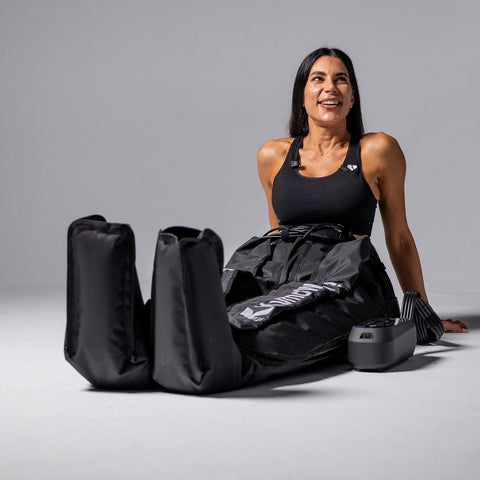
KumoWave Elite X – Pressotherapy Pants
Full-coverage trousers. Ideal for lipedema, fluid retention and intensive use.
€799,00 €999,00
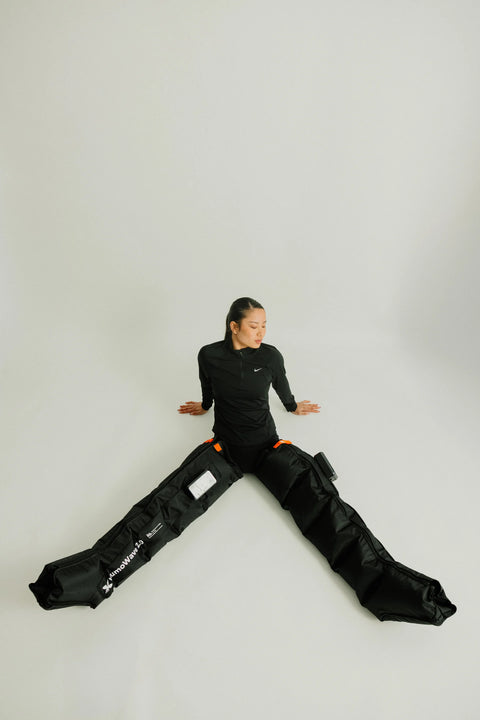
KumoWave 2.0 - Wireless Pressotherapy
Wireless, lightweight boots. Perfect for daily use and recovery.
€499,00 €599,00