

The psoas is a deep hip muscle. When you spend many hours sitting, it can behave as if it were shorter and cause tightness when you stand up, walk, or straighten your pelvis. (pubmed.ncbi.nlm.nih.gov)
This does not always mean an injury, but it does mean your hip is getting less extension and less range of motion than it needs. That is why the safest way to relieve it is usually to combine gentle mobility, proper stretching, and strength training, not aggressive pressure. (pmc.ncbi.nlm.nih.gov)
Pressotherapy at home
End the day with light legs
★★★★★ 4,8/5 · rated by verified customers
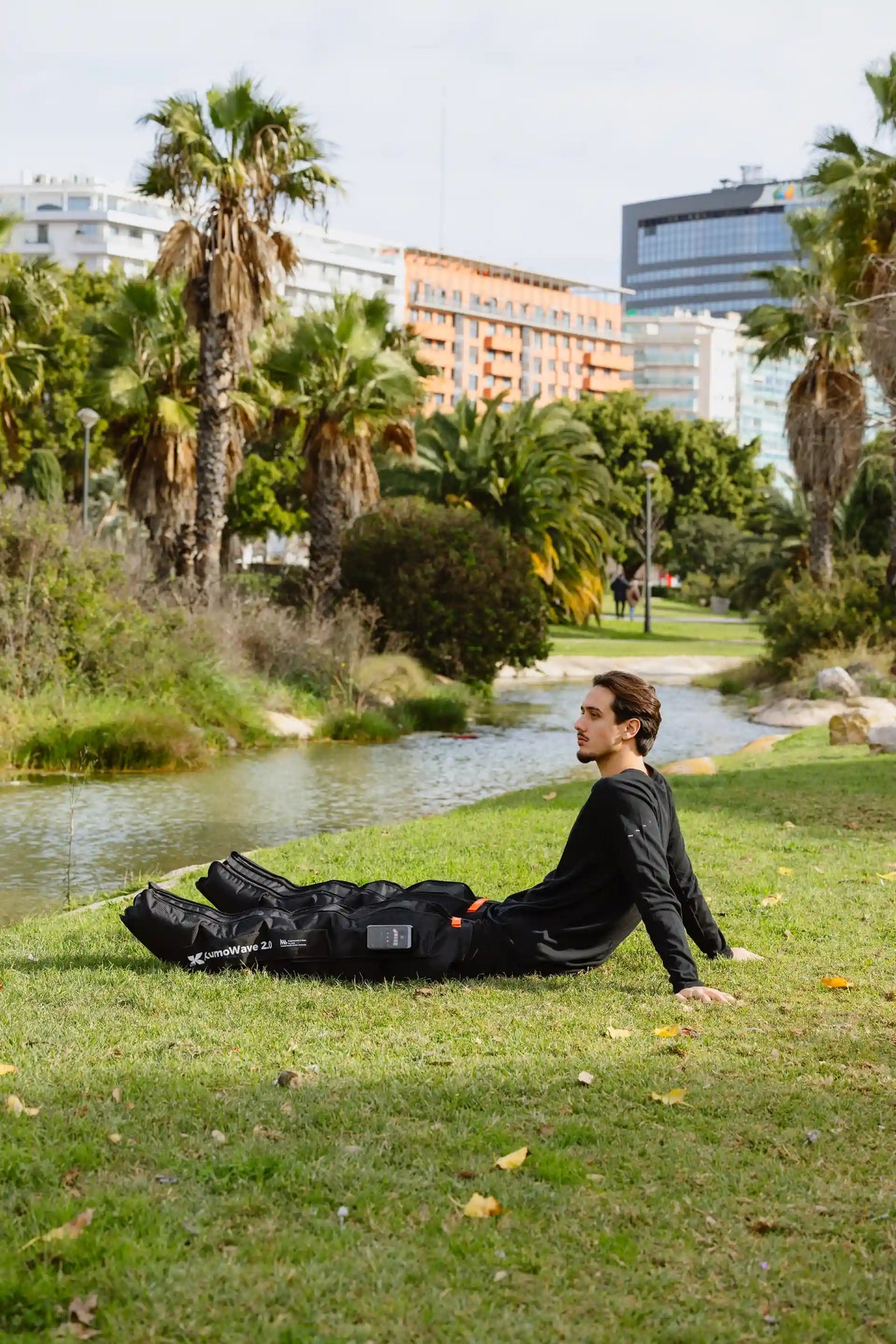
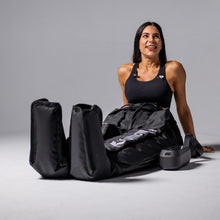
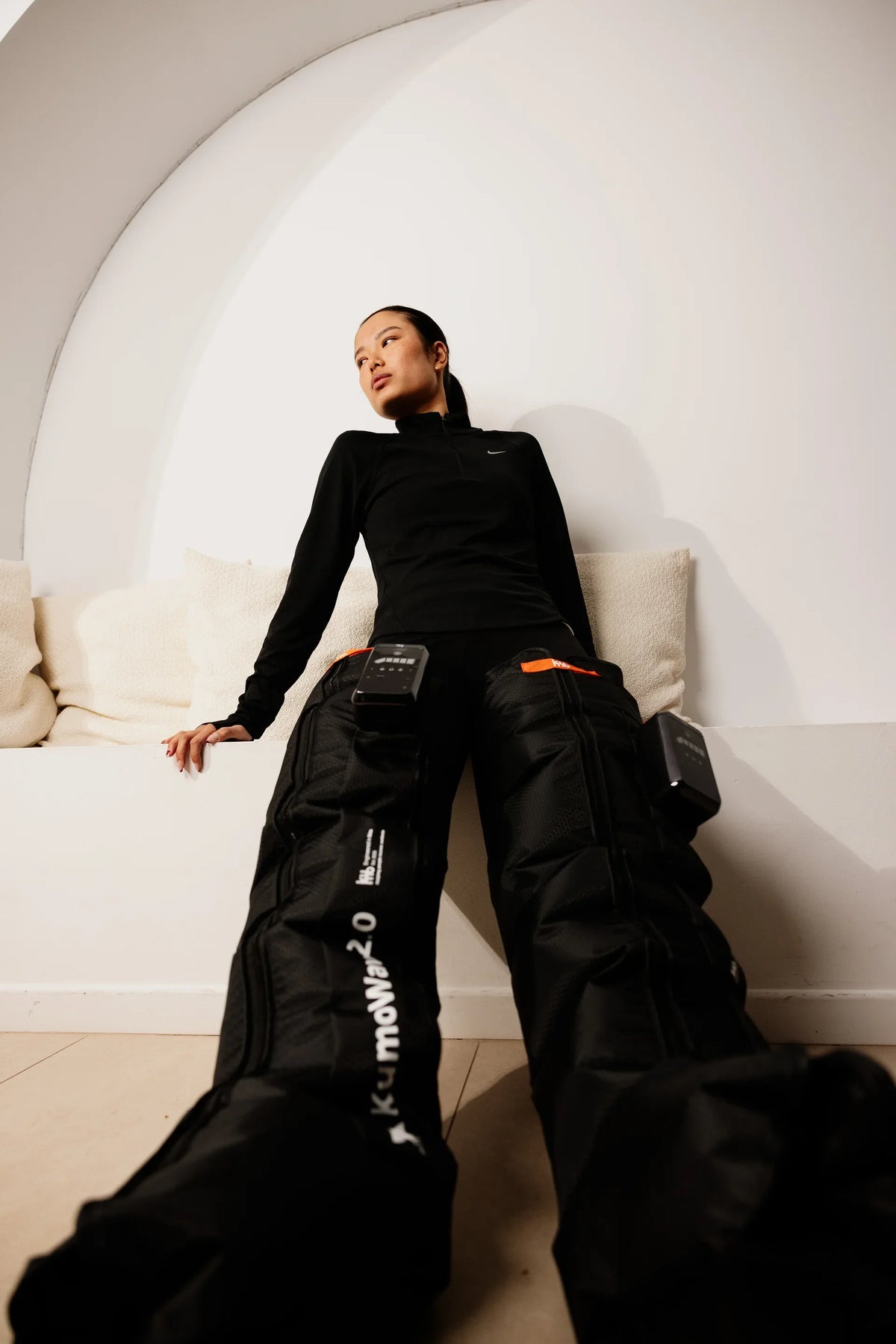
KumoWave pressotherapy boosts circulation and helps drain fluid with sequential compression, in 20-minute sessions at home.
- Boosts circulation and helps drain fluid
- Chamber-based compression, adjustable to you
- Sequential compression that mimics manual drainage
€799,00€999,00
−10% on your 1st order when you subscribe to the newsletter

What is the psoas and why does it matter so much
The psoas major forms the iliopsoas complex together with the iliacus. This group plays an important role in hip flexion and lumbopelvic stability, and its clinical relevance is increasing because it is a deep structure related to nerves, vessels, and retroperitoneal organs, as summarized in the anatomical review of the iliopsoas.
Because of its depth, treating it as if it were a superficial muscle often leads to mistakes. The most useful thing to do at home is not to “beat it up,” but to give the hip gradual movement, reduce continuous sitting time, and use tolerable stretches.
Personalized protocol · included with your purchase
Want us to tell you how to use it in your case?
With your purchase, our experts prepare a personalized usage protocol for your case: sport, circulation, fluid retention, pregnancy or lipedema.
Message us on WhatsAppOur experts reply · no obligation
Why it shortens after hours of sitting
Sitting keeps the hip in flexion for a long time. Observational studies have found an association between spending more time sitting, moving less, and having less passive hip extension, as well as greater iliopsoas stiffness in office workers, as shown in the study on sedentary behavior and hip extension.
This helps explain why so many people notice the same sequence: they stand up from their chair, take a few steps with a “closed” pelvis, feel tightness in the front of their hip, and sometimes compensate with their lower back. It is not a diagnostic test on its own, but it is a very common pattern.
How it manifests
Signs that usually appear
| Sign | What you usually feel | First sensible step |
|---|---|---|
| Tightness when standing up | A feeling of a “closed” hip or difficulty straightening up. | Walk for a few minutes and try gentle mobility. |
| Discomfort in the groin or the front of the hip | It may appear when straightening the leg backward or climbing stairs. | Reduce the load and see if the pattern repeats. |
| Lower back discomfort when standing up | The lower back seems to compensate for the lack of hip extension. | Add glutes and trunk to the routine, not just stretching. |
| Pain that worsens or changes | It stops feeling like simple stiffness. | Consult to rule out other causes. |
Lower back, hip, glute, or groin pain, along with a feeling of stiffness when standing upright, matches the most common clinical description of the psoas. If fever, weakness, tingling, or a clear change in the pattern also appears, it is no longer advisable to treat it as a simple postural discomfort.
on your first order when you join the newsletter
We send you the code instantly. No spam.
How to safely release it
The idea is simple: lower the tone, regain extension, and do not irritate the area further. Flexibility responds better when the muscle is warmed up, and current best practices insist on stretching without pain and with progression. flexibility recommendations from the American Heart Association
1. Start with gentle mobility
Before stretching, walk for a few minutes at a comfortable pace, do gentle hip swings, or pelvic tilts without forcing yourself. The American Heart Association recommends working on flexibility when the muscles are already warm, not with a “cold” pulling sensation.
2. Use the half-kneeling hip flexor stretch
Place one knee on the floor, step the other leg forward, and keep your torso upright. Bring your pelvis into a slight posterior tilt, as if you wanted to bring your pubic bone toward your belly button, until you feel a gentle tension in the front of the back hip. NHS and public hospital guides describe this pattern as the basic hip flexor stretch, and you can see it in the NHS guide for hip flexor stretching.
Maintain a mild tension, breathe, and exit the stretch if a lower back pinch, tingling, or sharp pain appears. The evidence on stretching suggests that gentle ranges of about 10 to 30 seconds are a common benchmark for improving mobility without turning the exercise into excessive strain. (pubmed.ncbi.nlm.nih.gov)
3. Add glute and trunk strength
Stretching helps, but it is not always enough. NHS physiotherapy guidelines include glute and hip strengthening exercises as part of managing hip and lower back discomfort, because the hip does not work well if everything depends only on the flexor, as shown by the hip strengthening exercises from Cambridge University Hospitals.
In practice, this means alternating stretching with simple control exercises, such as glute bridges, gentle abdominal activation, and short walks spread throughout the day. The goal is not to tire yourself out, but to teach the hip another movement pattern. (guysandstthomas.nhs.uk)
4. If you want to order a broader routine, do it without rushing
If the stiffness is not limited to the psoas, but you also notice a “stuck” hip or a loaded glute, you can complement the work with a guide on hip stiffness with percussion massage and opening exercises. (services.eastcheshire.nhs.uk)
If you also want to understand how to chain mobility and overall recovery, a useful read is how to combine pressotherapy and stretching after training.
If it helps you to have a pre-built sequence, you can review a weekly home recovery routine and adapt only the mobility part to your goal. (pubmed.ncbi.nlm.nih.gov)
What not to do
- Do not press hard on the abdomen or groin to “find” the psoas. It is a deep muscle, with nearby vascular and nervous structures, so aggressive direct pressure is not a good self-management strategy.
- Do not use a massage gun on the abdomen, spine, groin, or an area with sharp pain, bruising, a wound, or suspected thrombosis. The systematic review on massage guns lists clear precautions for wounds, recent fractures, thrombosis, and sensitive areas.
- Do not force the stretch to the point of sharp pain or a discharge sensation. The goal is to move, not to irritate further.
- Do not continue as usual if the pain changes, radiates with greater intensity, or lasts more than a week. In that case, we are no longer talking about simple stiffness for self-adjustment at home.
If you are pregnant, postpartum, have kidney, liver, or heart disease, take medication regularly, or have a recent injury, ask for an assessment before changing your routine. The NIH and the Mayo Clinic remind that people with medical conditions and pregnant women may need to adapt or avoid certain massage or recovery practices. (health.nih.gov)
When to seek professional help
If the pain does not improve in a week, if you have difficulty walking or straightening up, if fever, weakness, tingling, abdominal pain, or a clear worsening appears, it is advisable to consult. Cleveland Clinic recommends an assessment when the discomfort persists or changes, and NICE guidelines insist on maintaining normal activity, but paying attention to signs that no longer fit a simple mechanical pain. NICE recommendations for lower back pain psoas syndrome symptoms and management at Cleveland Clinic.
A physical therapist is usually one of the most useful first options to assess mobility, strength, and exercise technique. In some contexts, manual or osteopathic therapy can be a complement, but it should not replace a medical evaluation when there are warning signs or an atypical presentation.
FAQ about the psoas and sitting
Why does the psoas shorten after many hours of sitting and how does it manifest?
Because the hip spends a lot of time in flexion and gets less extension and less range of motion. In practice, this can be noticed as tightness in the groin, discomfort in the front of the hip, a feeling of a “closed” pelvis, or lower back pain when straightening up. The available evidence presents it as a frequent association in sedentary people and office jobs, not as an absolute rule for everyone.
How to safely release the psoas after a day of sitting without aggravating it?
The safest thing is to start with a few minutes of gentle walking, continue with a half-kneeling hip flexor stretch, and finish with a simple glute or trunk activation move. The key is to notice gentle tension, not pain. If the symptom worsens with the stretch, if tingling appears, or if you notice a clear lower back pinch, stop and change strategy.
What stretching and strengthening exercises are recommended to gently relax the psoas?
The most useful are usually the half-kneeling hip flexor stretch, short walks spread throughout the day, and strength exercises for the glutes and trunk, such as gentle bridges or abdominal activation without holding your breath. The idea is not to “release” the psoas with force, but to improve the load distribution between the hip, glutes, and midsection. The NHS physiotherapy clinical guidelines and recent evidence on stretching go in that direction.
Can psoas shortening cause lower back pain and how to prevent it?
Yes, it can be associated with lower back discomfort, especially if the hip loses extension and the lower back compensates. To prevent it, it helps to stand up frequently, maintain some daily activity, stretch gently, and strengthen the glutes and trunk. NICE recommends staying active and using exercise in a graduated way for lower back pain, which fits well with this problem when the main cause is postural or load-related.
Is it advisable to consult a physical therapist or an osteopath if the psoas is tight from sitting?
If the discomfort is recurring, a physical therapist is usually a good first option to assess mobility, strength, and exercise technique. Osteopathy can be a complement in some contexts, but it should not replace a medical evaluation when there is persistent pain, a clear change in pattern, or warning signs. Cleveland Clinic includes physiotherapy and osteopathic manual therapy within the conservative options that a professional can propose.
And now what?
Start small, but start today. If you want to continue with an orderly routine, go back to the Kumo Balance home page and resume your next step from there calmly.
KumoWave pressotherapy
Choose your at-home pressotherapy
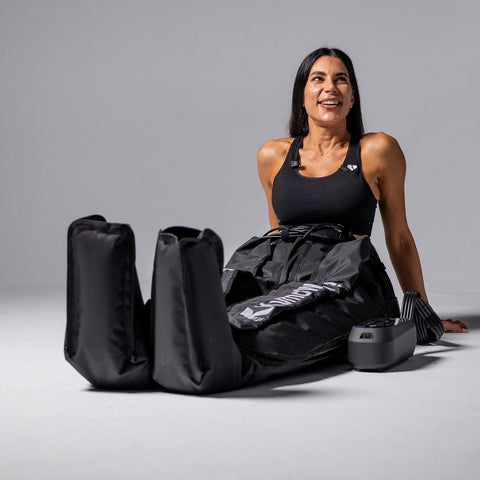
KumoWave Elite X – Pressotherapy Pants
Full-coverage trousers. Ideal for lipedema, fluid retention and intensive use.
€799,00 €999,00
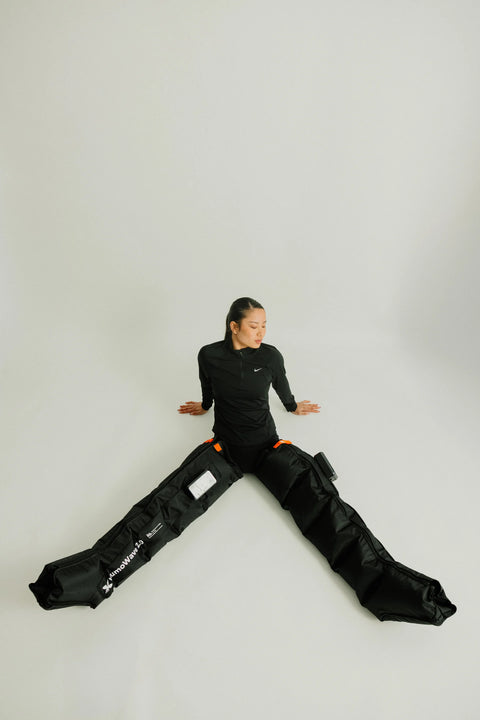
KumoWave 2.0 - Wireless Pressotherapy
Wireless, lightweight boots. Perfect for daily use and recovery.
€499,00 €599,00