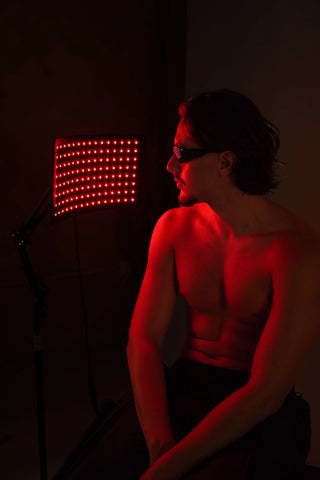


Microneedling at home and LED light can be combined. The key is letting the inflammation settle before you bring phototherapy back in, because microneedling leaves the skin barrier temporarily sensitive and redness can last anywhere from about 24 hours to several days, depending on the intensity and the person. (aad.org)
If your skin still feels hot, tight, or stinging, it is not the moment to push. As a practical rule, wait until the redness and burning are gone before going back to LED; on reactive skin or after deeper sessions, that can mean waiting a few more days. This is a cautious inference based on the recovery times described by the AAD and Cleveland Clinic, not a universal rule.
Facial red light
Bring your skin back to life
★★★★★ 4,8/5 · rated by verified customers
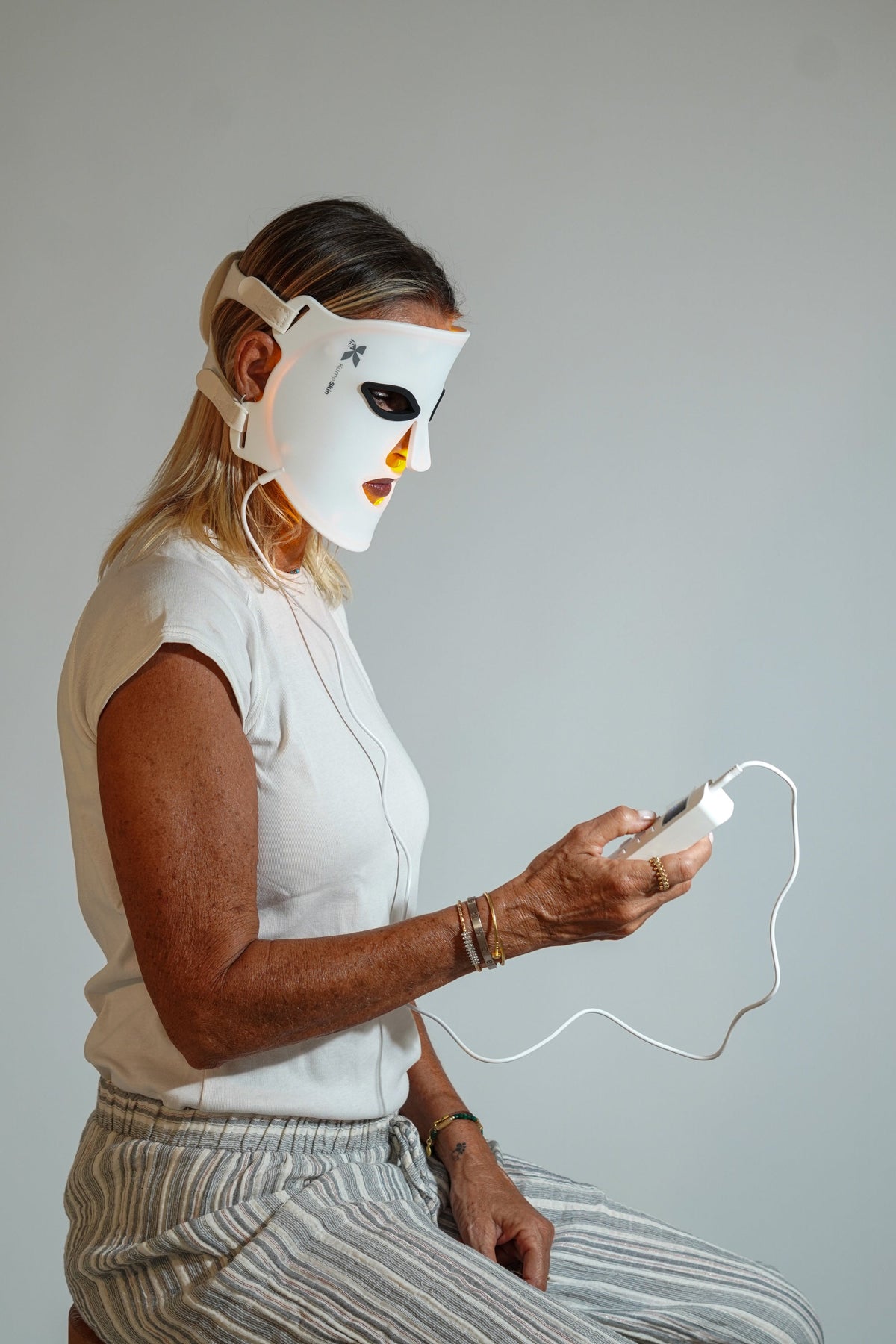
The KumoSkin LED mask helps repair and calm your skin in short sessions at home.
- 250 LEDs in flexible medical silicone
- Red light to boost collagen and glow
- 4 lights: red, infrared, blue and yellow
€299,00€429,00
−10% on your 1st order when you subscribe to the newsletter

The short answer
At home, the safest approach is not to do microneedling and LED in the same session unless a professional has specifically prescribed it. The AAD explains that red light therapy can be part of a plan that also includes microneedling, but that it should be folded in as a complement and on tolerant skin, not over an irritated surface. (aad.org)
Before you go further: at-home microneedling is not a harmless step
The AAD warns that the microneedling that delivers visible, lasting results is a medical treatment, and that at-home microneedling, also called dermarolling, can be dangerous because of infection risk and poor technique. If you decide to do it at home, hygiene, needle depth, and the state of your skin matter as much as frequency. (aad.org)
Personalized protocol · included with your purchase
Want us to tell you how to use it in your case?
With your purchase, our experts prepare the ideal LED protocol for your skin type and goal (acne, wrinkles, dark spots...).
Message us on WhatsAppOur experts reply · no obligation
For a more organized routine, it may help to read an evening protocol with an LED face mask and this frequency guide for red light therapy at home, because the best sequence is not the same for every skin.
Why the order matters
Microneedling leaves skin more reactive
The AAD describes microneedling as a procedure using tiny needles that puncture the skin. After the session, it is normal to see redness, a mild burning sensation, or swelling for a few days, and Cleveland Clinic notes that redness can last around 24 hours or up to 5 days in some people.
LED light is usually well tolerated, but not on irritated skin
Red LED is used as a complement in dermatology routines and generally has a favorable short-term safety profile. Even so, the AAD indicates that the most common adverse effects are mild, such as temporary irritation, and that data are still missing to fully understand its long-term effects on the skin.
on your first order when you join the newsletter
We send you the code instantly. No spam.
The AAD also summarizes a study in which 90 patients received 8 red light sessions over 4 weeks and more than 90 percent noticed some improvement. That does not mean LED should be stacked right onto microneedling, but rather that it tends to be worked in cycles, with a logic of gradual recovery.
How to space sessions without irritating your skin
A 2024 systematic review on LED and experimental wound healing found promising results, and another recent review on photobiomodulation is a reminder that there is still no perfect universal protocol. The practical translation: the best interval depends on how your skin reacts, not on a rigid formula.
Summary of indicative intervals
| Situation after microneedling | What to do with LED | Practical reading |
|---|---|---|
| Mild redness that fades quickly | Wait at least 24 hours and go back only if the skin feels comfortable. | Useful when recovery was gentle. |
| Persistent heat, tightness, or stinging | Stretch the interval to 48 or 72 hours, or longer if the irritation continues. | Your skin decides more than the calendar. |
| More intense session or deeper needle | Push LED light back by several days. | Repair and tolerance should come first. |
| Warning signs, such as infection or an unusual reaction | Do not resume the routine and ask for a professional assessment. | Safety comes first. |
These intervals are indicative. They are based on the recovery ranges described by the AAD and Cleveland Clinic and on a cautious inference for home use. If you notice stinging, heat, or more redness, extend the break.
What to do before and after
Before microneedling and LED
- Skip it if you have a recent tan, a skin infection, or painful breakouts, because the AAD recommends postponing microneedling in those cases.
- If you take isotretinoin, do not improvise the interval, because recommendations vary between guidelines and the decision has to be individualized. The AAD talks about waiting at least a month from the last pill, while Cleveland Clinic describes a wider window in its clinical guidance.
- Do not add LED if the skin is still burning or very red, because red light therapy at home can irritate temporarily and should not be layered onto already sensitized skin.
After the session
- Wait 24 hours before wearing makeup.
- Use gentle cleansers and stop anything that stings. The AAD stresses that products that burn or sting are irritating your skin. (aad.org)
- Pause retinoids and other irritating actives for a few days if your professional advised it. The AAD notes that the routine around microneedling may include stopping retinoids for several days.
- Go back to LED only when the skin is calm, with no heat, burning, or active redness.
If your skin is deeper in tone, it deserves an even more conservative pace. The AAD notes that visible light can trigger hyperpigmentation more easily in some skin types, so it is better to start with a lower frequency and watch how your skin responds before picking up the pace.
When to check in before combining the two
Not everyone is a good candidate for microneedling. The AAD advises against this procedure for people with poor wound healing, keloids, a weakened immune system, ongoing radiation therapy, or skin cancer in the area; it also recommends postponing it if there is a skin infection, painful breakouts or pus, a recent tan, or recent isotretinoin.
If you are pregnant, recently post-surgery, or living with a chronic condition that can affect healing or circulation, get advice before combining protocols. The AAD insists that a prior assessment with a dermatologist helps decide whether an at-home therapy makes sense in your case.
How this fits into a real at-home routine
A simple sequence usually works better than an ambitious routine. First, take care of cleansing and skin tolerance. Then, once the area is no longer reactive, bring red light back as its own phase of the routine, not as an immediate reward for having done microneedling.
If you want to place it inside a broader protocol, this guide to how an LED face mask works clarifies what to expect from each session, and red light therapy at home: steps and frequency helps you understand the usual rhythm of use. If you prefer a more powerful format, you can also look through advanced LED light therapy at home.
A practical calendar example
- Day 0: microneedling, with no LED unless a professional says otherwise.
- Day 1: soothing care only, if the skin is calm.
- Day 2 or 3: bring LED back if there is no redness, heat, or burning.
- Later on: return to your usual frequency if your skin tolerates it well.
This calendar is a cautious guide, not a universal prescription. If your skin takes longer to settle, the interval should stretch, not be forced.
Frequently asked questions
How many days should you leave between two at-home microneedling sessions with LED light?
The safest way to think about it is backward: first the skin calms down, then you return to LED. For many people, that means waiting at least 24 hours, and longer if redness, heat, or tightness persists. When the microneedling session has been more intense, the margin can stretch to several days. There is no single interval valid for every skin, because the AAD and Cleveland Clinic describe variable recoveries.
Is it safe to use an LED device after microneedling at home, and how long should you wait?
It can be, if the skin is no longer irritated and the device is used according to its instructions. The AAD explains that red light therapy can be part of a plan that includes microneedling, but it also warns that phototherapy at home can cause mild irritation and that people with more sensitive skin should proceed more cautiously. If you have just had microneedling and it burns, it is better to wait.
Which products are best avoided after microneedling and LED at home?
It is worth pausing anything that can sting or over-exfoliate. The AAD indicates that, in the routine around microneedling, retinoids and other ingredients are sometimes paused for a few days, and it also recommends waiting 24 hours before wearing makeup. If a cleanser, serum, or cream stings on application, that is a sign your skin is not ready for that product yet.
Microneedling at home and LED: what are the best practices for not irritating sensitive skin?
Less intensity and more rest. On sensitive skin, the goal is not to add stimuli but to reduce accumulated irritation. Start with separate sessions, use gentle products, wait for the redness to disappear, and watch how your skin responds before increasing frequency. The AAD notes that red light therapy can cause temporary irritation and that sensitivity to visible light can be higher in some skin types, so progression should stay conservative.
What now?
If you want to turn all of this into an organized routine, start by lowering the intensity, spacing the sessions properly, and sticking to a simple protocol. To keep exploring phototherapy and recovery options at home, browse advanced LED light therapy at home and come back to Kumo's approach to recovery whenever you want to fit red light therapy into your day with more perspective.

Facial red light
KumoSkin Mask – LED Facial Mask
★★★★★ 4,8/5 · rated by verified customers
- 250 LEDs in flexible medical silicone
- Red light to boost collagen and glow
- 4 lights: red, infrared, blue and yellow
€299,00€429,00· pay in installments with seQura or Klarna