


Magnesium matters. It takes part in energy production, in muscle and nerve function, and in hundreds of enzymatic reactions, but that does not mean a supplement improves recovery in everyone. (ods.od.nih.gov)
The evidence points to a clearer use when intake is low or there is a deficiency, while in healthy people with a sufficient diet the effect on DOMS, strength or cramps is inconsistent.
Red & infrared light
Recover faster, at home
★★★★★ 4,8/5 · rated by verified customers
The KumoLux panel supports muscle recovery with full-body red and infrared light.
- 660 nm red + 850 nm infrared light
- Full-body muscle recovery
- Clinically validated biohacking protocols
€399,00€499,00
−10% on your 1st order when you subscribe to the newsletter

What role magnesium plays in muscle
Magnesium acts as a cofactor in more than 300 enzyme systems and takes part in the transport of calcium and potassium across cell membranes, which is relevant for muscle contraction and heart rhythm. It is also involved in energy production.
In other words, it is not a minor detail. If magnesium is missing, fatigue, weakness, muscle twitching and cramps can appear; if there is too much because of supplements or medication, it can also cause digestive problems and, in risk settings, toxicity.
Personalized protocol · included with your purchase
Want us to tell you how to use it in your case?
With your purchase, our experts set up your red and infrared light sessions for your sport and goal.
Message us on WhatsAppOur experts reply · no obligation
How much is recommended and where it comes from
The NIH recommendations for adults range from 310 to 420 mg a day depending on age and sex. The most useful sources are green leafy vegetables, legumes, nuts, seeds and whole grains. The tolerable upper limit for magnesium from supplements and medication is 350 mg a day in adults, and it does not include what you eat in food.
So if you already cover the basics with food, the supplement has less room to make a difference. That is a reasonable inference from the physiology of the mineral and from the available evidence on performance and recovery.
What the evidence says about muscle recovery
When the goal is less DOMS
A 2024 systematic review found four eligible studies and described a reduction in muscle pain, better recovery and a possible protective effect against muscle damage, but the evidence base was small and heterogeneous. In other words, there are promising signals, not a universal certainty.
on your first order when you join the newsletter
We send you the code instantly. No spam.
In addition, a 2018 meta-analysis did not observe significant improvements in peak torque, muscle strength or power after supplementation. This does not invalidate every use, but it does suggest that magnesium does not act as a reliable recovery booster in any context.
When cramps are the problem
For muscle cramps, the evidence is even less favorable. The Cochrane review concluded that magnesium does not appear effective for nocturnal cramps in the general population and, moreover, it did not identify randomized trials specific to exercise-associated cramps.
So if cramps are frequent, it is worth first reviewing hydration, training load, rest and possible medical causes. Magnesium can be part of the conversation, but it should not be the automatic explanation for every cramp.
Key idea: magnesium can help when there is a real underlying problem, but it does not replace a sufficient diet or a well-built recovery strategy. That conclusion is a reasonable inference from the available evidence.
Practical summary: when it makes the most sense
| Situation | What the evidence suggests | What to do |
|---|---|---|
| Low intake or likely deficiency | Supplementation may make more sense if there is fatigue, weakness or cramps consistent with a real shortfall. | First fix the diet and consider a professional review. |
| Healthy person with sufficient intake | The benefit for DOMS, strength or power is uncertain. | Do not expect big changes from it alone. |
| Recurring cramps | It is not a clear solution for most cases. | Other causes need to be looked for and basic habits reviewed. |
| Kidney disease, pregnancy or relevant medication | Requires caution and follow-up. | Talk to a professional before starting. |
When it does make sense to consider it
Before thinking about supplements, look for context: symptoms consistent with a deficiency, a poor diet, conditions that alter absorption or drugs that change magnesium status. The NIH flags fatigue, weakness, nausea and cramps as early signs, but it also recalls that magnesium status is hard to assess and is not well summarized by a single laboratory measurement.
- If you eat few magnesium-rich foods, such as leafy greens, legumes, nuts, seeds and whole grains, fixing the diet is usually the first logical step.
- If you notice persistent fatigue, weakness or cramps, it is best not to assume from the outset that everything is solved with a bottle, because those signals also appear in other medical situations.
- If you have gastrointestinal conditions, type 2 diabetes, chronic alcohol use or advanced age, the risk of inadequate intake is higher and deserves more attention.
- If you take diuretics, proton pump inhibitors, bisphosphonates, tetracyclines or quinolones, there are possible interactions or changes in magnesium status that are worth reviewing with a professional.
- If you have kidney disease, self-medicating is not a good idea, because the risk of toxicity rises when the body clears the excess less well.
How to take it sensibly
If you decide to try it, start with food and review the rest of the routine. Magnesium can cause diarrhea, nausea and abdominal cramping at high doses, and the risk of toxicity goes up when kidney function is impaired. It can also interact with bisphosphonates, tetracyclines, quinolones, diuretics and proton pump inhibitors.
If you already take laxatives or antacids containing magnesium, that intake counts too. And if your case includes pregnancy, kidney disease, a relevant digestive condition or chronic medication, the prudent thing is to review whether it is appropriate with a health professional before supplementing.
How it fits into a wider recovery routine
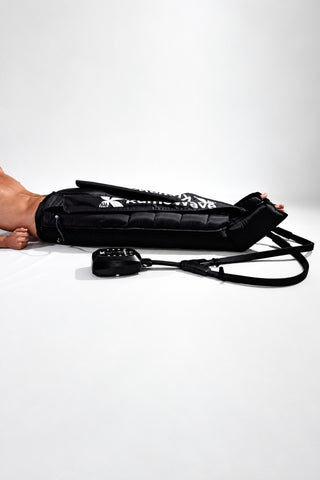
Magnesium works better as one piece of a system than as the central piece. If you train several times a week, a well-organized muscle recovery plan or a home recovery protocol with pressotherapy, red light therapy and a massage gun help put each tool in its place. Red light therapy for muscle recovery is another example of non-invasive support that makes more sense inside a complete strategy than on its own.
FAQ
Does magnesium really help muscles recover?
Yes, but above all in specific contexts. The 2024 review on muscle pain found signals of improvement in recovery and muscle damage, although with few studies and considerable heterogeneity. By contrast, a 2018 meta-analysis did not detect clear improvements in strength, power or peak torque. The practical reading is that it can help correct a shortfall, but it does not work as a universal shortcut to perform or recover better.
Does it work for DOMS?
It may have a modest effect in some cases, but it is not a consistent solution. If DOMS is intense, training load, progression, rest and total energy usually weigh more than an isolated supplement. Magnesium can add something if your diet is poor in this mineral or if a deficiency exists, but it should not be presented as the foundation of recovery.
What if I already eat well and train normally?
The change is most likely to be small or nil. In people who already cover their needs through diet, the evidence does not show a clear and consistent improvement in muscle recovery. That is why it usually makes more sense to review the basics first, such as nutrition, rest, distribution of loads and consistency, before adding another supplement out of inertia.
Which foods provide the most magnesium?
The best sources are usually leafy greens, legumes, nuts, seeds and whole grains. Certain drinks and fortified foods can also contribute something. If your goal is to recover better, starting from a solid dietary base is usually more sensible than depending on a supplement without reviewing the rest of the plan.
How do I fit it into a recovery routine?
The most useful way is to think of it as occasional support, not as the lead. If you have a clear reason to use it, watch digestive tolerance and combine it with a complete strategy of rest and training. In practice, a weekly routine or a home recovery protocol help decide where each tool fits and avoid overstating a single ingredient.
So what now?
If you want to keep building a more complete recovery routine, start with the Kumo Balance home page and with our clinical technology.
To go deeper: Muscle therapy for fast recovery after training: a practical, evidence-based guide, Red light therapy and muscle recovery and Red light therapy for muscle recovery.

Red & infrared light
KumoLux Panel – Red and Infrared LED Panel
★★★★★ 4,8/5 · rated by verified customers
- 660 nm red + 850 nm infrared light
- Full-body muscle recovery
- Clinically validated biohacking protocols
€399,00€499,00· pay in installments with seQura or Klarna