

Advanced lipedema demands a different approach. When the disease reaches stage 3 or 4, the main goal becomes reducing pain, protecting mobility, and controlling persistent edema, not just attempting to "reduce volume."
In stage 3, large folds, lobulations, and a more columnar shape of the legs usually appear; in stage 4, many sources describe the coexistence of lipedema and lymphedema, also called lipolymphedema. Not everyone progresses linearly or goes through all stages.
Pressotherapy at home
End the day with light legs
★★★★★ 4,8/5 · rated by verified customers
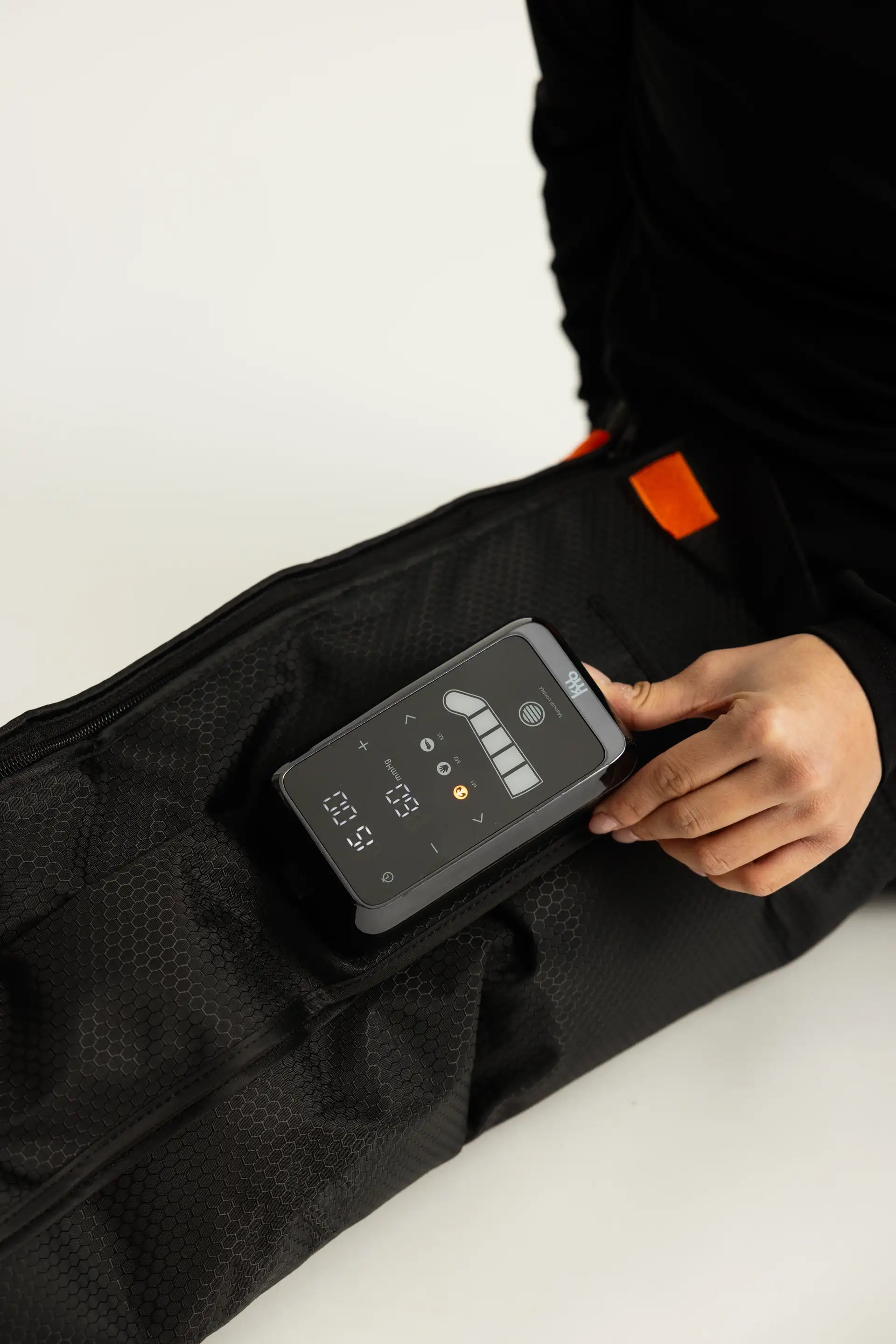
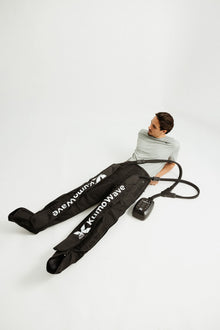
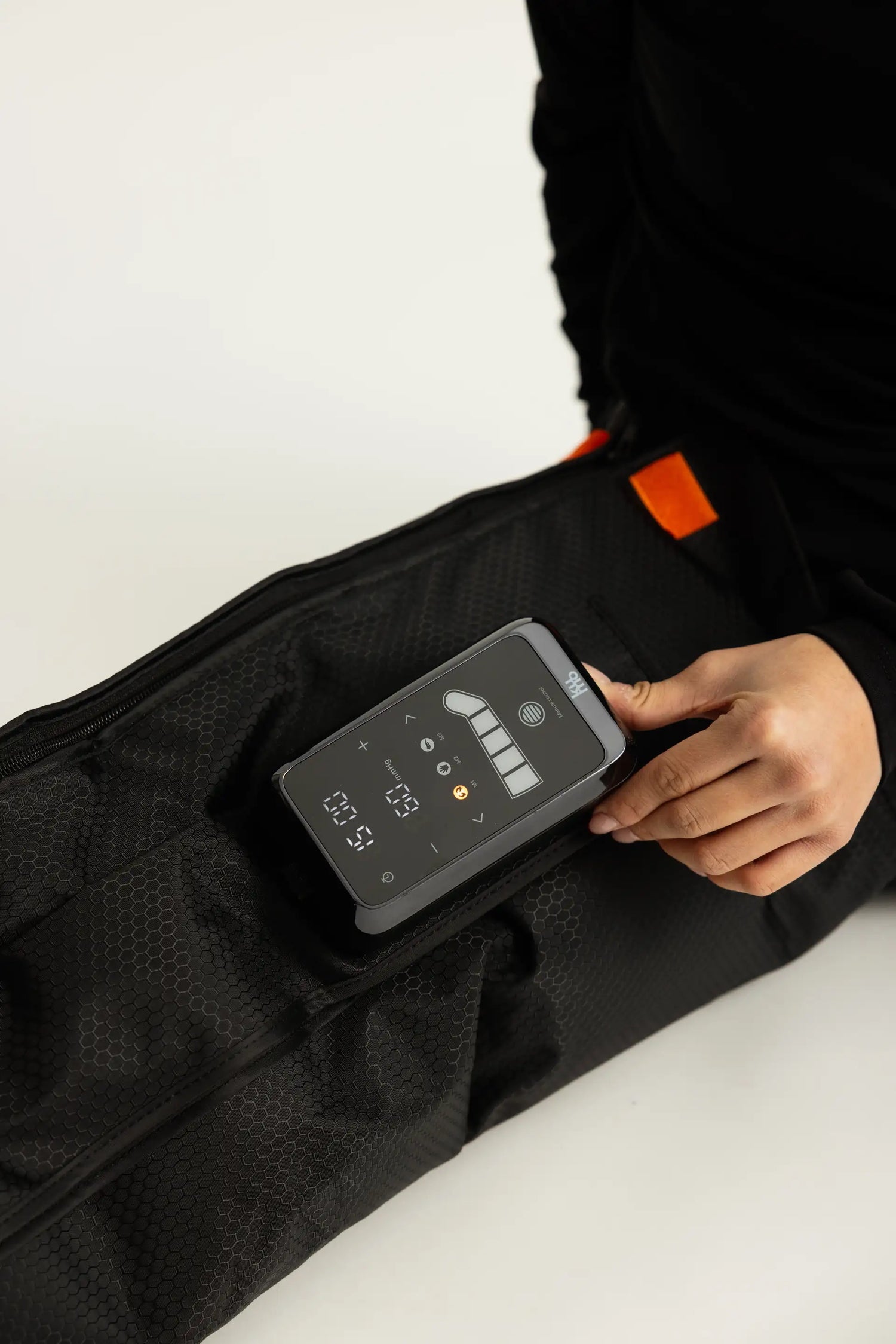
KumoWave pressotherapy boosts circulation and helps drain fluid with sequential compression, in 20-minute sessions at home.
- Boosts circulation and helps drain fluid
- Chamber-based compression, adjustable to you
- Sequential compression that mimics manual drainage
€799,00€999,00
−10% on your 1st order when you subscribe to the newsletter

If you want a broader view of the approach, the guide to real treatment options helps to organize the landscape between conservative management, home support, and surgery.
What really changes in stages 3 and 4
The Cleveland Clinic's clinical review of lipedema summarizes the progression well: stage 3 can make walking difficult due to the shape and size of the fat masses, and stage 4 is used to describe lipedema with lymphedema at the same time. The StatPearls clinical summary adds that stage 3 presents lobular extrusions of skin, fat, and fascia, with more fibrosis and less elasticity.
Personalized protocol · included with your purchase
Want us to tell you how to use it in your case?
With your purchase, our experts prepare a personalized usage protocol for your case: sport, circulation, fluid retention, pregnancy or lipedema.
Message us on WhatsAppOur experts reply · no obligation
The 2024 German S2k guideline reminds us of an important point: the morphological classification by stages does not accurately reflect the severity of symptoms, so the therapeutic decision should be based on pain, functional limitation, associated edema, and quality of life. (register.awmf.org)
Options commonly used when the disease progresses
In advanced stages, treatment usually combines several elements. The priority is to alleviate symptoms and maintain function, because there is no single cure that erases lipedematous tissue.
Practical summary of options according to objective
| Objective | What is usually done | When it can help | Key point |
|---|---|---|---|
| Reduce pain and heaviness | Individualized compression and material adjustment | In stage 3 and in lipolymphedema with persistent symptoms | Pressure matters, but material and tolerance matter as much or more. |
| Decrease associated edema | Decongestive therapy, bandaging and, if appropriate, pneumatic compression therapy | When there is swelling, a feeling of tension or a lymphatic component | Compression and pressure therapy are complements, not substitutes for the entire plan. |
| Protect mobility | Adapted, progressive, low-impact exercise | Always, even after surgery | Consistency usually outweighs intensity. (lipedema.net) |
| Improve volume and refractory symptoms | Lipedema-specific liposuction in expert centers | When pain and limitation do not improve with conservative treatment | It is not a cure, but it can provide lasting relief. |
Well-fitting compression
Compression is part of the standard treatment for lipedema. The 2024 German guideline indicates that it can be started with medical compression stockings, bandages, or adaptable systems, and that for long-term management, medical compression stockings are usually preferred. It also emphasizes that the main goal is to relieve pain and other subjective symptoms, not to "undo" adipose tissue.
on your first order when you join the newsletter
We send you the code instantly. No spam.
In the US standard of care, stage 3 is usually managed with micro-massage type garments or Class I/II if tolerated, and in lipedema with lipolymphedema the choice is individualized according to clinical presentation. In practice, this means that a stronger garment does not always yield better results if it increases pain or hinders adherence.
If heaviness dominates daily life, the practical guide to home pressure therapy can help to understand when pneumatic pressure therapy acts as support and when it should not be forced. A randomized trial published in PubMed supported conservative management with graduated compression, with or without a pneumatic device, to improve circumference, bioimpedance, and pain. (pubmed.ncbi.nlm.nih.gov)
Decongestive therapy and skin care
Complex decongestive therapy or complex decongestive physiotherapy usually combines manual lymphatic drainage, bandaging or compression, skin care, and exercise. The German guideline cites studies in which the combination of CDP or CDT with exercise produced more benefit than exercise alone, and also documented pain reduction in patients treated with this approach.
In people with lipolymphedema, skin care gains importance because the risk of infection increases when there is lymphedema. Cleveland Clinic notes that skin can become irritated, infected, or injured more easily when the lymphatic system is compromised.
Exercise and habits that do help
Exercise does not cure lipedema, but it does help to move better and control symptoms. Cleveland Clinic recommends low-impact activities such as walking, swimming, or cycling, and the lipedema standard of care insists on starting slowly and progressing according to tolerance.
At this point, consistency is key. A realistic plan usually works better than a very aggressive strategy that cannot be sustained later. If you want concrete ideas for adapted movement, the guide to activities that help and which to avoid can serve as an initial map.
If obesity also exists, the German guideline recommends treating it as a parallel problem, because limb liposuction is not a general weight loss method. It also reminds that extreme diets do not resolve lipedema as they do with other forms of body fat.
When to consider surgery
The surgery most used in lipedema is liposuction adapted to lipedematous tissue, with techniques such as tumescent or water-assisted liposuction. The 2024 S2k guideline indicates that the indication should not depend only on the stage, but on pain resistant to conservative treatment, limited mobility, and dermatological or orthopedic sequelae.
A 2024 meta-analysis on liposuction in lipedema found significant improvements in spontaneous pain, edema, bruising, mobility, and quality of life after surgery, although more than half of the patients still needed conservative therapy. This reinforces a practical idea: surgery can be very useful, but it is usually a complement within a broader plan.
After liposuction, the German guideline recommends immediately starting complex decongestive therapy and continuing conservative treatment according to symptoms. It also makes clear that liposuction does not cure lipedema, although it can provide lasting pain relief and improved quality of life.
If you are interested in better understanding this step, the article on lipedema surgery can help you locate the most used techniques and expected results.
How to distinguish advanced lipedema from a lymphatic component
When associated lymphedema appears, the picture changes. The Cleveland Clinic's lymphedema guide explains that lymphedema can cause swelling in the feet and legs, a feeling of heaviness or fullness, thicker skin, and an increased risk of infection. In advanced lipedema, these signs suggest lipolymphedema and justify a specialized evaluation.
- The foot or toes begin to swell, whereas before they were spared.
- The leg feels heavier, fuller, or tighter, and mobility is affected.
- The skin appears thicker, puffier, or stiffer.
- Wounds or infections appear more easily.
- Swelling stops responding well to elevation; this is a clinical inference and should be evaluated by a specialist.
In other words, if the condition "descends" from painful and symmetrical fat to more persistent edema, the management should increasingly resemble that of an associated lymphatic disorder.
Frequently Asked Questions
What treatment options are recommended in stage 3 and 4 lipedema to reduce volume and pain?
The basis is usually conservative: adapted compression, complex decongestive therapy, low-impact exercise, and skin care. When there is associated edema, pneumatic compression therapy can be a useful complement if there are no contraindications. If pain remains resistant or mobility decreases, lipedema-specific liposuction may be considered in experienced centers. The realistic idea is to combine tools, not to look for a single miraculous solution.
Is it possible for lipedema to progress from stage 3 to 4 and what signs indicate this progression?
Yes, it can happen, although not everyone progresses. Stage 4 is usually used when associated lymphedema appears. The signs that most suggest it are swelling in the feet or toes, a more marked feeling of heaviness, thicker or tighter skin, and easier infections or wounds. If elevation helps less and less, the suspicion of a lymphatic component increases. This reading must be confirmed by a professional, because the morphological stage does not always reflect the real severity.
What role do compression and decongestive therapy play in stage 3-4 lipedema?
They play a central role. The German guideline considers compression part of the standard treatment to relieve pain, and the US standard of care recommends adapting the type of garment to tolerance and leg shape. Complex decongestive therapy adds drainage, bandaging, exercise, and skin care. In studies cited by the guideline, the combination of CDP or CDT with exercise outperformed isolated exercise in several clinical outcomes.
What surgical options exist for stage 3 or 4 lipedema and when should they be considered?
The main surgical option is liposuction adapted to lipedema, often tumescent or water-assisted. It should be considered when there is documented pain that does not improve with conservative treatment, functional limitation, orthopedic or dermatological sequelae, and a significant burden on daily life. The indication should not depend only on the stage. Surgery can improve symptoms for years, but it does not cure the disease and usually still requires conservative treatment afterward.
How does lipedema with lymphedema (lipolymphedema) influence the management of stage 4?
When there is lipolymphedema, the plan usually becomes more lymphatic: more individualized compression, more attention to the skin, more edema control, and often more support with decongestive therapy. It is also necessary to better monitor the risk of infections and assess whether pressure therapy fits or not. In practice, this usually means more follow-up and fine adjustments, because the goal is no longer just to treat painful fat, but also a compromised drainage system.
What now?
If you recognize several of these symptoms, the next step is to build a realistic and sustained plan. You can return to the Kumo Balance website for better guidance, review the practical guide to home pressure therapy or review the overview of real treatment options and decide what best fits your situation.
KumoWave pressotherapy
Choose your at-home pressotherapy
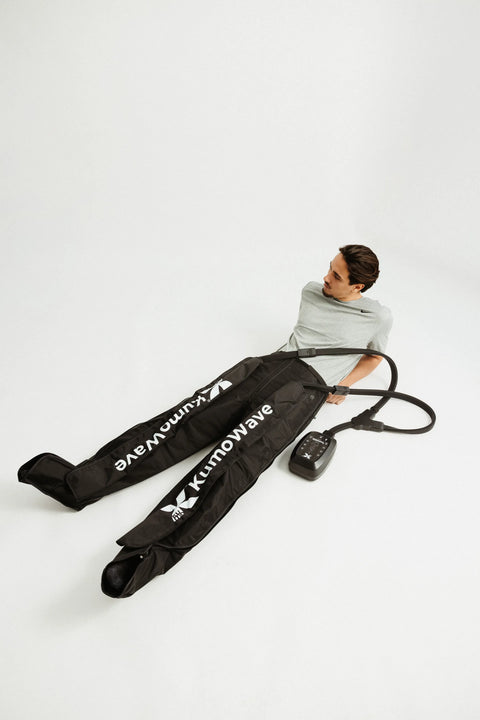
KumoWave Elite – Pressotherapy Pants
Full-coverage trousers. Ideal for lipedema, fluid retention and intensive use.
€799,00 €999,00
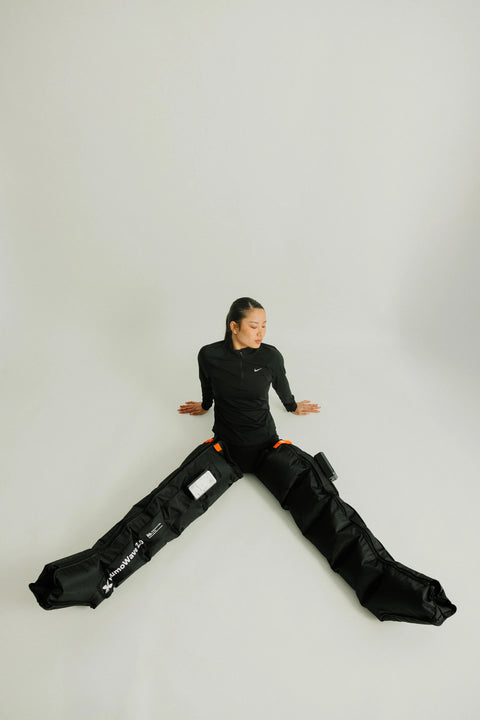
KumoWave 2.0 - Wireless Pressotherapy
Wireless, lightweight boots. Perfect for daily use and recovery.
€499,00 €599,00