


Not every fast fits every training plan.
If you play sports regularly, the key is not only how long you go without eating, but how you organize meals, hydration, and recovery so your session quality does not drop. The most recent evidence suggests that intermittent fasting may help improve weight and fat mass in healthy adults who train, but it shows no clear advantage for performance or for fat-free mass.
Pressotherapy at home
End the day with light legs
★★★★★ 4,8/5 · rated by verified customers
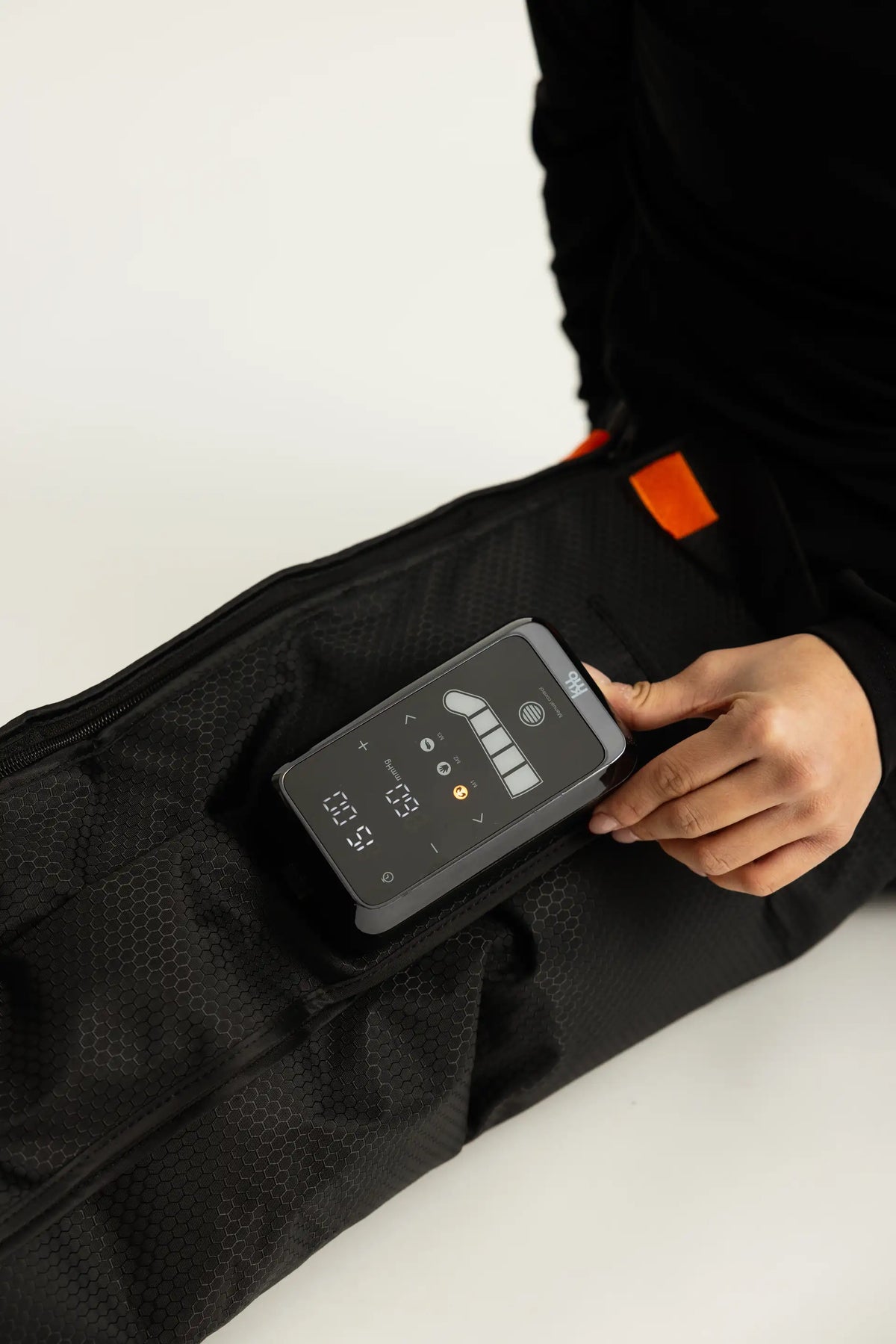
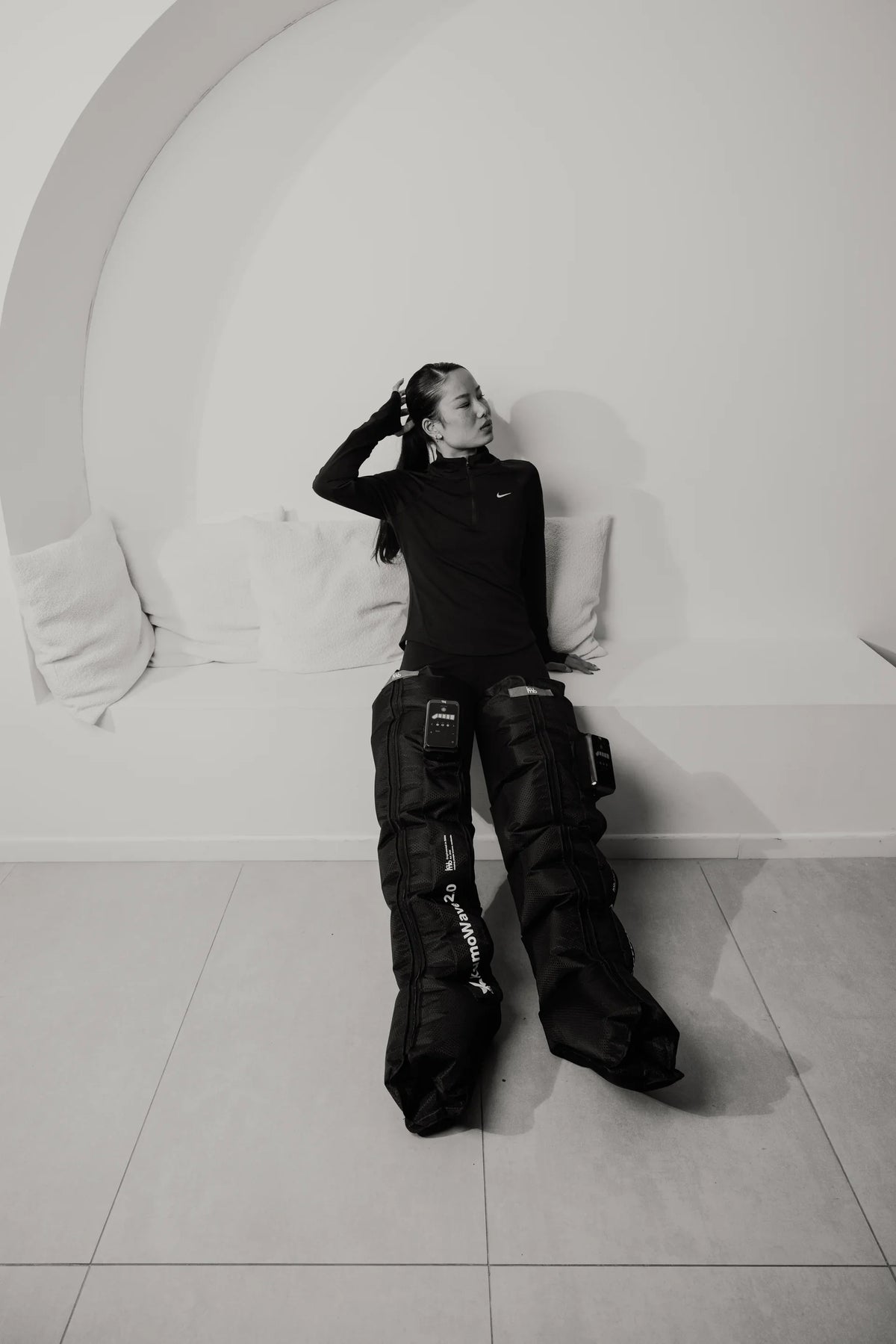
KumoWave pressotherapy boosts circulation and helps drain fluid with sequential compression, in 20-minute sessions at home.
- Boosts circulation and helps drain fluid
- Chamber-based compression, adjustable to you
- Sequential compression that mimics manual drainage
€799,00€999,00
−10% on your 1st order when you subscribe to the newsletter

What changes when you train fasted
Intermittent fasting is not a single strategy, but several formats of time-restricted eating. Mayo Clinic explains that it can range from eating windows of 6 to 8 hours to longer fasts, and that the long-term effects are still not fully clear. In sport, the important question is whether you reach the session with enough available energy to sustain the effort and recover afterward. (mayoclinic.org)
In a 2024 systematic review of 15 randomized trials and 361 participants, time-restricted fasting reduced body weight and fat mass, but showed no between-group differences in physical performance variables or in fat-free mass. That does not mean it works the same way for everyone, but it does suggest that sports recovery depends more on the training context and on total intake than on the eating window by itself.
Personalized protocol · included with your purchase
Want us to tell you how to use it in your case?
With your purchase, our experts prepare a personalized usage protocol for your case: sport, circulation, fluid retention, pregnancy or lipedema.
Message us on WhatsAppOur experts reply · no obligation
The priority, when you want to recover well, is to reach the next session with enough energy, protein, and fluids.
If you want to dig into the foundation of that recovery, this guide to the keys of muscle recovery after sport can also help, because there the focus is no longer only eating less, but recovering better between sessions.
How to organize meals, carbohydrates, and protein around training
Before training
If you train in the morning and fasted work suits you, an easy, technical, or mobility session usually fits better than a long, demanding one. This is a reasonable inference from the literature: the ISSN notes that intense, prolonged efforts put more pressure on fuel supply and fluid regulation.
on your first order when you join the newsletter
We send you the code instantly. No spam.
On the other hand, if you are going to do heavy strength work, intervals, a long run, or a second session the same day, it is worth considering a meal beforehand or breaking the fast closer to the session. The point is not to tough it out on discipline, but to preserve quality, technique, and the ability to recover.
After training
Protein close to exercise is still relevant. The ISSN indicates that taking protein around training, roughly within the 2 hours before or after, can support muscle protein synthesis and recovery. (pmc.ncbi.nlm.nih.gov)
If you need to refill glycogen quickly because you train again in less than 4 hours, the ISSN recommends a more aggressive carbohydrate strategy and, where appropriate, adding protein. In its position on nutrient timing, it proposes 1.2 g of carbohydrate per kilogram per hour, or 0.8 g/kg/h of carbohydrate together with 0.2 to 0.4 g/kg/h of protein depending on the context.
For most recreational athletes, that does not mean living with a calculator in hand. It means not leaving recovery for later if the next day also carries load. If your eating window is short, planning the first meal after training usually makes more difference than improvising.
In practice, it helps to keep four priorities in mind:
- If the session is intense or there is a double training day, fuel matters more than the fasting window.
- If only a few hours remain before training again, carbohydrates become a real priority.
- Protein close to the session supports muscle repair and adaptation to the effort.
- Drinking enough, without overdoing it, is part of recovery and of performance.
Hydration
Hydration is a central piece, not a detail. The NATA position statement on fluid replacement notes that insufficient hydration, even moderate, compromises performance and makes recovery worse, while drinking too much can also be a problem. The practical recommendation is to work with an adequate, but not excessive, intake before, during, and after activity. (nata.org)
The table below summarizes a practical application of these ideas.
Practical fasting and recovery scenarios
| Situation | What usually works better | When it is worth adjusting |
|---|---|---|
| Easy, technical, or mobility session | Can fit inside the fasting window if you arrive well hydrated and feel stable. | If dizziness, weakness, or hunger that disrupts movement control shows up. |
| Strength, HIIT, or a long run | It is usually better to move food and fluids closer to the session or to break the fast beforehand. | If the pace drops, coordination worsens, or fatigue arrives too early. |
| Two sessions in less than 4 hours | Prioritize carbohydrates and add protein to speed up refueling and repair. | If you cannot reach the next session with enough energy. |
| People with diabetes, pregnancy, or another medical condition | Do not improvise; individualized professional supervision is required. | If there are medication changes, unstable glucose, or warning symptoms. |
To build a complete support routine, you can combine basic habits with resources such as this complete recovery routine with pressotherapy, massage, and red light therapy, always as a complement to rest, food, and effort planning.
When not to force the fast
Not everyone should start with a narrow eating window. Mayo Clinic indicates that intermittent fasting may not be suitable for people with eating disorders, for those who are pregnant or breastfeeding, and for those at higher risk of bone loss or falls. The NHS guidance adds that you should not improvise if there is diabetes, medication that depends on meals, or a history of eating disorders.
In people with diabetes, the NIDDK recommends planning ahead with a health professional, especially where there is insulin, dehydration, recent fever, or recent cardiovascular history. It also warns that some medications may need adjustment and that glucose monitoring should be more frequent if you decide to fast. (niddk.nih.gov)
In addition, if persistent dizziness, excessive tiredness, headaches, mood changes, constipation, or changes in the menstrual cycle appear, it is worth reviewing the strategy. Mayo Clinic notes that these effects can occur with some fasting patterns and that not everyone responds the same way.
Which physical activities usually fit best during a fast
By inference, activities with lower energy demand usually fit better than explosive or long-duration efforts when you have not eaten yet. Walking, mobility, technique, and low-intensity sessions are usually more sensible options than a long, explosive session, because the nutrient timing literature stresses that high intensity and long duration demand more fuel and more fluid control.
That does not mean fasting forbids training, but that it forces you to individualize. If you notice performance dropping, that recovery is hard, or that you obsess over respecting the window above training quality, it is probably better to rearrange your schedule than to push harder.
If a broader framework of well-being and recovery interests you, you can also review when to use red light therapy for post-training recovery or learn how to create a recovery protocol at home to bring more order to your week.
Frequently asked questions
Is intermittent fasting compatible with sports recovery and regular training?
In some people yes, but it is not automatically the best option for every sport or every training phase. Recent evidence suggests that time-restricted fasting may help improve weight and fat mass in healthy adults who already train, with no clear changes in performance. Even so, when volume or intensity rise, recovery depends heavily on still reaching the next effort with enough energy, protein, and fluids.
How can you optimize recovery after a session when practicing intermittent fasting?
Prioritize three things: hydration, protein close to training, and carbohydrates if you are going to train again soon. The ISSN recommends protein around the session to support muscle protein synthesis, and proposes faster carbohydrate replacement when the gap between sessions is short. NATA also reminds us that hydration before, during, and after affects performance and recovery. Sleeping well and avoiding extreme deficits also helps keep fasting from becoming a brake.
What risks or precautions are there in mixing intermittent fasting and intensive sport?
The main risks are lowering energy availability, becoming dehydrated, feeling dizzy, or losing technical quality through fatigue. Mayo Clinic notes that fasting can cause tiredness, dizziness, headache, mood changes, or menstrual changes, and the NHS recommends not improvising in cases of pregnancy, eating disorders, or diabetes. In people on glucose-lowering medication, on insulin, or with relevant medical history, professional supervision is especially important.
Which physical activities should take priority during a fasting period?
Gentle activities are usually better tolerated than explosive or long-duration efforts. Walking, mobility, technique, and low-intensity sessions are usually more sensible options, especially if you have not yet checked how your body responds. This recommendation is an inference based on the sports nutrition literature, which stresses that high intensity and prolonged work demand more fuel and more fluid control. If you see performance dropping, adjust the schedule before the demand.
Do you need to adjust protein and carbohydrates around sessions when doing intermittent fasting?
Yes, especially if your goal is to perform and recover, not only to meet a fasting window. Protein close to training helps repair and muscle protein synthesis, and carbohydrates become more important when you need to recover quickly for another session. If you train in the morning and will not move again for many hours, the margin is wider; if you do double sessions or intense work, the eating window should be organized more precisely.
What now?
If you want to keep refining your routine, start with the keys to sports recovery in 2026, look at how performance, energy, and recovery relate, and if you feel like seeing the site's general approach, visit the Kumo Balance home page.
If you have diabetes, are pregnant, take medication that depends on meals, have had dizziness, or suspect that fasting is costing you health or performance, check with a health professional first and do not force the strategy on your own.
To keep going deeper : Photobiomodulation and sports recovery what the science says, Recovery after a sports injury circulation and red light with precautions and Sports recovery in 2026 keys to heal faster and perform better.
KumoWave pressotherapy
Choose your at-home pressotherapy
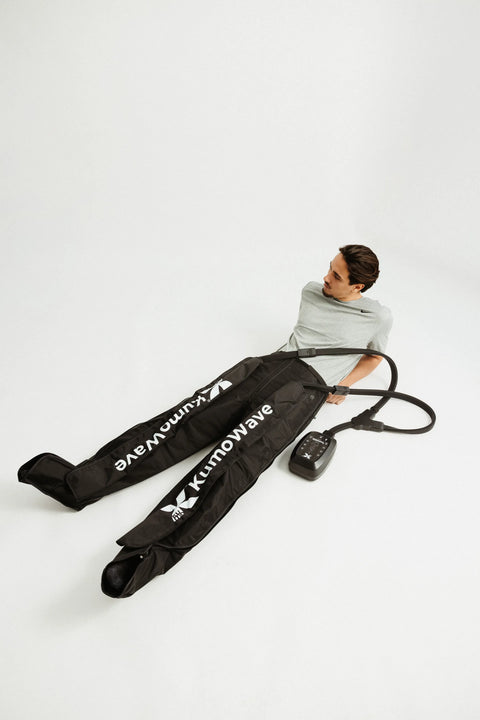
KumoWave Elite – Pressotherapy Pants
Full-coverage trousers. Ideal for lipedema, fluid retention and intensive use.
€799,00 €999,00
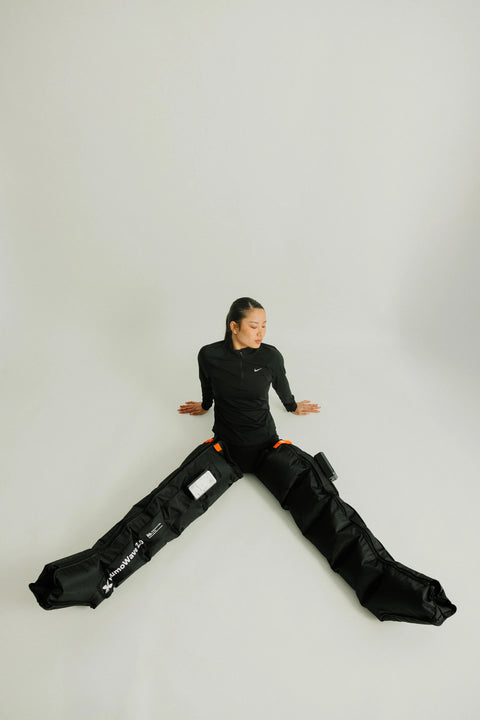
KumoWave 2.0 - Wireless Pressotherapy
Wireless, lightweight boots. Perfect for daily use and recovery.
€499,00 €599,00