
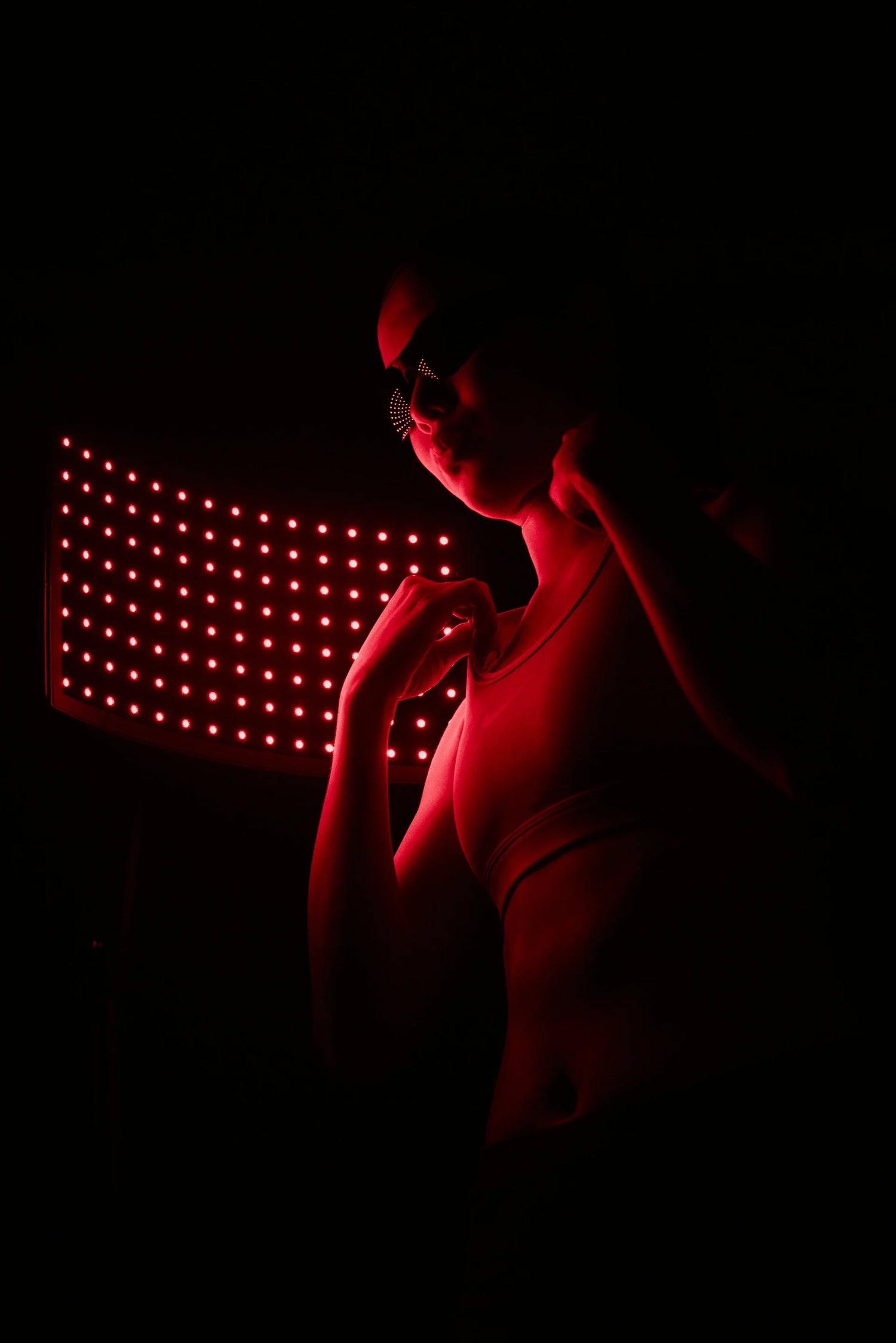
Photobiomodulation holds promise, but it's not a miracle cure. In sports recovery, the useful question isn't whether red light is trendy, but when it truly helps. (mdpi-res.com)
The short answer is that there are positive signs, but they are highly dependent on the dosage, application time, and treated tissue; therefore, it's advisable to separate localized evidence from generalist promises.
Red & infrared light
Recover faster, at home
★★★★★ 4,8/5 · rated by verified customers
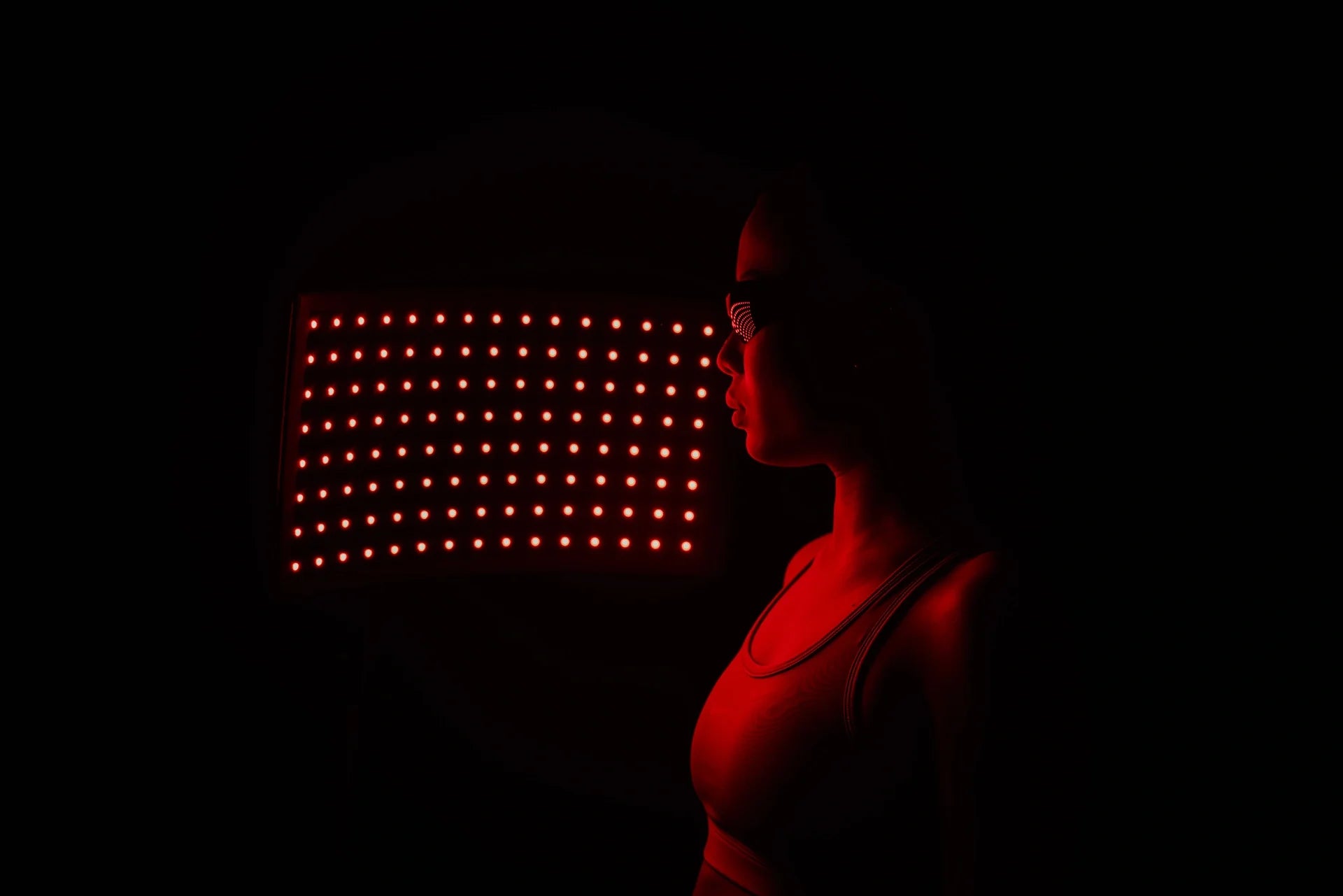
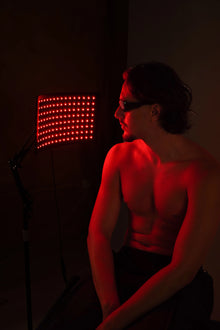
The KumoLux panel supports muscle recovery with full-body red and infrared light.
- 660 nm red + 850 nm infrared light
- Full-body muscle recovery
- Clinically validated biohacking protocols
€399,00€499,00
−10% on your 1st order when you subscribe to the newsletter

The prudent reading today is clear: photobiomodulation seems more robust as localized, well-dosed support than as a universal solution for performing or recovering faster.
What is photobiomodulation and why is it relevant in sports?
Photobiomodulation, or PBM, is a non-thermal intervention that uses red or near-infrared light to generate a biological response in tissues. The most cited hypothesis is that photons are absorbed by mitochondrial chromophores, especially cytochrome c oxidase, with effects on ATP, nitric oxide, and redox signaling. The mechanistic review on cytochrome c oxidase and nitric oxide helps to understand this biological basis.
Personalized protocol · included with your purchase
Want us to tell you how to use it in your case?
With your purchase, our experts set up your red and infrared light sessions for your sport and goal.
Message us on WhatsAppOur experts reply · no obligation
If you want a more basic explanation of photobiomodulation, what photobiomodulation is and what it's used for will help you place the concept before delving into protocols or devices.
In sports, the idea is not to "cure everything" with light, but to try to create a more favorable cellular environment to better tolerate effort and recover with less physiological friction. This promise is plausible, but the actual magnitude of the effect depends heavily on the protocol design.
What does science say about sports recovery?
The overall picture is mixed, but not empty. In the 2023 review on sports performance, 15 randomized trials found positive signals in various outcomes: 4 studies with better oxygen uptake, 5 with less muscle damage, 2 with lower lactate, and 3 with less muscle soreness; however, not all studies replicated the effect.
on your first order when you join the newsletter
We send you the code instantly. No spam.
- In the 2024 meta-analysis on running, 12 studies showed no significant benefit in time-trial or time-to-exhaustion, with an effect size of SMD = 0.13 and no clear dose-response relationship.
- The 2025 systematic review on whole-body photobiomodulation compiled only 5 studies with 105 participants, found no evidence of improvement in performance or recovery, but did observe possible signals regarding sleep. (fisiologiadelejercicio.com)
If you want more context, Kumo's article on the 2025 analysis of sports performance summarizes well why today it's appropriate to be enthusiastic, but not naive.
Quick Table: Usage Scenarios and Practical Interpretation
| Scenario | What studies show | What it means in practice |
|---|---|---|
| Localized PBM before exercise | This is the most studied format; the 2019 clinical guideline proposed 20 to 60 J for small muscle groups and 60 to 300 J for large groups, using red or near-infrared light with direct skin contact. | This is the most consistent approach if you're looking for performance or reduced acute fatigue, provided the dose is well-adjusted. |
| PBM and running | The 2024 meta-analysis of 12 studies found no significant benefits or clear dose-response relationship. | It's not advisable to promise it will make you run better on its own. |
| Whole-body panels | The 2025 review gathered 5 studies and 105 participants; it saw possible sleep improvement, but not in recovery or performance. | They might make sense for wellness, but the sports evidence remains weak. |
Parameters most frequently repeated in studies
The most cited clinical recommendations follow the lines of the clinical recommendation by Leal-Junior and collaborators: use red or near-infrared light, in direct contact with the skin, and adjust the dose to the muscle and the objective. In that guide, the indicative ranges were 20 to 60 J for small muscle groups and 60 to 300 J for large groups, in healthy adults.
To better understand why 660 nm and 850 nm are talked about so much, it's useful to separate penetration and practical application; therefore, it may be helpful to review the differences between 660 nm and 850 nm before choosing a protocol.
Most favorable reviews agree on three ideas: better localized than diffuse use, application before effort in many successful protocols, and the need to adjust energy to muscle size. In other words, it's not about turning on more light, but about using light better.
What is still unclear
The main limitation is heterogeneity: wavelengths, power, total energy, application time, treated muscle, and the athletes' skill level all vary. For this reason, one review might find improvements in an outcome while another finds nothing significant.
- There is no universal number of sessions for sports recovery, because trials use very different schemes and the effect depends on the context.
- More energy does not necessarily mean a better result, as photobiomodulation appears to follow a biphasic response. (pubmed.ncbi.nlm.nih.gov)
- The most compelling evidence emerges when the protocol is adjusted to the tissue, the timing of the effort, and the specific objective.
The useful conclusion is not "it works" or "it doesn't work," but "it works best in certain contexts and with a precise protocol." That's the difference between an interesting tool and an inflated promise.
How to integrate it into a recovery routine
The key is not "more light," but a better adjusted protocol. PBM fits best when used with clear intent: before a demanding session, in a short recovery block, or as specific support within a broader routine. It does not replace sleep, nutrition, load management, or well-planned strength training.
A sensible way to start
- Define whether your goal is to perform better before training or recover better afterward, because the application time changes the logic of the protocol.
- Maintain the same scheme for several days to avoid mixing the effect of photobiomodulation with other changes in your plan.
- Record simple signals such as muscle soreness, perceived fatigue, sleep, and feeling of freshness the next day.
- If you are going to use it at home, first review safe at-home photobiomodulation with criteria to avoid improvising sessions.
Safety and responsible use
The 2019 clinical guideline focused on healthy adults and did not allow for safe extrapolation to people with pathologies, older individuals, or complex injuries. If your goal is to recover from an injury, it's sensible to personalize the protocol with a professional. And, if the application is facial, also review eye safety in red light therapy.
Frequently Asked Questions
Does photobiomodulation improve muscle recovery after intense exercise?
Yes, but not automatically or in all contexts. Several reviews and trials observed fewer markers of muscle damage, less subjective pain, and, in some cases, better effort tolerance when PBM was applied locally and at the right dosage. However, the 2024 running meta-analysis did not find a clear benefit in performance, so recovery should not be taken for granted either. The most cautious interpretation is to think of PBM as possible support, not as a universal solution.
How many photobiomodulation sessions are recommended for sports recovery?
There is no universal number. The literature mixes single sessions before effort, repeated protocols over several days, and schemes adapted to the type of sport. Clinical recommendations emphasize total dose, muscle size, and application time more than a fixed number of sessions. Therefore, the most useful approach is to maintain a consistent protocol during a specific block and evaluate whether you actually notice changes in fatigue, pain, sleep, or freshness during training.
Can PBM enhance sports performance or only recovery?
It can influence both, but the evidence is more consistent in some scenarios than in others. The 2023 review observed improvements in variables such as oxygen volume, muscle damage, and pain in some trials, while the 2024 meta-analysis on running did not show a significant advantage. In other words, PBM can help, but it does not guarantee better marks. The most reasonable view is to see it as a supplement that can provide an edge, not as a substitute for training.
What wavelengths and duration are effective for recovery in athletes?
The most cited studies use red and near-infrared light, approximately between 655 and 950 nm. The 2019 guideline proposed indicative ranges of 20 to 60 J for small muscle groups and 60 to 300 J for large groups, with direct skin contact. However, the exact duration depends on the device's power and the treated area; therefore, the complete protocol matters more than a single isolated number.
What does current evidence say about photobiomodulation in high-performance athletes?
The evidence is promising, but still inconsistent. Some reviews find improvements in fatigue, pain, or certain recovery markers when PBM is used locally and pre-effort, but recent meta-analyses show that not all sports or all protocols respond equally. The current conclusion is that PBM can be useful in high-performance athletes, although solid standardization is still lacking to translate it into a universal recommendation.
What now?
If you want to continue exploring how this technology fits into a home recovery routine, start with the Kumo Balance website, and if you are interested in applying the technology at home, check out advanced LED light therapy at home.

Red & infrared light
KumoLux Panel – Red and Infrared LED Panel
★★★★★ 4,8/5 · rated by verified customers
- 660 nm red + 850 nm infrared light
- Full-body muscle recovery
- Clinically validated biohacking protocols
€399,00€499,00· pay in installments with seQura or Klarna