Lipedema in the legs is not simple fat accumulation. It is a chronic disorder of adipose tissue that typically causes symmetrical swelling, pain, tenderness, and bruising, with the feet usually spared. (my.clevelandclinic.org)
Stages help to order the progression but do not explain everything: the actual intensity also depends on pain, stiffness, inflammation, and the possible coexistence of lipo-lymphedema. Detecting it early changes the approach and prevents diagnostic delays. (pmc.ncbi.nlm.nih.gov)
Pressotherapy at home
End the day with light legs
★★★★★ 4,8/5 · rated by verified customers
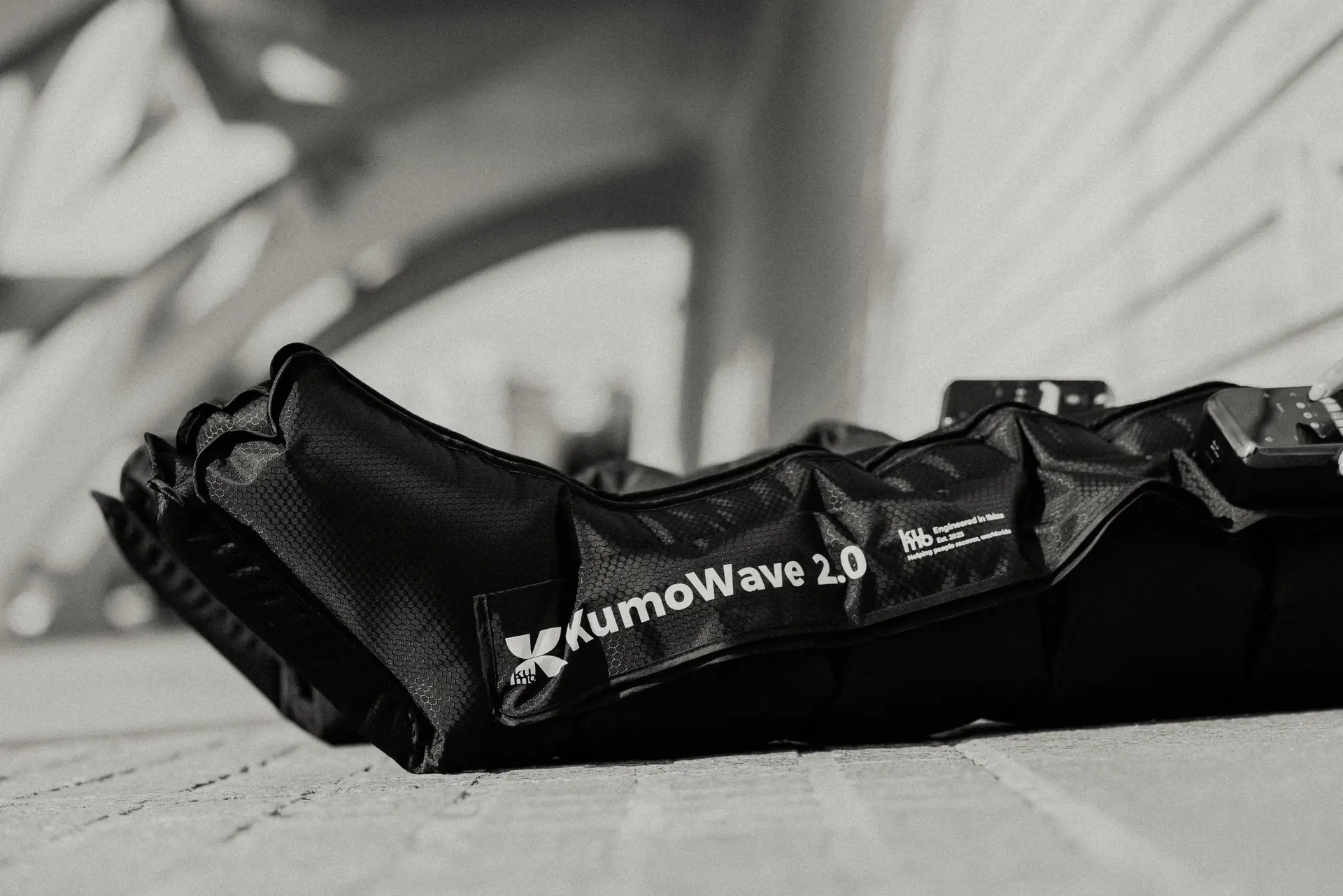
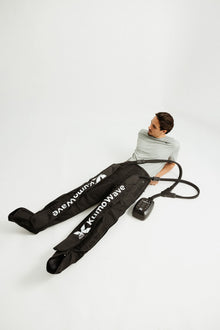
KumoWave pressotherapy boosts circulation and helps drain fluid with sequential compression, in 20-minute sessions at home.
- Boosts circulation and helps drain fluid
- Chamber-based compression, adjustable to you
- Sequential compression that mimics manual drainage
€799,00€999,00
−10% on your 1st order when you subscribe to the newsletter

Signs pointing to lipedema
The typical pattern is bilateral, symmetrical, and disproportionate to the trunk. It can also worsen at the end of the day, with heat, or after many hours of standing, and appear or become more evident during hormonal stages such as puberty, pregnancy, or menopause.
- Legs grow symmetrically, and the ankle usually maintains a clear cut with the foot.
- There is pain to the touch, hypersensitivity, and easy bruising.
- The skin may feel grainy or show small nodules, and over time, larger ones.
- Heaviness increases with heat or prolonged standing.
- It can appear or become more evident after puberty, pregnancy, or menopause. (pmc.ncbi.nlm.nih.gov)
To broaden the general view, lipedema: what it is, symptoms, and treatment in 2026 serves as a starting point to understand the complete picture.
Personalized protocol · included with your purchase
Want us to tell you how to use it in your case?
With your purchase, our experts prepare a personalized usage protocol for your case: sport, circulation, fluid retention, pregnancy or lipedema.
Message us on WhatsAppOur experts reply · no obligation
Stages of lipedema in the legs
Four morphological stages are described. The classification is useful for ordering visible findings but does not replace individual clinical evaluation or alone measure the actual severity of the problem.
Summary of the stages
| Stage | Common changes | Frequent symptoms | Clinical interpretation |
|---|---|---|---|
| Stage 1 | Smooth skin and soft tissue with small palpable nodules. | Mild pain, tenderness, and bruising, although the external appearance may still be subtle. | Early phase, useful for detecting the problem before visible fibrosis. |
| Stage 2 | Irregular surface, with a cushioned or "orange peel" appearance. | More tenderness to the touch and uneven texture, with discomfort often more noticeable at the end of the day. | Fibrosis begins to become more evident, and the contour changes progressively. |
| Stage 3 | Fat lobules, large nodules, and contour deformity, especially in thighs and knees. | Increased pain, stiffness, and difficulty walking or fitting clothes. | This is an advanced stage with clear functional impact. |
| Stage 4 | Lipedema and lymphedema coexist; the foot may begin to be involved. | More complex edema, marked heaviness, and more limited mobility. | Most advanced scenario, also called lipo-lymphedema, requiring specialized evaluation. |
If the initial phase raises doubts, lipedema in stage 1: how to detect it before it progresses delves into the early signs that often go unnoticed.
When the disease progresses, lipedema in stages 3 and 4: what options are there when the disease progresses summarizes the more complex scenario and the decisions usually made.
on your first order when you join the newsletter
We send you the code instantly. No spam.
How lipedema in the legs is diagnosed
Diagnosis is primarily clinical. There is no single reference test; therefore, the interview and physical examination are central, and imaging is used mainly to rule out other causes or coexisting conditions.
- Family history and onset time are reviewed, as there is often an appearance pattern linked to hormonal changes.
- It is assessed whether the volume increase is bilateral, symmetrical, and with sparing of feet and hands.
- Pain, increased sensitivity, and frequent bruising are explored, which help differentiate it from simple fat accumulation.
- If there are doubts, ultrasound, DEXA, magnetic resonance imaging, or tomography can help clarify the picture.
Confusion with obesity, lymphedema, or chronic venous disease is frequent, but the main clue remains the combination of symmetry, pain, and relative sparing of the feet. When there is pitting edema, varicose veins, color changes, or ulceration, the diagnostic balance shifts towards venous pathology. (pmc.ncbi.nlm.nih.uk)
Approach and treatment
In 2024, the German S2k guideline brought together 60 recommendations on diagnosis, conservative and surgical treatment, as well as psychosocial factors and self-care. The underlying message is clear: the approach must be comprehensive and realistic. (pubmed.ncbi.nlm.nih.gov)
Conservative therapies are often the basis: compression, manual lymphatic drainage, adapted exercise, and skin care. Recent reviews show that these measures can relieve pain and swelling, although the effect is usually partial and depends on consistency.
In this context, pressotherapy and lipedema: usefulness and precautions can be understood as a complementary support: intermittent pneumatic compression has been considered safe and useful in lipedema when the indication is appropriate, but it does not replace the overall plan. (pubmed.ncbi.nlm.nih.gov)
Movement also matters. Swimming, cycling, and gentle walking are usually better tolerated than high impact, and that's why the article exercise for lipedema: what activities help and which should be avoided is useful for adapting the routine.
When the condition is advanced or significantly limits function, tumescent liposuction with lymphatic preservation can offer sustained improvements. A systematic review from 2026, with 61 articles, found the strongest evidence for this option in pain, mobility, and quality of life in selected cases. (pubmed.ncbi.nlm.nih.gov)
Weight and diet still matter for general health, but they usually do not erase lipedematous tissue on their own. In addition, as it is a chronic and often underdiagnosed disease, emotional support and professional follow-up are part of the approach.
Frequently asked questions about lipedema in the legs
What is lipedema and how does it affect the legs?
It is a disorder of adipose tissue that primarily affects the legs and, in some people, also the arms. It is characterized by symmetrical volume increase, pain to the touch, and feet usually spared. Many people confuse it with localized fat or cellulite, but it does not respond in the same way to diet or exercise. Early recognition helps prevent diagnostic delays and guide a more useful plan.
What are the stages of lipedema and what characterizes each one?
Four stages are described. Stage 1 has smooth skin and small nodules; stage 2 shows an irregular surface; stage 3 adds fibrosis and lobulations; and stage 4 appears when lipo-lymphedema coexists. Even so, external appearance does not explain everything: pain, sensitivity, and function are very important for assessing the actual case. The classification serves as a guide, but should not be used as the sole measure of severity.
How is lipedema in the legs diagnosed?
Diagnosis is clinical: history, examination, and a detailed physical examination. There is no single reference test; therefore, ultrasound, MRI, tomography, or DEXA are used to rule out other causes when necessary. The presence of symmetry, pain, and sparing of feet and hands is quite indicative. If there is also a family history or onset after hormonal changes, suspicion increases.
What treatments exist for lipedema in the legs and what is their effectiveness?
Treatments combine compression, manual lymphatic drainage, adapted exercise, skin care, and, in some cases, pressotherapy as support. Recent evidence indicates that these measures can relieve symptoms, but tumescent liposuction offers the best sustained improvement in selected patients. The choice depends on the stage, pain, and function, so it is advisable to individualize the plan.
How to differentiate lipedema from other leg problems like lymphedema or venous edema?
Lipedema is usually bilateral, symmetrical, and painful, with relatively spared feet. Lymphedema is related to lymphatic drainage failure and can affect the foot; chronic venous disease usually causes varicose veins, color changes, pitting edema, and, in advanced cases, ulceration. When in doubt, clinical examination and imaging tests help separate the conditions and avoid confusing diagnoses that require different management.
What now?
If you recognize several of these signs, don't put it off. Start by checking lipedema treatment: real options and what really works and continue exploring the Kumo Balance website to integrate recovery and self-care into your daily life.
KumoWave pressotherapy
Choose your at-home pressotherapy
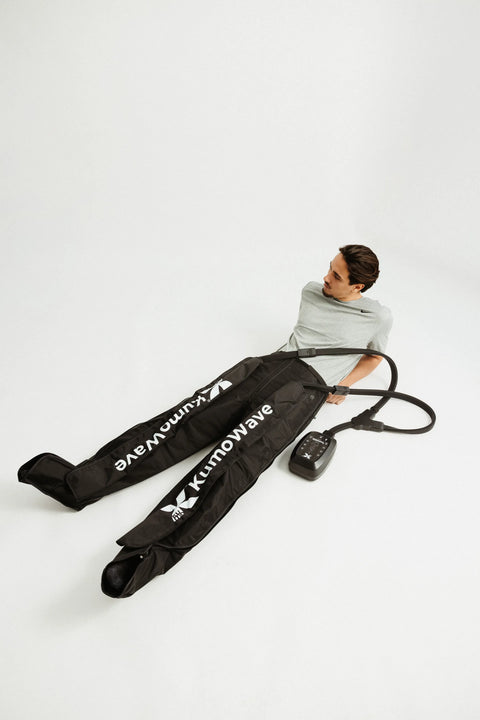
KumoWave Elite – Pressotherapy Pants
Full-coverage trousers. Ideal for lipedema, fluid retention and intensive use.
€799,00 €999,00
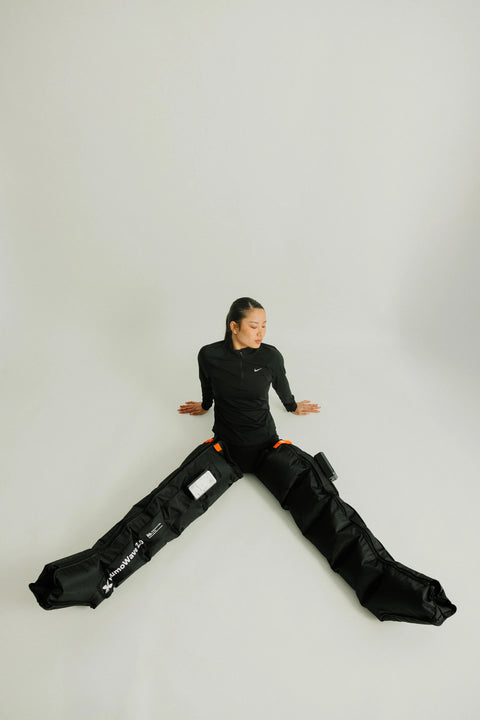
KumoWave 2.0 - Wireless Pressotherapy
Wireless, lightweight boots. Perfect for daily use and recovery.
€499,00 €599,00