

Riding takes its toll. If you finish with a stiff hip, a loaded inner thigh, and a tight lower back, you need a short, well-executed release.
In recent literature on horseback riding, back pain comes up very often: a 2024 systematic review pooled 14 studies and 4,527 participants and found point prevalences between 27.9% and 87.9% depending on the sample. On top of that, a 2026 paper on German riders puts hip pain in a range of 8% to 19%. We are not always talking about injury, but we are talking about overload.
Pressotherapy at home
End the day with light legs
★★★★★ 4,8/5 · rated by verified customers
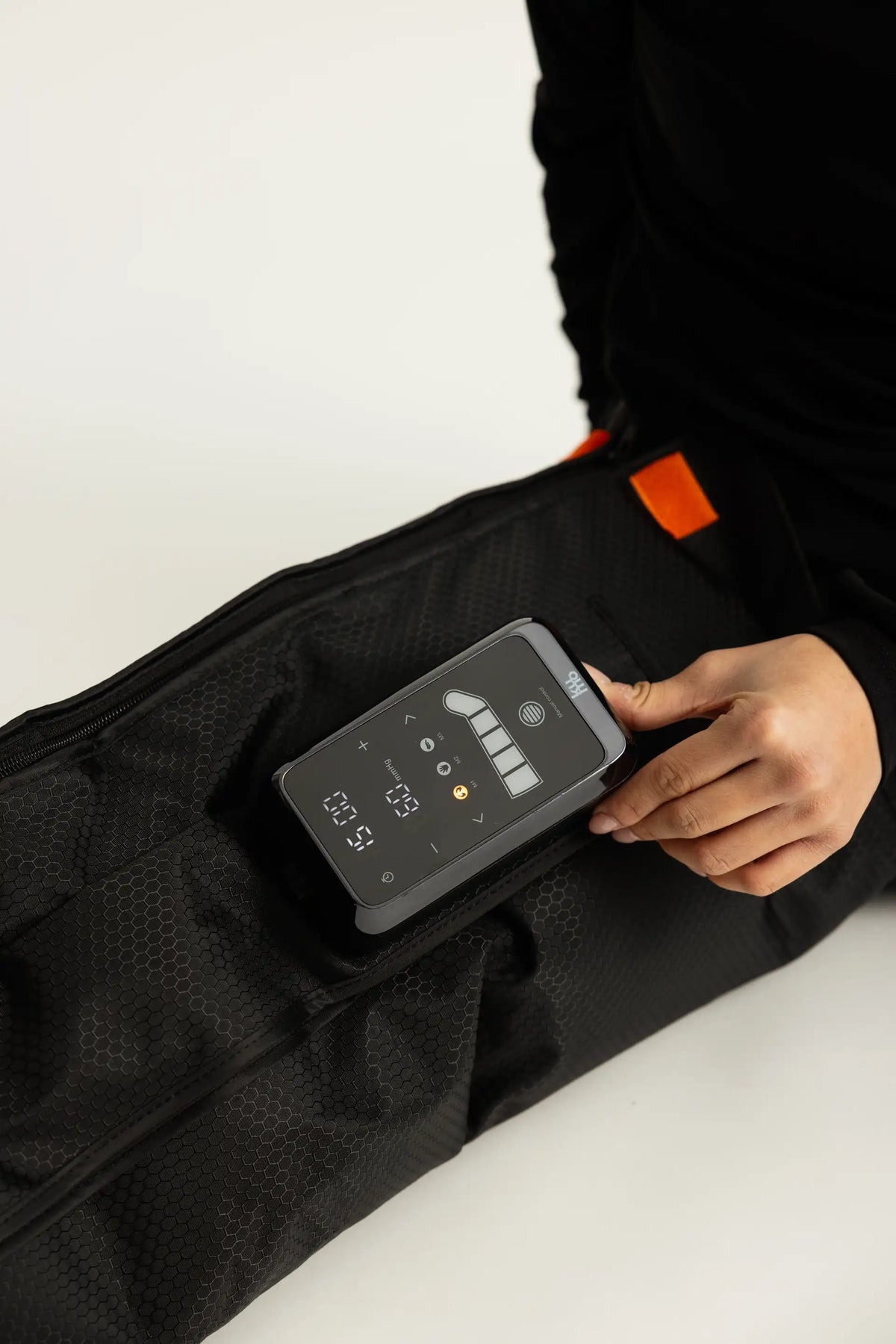
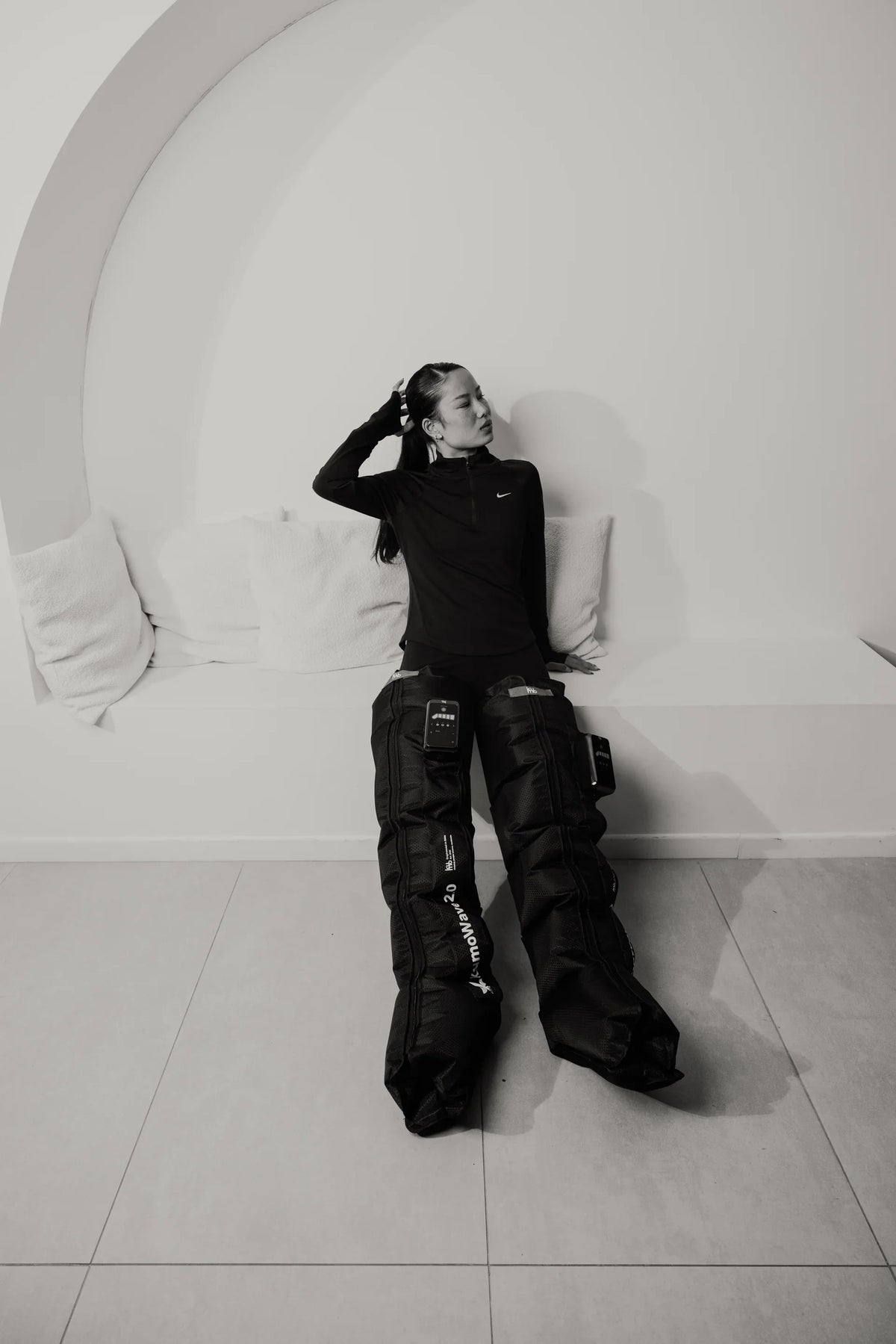
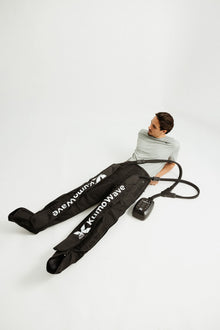
KumoWave pressotherapy boosts circulation and helps drain fluid with sequential compression, in 20-minute sessions at home.
- Boosts circulation and helps drain fluid
- Chamber-based compression, adjustable to you
- Sequential compression that mimics manual drainage
€799,00€999,00
−10% on your 1st order when you subscribe to the newsletter

Why these areas take so much load in the saddle
The hip transmits forces between rider and horse, while the lower back and the inner thigh work to stabilize the body, follow the movement, and hold posture. When the session is long, intense, or very repetitive, that combination can leave stiffness once you dismount.
If the hip is what you notice most, a useful reference is this guide to easing hip stiffness with percussion massage and opening exercises, because it goes deeper into gentle mobility and opening, exactly the kind of work that usually fits best once the muscles are already warm. (nhs.uk)
Personalized protocol · included with your purchase
Want us to tell you how to use it in your case?
With your purchase, our experts prepare a personalized usage protocol for your case: sport, circulation, fluid retention, pregnancy or lipedema.
Message us on WhatsAppOur experts reply · no obligation
What to do right after the session
The first useful step is to walk for a few minutes and breathe more slowly. As a general reference, the NHS recommends a cool-down of about 5 minutes after exercise to progressively relax the tissue and improve flexibility.
If stiffness dominates, gentle heat can help. If what you feel is a more recent sense of overload or tenderness, a wrapped cold cloth for a few minutes can also help. The NHS includes both options within self-care for back pain. (nhs.uk)
Quick release routine for hips, adductors, and back
Do it without bouncing and with calm breathing. Take it as a practical proposal based on general exercise guidance, not as a closed medical protocol.
on your first order when you join the newsletter
We send you the code instantly. No spam.
| Area | Exercise | How to do it | Practical reference |
|---|---|---|---|
| Hip and glute | Knee to chest | Lie on your back, bring one knee toward your chest, and keep your lower back on the floor. Switch sides without forcing. | 30 seconds per side, 2 reps. (mayoclinic.org) |
| Adductors | Butterfly or gentle inner thigh opening | Sit with the soles of your feet together and let your knees drop toward the floor without pushing. | 15 to 20 seconds, 2 reps. |
| Hip flexors | Low lunge with the knee down | Place one knee on the floor, keep your torso upright, and move forward little by little until you feel a stretch at the front of the hip. | 30 seconds per side, 2 reps. |
| Lower back | Gentle walking and controlled mobility | Walk for 5 minutes and add slow movements that do not increase pain. | 5 to 10 minutes. |
If a position gives you a sharp twinge, reduce the range. Mayo Clinic insists that stretching should be gentle, without bouncing, and free of pain.
If you prefer to pair mobility with self-release, you can review the guide to using percussion massage by muscle group to better locate legs, back, glutes, and shoulders. The idea is to support recovery, not to replace it.
If there is a strain, overload, or a sensitive adductor
When the pain feels more like a strain than simple stiffness, the plan changes a little. For the first 48 hours, relative rest, ice, compression, and elevation are usually recommended; after that, if pain allows, gentle mobility and progressive strengthening.
The Berkshire physiotherapy guide also warns against overstretching at this stage and says that if the exercises make symptoms worse, you should lower the load or stop. If the area feels very tender, swells noticeably, or walking becomes hard, it is better to get it assessed.
Mistakes worth avoiding
Many riders drag the discomfort out by trying to “loosen” the body too fast. What usually helps is the opposite: less rush, more control, and more consistency.
- Do not stretch cold without walking or mobilizing for a few minutes first.
- Do not bounce when looking for more range in the hip or in the adductors.
- Do not stay still all day if all you have is mild stiffness.
- Do not push an area that is already warning you with sharp pain or loss of strength.
NHS and Mayo Clinic guidance agree that gentle activity usually works better than prolonged rest, and that pain that gets worse during exercise is a signal to stop and readjust.
How to arrive fresher at your next ride
Recovering after riding is not only stretching, it is also strengthening. The AAOS hip program includes abduction and adduction exercises, and in practice that helps the pelvis tolerate load better when you ride often. (orthoinfo.aaos.org)
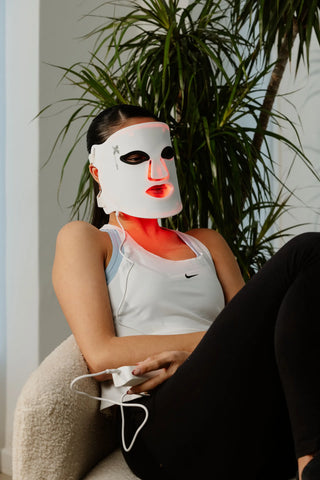
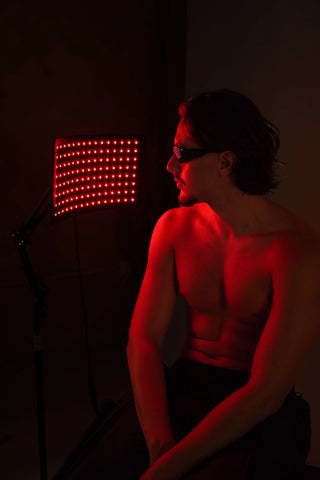
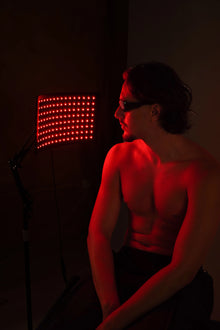
If you want to organize everything in a few minutes, this at-home recovery routine with pressotherapy, red light therapy, and percussion massage can work as a general structure for your heavier days.
In practice, combine two or three weekly sessions of light strength work, short daily mobility, and a good cool-down after riding. If an exercise increases pain, do not turn it into a challenge.
When to stop and get it checked
If any of these signs show up, do not push the session and get it checked. Pain that lasts more than a few weeks, pain that travels down one leg, weakness, tingling, fever, or pain that started after a fall are clear reasons to seek assessment. Mayo Clinic and the NHS also recommend care if the pain gets worse at rest or comes with changes in bladder or bowel. (mayoclinic.org)
- Back pain that radiates into the leg or travels below the knee.
- Tingling, weakness, or loss of sensation.
- Fever, unexplained weight loss, or pain after a blow or a fall.
- Groin pain with marked swelling, a lump, or clear worsening when walking.
If you are pregnant, have just been injured, or live with a medical condition, adapt any stretch with a physical therapist or health professional before you start.
Frequently asked questions
How do you relieve your hips after a riding session?
Start with 5 minutes of easy walking to bring your heart rate down, then do calm hip and glute stretches, such as knee to chest or a hip flexor stretch. Hold each position for 15 to 30 seconds, without bouncing, and stop if sharp pain shows up. If you are pregnant, have an injury, or live with an underlying condition, adapt the routine with a professional.
How do you relax the adductors after horseback riding?
If all you feel is stiffness, a gentle inner thigh stretch, butterfly style, is usually a good option. If the pain arrived as a strain, the first 48 hours call for relative rest, ice, compression, and elevation; after that you can bring mobility and strength back little by little. If the pain increases when you squeeze your legs together or when you walk, get it assessed.
What exercises help the back after riding?
The best base is usually walking, moving regularly, and doing gentle stretches, not spending the day in bed. For the lower back, knee to chest is a classic reference, and if the pain lasts more than a few weeks or travels down the leg, it is worth seeing someone. If an exercise increases the discomfort, stop.
How do you avoid lower back pain while riding?
Do a short activation before you mount, with 5 to 10 minutes of light movement, and do not neglect glute, adductor, and core strength off the horse. The hip and the pelvis benefit from a consistent routine, not from isolated efforts. If you ride often and the pain comes back every week, a professional assessment is worth it.
What stretches should you do before and after riding for the hips and back?
Before mounting, the most sensible thing is a brief dynamic warm-up, not a long cold stretch. Afterward, gentle sustained stretches for the hip, adductors, hamstrings, and lower back fit much better. Mayo Clinic and the NHS agree that the right order is to warm up first and stretch later, when the muscle is more receptive.
So what now?
If the pain lasts more than a few weeks, travels down the leg, comes with tingling, or you notice weakness, seek professional assessment. And if you already have medical clearance and want to keep organizing your recovery with clear resources, head back to Kumo Balance and save this at-home recovery routine with pressotherapy, red light therapy, and percussion massage to check after your next ride.
KumoWave pressotherapy
Choose your at-home pressotherapy
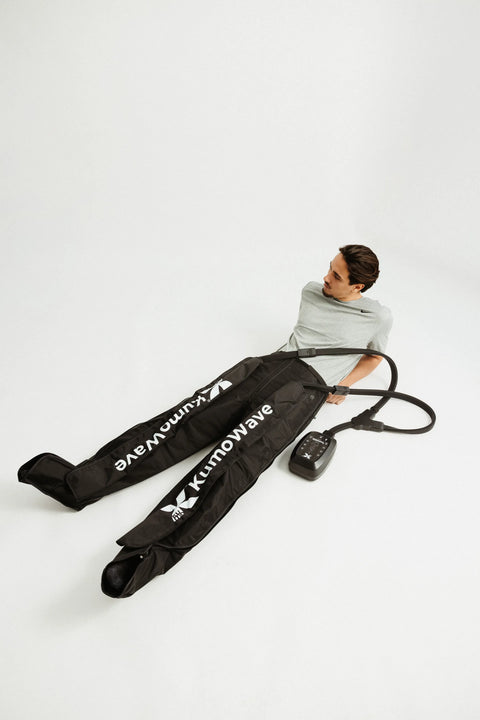
KumoWave Elite – Pressotherapy Pants
Full-coverage trousers. Ideal for lipedema, fluid retention and intensive use.
€799,00 €999,00
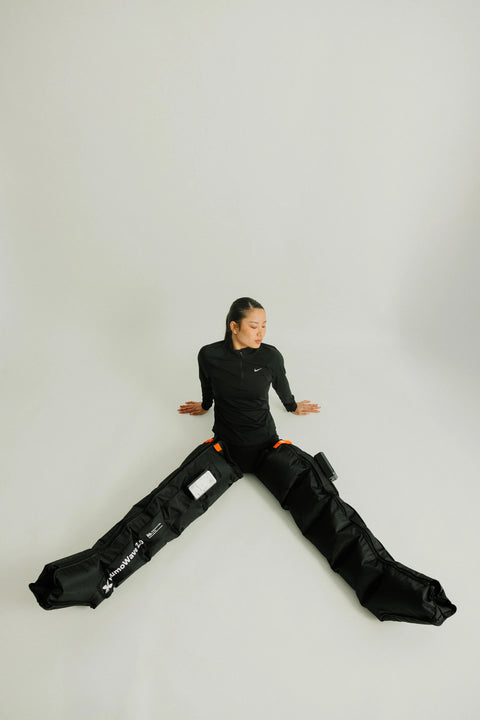
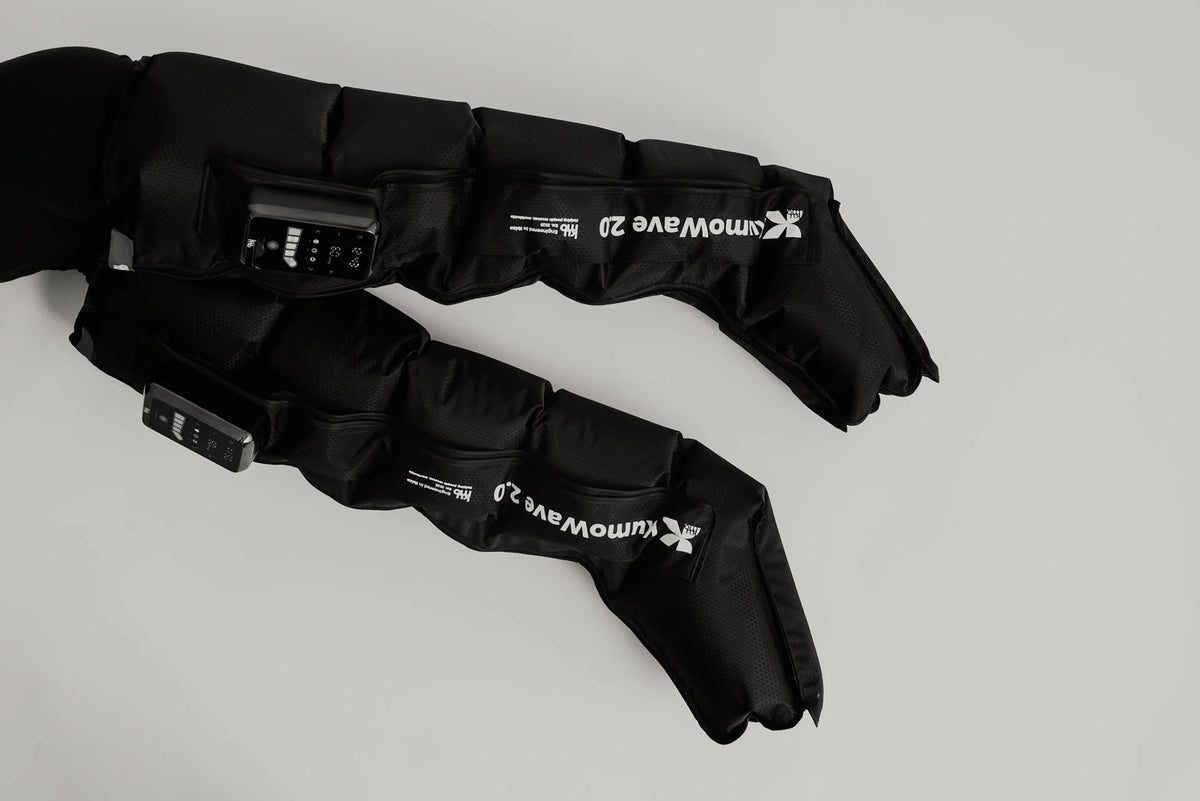
KumoWave 2.0 - Wireless Pressotherapy
Wireless, lightweight boots. Perfect for daily use and recovery.
€499,00 €599,00