


Sleeping better starts before going to bed.
Sleep hygiene combines habits, schedules, and environmental conditions that help the body recognize when it's time to rest. It's not a miracle cure, but it is a useful foundation for organizing the signals sent to the brain. A 2024 literature review analyzing 548 studies in adults found that, although the definition varies, three themes almost always appear: behavior, environment, and routine control. (pubmed.ncbi.nlm.nih.gov)
Red & infrared light
Recover faster, at home
★★★★★ 4,8/5 · rated by verified customers
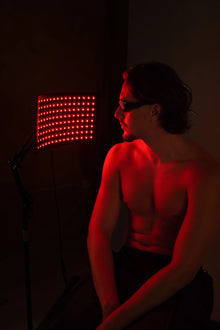
The KumoLux panel supports muscle recovery with full-body red and infrared light.
- 660 nm red + 850 nm infrared light
- Full-body muscle recovery
- Clinically validated biohacking protocols
€399,00€499,00
−10% on your 1st order when you subscribe to the newsletter

In practice, specialists emphasize four frequently repeated ideas: regularity, fewer stimuli at night, control of stimulants, and a bedroom prepared for sleep. They also remind us that when insomnia persists, sleep hygiene helps, but is not enough on its own.
What exactly is sleep hygiene
In simple terms, sleep hygiene is the set of daily decisions that facilitate more stable rest. It includes everything from the time you go to bed to the light around you, as well as caffeine, naps, room temperature, and the time you allow yourself to unwind before turning off the light. If you want to see an example of a simple sequence for the last hour of the day, you can read a nighttime routine with red light for inspiration on organizing the end of the day. (pubmed.ncbi.nlm.nih.gov)
Personalized protocol · included with your purchase
Want us to tell you how to use it in your case?
With your purchase, our experts set up your red and infrared light sessions for your sport and goal.
Message us on WhatsAppOur experts reply · no obligation
Habits recommended by specialists
The recommendations with the most consensus are quite direct: maintain similar schedules every day, reserve the last hour for quiet activities, reduce caffeine and alcohol consumption near bedtime, and take care of the bedroom environment. The NHLBI also advises avoiding nicotine, moderating naps, and staying physically active during the day.
Practical table of useful habits
| Habit | How to apply it | Practical idea |
|---|---|---|
| Regular schedule | Go to bed and wake up at similar times, also on weekends. | Try to keep the difference to no more than approximately one hour. |
| Quiet last hour | Reserve the 60 minutes before sleep to slow down. | Reduce screens, intense light, and very demanding exercise. |
| Fewer stimulants | Avoid caffeine, nicotine, alcohol, and very heavy dinners near bedtime. | Caffeine can interfere up to 8 hours later. |
| Favorable bedroom | Keep the room dark, quiet, and cool. | If needed, use blackout curtains or a dim night light. |
| Short naps | If you sleep during the day, try to keep them brief. | In adults, a nap of up to 20 minutes is usually the practical reference. |
Quick key: if you only change three things, start with a regular schedule, less caffeine in the afternoon, and one hour beforehand without rushing. They are small adjustments, but they usually make more difference than trying to change everything at once.
If you work shifts
When the schedule is irregular, sleep hygiene needs some extra adjustments. The NHLBI suggests taking advantage of bright light during work, limiting caffeine to the first part of the shift, and reducing noise and light as much as possible when it's time to sleep during the day. In that case, darkening the room well and protecting rest with blackout curtains can be as important as going to bed early.
on your first order when you join the newsletter
We send you the code instantly. No spam.
What it can provide when there is insomnia, and what it cannot
Current evidence suggests that sleep hygiene education can improve some symptoms, but it is not the most powerful intervention when we talk about chronic insomnia. A meta-analysis published in 2025, with 42 randomized trials and 4,245 adults, found improvement in the severity of insomnia, although cognitive behavioral therapy for insomnia, CBT-I, obtained superior results. The AASM guideline also points out that sleep hygiene should not be used as the sole treatment for chronic insomnia in adults. (pubmed.ncbi.nlm.nih.gov)
If the sleep problem persists for weeks, if it occurs at least three nights a week for three months, or if it already affects your energy, concentration, or mood, the most prudent thing is to talk to a healthcare professional. And if you are pregnant, breastfeeding, under 18, or live with kidney, liver, or heart disease, or are undergoing ongoing treatment, it is advisable to individualize any major change with your doctor or pharmacist.
How to prepare the bedroom for better sleep
The environment matters more than it seems. The NHLBI insists on three very simple elements: darkness, silence, and coolness, because the night should not send contradictory signals to the brain. If outside light enters, blackout curtains help. If noise is unavoidable, it is advisable to find ways to dampen it. And if your problem is waking up easily, it is worth checking if there are lights, screens, or small noises that have become normalized in the room.
It also helps to use the bed as a real place of rest and not as an extension of work, social media, or pending tasks. The fewer stimuli your brain associates with that place, the easier it is to enter sleep mode. Perfection is not required; consistency is.
FAQ on sleep hygiene
What is sleep hygiene and why is it so important for sleep quality?
It is the set of habits and conditions that facilitate more regular rest, such as schedule, light, caffeine, naps, and the room environment. It is important because sleep responds a lot to repeated signals. When those signals are stable, it is easier for the body to understand that it is time to rest. Recent scientific literature also shows that the concept is not always defined the same way, although it almost always revolves around behavioral and environmental factors. (pubmed.ncbi.nlm.nih.gov)
What specific habits do specialists recommend to improve sleep hygiene in adults?
The most cited are quite clear. Maintain a similar time for going to bed and waking up, reserve the last hour of the day for quiet activities, avoid caffeine, alcohol, and nicotine near bedtime, and take care of the bedroom so that it is dark, quiet, and cool. It is also advisable to limit naps if you later have trouble sleeping at night. The NHLBI adds that the difference between workdays and weekends should not be large.
How can sleep hygiene help treat insomnia without resorting to medication?
It can help when insomnia is fueled by irregular schedules, excess nighttime light, late caffeine, or highly stimulating routines. Now, if we talk about chronic insomnia, the strongest evidence favors CBT-I, and the AASM does not recommend sleep hygiene as a sole treatment. A 2025 meta-analysis found improvement with sleep hygiene education, but also showed that it was less effective than CBT-I and other active interventions. If the problem persists, a professional evaluation is advisable.
What foods or drinks should be prioritized or avoided before going to bed?
Before sleeping, a light dinner usually goes better than a heavy meal. It is advisable to avoid caffeine, alcohol, and nicotine near bedtime, and also to be cautious with coffee, tea, chocolate, and energy drinks in the afternoon. The NHLBI points out that caffeine can continue to interfere up to 8 hours later, so a late intake can delay sleep. If you take medication or have doubts, ask your doctor or pharmacist for advice.
How to organize the room to promote restorative sleep?
Think of three words: darkness, silence, and coolness. A room with little light, less noise, and a pleasant temperature usually promotes rest better than a space filled with stimuli. If light enters from outside, blackout curtains help; if noise is the problem, it is advisable to find simple ways to dampen it. It is also a good idea to avoid screens and intense lights in the last hour, so that the bedroom continues to be associated with sleeping and not with being alert.
Sources and reference reading
- healthy sleep habits from the NHLBI
- factors that favor insomnia according to the NHLBI
- AASM behavioral guideline on chronic insomnia
- 2025 meta-analysis on sleep hygiene education
- 2024 literature review on the definition of sleep hygiene
And now what?
If you want to keep fine-tuning your nights, return to Kumo Balance, review the step-by-step protocol with a red light panel and, if you want some complementary reading, open the guide on red light therapy and rest. Keep the essentials: consistency, fewer stimuli, and a bedroom prepared for rest.

Red & infrared light
KumoLux Panel – Red and Infrared LED Panel
★★★★★ 4,8/5 · rated by verified customers
- 660 nm red + 850 nm infrared light
- Full-body muscle recovery
- Clinically validated biohacking protocols
€399,00€499,00· pay in installments with seQura or Klarna