
Your skin needs a break.
After weeks of sun, heat, and more time outdoors, the best thing to do is not "do more," but rather reduce inflammation, rehydrate, and prevent new UV damage. Sunburn is a skin injury caused by too much sun exposure, and it usually improves in a few days if managed carefully.
Facial red light
Bring your skin back to life
★★★★★ 4,8/5 · rated by verified customers
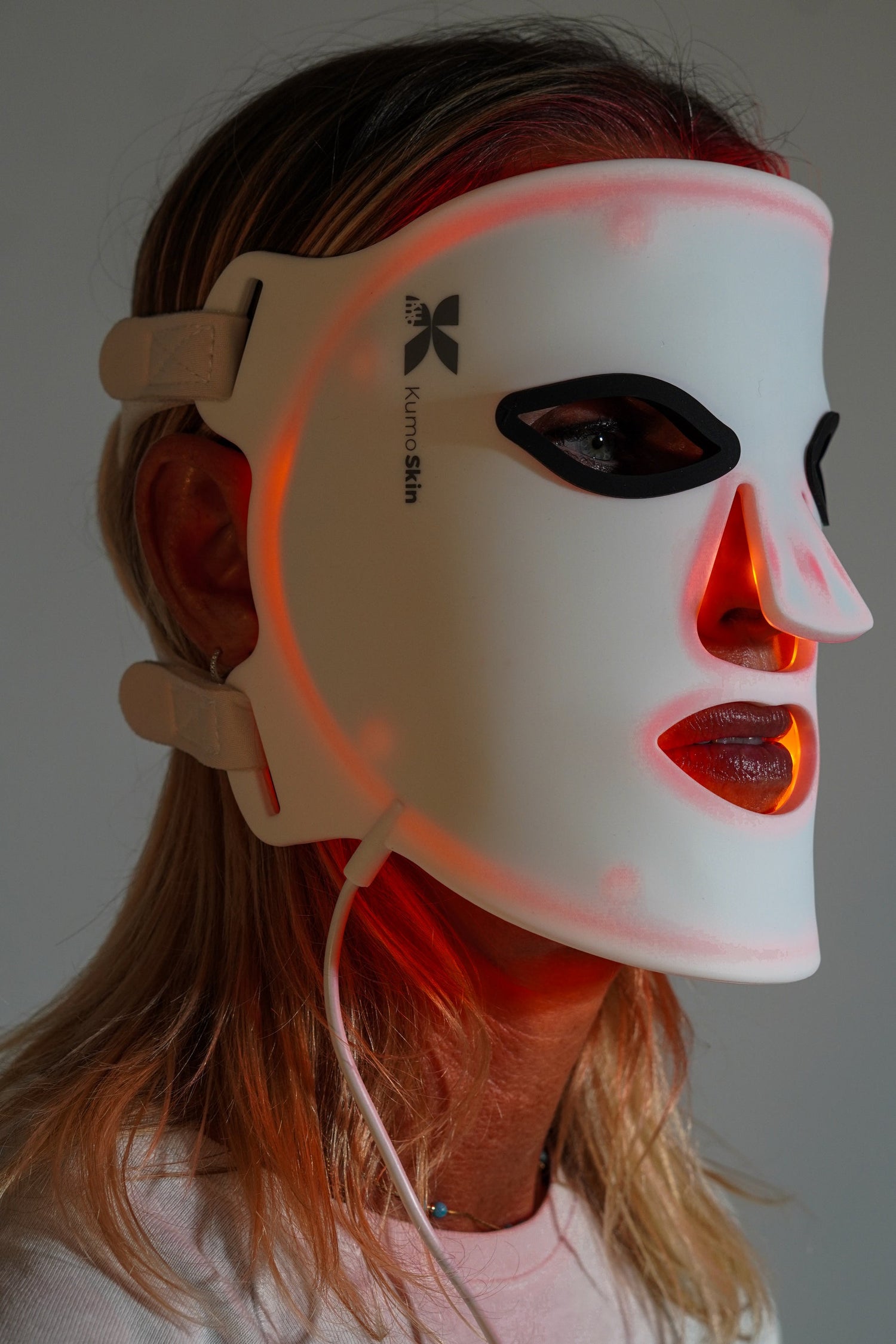
The KumoSkin LED mask helps repair and calm your skin in short sessions at home.
- 250 LEDs in flexible medical silicone
- Red light to boost collagen and glow
- 4 lights: red, infrared, blue and yellow
€299,00€429,00
−10% on your 1st order when you subscribe to the newsletter

If you notice redness, heat, tightness, itching, or peeling, the goal is simple: soothe, protect, and allow the skin barrier to recover without unnecessary aggression. Furthermore, even when there's no obvious sunburn, repeated sun exposure causes cumulative damage and accelerates visible aging. (aad.org)
What the sun does to your skin in summer
Intense sun exposure can leave skin dehydrated, sensitive, and more reactive to almost everything. Moreover, the damage doesn't end with redness: the AAD emphasizes that UV radiation contributes to premature aging, and the Skin Cancer Foundation reminds us that accumulated damage increases the risk of skin cancer.
Personalized protocol · included with your purchase
Want us to tell you how to use it in your case?
With your purchase, our experts prepare the ideal LED protocol for your skin type and goal (acne, wrinkles, dark spots...).
Message us on WhatsAppOur experts reply · no obligation
A sunburn can feel like heat, pain, peeling, or blisters, and usually improves in about 7 days if it's mild. On black or brown skin, the color change may be less visible, so it's also important to pay attention to feelings of heat or tightness.
The AAD guidelines for treating sunburn, the NHS on sunburn, and the Skin Cancer Foundation agree on the basics: get out of the sun, cool the skin, hydrate, and do not manipulate blisters or peeling skin.
The priority is not to "fix" the skin by force: it's to calm it, protect it, and allow its barrier to function normally again.
−10%on your first order when you join the newsletter
We send you the code instantly. No spam.
First 72 hours: how to calm your skin
- Get out of the sun as soon as possible and avoid further exposure until your skin stops burning.
- Cool the area with a lukewarm or cool shower, or with a cool, damp towel; direct ice is not a good idea.
- Apply an unscented cream or lotion while the skin is still damp, ideally with aloe vera or soy if it suits you.
- Drink more water and avoid alcohol if you feel dry or hot.
- Do not pop blisters or rub peeling skin.
If your skin starts to peel, don't pull it off. Let it shed on its own and maintain gentle hydration; this reduces the risk of further irritation and helps the area heal without complications.
Repair plan according to skin condition
| Skin condition | What to prioritize | What to avoid |
|---|---|---|
| Redness, heat and stinging | Cool compresses, lukewarm or cool shower, and unscented cream applied to damp skin. | Do not use direct ice, harsh soap, or friction from towels or tight clothing. |
| Peeling | Gentle hydration, sufficient water, and light textures that don't sting. | Do not scratch, do not peel off the skin, and do not add mechanical exfoliation. |
| Blisters | Let them heal, keep them clean, and protect them from friction. | Do not puncture them or cover them with products that retain too much heat. |
| Skin already calm | Gradually return to your routine and maintain daily photoprotection. | Do not suddenly resume prolonged sun exposure without protection. |
When your skin is calm: return to a simple routine
If there's no more burning, you can resume layered skincare, taking your time. For aesthetic and gentle continuity, you have the guide on using a LED facial mask after summer sun, which fits well when you're looking for a calmer night.
If you want to better structure that moment of the day, the night facial routine with a LED mask serves as a step-by-step guide, and red light therapy: benefits and how it works 2025 explains the general context.
How to prevent it from happening again
Daily sun protection remains the best mid-term repair. The AAD recommends shade, protective clothing, and a broad-spectrum, water-resistant SPF 30 or higher; furthermore, it insists that protection matters for all skin tones.
The Skin Cancer Foundation reminds us that even a mild burn leaves accumulated damage and that exposure without visible burn can also cause harm. In practice, this means reapplying sunscreen, covering shoulders, décolletage, and ears, and seeking shade when the sun is strongest.
If you're still going to be outdoors, think in terms of consistency: daily protection, sufficient hydration, and a routine that doesn't punish the skin barrier. This combination not only helps the skin look better but also reduces the risk of spots, uneven texture, and premature aging.
Frequently asked questions
How long does it take for skin to recover after sun exposure?
For a mild burn, the skin usually improves in about 7 days, although peeling may start within a few days and sensitivity may last a little longer. The key is not to rush your routine: first cool, then hydrate, and only then resume the products you use daily. If there are extensive blisters, dizziness, fever, or significant pain, it's not advisable to wait to "see if it passes."
What cream is best after getting a sunburn?
The safest option is usually an unscented lotion or cream applied to damp skin. The AAD mentions aloe vera or soy, and the NHS recommends aftersun cream/spray or an unscented moisturizer. If something stings when you apply it, switch to a simpler formula and avoid mixing too many active ingredients at once. The important thing is not to "treat" the skin with too many steps, but to maintain hydration that doesn't irritate.
Can I use exfoliants, retinol, or acids if I've been sunburned?
While the skin is still red, hot, or peeling, it's prudent not to exfoliate or rub off the peeling skin. The NHS advises not to scratch or remove peeling skin, and the AAD recommends getting out of the sun and protecting the area to allow it to recover. Once the skin is stable, reintroduce products gradually and observe tolerance; if you notice stinging, take a step back.
When should I see a doctor for a sunburn?
Seek medical help if there are large or widespread blisters, fever, chills, dizziness, confusion, severe pain, or signs of infection like pus or red lines. The NHS points to these situations as reasons for urgent care, and the Skin Cancer Foundation reminds us that severe burns are not just a cosmetic problem. When in reasonable doubt, especially with children, it's better to consult a doctor than to minimize symptoms.
What now?
If you want to continue caring for your skin with a simpler and more consistent routine, go back to the Kumo Balance homepage and also explore the benefits of the LED facial mask for the skin to assess when it best fits into your post-summer routine.

Facial red light
KumoSkin Mask – LED Facial Mask
★★★★★ 4,8/5 · rated by verified customers
- 250 LEDs in flexible medical silicone
- Red light to boost collagen and glow
- 4 lights: red, infrared, blue and yellow
€299,00€429,00· pay in installments with seQura or Klarna