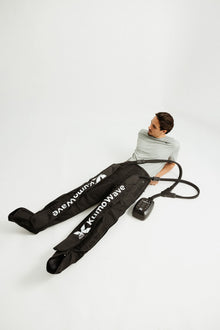

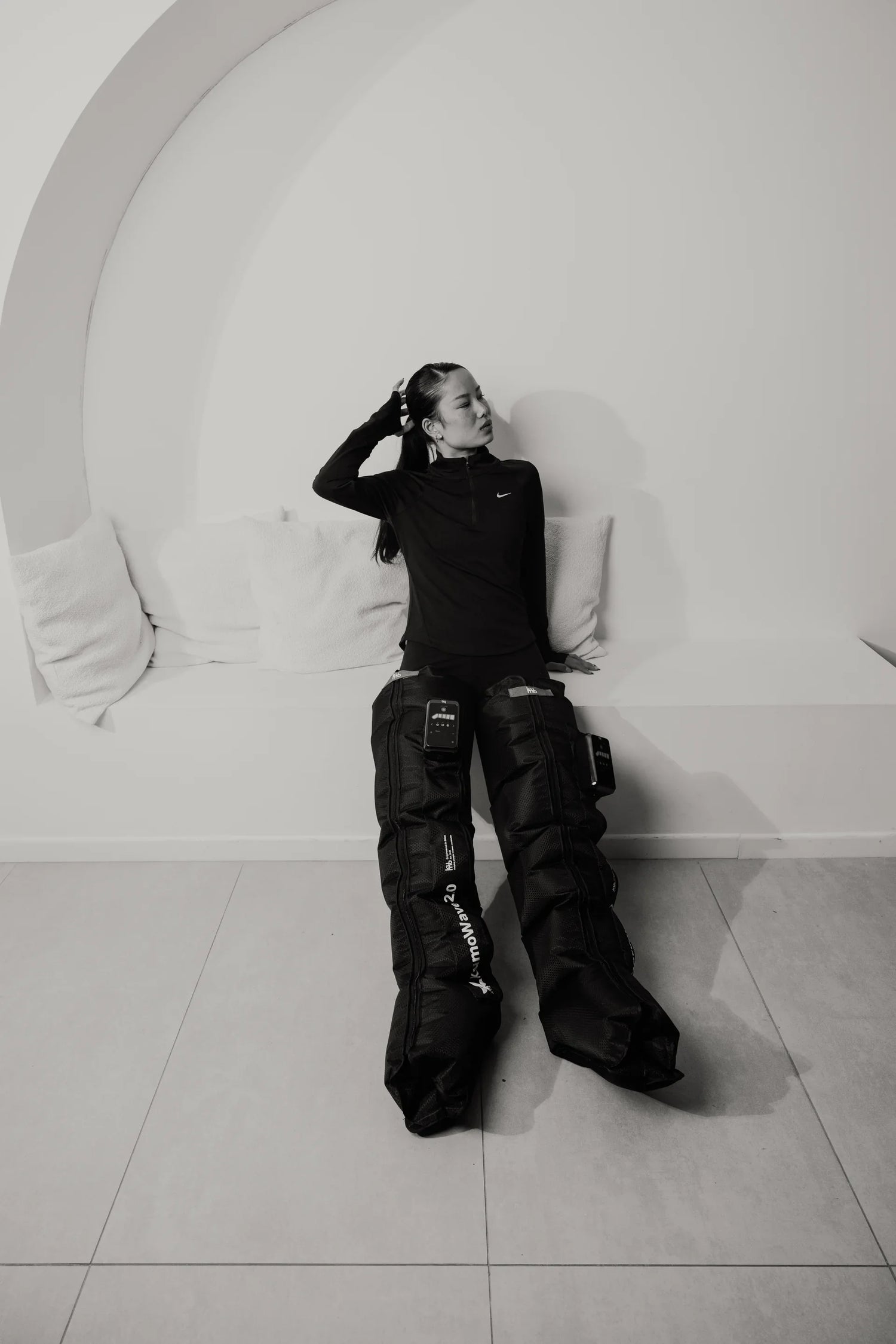
Recovering well changes training.
If you leave a session feeling heavy, combining stretching and pressotherapy can help you wind down, feel lighter in your legs, and better manage your cool-down. The idea isn't to work miracles, but to combine two tools with different functions: one works on mobility and relaxation, the other promotes compression and circulatory return. (nhs.uk)
Pressotherapy at home
End the day with light legs
★★★★★ 4,8/5 · rated by verified customers
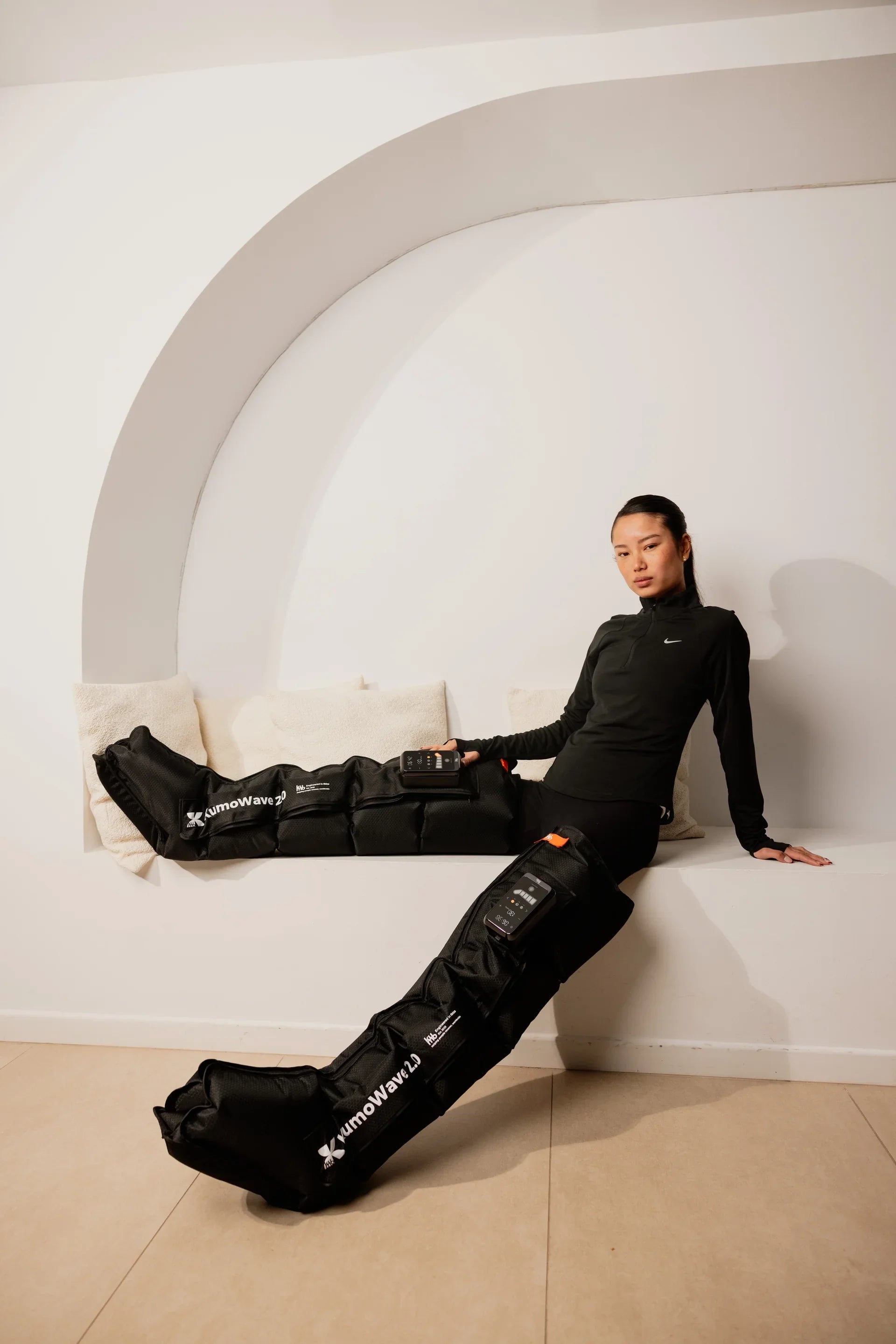
KumoWave pressotherapy boosts circulation and helps drain fluid with sequential compression, in 20-minute sessions at home.
- Boosts circulation and helps drain fluid
- Chamber-based compression, adjustable to you
- Sequential compression that mimics manual drainage
€799,00€999,00
−10% on your 1st order when you subscribe to the newsletter

What each technique offers
The NHS recommends stretching at the end of exercise as part of the cool-down to relax, improve flexibility, and lower your heart rate. Even so, recent reviews show that when used alone, they do not offer a clear and consistent improvement in muscle soreness, strength, or performance; their real value lies more in the transition to calm than in "curing" muscle aches.
Pressotherapy, understood as intermittent pneumatic compression, helps move blood towards the heart and is used in clinical settings to prevent thrombosis. In sports, a 2022 systematic review found moderate benefits, especially in the perception of muscle pain, but no clear improvement in performance. Simply put: it can make you feel better, but it does not replace rest or a training plan. (my.clevelandclinic.org)
Personalized protocol · included with your purchase
Want us to tell you how to use it in your case?
With your purchase, our experts prepare a personalized usage protocol for your case: sport, circulation, fluid retention, pregnancy or lipedema.
Message us on WhatsAppOur experts reply · no obligation
How to combine them without overcomplicating things
The most logical sequence is usually: first lower your heart rate, then stretch gently, and apply pressotherapy once you are breathing normally. This is a practical inference based on what each technique does: stretching fits as a cool-down, and compression as circulatory support. If you finish with a strong feeling of heavy legs or spend many hours standing, some people prefer a brief compression session before stretching; the important thing is that there is no pain or uncomfortable pressure. To delve deeper into the order, you can review the guide on the ideal order for better recovery.
Practical table for a mixed session
Think of the routine as three simple blocks: recovering your pulse, gentle movement, and finishing with comfortable compression. The NHS places stretching as part of cooling down, and the evidence on pressotherapy suggests a useful effect on the feeling of heaviness, not a radical transformation of recovery.
| Moment | What to do | Objective |
|---|---|---|
| After training | Walk or move very gently until breathing normalizes. | Lower heart rate and prepare the body for stretching. |
| Gentle stretching | Spend about 5 minutes stretching without bouncing, holding positions comfortably. | Promote cool-down and recover mobility. |
| Pressotherapy | Apply comfortable compression following the device's or professional's guidelines. | Support circulation and relieve the feeling of heavy legs. |
| Finish | Walk for a few minutes and observe how your legs respond. | Check tolerance and end the session with a stable feeling. |
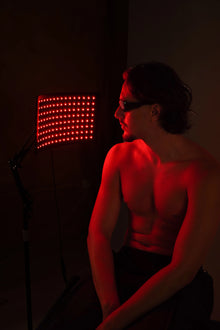
If following a fixed script helps you, turning it into a weekly protocol avoids improvisation. A home recovery template with pressotherapy, red light therapy, and a massage gun can serve as a framework for high-load days and lighter days, and you can adapt it to your sport and schedule. A weekly home recovery protocol fits well into this logic.
on your first order when you join the newsletter
We send you the code instantly. No spam.
Mistakes to avoid
- Don't force intense or bouncy stretches; the idea is to feel better, not add another mechanical load.
- Do not use pressotherapy if the pressure hurts, if there are wounds under the compression, or if you notice skin irritation.
- Do not expect this combination to replace sleep, rest between sessions, or a well-planned program; the evidence places it as support. (pubmed.ncbi.nlm.nih.gov)
- Do not apply it without adapting if you are pregnant, injured, or have had a recent medical event. (nhs.uk)
When to be cautious or seek assessment
If swelling appears in only one leg, localized warmth, unusual pain, shortness of breath, injuries under the cuff, or clear discomfort with pressure, stop the session and seek professional evaluation. Cleveland Clinic warns that the device should not hurt and that skin irritation, pressure injuries, and breathing difficulties are signs to consult; the NHS also recommends adapting stretches if there is an injury, pregnancy, or a health problem, or if you have had recent surgery or a heart attack. If you want to review the topic in more detail, the guide on benefits and contraindications of home pressotherapy summarizes the key points.
FAQ about stretching and pressotherapy
Does pressotherapy help reduce muscle fatigue and the feeling of heavy legs after exercise?
Yes, it can help, especially with the subjective feeling of relief. A 2022 systematic review found moderate benefits of pressotherapy for recovery and perceived muscle pain, although no clear improvement in performance. This makes it a useful tool when you finish with heavy legs, but not a shortcut to instantly recover "from zero to one hundred." If you use it, think about comfort, regularity, and tolerance, not maximum pressure. (pubmed.ncbi.nlm.nih.gov)
Are there risks or contraindications to combining pressotherapy with stretching in a recovery routine?
In healthy individuals, the combination is usually well-tolerated if stretching is gentle and pressure is comfortable. Caution increases if there is pain, wounds under compression, irritated skin, shortness of breath, abnormal swelling, or a recent medical event, because compression should not cause discomfort and stretches may need adaptation. If you have doubts, especially during pregnancy, injury, or recent surgery, it is best to seek evaluation before using the routine.
Is it better to stretch before or after pressotherapy?
As a practical rule, first slow down, then stretch, and then use pressotherapy once you are calmer and breathing steadily. This sequence aligns with the function of each technique: stretching acts as a cool-down and compression as circulatory support. However, if you finish very congested or spend many hours on your feet, a short compression session before stretching might be more comfortable. The key is that no part of the routine should cause pain.
How long should stretches last after training?
The NHS suggests about 5 minutes of gentle stretches at the end of exercise, holding each position for 15 to 20 seconds. Prioritize calves, hamstrings, glutes, adductors, and quads, without bouncing or pain. If you feel a lot of tension, reduce the range before extending the time. The goal is not to force flexibility, but to help the body transition from exertion and gradually return to a calmer state.
What now?
If you want to make this logic a habit, start with the home pressotherapy collection and return to the Kumo Balance homepage to incorporate your recovery into a simple and sustainable routine.
KumoWave pressotherapy
Choose your at-home pressotherapy
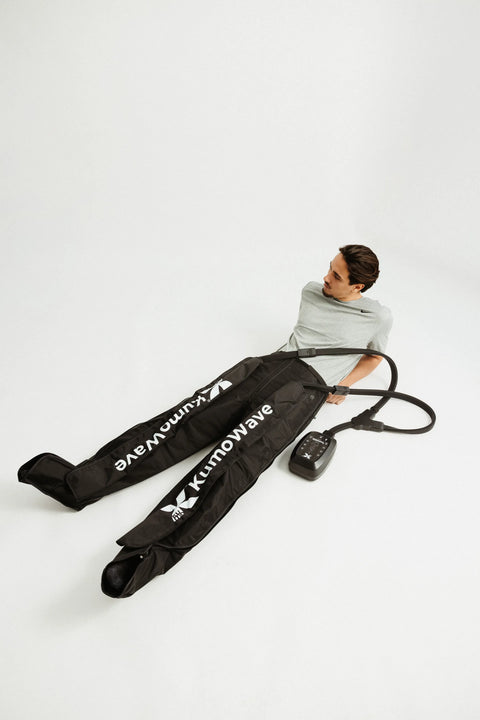
KumoWave Elite – Pressotherapy Pants
Full-coverage trousers. Ideal for lipedema, fluid retention and intensive use.
€799,00 €999,00
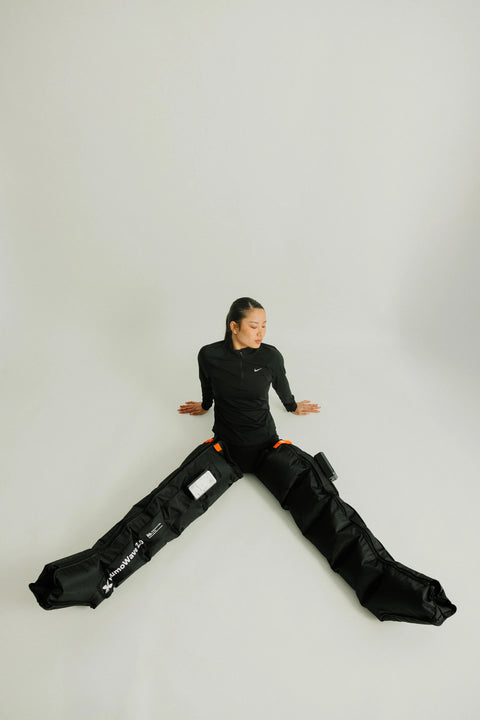
KumoWave 2.0 - Wireless Pressotherapy
Wireless, lightweight boots. Perfect for daily use and recovery.
€499,00 €599,00