
Legs age too.
If you experience heaviness, swelling, or stiffness at the end of the day, the most helpful approach is usually a combination of gentle movement, elevation, and vigilance for warning signs. In older individuals, swelling of the feet and ankles is common, and venous insufficiency becomes more likely with age.
Pressotherapy at home
End the day with light legs
★★★★★ 4,8/5 · rated by verified customers
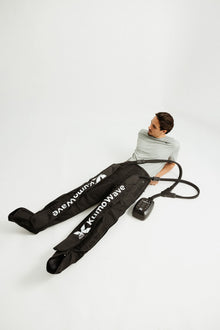
KumoWave pressotherapy boosts circulation and helps drain fluid with sequential compression, in 20-minute sessions at home.
- Boosts circulation and helps drain fluid
- Chamber-based compression, adjustable to you
- Sequential compression that mimics manual drainage
€799,00€999,00
−10% on your 1st order when you subscribe to the newsletter

The good news is that you don't need intense training: small, repeated routines can help blood and fluid return to the heart, which often translates to less heaviness throughout the day.
Why Legs Feel Heavier with Age
With age, veins may return blood less efficiently, and edema becomes more likely. MedlinePlus explains that venous insufficiency occurs when veins have difficulty carrying blood from the legs back to the heart, and age is a risk factor. MedlinePlus's explanation of venous insufficiency provides a good basis for understanding why circulation slows down in some older people.
Personalized protocol · included with your purchase
Want us to tell you how to use it in your case?
With your purchase, our experts prepare a personalized usage protocol for your case: sport, circulation, fluid retention, pregnancy or lipedema.
Message us on WhatsAppOur experts reply · no obligation
It's also important to remember that swelling of the feet, ankles, and legs is relatively common in older age. The MedlinePlus fact sheet on swollen feet, ankles, and legs notes that edema can arise from many causes, including spending too much time sitting or standing.
To support this process, regular movement is usually more valuable than a single intense session. The National Institute on Aging summarizes that older adults benefit from combining aerobic activity, strength, and balance, with a general guideline of 150 minutes per week of moderate activity. (nia.nih.gov)
Gentle Habits That Really Help
If your goal is to feel lighter in your legs, prioritize these simple and sustainable ideas:
on your first order when you join the newsletter
We send you the code instantly. No spam.
- Walk for a few minutes several times a day; the NHS guide on swollen legs recommends gentle exercise, such as walking, to improve blood flow.
- Perform ankle pumps and foot movements while seated to help mobilize fluid when you cannot walk.
- Elevate your legs above heart level when resting, if your doctor has not advised against it.
- Take frequent breaks if you spend a lot of time sitting, standing, or traveling, as prolonged immobility promotes fluid accumulation.
- Watch your salt intake and avoid clothing or socks that are too tight on your leg, as they can worsen swelling.
Brief 10-Minute Routine for Days with Tired Legs
The key is to repeat short routines often, rather than doing a single long session. This logic aligns with activity recommendations for older adults, which prioritize a combination of aerobic exercise, strength, and balance adapted to each person's level. (nia.nih.gov)
| Movement | How to do it | Benefits |
|---|---|---|
| March in place | 1 minute at a comfortable pace, lifting knees slightly. | Activates the calf and ankle without impact. |
| Ankle flexion and extension | 30 seconds per foot, sitting with back supported. | Helps move fluid when the leg is still for a long time. |
| Leg elevation | 2 to 3 minutes with legs supported at an elevated position. | Reduces gravitational pressure on venous return. |
| Gentle walk | 3 to 5 minutes around the house, hallway, or garden. | Activates the muscular system that propels blood upwards. (guysandstthomas.nhs.uk) |
If you find it helpful to structure these routines, the step-by-step guide to using pressotherapy at home can help you integrate them systematically into your rest time.
When Pressotherapy Can Be a Support
Compression therapies are used precisely to aid blood flow and edema control: Mayo Clinic notes that compressing and elevating the leg can help improve blood flow, and that moving the muscles also promotes fluid drainage. Mayo Clinic's recommendations for edema summarize this very well.
Therefore, in some home routines, pressotherapy is considered a wellness complement, not a substitute for movement, medical evaluation, or daily habits. If you want to explore this approach, the collection of pressotherapy for home use can serve as a starting point, and the guide on pressotherapy and venous return helps to better understand how it fits into your routine.
The practical idea is simple: first gentle movement, then rest with elevation and, if your situation allows and your healthcare professional deems it appropriate, compression support to promote a feeling of lightness.
When to Consult Before Trying to Activate Circulation
If swelling appears in only one leg, is painful, feels hot, or is accompanied by shortness of breath, do not treat it as simple fatigue. (mayoclinic.org)
It is also advisable to seek evaluation if pain appears when walking and improves with rest, as this could indicate an arterial problem rather than normal aging. The American Heart Association reminds us that leg pain with exertion can be a sign of peripheral artery disease, and MedlinePlus notes that this condition reduces blood flow to the legs. (heart.org)
If edema changes abruptly, or if there is redness, localized heat, or intense discomfort, it is prudent to pause any self-care strategy and seek professional guidance.
Frequently Asked Questions
What is the best exercise to improve leg circulation in older adults?
Walking at a comfortable pace and adding ankle and foot movements several times a day is usually most helpful. In older adults, aerobic activity, strength, and balance are recommended as a whole, not as a single practice; therefore, a short, repeated routine often works better than a long, isolated effort. If you walk little, start with very brief blocks and only increase when comfortable. (nia.nih.gov)
Is it normal for ankles and feet to swell at the end of the day?
Yes, it can happen, especially with heat, after sitting or standing for a long time, or due to mild edema. MedlinePlus notes that swelling of the feet, ankles, and legs is common in older people. Even so, if the swelling is only in one leg, is painful, feels hot, or appears suddenly, it is advisable to consult a doctor. It's not appropriate to assume everything is "due to age" without reviewing the context.
Can pressotherapy help if I have heavy legs?
It can be a useful complement when the discomfort is related to swelling or a sensation of heaviness. Clinical sources on edema agree that compression, leg elevation, and muscle movement help blood flow. However, it should not be used to mask new pain, unilateral swelling, or shortness of breath: medical causes must first be ruled out. Pressotherapy fits best as a support, not as a sole solution.
How long does it take to notice less heaviness in the legs?
It depends on the cause and consistency. Some people notice relief the same day when they elevate their legs, walk a little, and reduce sedentary time; others need several weeks of a regular routine for the heaviness to decrease more significantly. If the discomfort worsens, wakes you up at night, or changes notably, it is best to seek an evaluation to avoid attributing everything to age.
When does leg pain stop being "normal"?
It stops being normal when it appears with exertion and improves with rest, when it is accompanied by marked swelling, or when it is new and persistent. This pattern can point to arterial or venous circulation problems, not just fatigue. The most prudent approach is to observe the pattern, not just the intensity: if the symptom changes, recurs, or limits your walking, professional evaluation is advisable.
What Now?
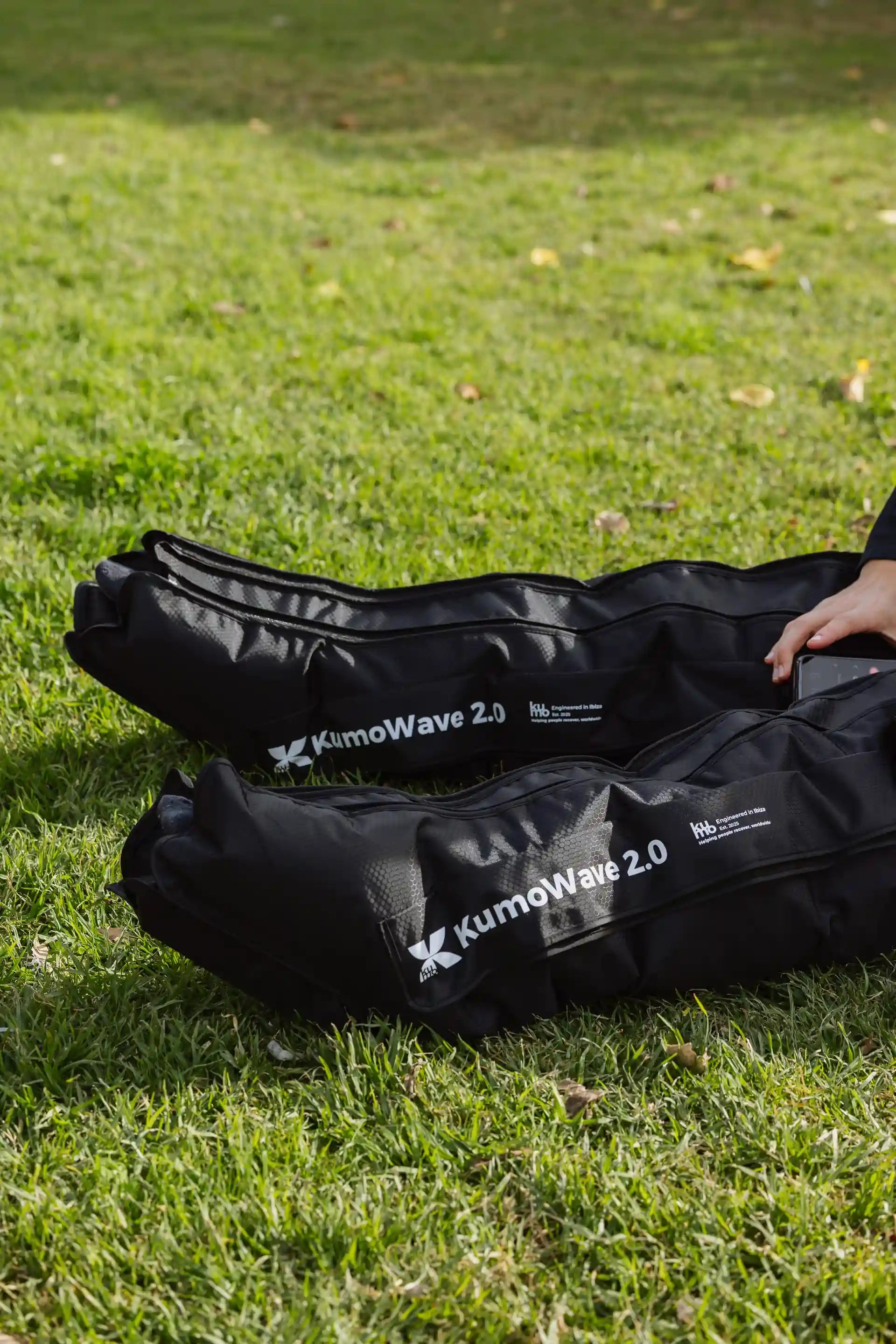
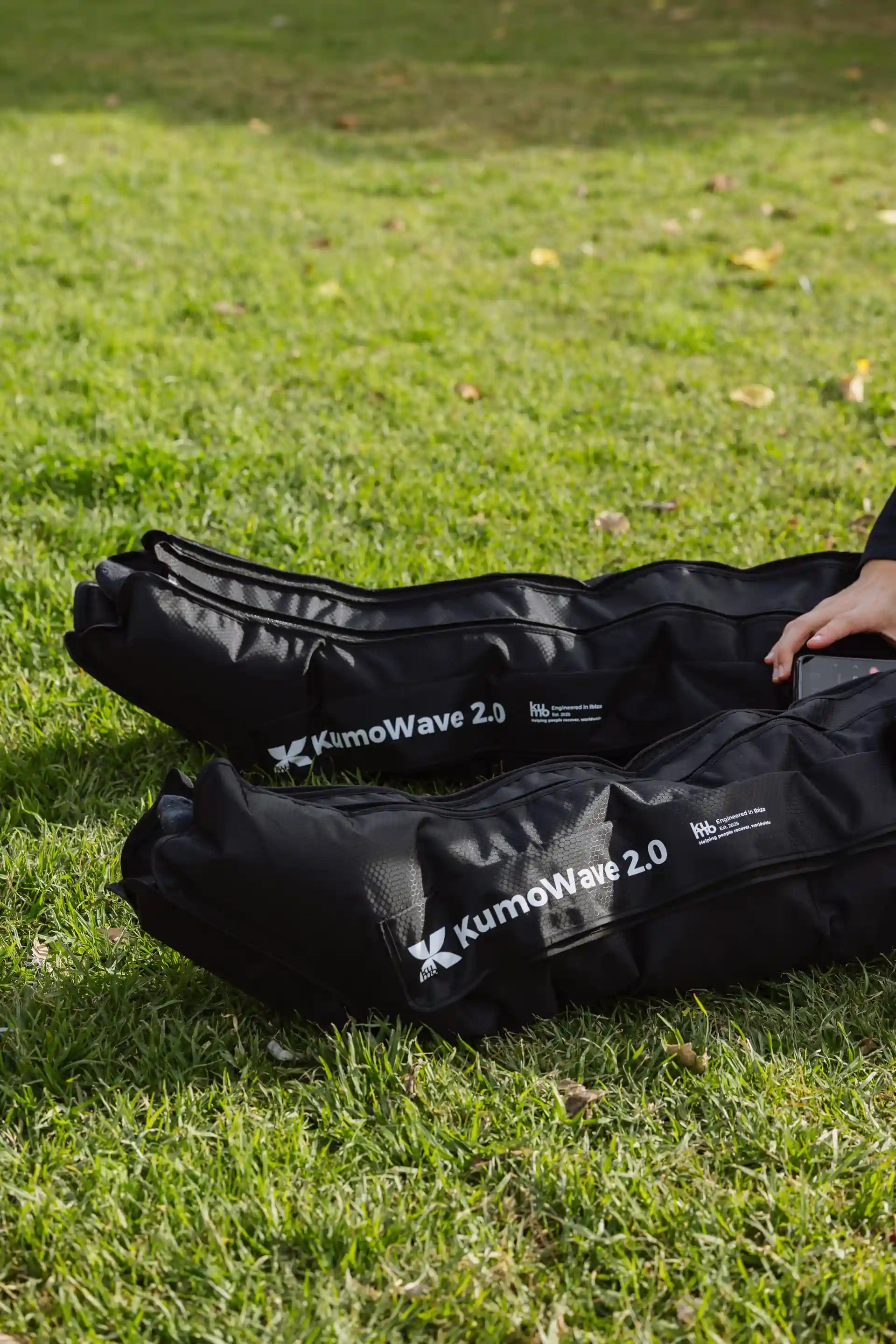
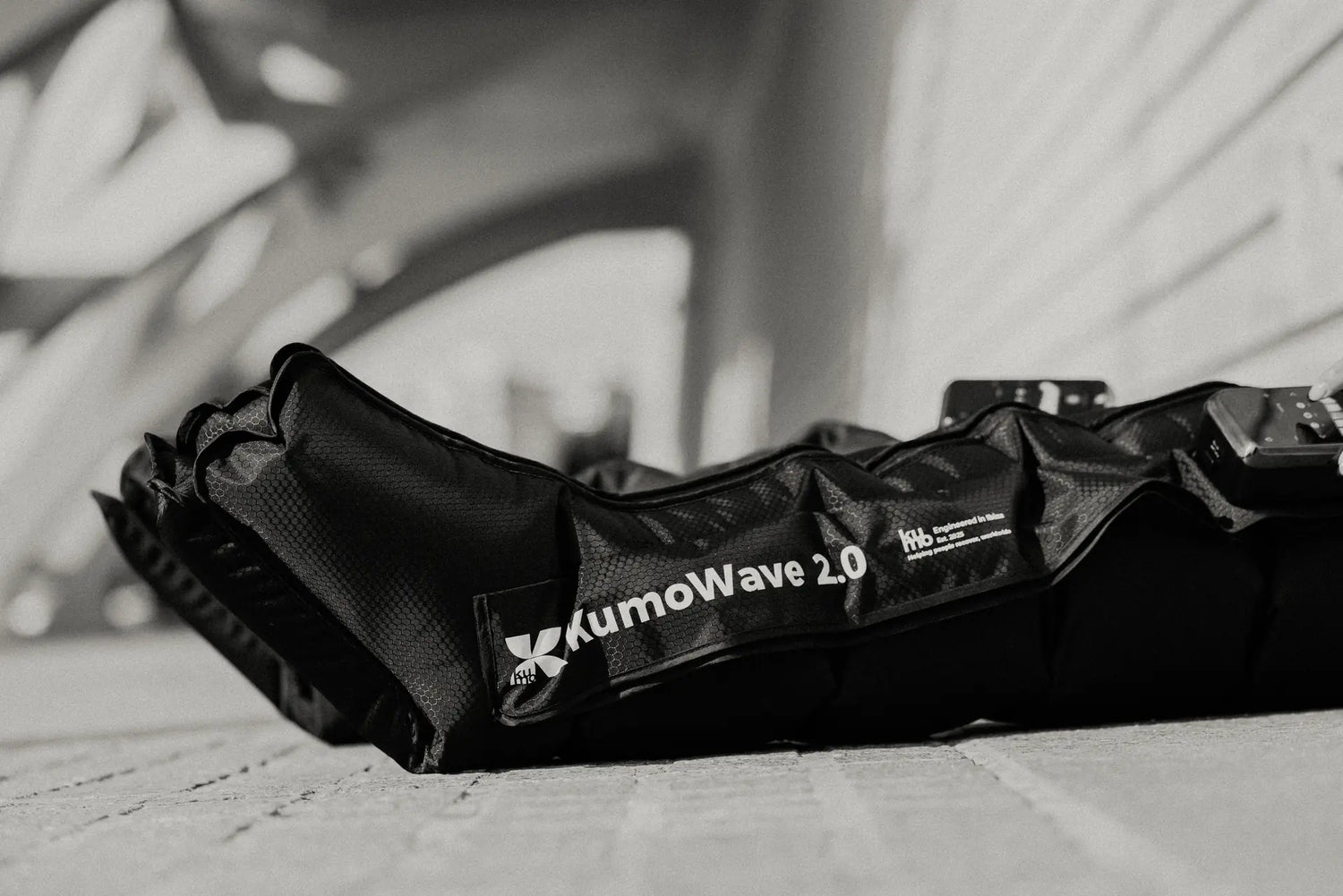
Start today with a short walk, add leg elevation, and if you want to explore a home wellness support, visit Kumo Balance and review KumoWave 2.0 to learn about a specific wireless pressotherapy option.
KumoWave pressotherapy
Choose your at-home pressotherapy
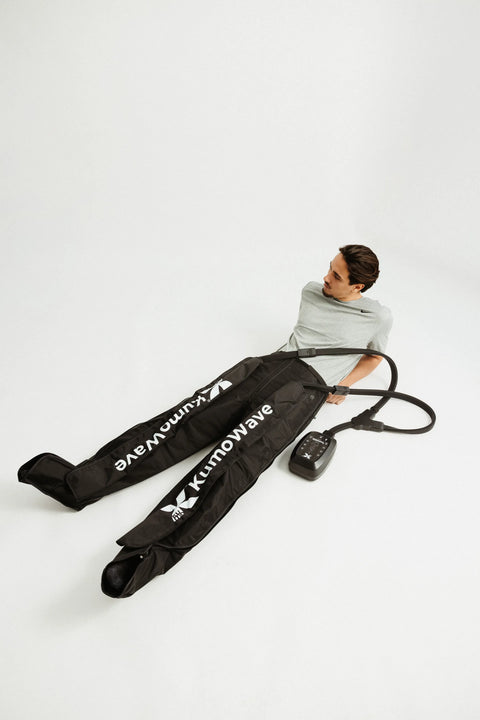
KumoWave Elite – Pressotherapy Pants
Full-coverage trousers. Ideal for lipedema, fluid retention and intensive use.
€799,00 €999,00
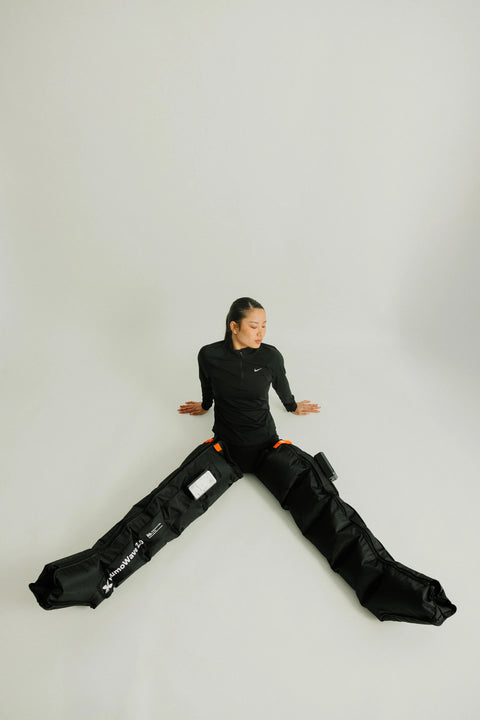
KumoWave 2.0 - Wireless Pressotherapy
Wireless, lightweight boots. Perfect for daily use and recovery.
€499,00 €599,00