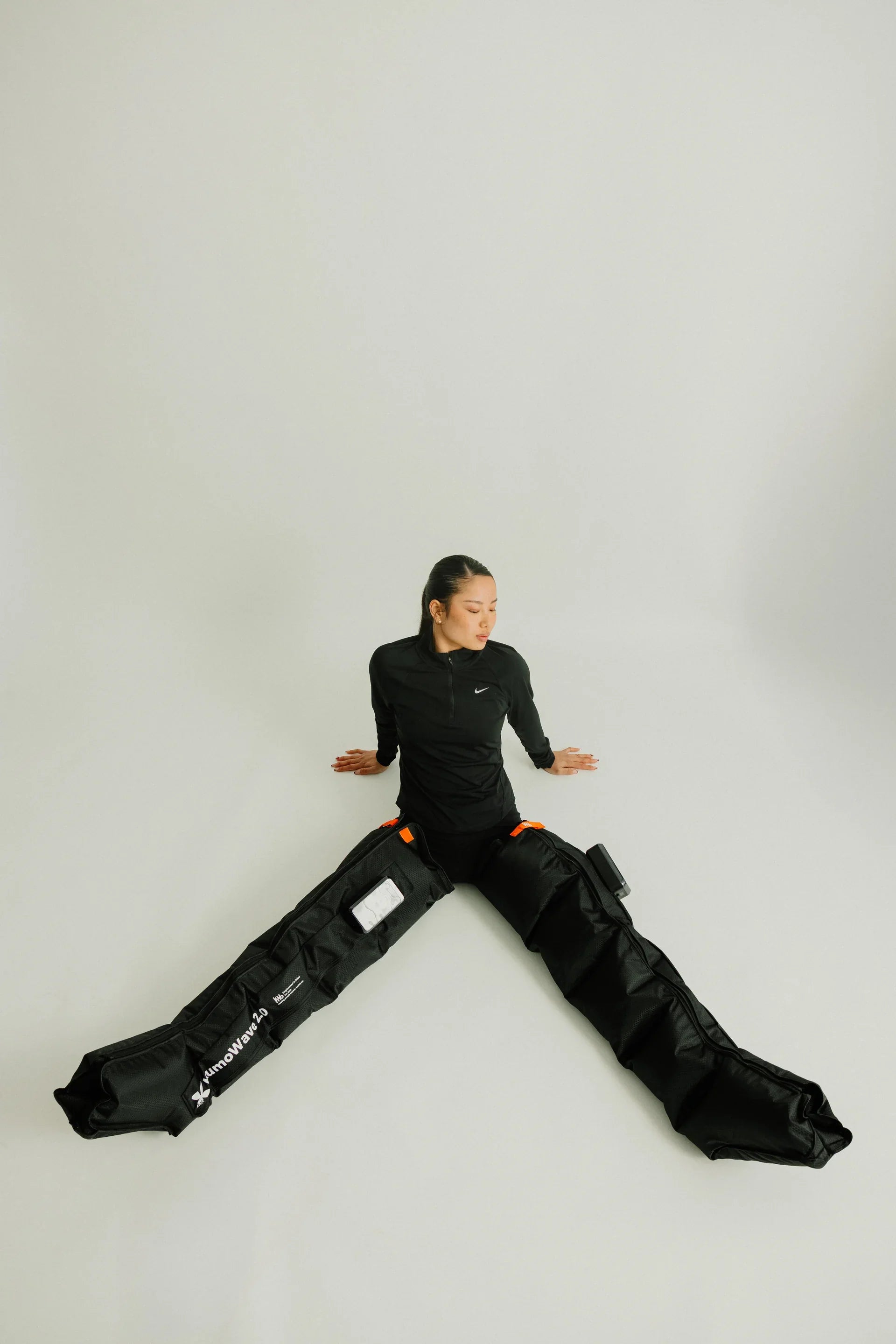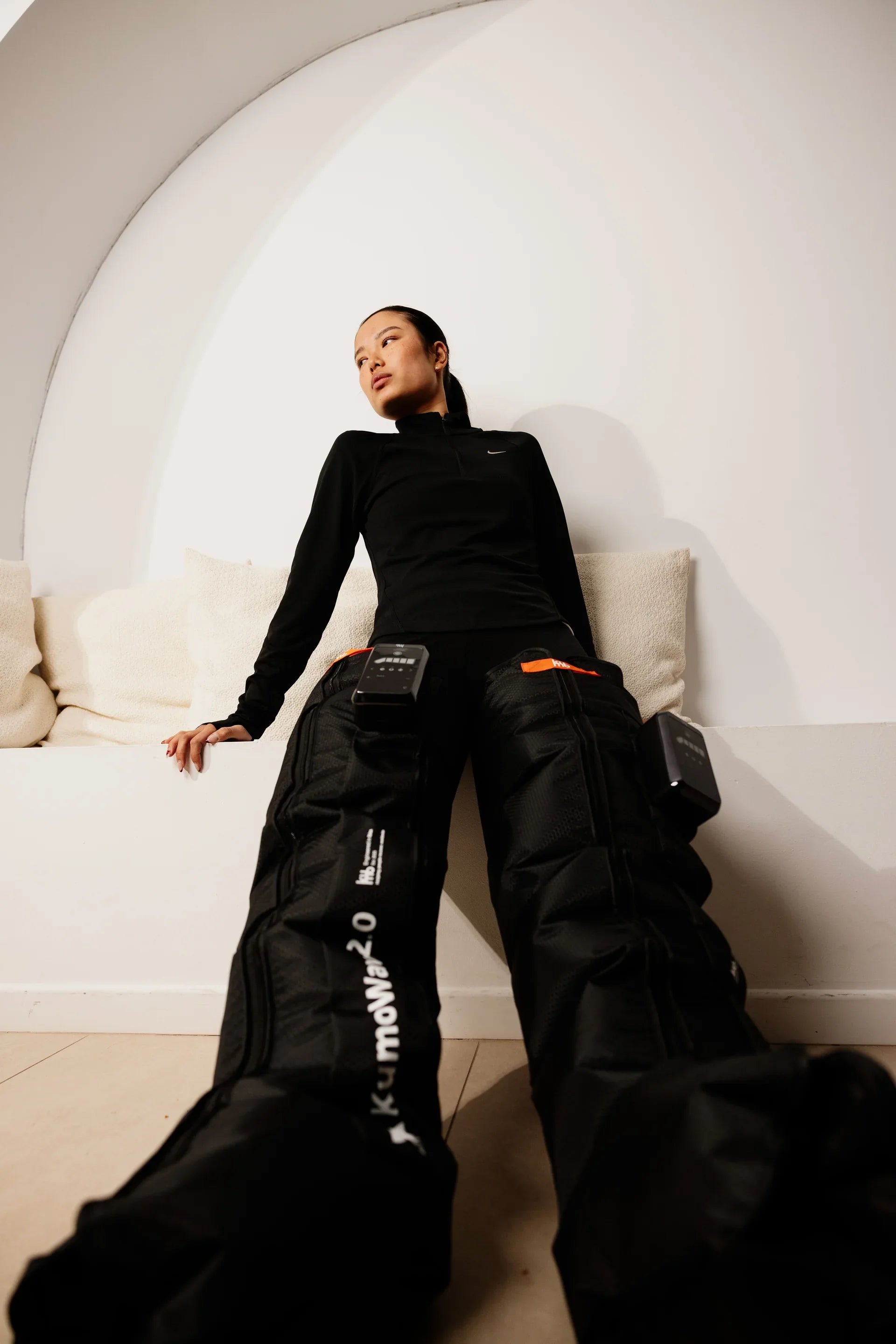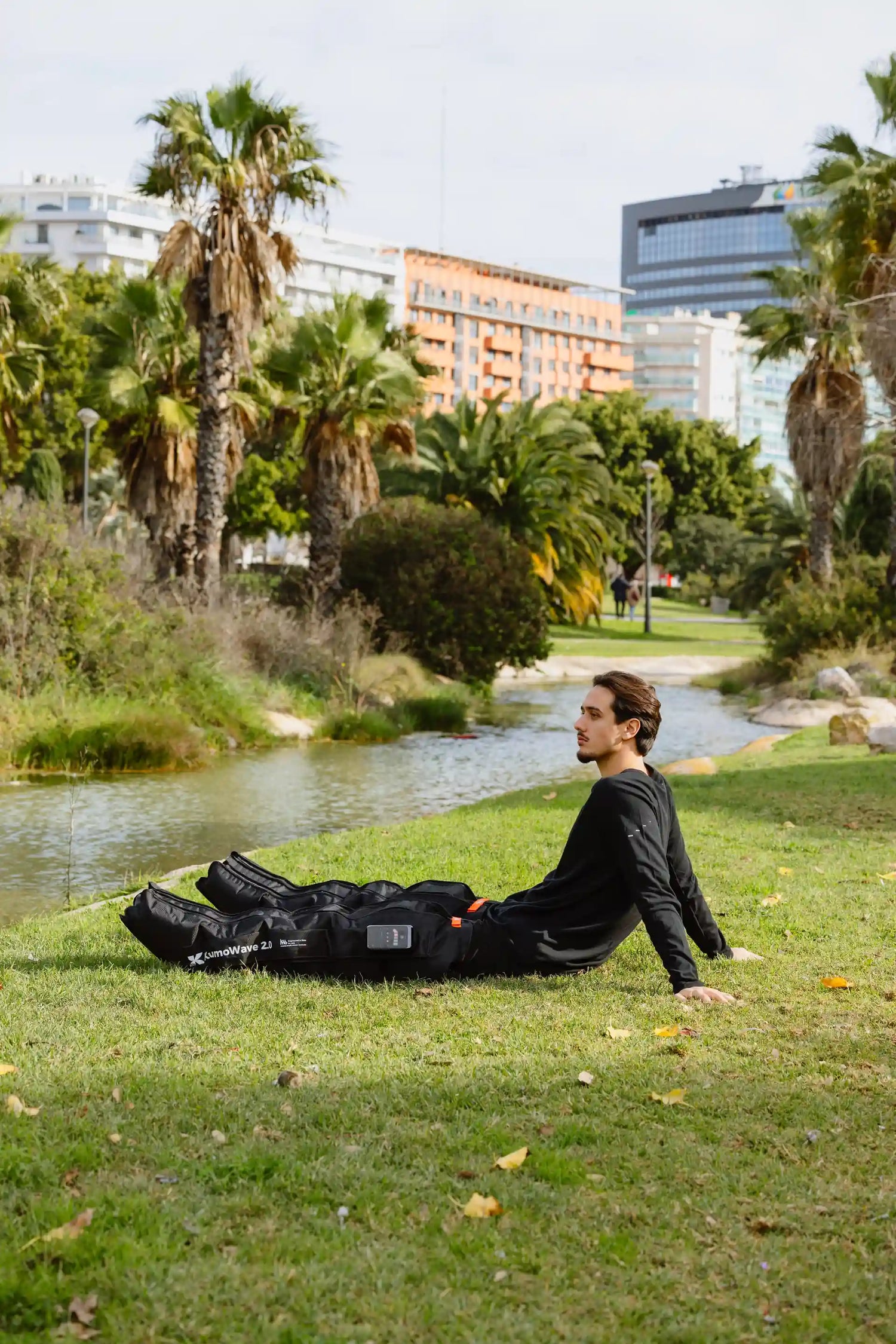
The key is to adjust time and frequency to the objective.
In clinical practice, the most frequently cited reference is between 45 and 60 minutes; in home lymphedema care, it can extend up to 1 to 2 hours a day, and in sports, many studies show 30 minutes. There is no single guideline for all cases. The NCI guide on lymphedema notes that there are still questions about optimal pressure, treatment schedule, and the need for maintenance, while an NHS protocol uses 6 sessions, twice a week for 3 weeks.
Pressotherapy at home
End the day with light legs
★★★★★ 4,8/5 · rated by verified customers
KumoWave pressotherapy boosts circulation and helps drain fluid with sequential compression, in 20-minute sessions at home.
- Boosts circulation and helps drain fluid
- Chamber-based compression, adjustable to you
- Sequential compression that mimics manual drainage
€799,00€999,00
−10% on your 1st order when you subscribe to the newsletter

What time and frequency are usually used
When the problem is edema, MedlinePlus in Spanish on edema reminds us that swelling is usually due to fluid accumulation in the tissues and frequently appears in the feet, ankles, and legs. To calmly interpret this, it is important to assume that there is no need to apply more pressure or extend the session to obtain better results.
If you want to apply this information to a home routine, the step-by-step usage guide helps convert it into an easy-to-follow sequence.
Personalized protocol · included with your purchase
Want us to tell you how to use it in your case?
With your purchase, our experts prepare a personalized usage protocol for your case: sport, circulation, fluid retention, pregnancy or lipedema.
Message us on WhatsAppOur experts reply · no obligation
In home lymphedema programs, a clinical study with 45 minutes daily describes this use, and another review even mentions 1 to 2 hours daily. In sports recovery, a 30-minute trial in sports recovery used a short session during the cool-down.
How to choose the guideline according to your objective
Heavy legs, edema, or fluid retention
If the goal is to reduce the feeling of heaviness or treat edema, pressotherapy is usually understood as a support, not a substitute for medical evaluation. The cause of the swelling can range from standing for many hours to lymphatic or vascular problems, so the correct frequency depends on why the fluid accumulates.
Before starting, also review the benefits and contraindications to decide if it really suits you.
on your first order when you join the newsletter
We send you the code instantly. No spam.
Lymphedema and more intensive treatments
In lymphedema, the NCI indicates that intermittent pneumatic compression usually goes along with compression garments and only when these are not enough. It also warns of a theoretical concern if 60 mmHg is exceeded or use is prolonged too much, so more intensity is not always better.
If you work with boots, the 2025 home use guide can help you order the progression more safely.
Sports recovery
In sports, studies usually use relatively short sessions, and the results do not always surpass placebo. Even so, 30 minutes is a realistic reference when the goal is to recover after exertion and not to treat a medical problem.
If you want to turn this logic into a consistent routine, the ideal frequency and times at home gives you a practical view of how to organize it.
Indicative ranges according to the objective
| Objective | Time per session | Indicative frequency |
|---|---|---|
| Supervised clinical course | 45 to 60 minutes. (wsh.nhs.uk) | 2 times per week for 3 weeks. |
| Home lymphedema program | 45 minutes a day or 1 to 2 hours a day. | Daily use in reviewed protocols. |
| Sports recovery | 30 minutes per session. | Variable depending on the study and objective. (pmc.ncbi.nlm.nih.gov) |
Key idea: the literature is heterogeneous, varying pressure, duration, frequency, and device type; therefore, there is no magic number that always works.
Before and after: how to use it more safely
Before starting, it is worth reviewing benefits and contraindications. The NHS protocol also recommends wearing comfortable clothing and using the bathroom before the session.
- Do not use pressotherapy if there is untreated deep vein thrombosis, recent pulmonary embolism or thrombophlebitis, cellulitis, severe heart, kidney, or liver failure, ischemic vascular disease, pulmonary edema, or open wounds.
- Stop the session if chest pain, shortness of breath, dizziness, numbness, or acute leg pain occurs.
- Do not try to increase effectiveness by increasing pressure or extending time on your own; the NCI warns of a theoretical concern with pressures above 60 mmHg and with prolonged use.
If you use compression boots at home, the guide to times and frequency of use can help you avoid improvising with the routine.
Frequently Asked Questions
How long does a pressotherapy session last?
In clinical practice, the most common window is between 45 and 60 minutes. In some lymphedema programs, daily sessions of 45 minutes or even 1 to 2 hours have been used, and in sports recovery studies, 30-minute sessions have been tested. The correct duration depends on the objective, pressure, tolerance, and whether the treatment is part of a medical plan or just for recovery.
How often should pressotherapy sessions be performed?
There is no universal frequency. An NHS protocol used 2 sessions per week for 3 weeks, while in home lymphedema, the reviewed guideline was daily. The NCI also emphasizes that the optimal schedule is not yet finalized. Therefore, the most sensible approach is to adjust the frequency to your case and not copy someone else's routine.
How many minutes per session are recommended for pressotherapy?
As an indicative range, 30 to 60 minutes cover a good part of the uses found in the evidence. 30 minutes are often seen in sports recovery; 45 to 60 minutes in supervised clinical courses; and, in some lymphedema scenarios, sessions are longer. More minutes do not automatically equate to better results, so progression must be cautious.
What care should be taken before and after a pressotherapy session?
Before, wear comfortable clothing and use the restroom; afterwards, observe for pain, tingling, dizziness, or shortness of breath. It is also advisable not to use it if there is acute skin infection, untreated thrombosis, pulmonary edema, or severe insufficiency. If you notice anything unusual during or after the session, stop use and consult a professional.
Does pressotherapy help with fluid retention?
It can help when fluid retention results in edema or lymphedema, because its objective is to mobilize accumulated fluid and promote drainage. But it does not eliminate the underlying cause. If the swelling is new, painful, unilateral, or persistent, the reason must be evaluated before continuing with more sessions.
What's next?
If you want to set up a realistic routine, start with the home starter guide and return to the Kumo Balance main website to see which option best fits your goal and recovery level.
KumoWave pressotherapy
Choose your at-home pressotherapy
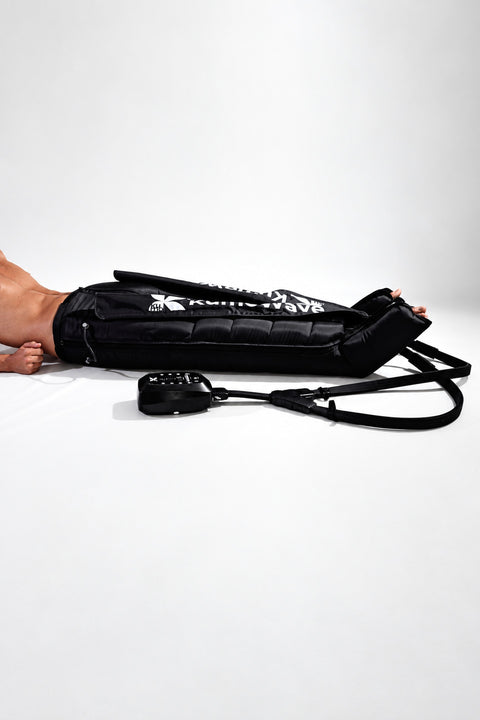
KumoWave Elite – Pressotherapy Pants
Full-coverage trousers. Ideal for lipedema, fluid retention and intensive use.
€799,00 €999,00
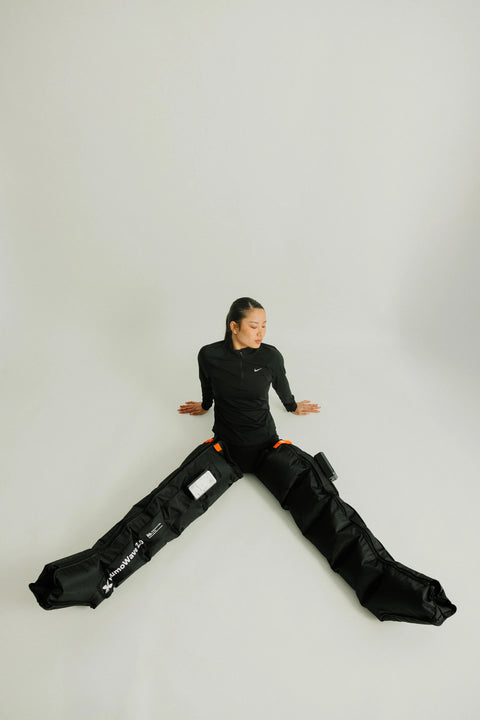
KumoWave 2.0 - Wireless Pressotherapy
Wireless, lightweight boots. Perfect for daily use and recovery.
€499,00 €599,00