

Cosmetic peptides are not a magic promise. They are short protein fragments studied for their role in cell signaling, mineral transport, and enzyme modulation, but their effect depends heavily on the formula and whether they cross the skin barrier. (pubmed.ncbi.nlm.nih.gov)
The most honest reading today is this: they can provide real cosmetic interest, especially in hydration and skin appearance, but human evidence remains heterogeneous and with modest results. In other words, they are more interesting as an ingredient with potential than as a miracle solution.
Pressotherapy at home
End the day with light legs
★★★★★ 4,8/5 · rated by verified customers
KumoWave pressotherapy boosts circulation and helps drain fluid with sequential compression, in 20-minute sessions at home.
- Boosts circulation and helps drain fluid
- Chamber-based compression, adjustable to you
- Sequential compression that mimics manual drainage
€799,00€999,00
−10% on your 1st order when you subscribe to the newsletter

What cosmetic peptides are and why they are interesting
A peptide is a short chain of amino acids. In cosmetics, it is incorporated into creams, serums, or eye contours to try to influence processes related to skin appearance, such as hydration, firmness, or radiance. Recent reviews, such as this 2025 review on skin peptides, group them into well-known functional families. (pubmed.ncbi.nlm.nih.gov)
Their interest arises from the fact that some peptides can participate in signals that affect the extracellular matrix or the behavior of certain skin cells. That does not mean that all act the same or that all cross the skin with the same ease. Permeability, stability, and the cosmetic vehicle continue to make the difference. (pubmed.ncbi.nlm.nih.gov)
Personalized protocol · included with your purchase
Want us to tell you how to use it in your case?
With your purchase, our experts prepare a personalized usage protocol for your case: sport, circulation, fluid retention, pregnancy or lipedema.
Message us on WhatsAppOur experts reply · no obligation
How they act in cosmetics according to the type of peptide
Four families you will see often
| Peptide family | What is sought in cosmetics | What is known today | Main limitation |
|---|---|---|---|
| Signal peptides | They are used to explore cellular messages linked to the dermal matrix and skin appearance. | The literature places them among the most studied families in cosmetics, along with other functional groups. (pubmed.ncbi.nlm.nih.gov) | The formula and skin penetration greatly condition the result. (pubmed.ncbi.nlm.nih.gov) |
| Carrier peptides | They are formulated to accompany certain minerals, such as copper, and support specific cosmetic functions. | They are considered interesting for their transport role and their possible participation in cell communication. (pubmed.ncbi.nlm.nih.gov) | Without a suitable vehicle, their arrival at the layers where they need to act can be limited. (pubmed.ncbi.nlm.nih.gov) |
| Neurotransmission inhibitory peptides | They are used in formulas aimed at the appearance of expression lines. | The literature includes them among the usual families, although the response in humans is not homogeneous. (pubmed.ncbi.nlm.nih.gov) | The evidence depends heavily on the formula design and the type of study. |
| Enzyme inhibitory peptides | They are investigated for their possible relationship with enzymes involved in the maintenance of the skin matrix. | They remain an area of interest, but not a guarantee of visible effect in any product. (pubmed.ncbi.nlm.nih.gov) | Low permeability remains one of the main bottlenecks. (pubmed.ncbi.nlm.nih.gov) |
The review on skin permeability reminds us that the great obstacle remains the stratum corneum barrier. That is why the stability of the formula, the pH, and the delivery system matter as much as the chosen peptide. If you want to delve deeper into that point, you can read this analysis on skin permeability and anti-wrinkle peptides. (pubmed.ncbi.nlm.nih.gov)
What current science says about their efficacy
A systematic review and meta-analysis from 2026 that gathered 19 randomized trials and 1,341 participants observed improvements in hydration and radiance, a modest effect on wrinkles, and inconsistent results in elasticity and density. Adverse events were scarce. You can see the summary in this 2026 meta-analysis with randomized trials.
That result fits with a fairly sensible idea: peptides can provide something useful in cosmetics, but they do not work as a universal shortcut. The magnitude of the benefit depends on the type of peptide, the concentration, the vehicle, and the time of use. In a mixed analysis of topical and oral routes, the clearest signal appeared in part of the ingested interventions, which reminds us that not all peptides behave the same.
on your first order when you join the newsletter
We send you the code instantly. No spam.
It is also advisable to look at safety carefully. A recent safety review indicates that many cosmetic peptides are considered safe under usual conditions of use and concentration, although the final tolerance depends on the complete formula. You can expand on this point in the safety review of peptides in cosmetics.
Cosmetic peptides and food-use peptides are not the same
If the product is ingested, another regulatory framework comes into play. The European register of health claims distinguishes between authorized and unauthorized claims, and hydrolyzed collagen appears with several unauthorized claims. Furthermore, the European Commission rejected a claim about a characteristic mixture of collagen peptides for skin health in a specific European regulation.
The practical conclusion is simple: that an ingredient is studied in nutrition or nutricosmetics does not authorize promising skin benefits as if they were automatic. If we talk about food supplements, AESAN recommends special caution in pregnancy, breastfeeding, children, people with underlying diseases, planned interventions, or ongoing medication, and reminds us that it is advisable to inform the healthcare professional before taking them. (aesan.gob.es)
How to read a formula with peptides
If you are looking for a cosmetic product, look at the complete formula before the marketing claim. The evidence suggests that the context of the active ingredient matters more than it seems, because penetration and stability change the final result a lot. (pubmed.ncbi.nlm.nih.gov)
- Look for the INCI to name the peptide specifically, not just generically.
- Give more weight to the whole formula, because an isolated peptide does not compensate for an unstable base.
- If your skin is sensitive, simplify the routine to reduce the risk of irritation from perfume, alcohols, or aggressive combinations.
- If the product is a food supplement, mentally separate it from cosmetics and check if the claim it promises is authorized.
If you want to expand the context on firmness and hydration, you can also read the guide on sagging skin on the face and body and the entry on dry and dehydrated skin. Not because they talk about peptides, but because skin is better understood when you also look at its barrier, its hydration, and its response to constant routines. (pubmed.ncbi.nlm.nih.gov)
Frequently asked questions about peptides for the skin
What is a cosmetic peptide and how does it act on the skin?
A cosmetic peptide is a short fragment of amino acids that is incorporated into creams or serums to try to modulate cellular signals related to the extracellular matrix, the transport of certain minerals, or the activity of some enzymes. In practical terms, its goal is to improve the appearance of the skin, not to act as a medication. The key is that not all peptides cross the skin barrier the same way, and therefore the complete formula matters as much as the isolated ingredient. (pubmed.ncbi.nlm.nih.gov)
What are the main types of peptides used in cosmetics and what effects are attributed to them?
The most cited are signal peptides, carrier peptides, neurotransmission inhibitors, and enzyme inhibitors. In cosmetics, they are studied for their relationship with firmness, elasticity, hydration, and fine lines, but the literature does not present them as a homogeneous group. Some are formulated to communicate a cellular message and others to accompany minerals such as copper; in all cases, penetration and stability greatly condition the result. (pubmed.ncbi.nlm.nih.gov)
Do peptides really improve the appearance of wrinkles or is it marketing?
It is not pure marketing, but it is also not a miracle solution. A 2026 meta-analysis with 19 randomized trials and 1,341 participants observed improvements in hydration and radiance, a modest effect on wrinkles, and inconsistent results in elasticity and density. That fits with the idea that peptides can provide something useful in cosmetics, as long as the formula is well designed and expectations are realistic.
How to choose a product with peptides adapted to my skin and my goals?
Prioritize a clear formula, your skin's tolerance, and the realistic goal you are looking for. If the skin is sensitive, it is better to have a simple routine without excess perfumes or irritating actives. If the product is a food supplement, clearly separate cosmetics from nutrition: in the EU, hydrolyzed collagen does not have an authorized health claim to promise skin benefits. If you are pregnant, breastfeeding, taking medication, or have an underlying disease, consult a doctor or pharmacist.
Are they safe for sensitive skin and what undesirable effects should be monitored?
In cosmetics, they are usually well tolerated, but any formula can cause problems due to the set of ingredients, not just the peptide. Watch for persistent itching, stinging, redness, or dryness that worsens after several applications. If it happens, discontinue the product. And if we talk about food supplements, caution should be greater in pregnant women, breastfeeding women, children, and people undergoing treatments, because AESAN recommends informing the healthcare professional before taking them.
And now what?
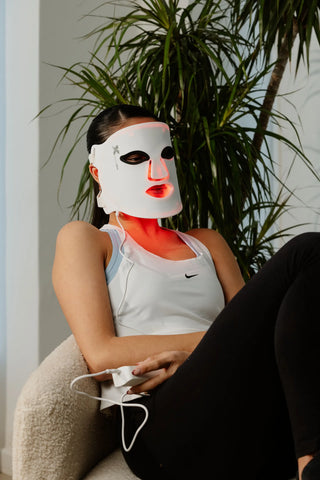
If you want to continue exploring facial care from a practical perspective, start with the Kumo Balance homepage and also save the guide on red light for the skin for another time.
KumoWave pressotherapy
Choose your at-home pressotherapy
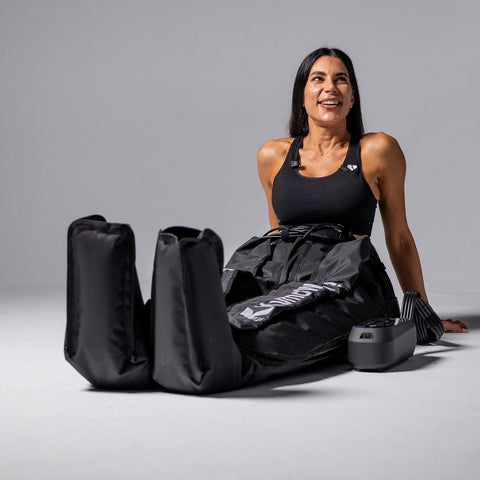
KumoWave Elite X – Pressotherapy Pants
Full-coverage trousers. Ideal for lipedema, fluid retention and intensive use.
€799,00 €999,00

KumoWave 2.0 - Wireless Pressotherapy
Wireless, lightweight boots. Perfect for daily use and recovery.
€499,00 €599,00