High cortisol slows your muscle recovery. When stress keeps going, the body spends more energy staying afloat than repairing tissue, and you feel it in your rest, in your performance and in DOMS that take longer than usual to fade.
Not every rise in cortisol is bad. During acute exercise it helps mobilize energy and respond to effort, but if mental and physical load piles up without breaks, the HPA axis stays switched on, sleep becomes less restorative and recovery slows down. (pmc.ncbi.nlm.nih.gov)
Pressotherapy at home
End the day with light legs
★★★★★ 4,8/5 · rated by verified customers
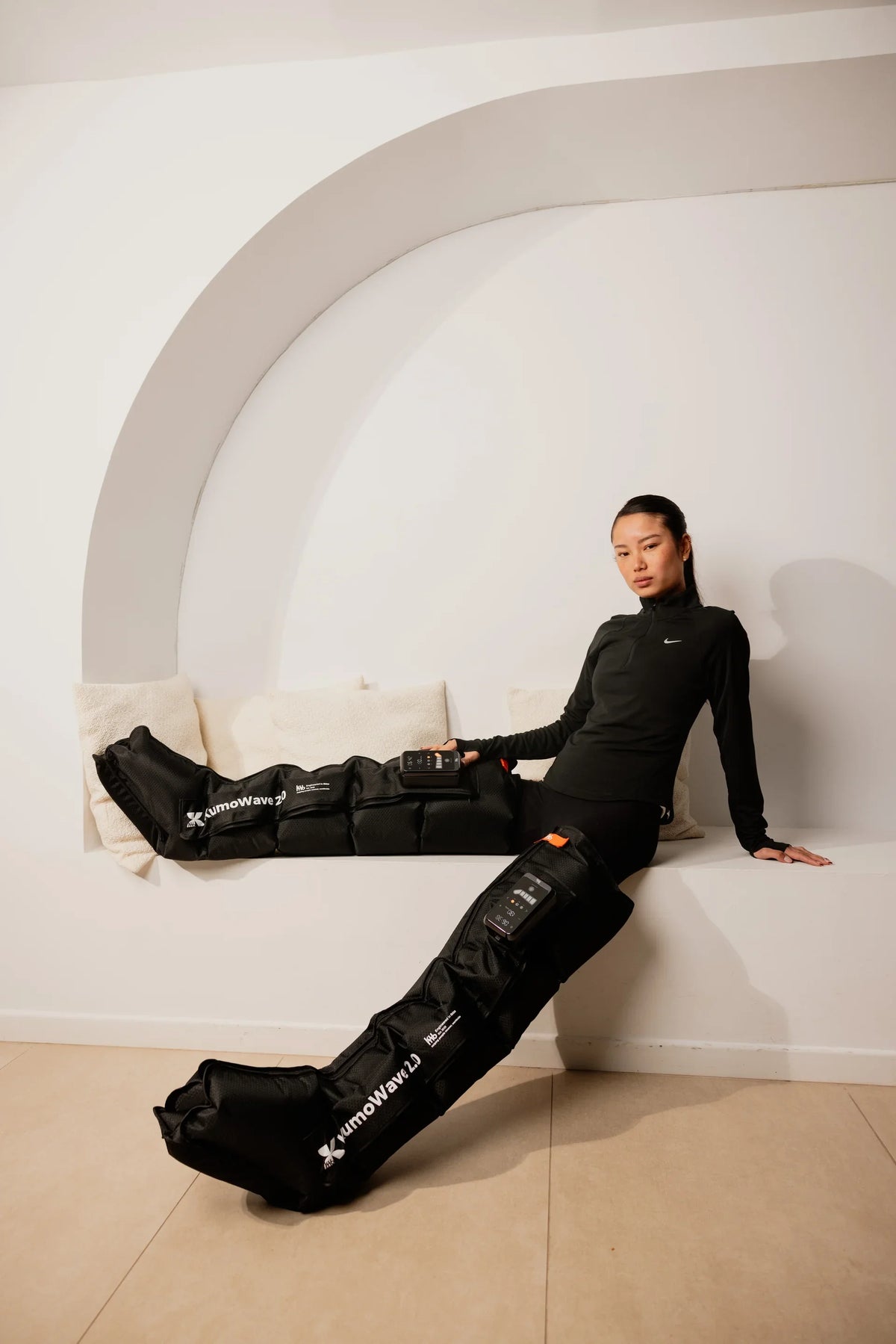
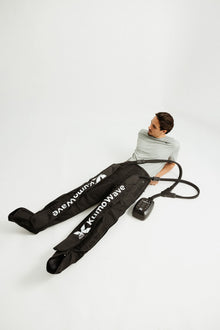
KumoWave pressotherapy boosts circulation and helps drain fluid with sequential compression, in 20-minute sessions at home.
- Boosts circulation and helps drain fluid
- Chamber-based compression, adjustable to you
- Sequential compression that mimics manual drainage
€799,00€999,00
−10% on your 1st order when you subscribe to the newsletter

The point is not to eliminate cortisol, but to keep prolonged stress from blocking your way back into repair mode.
What cortisol actually does in your body
A useful hormone when it shows up at the right time
Cortisol is part of the normal stress response. According to the NIDDK, it helps maintain blood pressure, regulate glucose, reduce inflammation and turn food into energy. That is why a one-off spike during a hard workout or a demanding week is not a problem on its own.
Personalized protocol · included with your purchase
Want us to tell you how to use it in your case?
With your purchase, our experts prepare a personalized usage protocol for your case: sport, circulation, fluid retention, pregnancy or lipedema.
Message us on WhatsAppOur experts reply · no obligation
The trouble starts when the signal never switches off
When cortisol stays high for a long time, the picture changes. Chronic exposure to glucocorticoids is associated with muscle weakness, fatigue, bruising more easily and other signs that belong to Cushing's syndrome. If those symptoms persist, a medical assessment is warranted. NIDDK guide to Cushing's syndrome
How stress slows muscle recovery
More catabolism, less building
The classic review on glucocorticoids and muscle mass describes cortisol acting on skeletal muscle by favoring the breakdown of contractile proteins and the mobilization of amino acids. In practice, that means the body prioritizes immediate fuel over repair and synthesis. review on glucocorticoids and skeletal muscle
This effect does not show up the same way in every context. Acute exercise can raise cortisol temporarily, but repeated training with enough rest tends to reduce the hormonal response to submaximal effort. The problem appears when intensity, volume and outside stress add up without real recovery.
on your first order when you join the newsletter
We send you the code instantly. No spam.
Worse sleep, worse repair
Sleep is a central piece of recovery. During the early phases of the night, HPA axis activity drops and cortisol falls to its lowest levels; on top of that, a review on sleep and cortisol notes that sleep restriction can raise afternoon and evening cortisol and increase stress reactivity the next day. review on sleep and circadian cortisol regulation
Night-time light matters too. A recent systematic review found that evening exposure to blue light can suppress melatonin, delay circadian phase and lengthen sleep latency. If you want to dig into that effect, you can read blue light at night and melatonin. (pmc.ncbi.nlm.nih.gov)
Training a lot does not always mean recovering better
A 2025 review on exercise and cortisol in people with psychological distress found moderate reductions in cortisol, especially with mind-body exercise, and placed the largest improvement around 530 MET-min/week, roughly equivalent to 90 to 150 weekly minutes of moderate intensity. It is a population reference, not a universal prescription, but it is a reminder that more is not always better. (pmc.ncbi.nlm.nih.gov)
Signs that stress is already interfering
When stress starts to take its toll, it does not always show up as lab-confirmed "high cortisol". You usually see it first in performance, in rest and in the feeling of accumulated fatigue. If signs such as marked muscle weakness, easy bruising or persistent physical changes also appear, an endocrine problem is worth ruling out.
Practical signs and what they may point to
| Sign | What may be behind it | What to do today |
|---|---|---|
| Fatigue that will not go away | May point to excess load, insufficient sleep or poor stress management, especially if your performance drops several days in a row. (pmc.ncbi.nlm.nih.gov) | Cut volume for a few days, sleep more and watch whether you return to your baseline. |
| Light sleep or waking up at night | Often goes hand in hand with a more reactive HPA axis and worse night-time cortisol regulation. | Improve sleep hygiene and dim the lights in the evening. |
| Muscle weakness, easy bruising or purple stretch marks | These are signs described in Cushing's syndrome and they need a medical assessment if they persist. | See a health professional. |
| Slow recovery after every session | May indicate that total stress exceeds your capacity to adapt. | Adjust the load and make real rest a priority. |
What you can do to recover better when cortisol is high
The most useful strategy is not chasing a perfect number, but reducing the total stress load and giving your body consistent signals to repair. That includes sleep, food, hydration, mental breaks and a training plan that leaves room to adapt.
Start where the impact is biggest
- Keep a steadier evening routine and cut screen stimulation, because evening light can delay melatonin and sleep. blue light at night and melatonin
- If tiredness forces you to sleep during the day, use the nap on purpose and without pushing the night aside. napping and recovery
- Get enough protein after training, because protein intake increases myofibrillar protein synthesis during recovery. protein after training
- Take care of hydration, since dehydration and heat can worsen glycogen resynthesis and post-exercise recovery. hydration and muscle recovery
- Take breaks that bring you back to parasympathetic mode, such as breathing more slowly, walking and winding down after training. vagus nerve and recovery
It is also worth remembering that regular exercise can help modulate stress, but excess without recovery can do the opposite. If you feel wired and overcooked, dropping the load for a few days usually pays off more than pushing harder.
When to ask for a medical assessment
If weakness is persistent, or if you get easy bruising, purple stretch marks, central weight gain, high blood pressure, high glucose, irregular periods or fatigue that does not improve with rest, do not put it all down to training. It is important to see a health professional, because Cushing's syndrome and other causes of hypercortisolism need their own diagnosis and treatment.
A single number is not enough for self-diagnosis either, because cortisol changes over the course of the day and doctors usually combine several tests. If you take prescribed glucocorticoids, do not adjust the dose on your own. The NIDDK notes that when excess cortisol is linked to these drugs, the adjustment must be gradual and supervised by a professional. If you are pregnant, recovering from surgery or living with a chronic condition, ask for guidance before changing your exercise or recovery routine.
FAQ: frequently asked questions
Does high cortisol really slow muscle recovery after training?
Yes, especially when the rise becomes repeated and does not come down with rest. Cortisol helps mobilize energy during effort, but if stress stays high it also favors a more catabolic environment, with more protein breakdown and worse sleep quality, two factors that slow muscle repair. A one-off spike from training hard is not bad; the problem is sustained exposure and, in particular, overtraining or prolonged stress.
How does chronic stress affect muscle catabolism and muscle gain?
Chronic stress keeps the HPA axis more activated and can shift resources toward survival instead of building tissue. In practical terms, that means more fatigue, worse sleep, less tolerance for training volume and less room to synthesize muscle protein efficiently. Muscle gain does not disappear, but it usually gets slower if your nervous system and your rest are not keeping up.
What signs suggest my cortisol is too high and affecting my recovery?
The most common signs are persistent fatigue, unrefreshing sleep, difficulty recovering between sessions and a drop in performance. If you also see marked muscle weakness, easy bruising, purple stretch marks, weight gain around the trunk, high blood pressure or menstrual changes, this is no longer just "training stress" and it deserves a medical review. The NIDDK describes those findings in Cushing's syndrome.
Can regular exercise normalize stress-related high cortisol?
Yes, but it depends on how it is done. The evidence suggests regular, well-dosed exercise can improve stress regulation and lower cortisol in some populations, especially when volume is not excessive and rest is sufficient. Training a lot with little recovery, on the other hand, can keep the HPA axis activated. The key is the dose, not the heroics.
What concrete strategies help when my cortisol is high and recovery is hard?
Start with the basics: steadier sleep, less light at night, enough protein after training, proper hydration and real pauses after effort. If you need a nap, take it on purpose and without turning it into a second night. You do not need huge changes or daily cortisol measurements; it usually works better to improve one variable at a time and hold it for a week or two to see whether your body responds better.
What now?
If you recognize several of these signs, do not push your body as if nothing were happening. Adjust sleep, training load and nutrition first, and seek a medical assessment if fatigue, weakness or physical changes persist. To keep tidying up your recovery habits, head back to the Kumo Balance site and take a look at napping and recovery or hydration and muscle recovery.
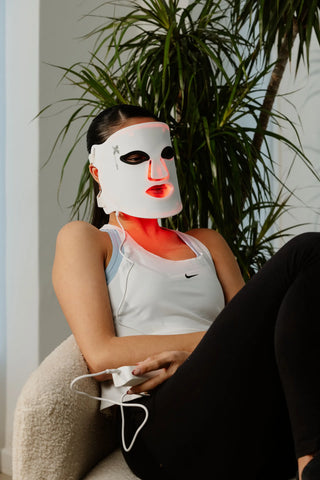
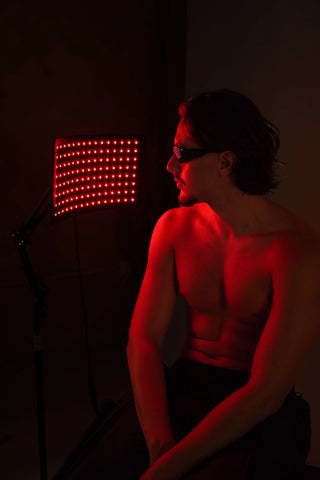
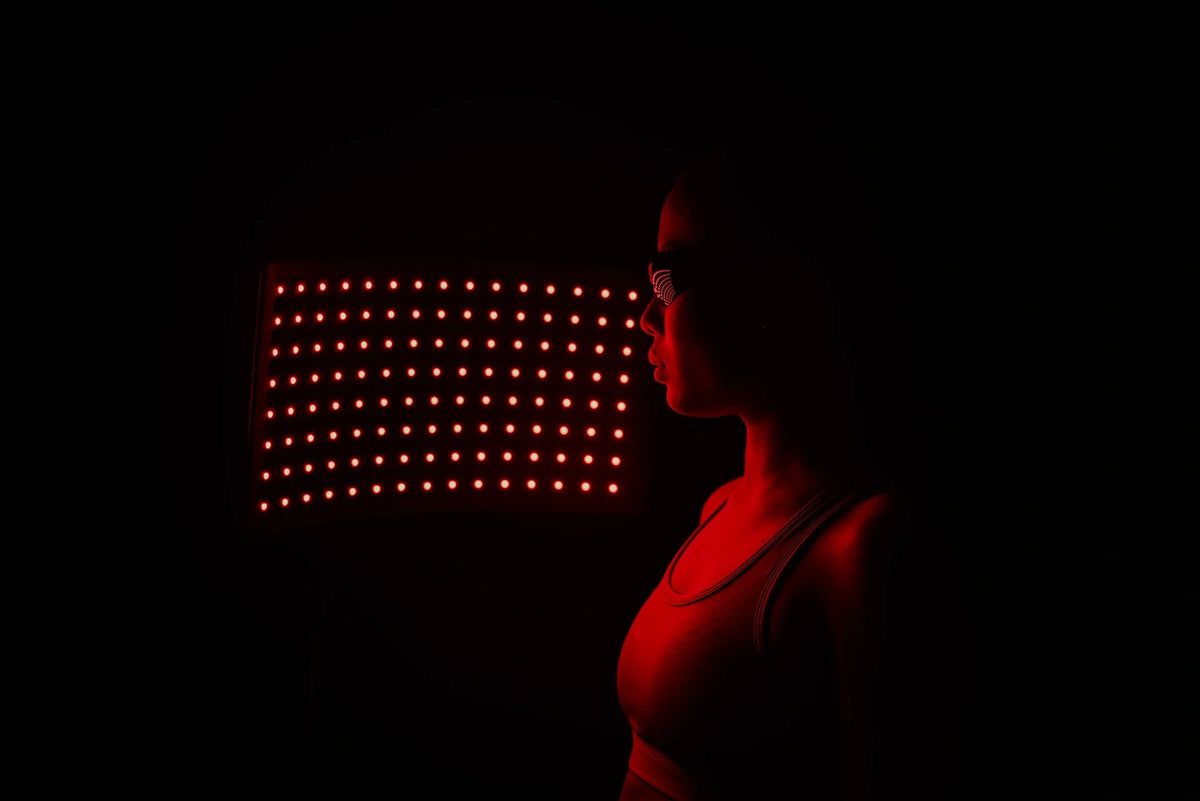
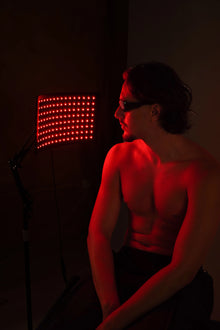
To go further: Red light therapy and muscle recovery, Red light therapy for muscle recovery and Pressotherapy at home and muscle recovery 2025.
KumoWave pressotherapy
Choose your at-home pressotherapy
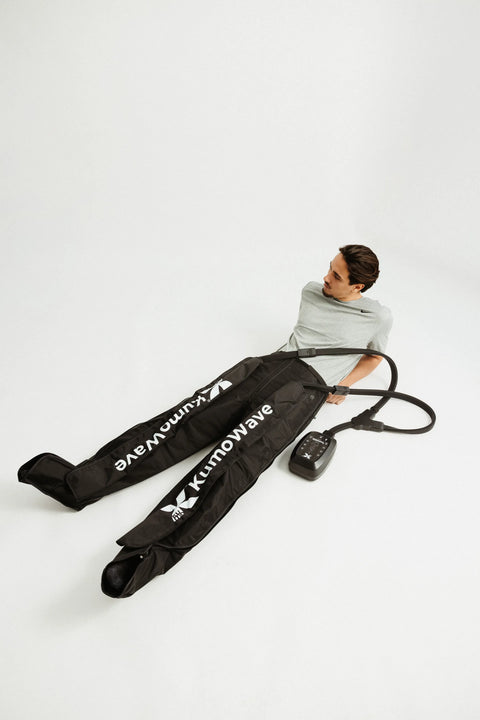
KumoWave Elite – Pressotherapy Pants
Full-coverage trousers. Ideal for lipedema, fluid retention and intensive use.
€799,00 €999,00
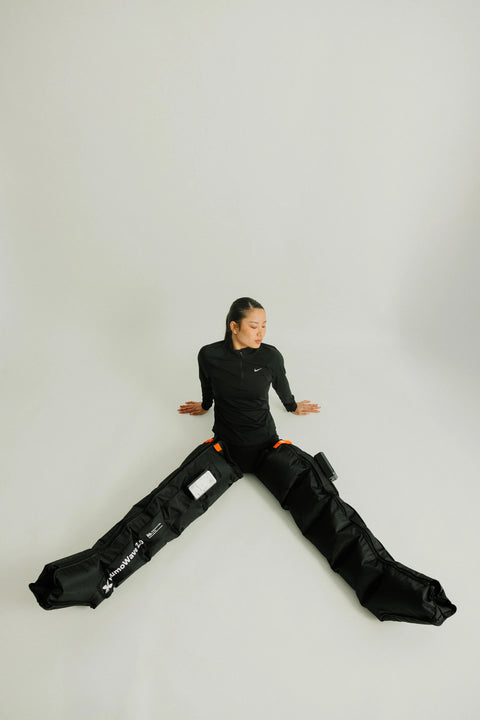
KumoWave 2.0 - Wireless Pressotherapy
Wireless, lightweight boots. Perfect for daily use and recovery.
€499,00 €599,00