After 60, recovering well does not mean doing more, but doing it better, with movements that respect your energy and your joints.
The most useful combination is usually daily movement, gentle strength work, balance, and flexibility, spread across short blocks that do not leave the body worse off at the end. The NHS guidelines for people over 65, updated in 2024, recommend physical activity every day, strength, balance, and flexibility work at least 2 days a week, and 150 weekly minutes of moderate intensity if you already have a base. (nhs.uk)
Pressotherapy at home
End the day with light legs
★★★★★ 4,8/5 · rated by verified customers
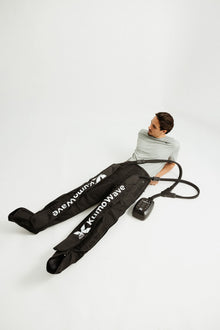
KumoWave pressotherapy boosts circulation and helps drain fluid with sequential compression, in 20-minute sessions at home.
- Boosts circulation and helps drain fluid
- Chamber-based compression, adjustable to you
- Sequential compression that mimics manual drainage
€799,00€999,00
−10% on your 1st order when you subscribe to the newsletter

What changes in legs and joints after 60
Over the years, it is easier to lose muscle mass, notice stiffness, and build up fatigue in the legs and feet. In osteoarthritis, exercise is usually one of the most important measures, and a home plan guided by your doctor or physical therapist can help you avoid overdoing the intensity. On top of that, swelling in the feet and ankles is common in older adults and can get worse after long stretches of sitting or standing. (nhs.uk)
- Getting up from a chair, climbing stairs, or standing for a while becomes harder.
- Stiffness shows up most when you start moving, especially in the morning or after sitting still.
- Legs can feel heavy if you go many hours without moving your ankles and calves.
All of that fits one simple idea: preserve function. That is why recommendations for older adults insist on daily activity, strength, balance, and flexibility, because they help maintain independence and reduce the risk of falls and of losing the mobility that daily life depends on.
Personalized protocol · included with your purchase
Want us to tell you how to use it in your case?
With your purchase, our experts prepare a personalized usage protocol for your case: sport, circulation, fluid retention, pregnancy or lipedema.
Message us on WhatsAppOur experts reply · no obligation
A realistic at-home routine, without overcomplicating it
The following proposal does not replace a health plan, but it does translate the guidelines into something easy to stick with: little time, little equipment, and a fair amount of consistency. If you have not exercised in a while or you have medical questions, the NHS recommends talking to your doctor first to adjust the intensity.
- Wake the body up when you get out of bed. For 3 to 5 minutes, move your ankles, knees, and hips through a gentle range. Marching in place or sitting down and standing up from a chair a few times helps wake the legs up.
- Spread movement across the day. Do small blocks of walking at home, a short stroll, or light household chores. The idea is to break up long sitting periods and not let stiffness build up.
- Work on strength two days a week. Use simple exercises such as heel raises, standing up from the chair with control, or pushes against the wall. Do few repetitions and leave room to recover between sessions.
- Close the day with a decompression block. Elevate your legs for a few minutes, breathe calmly, and slow the pace down. If you notice the leg ends up more tired than when you started, you have probably overdone the intensity.
Example of a 20-minute routine at home
| Moment | Goal | What to do | Approximate duration | Signal to ease off |
|---|---|---|---|---|
| When you get up | Wake the joints | Ankles, knees, hips, and gentle marching in place | 5 minutes | If you feel sharp pain or lose stability, reduce the range |
| Mid-morning | Get circulation going | Short stroll, moving around the house, or small active chores | 8 minutes | If you get short of breath or feel dizzy, stop and rest |
| Afternoon | Gentle strength | Sitting down and standing up from a chair, heel raises, and wall support | 7 minutes | If your knees feel more loaded at the end, do fewer repetitions |
| Evening | Decompression | Legs elevated, calm breathing, and a short relaxation | 5 to 10 minutes | If the swelling does not go down or gets worse, the cause is worth checking |
This outline sums up the combination of daily activity, strength, flexibility, and balance recommended by the NIA and the NHS, and adapts it into a short version that may fit better when there is stiffness, fatigue, or osteoarthritis.
Heavy legs: how to look after them day to day
If what you notice is heaviness, swelling, or more pronounced ankles, MedlinePlus advises elevating your legs on pillows, exercising them, taking breaks to move when you travel or stay on your feet for long stretches, using support compression if it has been recommended to you, and cutting back on salt if that fits your eating plan. (medlineplus.gov)
on your first order when you join the newsletter
We send you the code instantly. No spam.
In that context, some people fit home pressotherapy into a routine of movement, rest, and elevation as wellness support. If you want to look at that approach in more detail, you can browse the at-home pressotherapy collection.
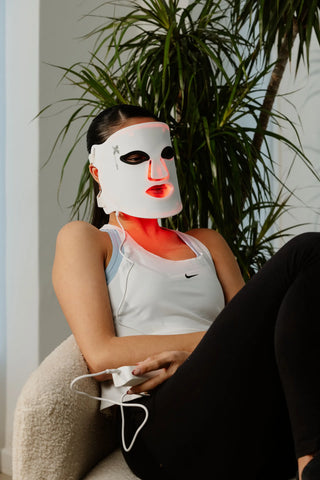
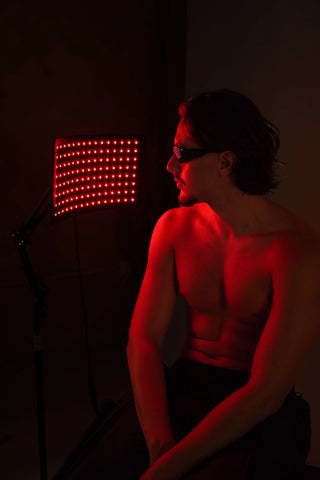
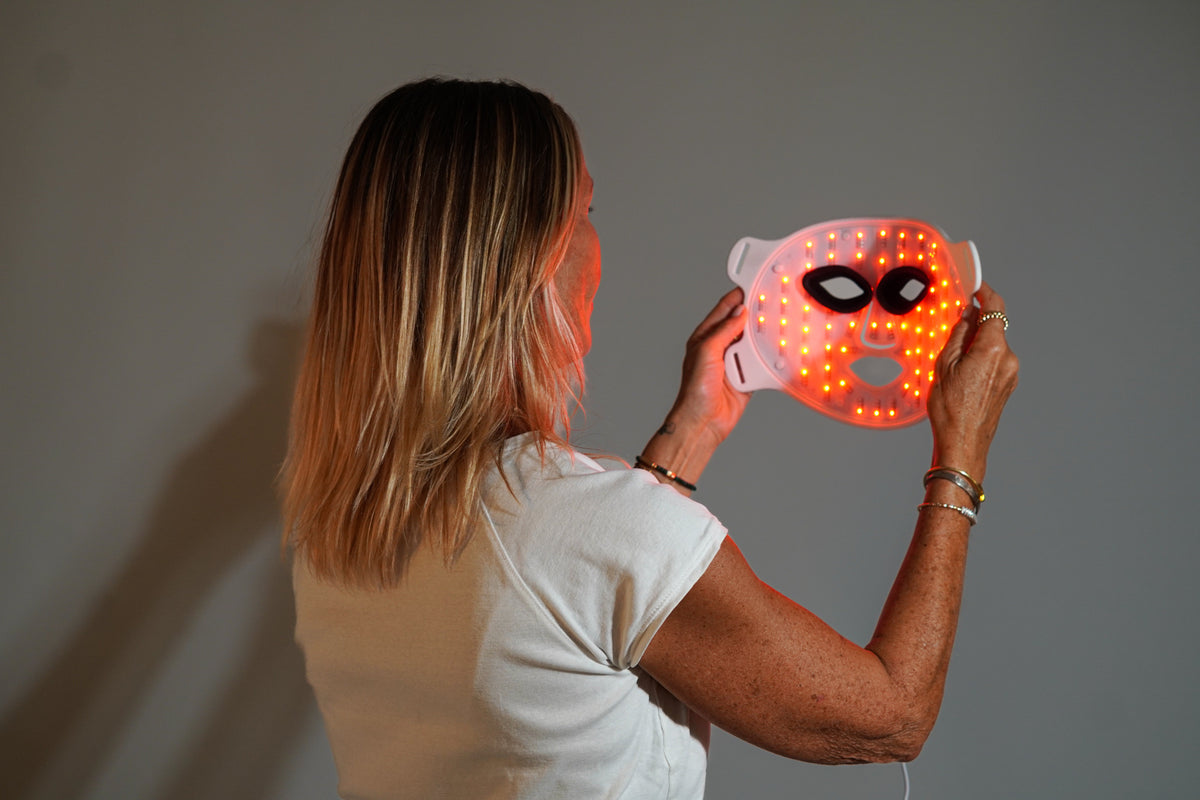
Red and infrared light: a complementary support
Photobiomodulation, or red light, is used as a wellness complement. The AAD notes that home-use LED devices are generally considered safe if the instructions are followed, but it also points out that eye protection is needed when the equipment calls for it, and the FDA warns that it is not advisable for people with photosensitivity, pregnancy, active implants, infection, a wound or injury in the area, treatment with photosensitizing drugs, or a history of cancer in the treated area. (aad.org)
If you want to understand how to fit it into your routine, you can read the guide to red light for muscle recovery or how to use red light at home.
Set up a simple space so you actually stick with it
A stable chair, a clear corner, and a timer are enough so you do not depend on how motivated you feel that day. The NIA recommends keeping a chair, a wall, or a support person nearby when you work on balance, and that same idea works for organizing a small recovery corner at home.
If you want to organize that space in a practical way, take ideas from how to set up a recovery corner at home.
When to seek care: signs that call for medical assessment
Seek care without waiting if the swelling shows up in only one leg, if the area is red or warm, if there is fever, if pain or swelling gets worse despite taking care of it at home, or if you notice shortness of breath or chest pain. MedlinePlus also advises asking for an assessment when the person has heart, kidney, or liver disease and the swelling is getting worse.
If you have osteoarthritis or other chronic complaints and exercise feels unsafe, the NHS advises adjusting the plan with a professional so you do not overload the joints.
Contraindications and precautions for wellness devices
Compression pressotherapy should not be used without professional assessment when there is severe peripheral arterial disease, decompensated heart failure, cellulitis or a local infection, or suspected thrombosis, because the consensus documents on compression recommend checking arterial status and monitoring these cases very carefully. (pmc.ncbi.nlm.nih.gov)
Red light or photobiomodulation is not advisable with photosensitivity, photosensitizing medication, pregnancy or pregnancy planning, active implants, active infection, a wound or injury in the area, or a history of cancer in the treated area. It is also worth using eye protection if the device requires it. (fda.gov)
FAQ about recovery after 60
How much movement do I need if I am over 60 and struggle to get started?
The most useful thing is to move a little every day and not wait for the perfect session. The NHS guidelines for people over 65 recommend daily physical activity, plus strength, balance, and flexibility work at least 2 days a week, and 150 weekly minutes of moderate intensity if you already have a base. If you have been inactive for a while, start with short blocks and build up gradually.
Is it normal to have swollen legs at the end of the day?
It can be common, especially in older adults or when you spend a lot of time standing or sitting. MedlinePlus explains that swelling in the feet, ankles, and legs can get worse with gravity and with lack of movement. Elevating your legs, moving them often, and taking active breaks usually help. If the swelling is new, shows up in only one leg, or comes with redness, warmth, or pain, a medical assessment is in order.
Can red light be part of a recovery routine?
Yes, but as a wellness complement and with realistic expectations. The AAD notes that home LED devices are considered safe if the instructions are followed and eye protection is used when needed. The FDA, for its part, is a reminder that it is not right for everyone, especially with photosensitivity, photosensitizing medication, pregnancy, active infection, or an injury in the area. If you use it, do so carefully and within a complete routine.
Can I use pressotherapy if I have knee pain or osteoarthritis?
Pressotherapy is not presented as a treatment for osteoarthritis, but as wellness support within a routine of movement and decompression. If the knee pain comes with unusual swelling, warmth, redness, a single affected leg, or vascular problems, you need to check with a professional first. In osteoarthritis, the NHS insists on keeping up adapted exercise and a home plan adjusted by a professional when needed.
What now?
If you want to move from theory to a simple habit, start by looking at our clinical and functional technology and always come back to the Kumo Balance home page to find your way around the site. From there, the goal is not a perfect routine, but a routine you can repeat tomorrow.
KumoWave pressotherapy
Choose your at-home pressotherapy
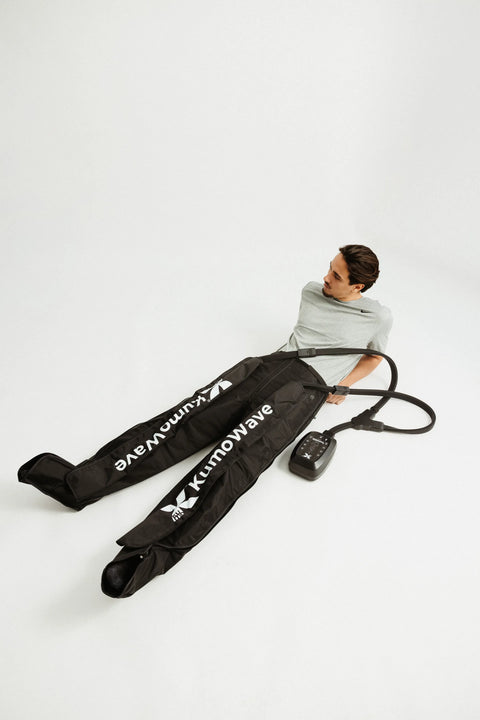
KumoWave Elite – Pressotherapy Pants
Full-coverage trousers. Ideal for lipedema, fluid retention and intensive use.
€799,00 €999,00
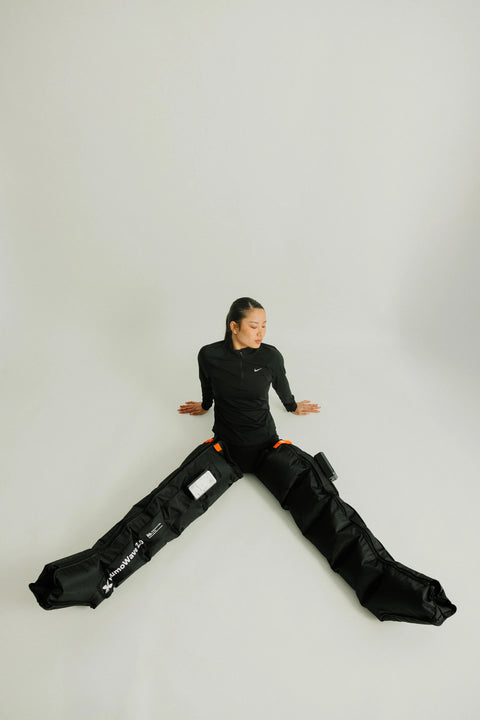
KumoWave 2.0 - Wireless Pressotherapy
Wireless, lightweight boots. Perfect for daily use and recovery.
€499,00 €599,00