
Consistency beats intensity.
If you're looking to improve dark spots (melasma, post-acne marks, or uneven skin tone), an LED mask can be a great addition to a realistic plan: daily sun protection , a gentle skincare routine, and consistent use over several weeks. In this guide, I'll explain what LED light can (and can't) do, how to create sustainable habits, and how to integrate Kumo 's technology into a routine focused on achieving a more even skin tone.
Facial red light
Bring your skin back to life
★★★★★ 4,8/5 · rated by verified customers
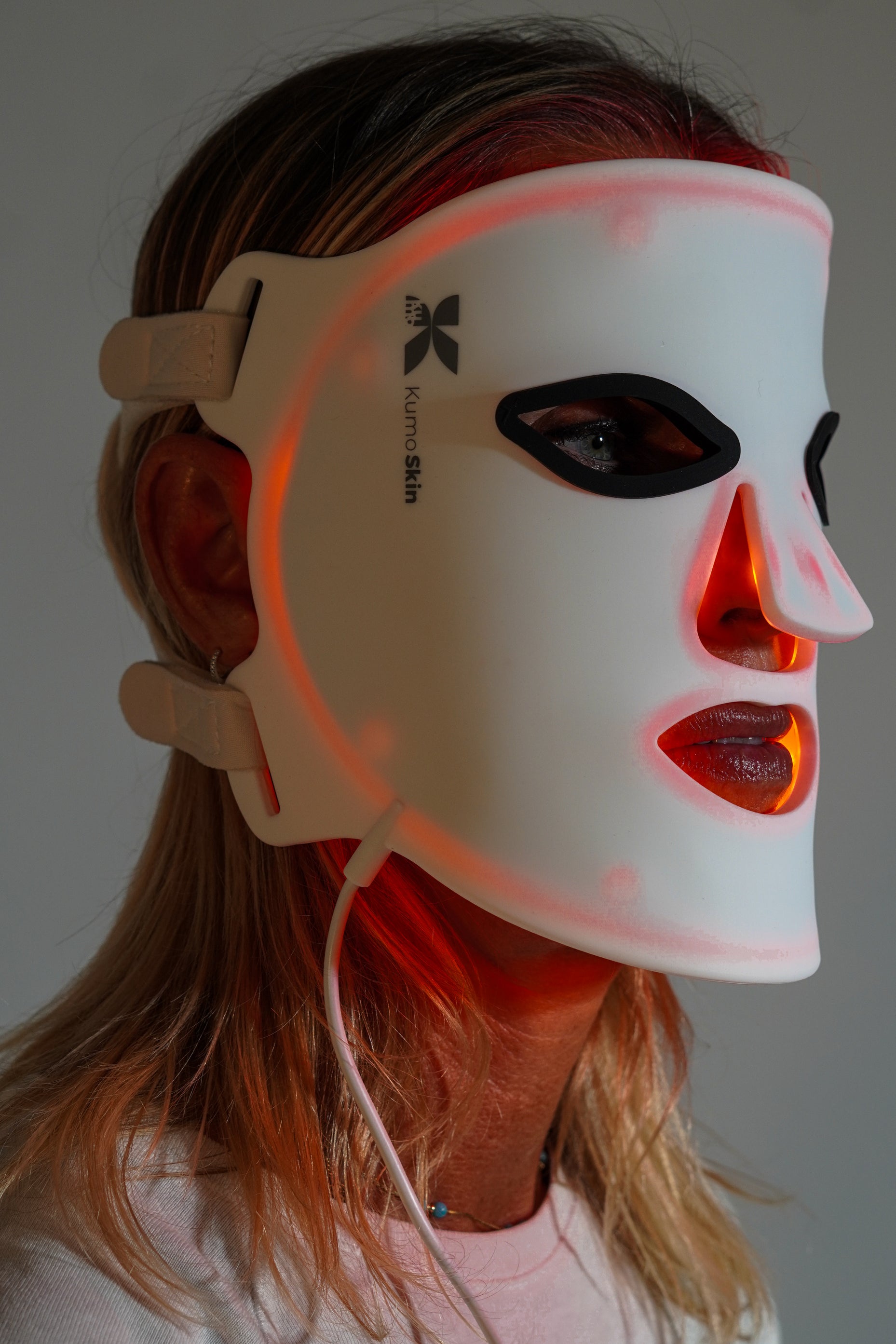
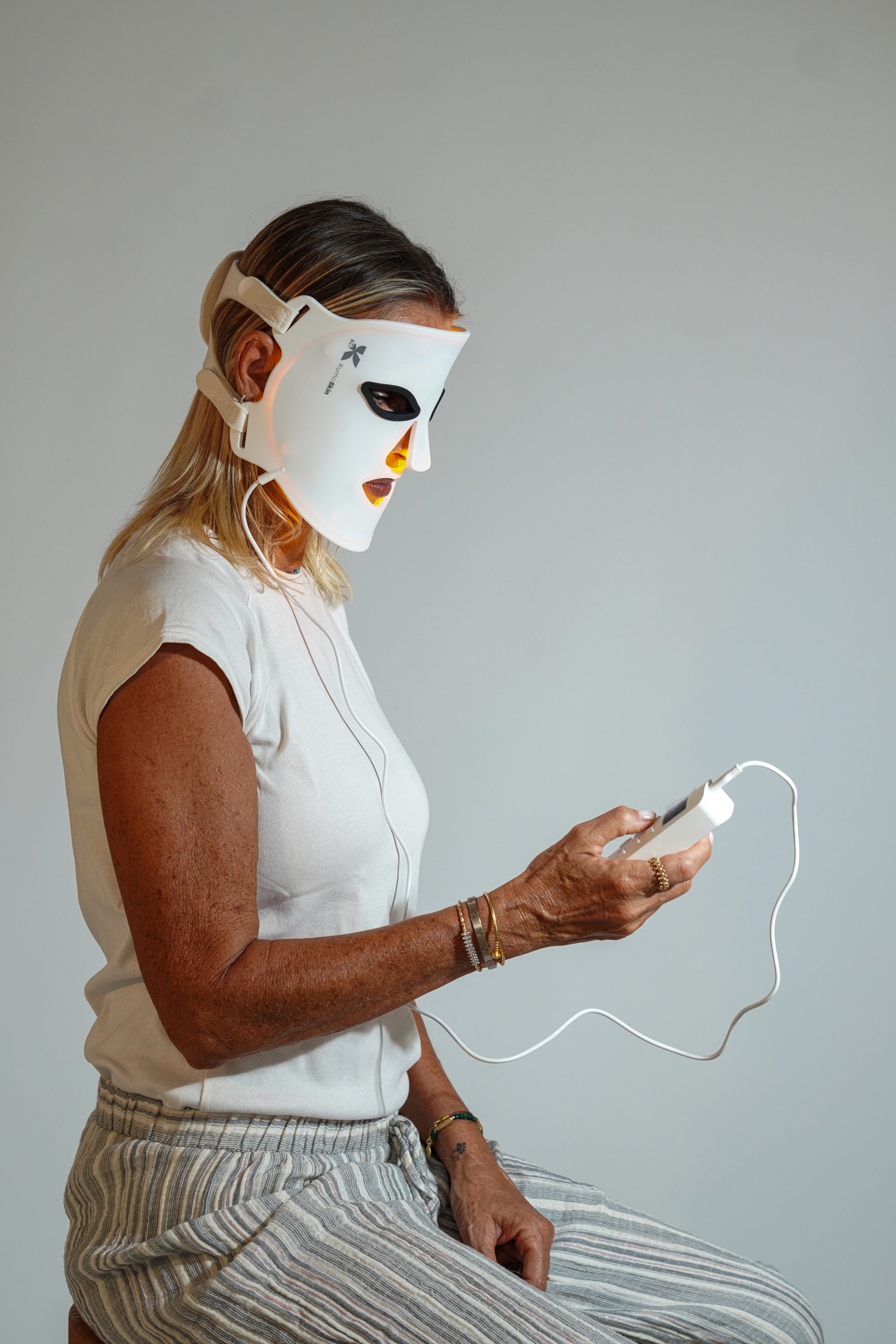
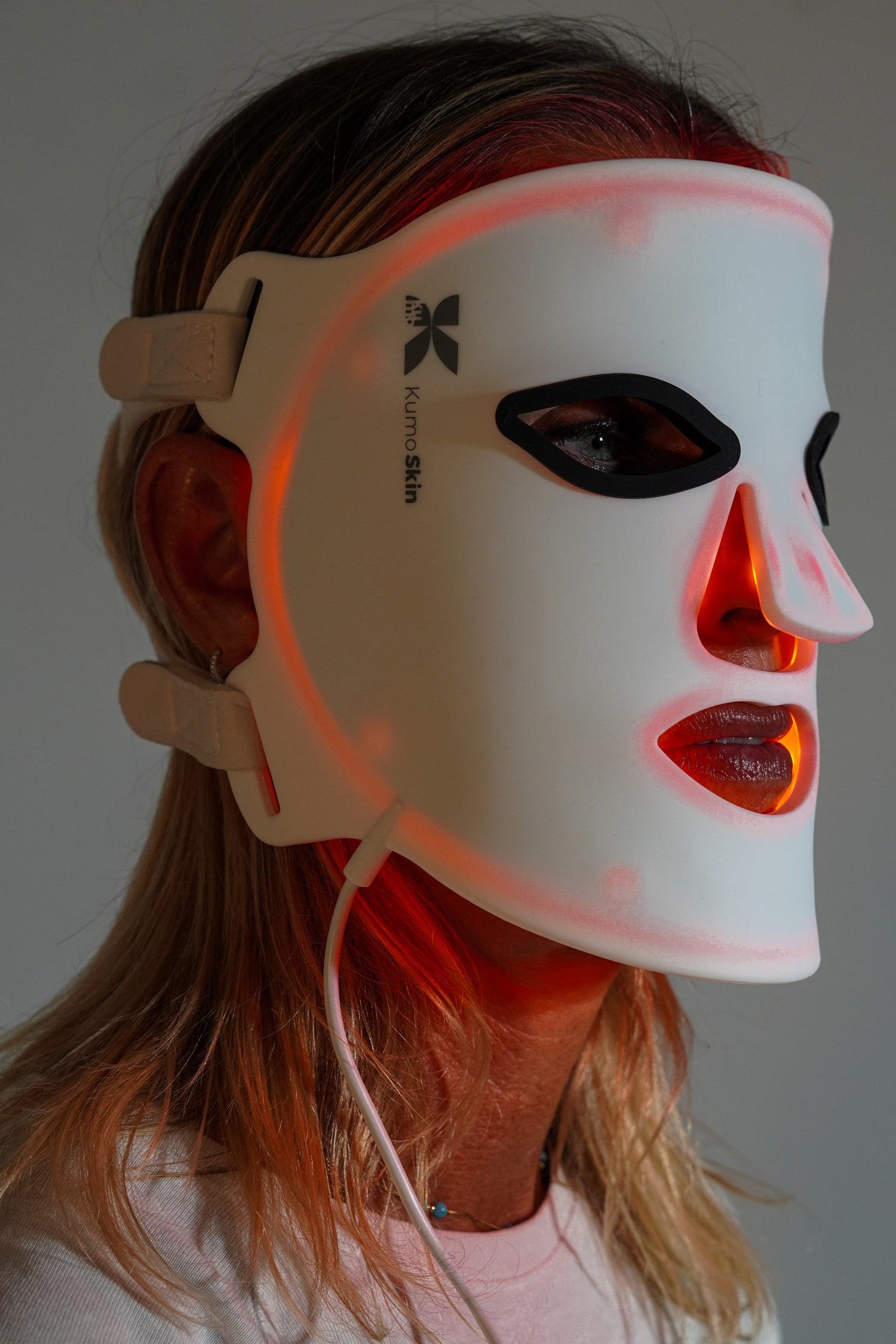
The KumoSkin LED mask helps repair and calm your skin in short sessions at home.
- 250 LEDs in flexible medical silicone
- Red light to boost collagen and glow
- 4 lights: red, infrared, blue and yellow
€299,00€429,00
−10% on your 1st order when you subscribe to the newsletter

1) Understanding the “stains”: not all stains are treated the same.
Common types of facial pigmentation
- Melasma : brownish-gray patches, often symmetrical (cheeks, forehead, upper lip). It is associated with sun, heat, hormones, and also visible light .
- Post-inflammatory hyperpigmentation (PIH) : spots that appear after inflammation (acne, dermatitis, insect bites, friction). They generally fade over time, but this can take months.
- Solar lentigines (sun spots): more "localized" and persistent; they usually require a dermatological strategy if they are to be treated intensively.
Why do they come back even if you "take care"?
The most common reason is simple: the stimulus (sun and visible light) is still there . Even with good SPF, visible light (400–700 nm) can contribute to darkening, especially in medium to high skin tones; that's why it's recommended to consider tinted sunscreens and iron oxides when an even skin tone is the priority.
( aad.org )2) What can an LED mask do for blemishes (and what expectations to have)
LED vs. “miracle”: the real role of light
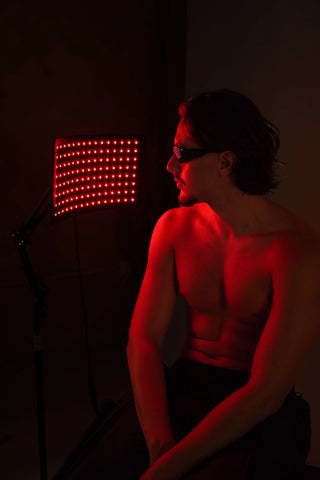
LED masks work by photobiomodulation : non-ionizing light (not UV) that can modulate skin processes such as inflammation, repair, and, depending on the wavelength and dose, pathways related to pigmentation. In melasma, recent reviews describe promising results with wavelengths such as amber (~585–590 nm) , red (~630 nm) , and near-infrared (~830–850 nm) at reported dose ranges (e.g., 1–20 J/cm²), but the level of evidence and protocols vary.
Personalized protocol · included with your purchase
Want us to tell you how to use it in your case?
With your purchase, our experts prepare the ideal LED protocol for your skin type and goal (acne, wrinkles, dark spots...).
Message us on WhatsAppOur experts reply · no obligation
What the evidence says (with concrete examples)
- Melasma and amber LED (590 nm) : a pilot study (2022) with 10 patients reported objective improvement after 8 weeks (1 session/week), with a decrease in the MASI index and no serious adverse events reported.
- Anti-melanogenesis mechanisms : research in ex vivo melanocyte and skin models has described that LED at 830 nm can reduce melanogenesis markers under certain experimental conditions (this does not replace robust clinical evidence, but helps to understand the “why”).
Most importantly: LED masks do not compete with SPF.
If your goal is to make dark spots less noticeable, sun protection is key. The American Academy of Dermatology recommends SPF 30 or higher and, for melasma, adds a crucial point: protection from visible light with tinted sunscreen containing iron oxides .
( aad.org )Golden rule: LED light is beneficial when your routine already provides sun protection (SPF + habits). If you don't use sun protection, any progress is negated.
3) The routine that most influences the result: daily habits (without complicating things)
Tomorrow: protect it so the pigment doesn't reactivate.
- Gentle cleaner (no friction).
- Antioxidants or niacinamide if your skin tolerates them (not mandatory, but it usually fits well into tone-enhancing routines).
- Broad-spectrum sunscreen SPF ≥ 30. For melasma or a tendency to develop dark spots, consider dye + iron oxides for visible light.
- Reapply as needed (especially if outdoors, sweating, or prolonged exposure).
Night: repair without irritating
- Double down on gentleness : irritation = inflammation = higher risk of PIH.
- If you use active ingredients (retinoids, AHA/BHA, depigmenting agents), do it strategically: few things, well chosen, and without "overloading".
- Hydration and skin barrier: stable skin better tolerates any treatment, including LED.
4) Consistency with LED masks: how to turn it into a sustainable habit
How to use it without falling into the "all or nothing" trap
An LED mask works best when it's easy to repeat . Instead of chasing perfect sessions, think of a "minimum viable" weekly use. If you have a Kumo LED mask, integrate its use according to the device's instructions and prioritize regularity. You can see the brand's selection in the LED light therapy section.
on your first order when you join the newsletter
We send you the code instantly. No spam.
8-week plan (guideline) to maintain consistency
This plan does not replace the instructions on your device; it serves to organize habits around sun protection and repetition.
| Week | Aim | What to focus on | Adjustment signals |
|---|---|---|---|
| 1–2 | Adherence | Daily SPF + LED sessions according to your protocol + initial photos with the same light | If irritation occurs: reduce harsh active ingredients and prioritize barrier protection. |
| 3–4 | Regularity | Reapply sunscreen on outdoor days + avoid friction (towels, scrubs) | If pimples appear: check occlusion/oils, don't "punish" the skin |
| 5–6 | Optimization | Consider using a tinted sunscreen/iron oxides if you have melasma or spots that darken easily. | If stains intensify: check indirect exposure (windows, car) |
| 7–8 | Assessment | Compare photos + maintain a stable routine (minimal changes) | If there are no changes: consult dermatology for diagnosis and combined plan. |
5) Blemishes and lifestyle: when “recovery” is also about skin
Even skin tone depends not only on what you put on your face, but also on stress, sleep, inflammation, and consistency . Kumo was born precisely from the idea of making recovery a routine (technology, habits, and daily performance). You can explore the brand's universe at Kumo .
Supplements that help sustain the habit (without promising miracles)
- Short and repeatable routines : 10–15 minutes of “tech self-care” is usually more sustainable than long and perfect plans.
- Body recovery : If you spend many hours on your feet or train, supporting circulation and reducing stress can help you maintain your routines without getting exhausted. If you're interested, there's a pressotherapy collection available.
- Muscle recovery : For those seeking a holistic approach to recovery, the KumoPulse Air integrates well into post-workout or end-of-day routines.
6) Safety and common mistakes with LED masks (to avoid worsening the stain)
Good security practices
- Eye protection : Follow the manufacturer's instructions; avoid looking directly at the LEDs.
- Avoid overtreatment : more sessions do not equal better results; the skin may become irritated.
- Caution if photosensitivity is present : some medications or pathologies may require prior medical advice.
- Newly damaged skin : If you have had a strong peel, laser or other procedure, check waiting times.
Mistakes that most hinder results
- Use LEDs and forget about SPF (or reapply "by eye").
- Excessive exfoliation : sustained microinflammation = increased risk of PIH.
- Friction (rough towels, aggressive cleaning, scratching pimples).
- Not measuring progress : without comparable photos, it's easy to give up just when you're starting to see results.
7) How long does it take for stains to improve: realistic timeframes
It depends on the type of pigmentation and its depth. For epidermal PIH , clinical references describe improvement within 6–12 months , while deeper pigmentation may be slower or more persistent. With melasma , long-term management (prevention and maintenance) is the usual approach, as it is prone to reactivation with light, heat, and hormonal changes.
( ncbi.nlm.nih.gov )FAQ about Kumo, LED mask and stains
How long does it take to see results using a Kumo LED mask for blemishes?
When it comes to dark spots, it's more sensible to measure changes over weeks, not days . A common approach in photobiomodulation studies for melasma uses 4- to 8-week timeframes to observe trends, although protocols vary. The important thing is to combine the use of the mask (following the device's instructions) with daily sunscreen and, if melasma is present, consider using a tinted sunscreen with iron oxides . Without this base, the pigment can easily reactivate and mask any improvement.
( pubmed.ncbi.nlm.nih.gov )Can I use an LED mask if I have melasma and sensitive skin?
In general, LED light is a non-UV technology and is usually well-tolerated when used correctly, but caution is advised for melasma and sensitive skin: a gentle routine , zero friction, and avoiding overloading the skin with too many active ingredients at once. The AAD also recommends daily sun protection and adding protection against visible light with a tinted sunscreen containing iron oxides . If your skin is easily irritated or you are experiencing a flare-up, first stabilize the skin barrier and avoid sudden changes.
( aad.org )Does the LED mask replace a depigmenting serum or a dermatological treatment?
No: LED light typically works as a complement , not a replacement. In melasma, for example, photoprotection that also blocks visible light has been shown to improve results when combined with topical treatments (in a classic trial, a pigmented photoprotector for visible light showed superior improvements compared to UV-only sunscreen over 8 weeks when used in conjunction with hydroquinone). If the spots are intense or persistent, a dermatological diagnosis helps to choose the most effective and safe combination.
( pubmed.ncbi.nlm.nih.gov )What should I do if I notice my dark spots getting darker even though I use SPF?
- quantity and reapplication (especially if there is external sweat or friction), (
- exposure to visible light (windows, car, terraces), and (
- If you need a tinted sunscreen with iron oxides, it's recommended by dermatologists for melasma because of its protection against visible light. If you're also irritating your skin (heavy exfoliation, poorly tolerated retinoids), use a lower SPF: less inflammation usually means less risk of residual pigmentation.
Can I combine the LED mask with vitamin C, niacinamide, or retinoids?
Many routines combine LED light therapy with active ingredients, but the key is tolerance . Niacinamide is generally well-tolerated, and studies are exploring its role in protecting against blue light-induced hyperpigmentation in experimental settings. With retinoids and acids, the risk is irritation: if your skin becomes sensitized, you may promote PIH (pigmentation-induced hyperpigmentation). A practical approach is to alternate "active" nights with "barrier" nights, and use the LED mask on days when your skin is stable, always following the manufacturer's instructions.
( pubmed.ncbi.nlm.nih.gov )So what now?
If you want to make improving your skin tone a habit, start with the basics: impeccable sun protection, a gentle routine, and a sustainable LED protocol. Explore Kumo's LED light therapy , and if you need guidance on integrating technology and recovery into your daily routine, get in touch via the contact page .

Facial red light
KumoSkin Mask – LED Facial Mask
★★★★★ 4,8/5 · rated by verified customers
- 250 LEDs in flexible medical silicone
- Red light to boost collagen and glow
- 4 lights: red, infrared, blue and yellow
€299,00€429,00· pay in installments with seQura or Klarna