
Sweating isn't the problem: what you do afterward determines how your skin looks.
If you train almost daily, it's normal to notice sweat breakouts , redness, tightness, or breakouts around your headphone/headphone area, back, or chest. The good news is that you don't need an endless routine: you need a logical sequence that protects your skin barrier, reduces irritation, and allows you to incorporate useful technology (like an LED mask ) without worsening sensitivity.
Facial red light
Bring your skin back to life
★★★★★ 4,8/5 · rated by verified customers
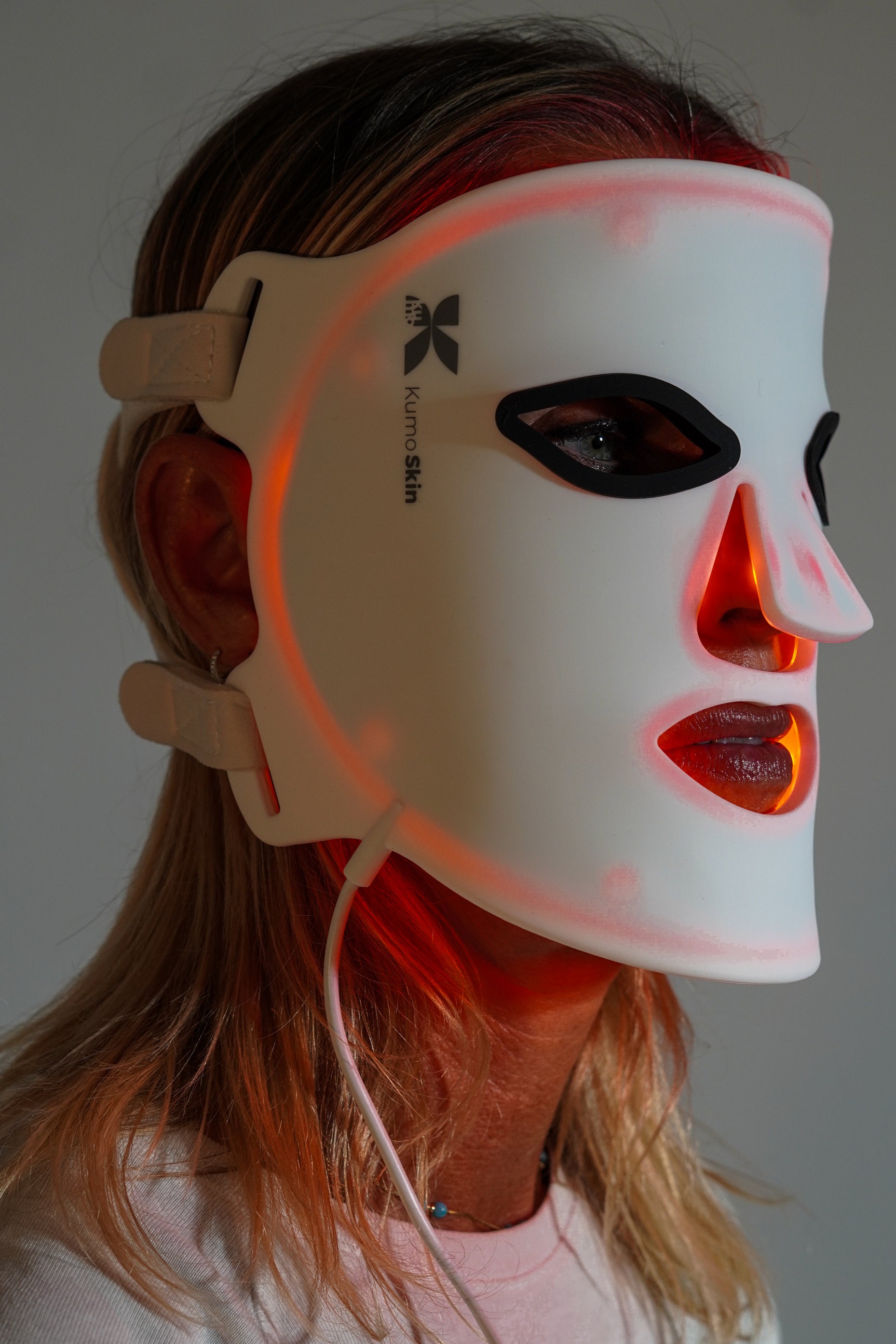
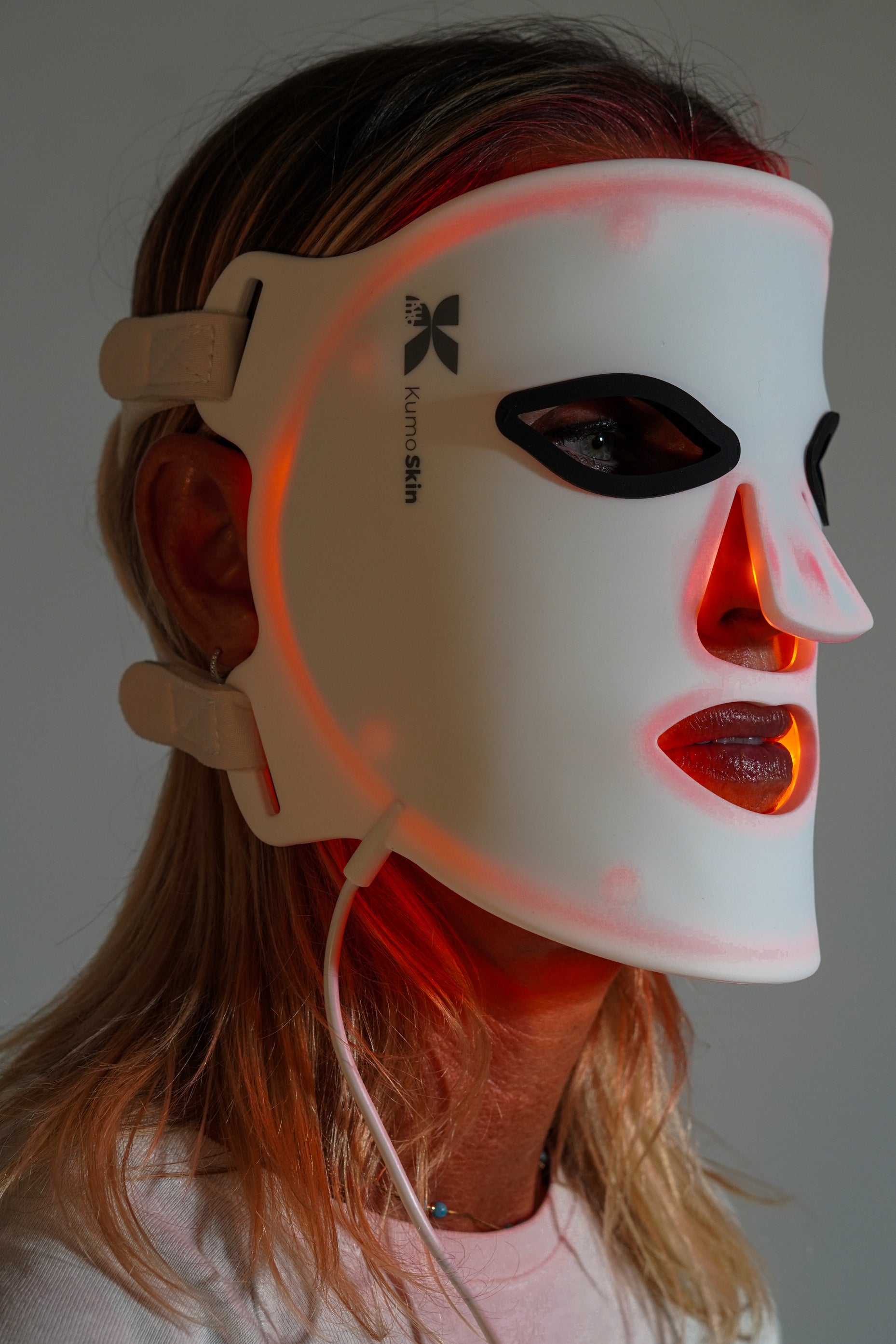
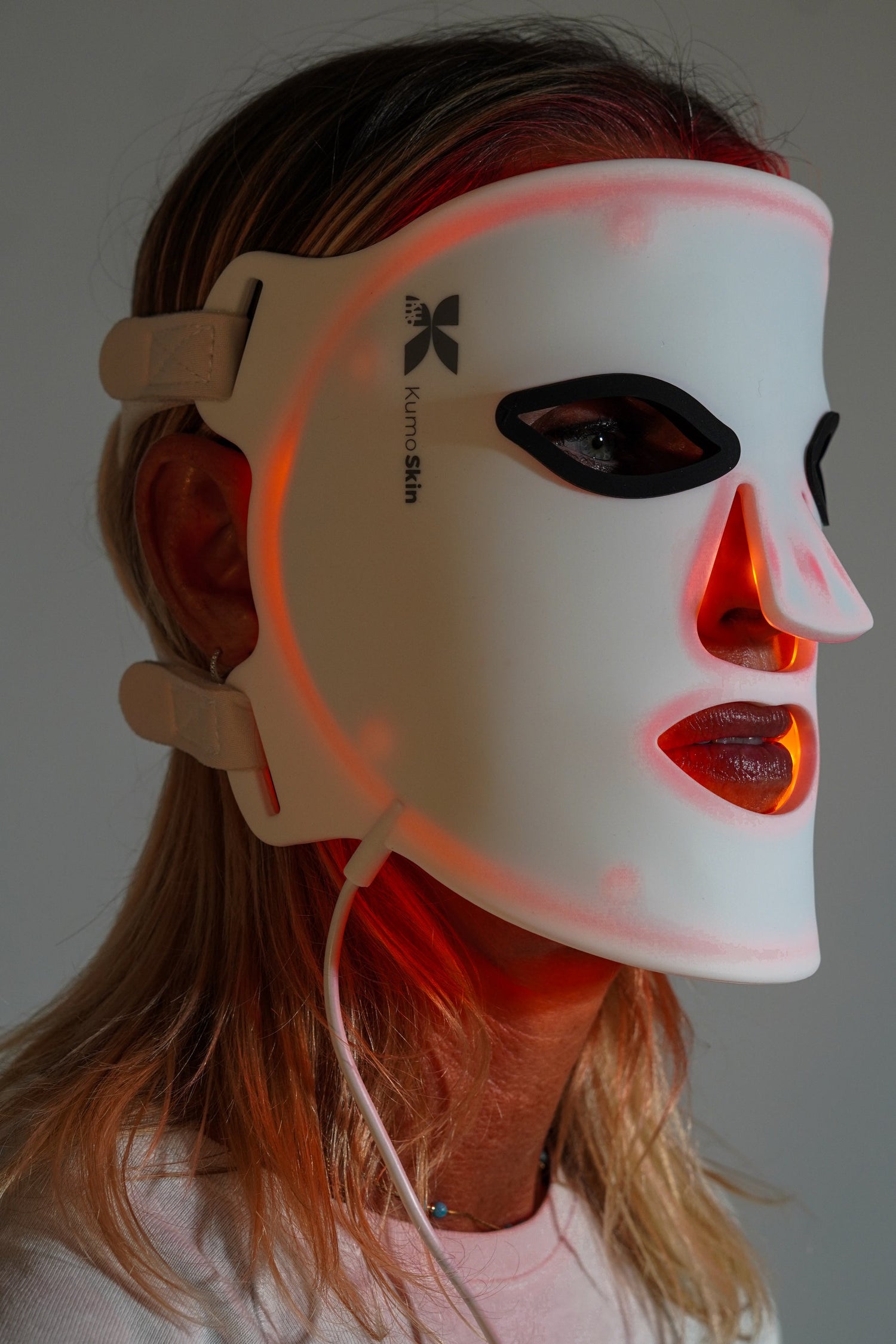
The KumoSkin LED mask helps repair and calm your skin in short sessions at home.
- 250 LEDs in flexible medical silicone
- Red light to boost collagen and glow
- 4 lights: red, infrared, blue and yellow
€299,00€429,00
−10% on your 1st order when you subscribe to the newsletter

In this guide I explain, step by step, how to care for your skin after the gym and when it makes sense to use LED light , with a practical approach aligned with Kumo 's smart recovery philosophy.
What happens to your skin when you sweat every day (and why do breakouts occur)
Sweat + friction + occlusion: the typical post-workout “combo”
Sweat alone doesn't "dirty," but it does create a humid environment that, combined with sebum , residue , tight clothing , and friction (towels, bands, suspenders, mats, helmets), facilitates:
Personalized protocol · included with your purchase
Want us to tell you how to use it in your case?
With your purchase, our experts prepare the ideal LED protocol for your skin type and goal (acne, wrinkles, dark spots...).
Message us on WhatsAppOur experts reply · no obligation
- Clogged pores and pimples (especially on face, back and chest).
- Irritation and redness from friction (mechanical acne / “acne mechanica”).
- Folliculitis or lesions that are mistaken for acne (when there is inflammation around the follicle).
That's why dermatologists recommend simple but very effective actions: shower as soon as possible , cleanse gently, and avoid "rubbing hard," which can worsen outbreaks.
The gym is also a contact environment: hygiene without paranoia
No need to panic: exercise is good for your health. But it's important to remember that microorganisms can be present on shared surfaces in sports facilities. Official organizations like the CDC recommend basic measures: cleaning/disinfecting shared equipment , hand hygiene, and covering wounds.
Key takeaway: The best post-gym "cosmetics" is a quick and gentle cleanse. Technology (like LED light therapy) works best when the skin is clean and soothed.
−10%on your first order when you join the newsletter
We send you the code instantly. No spam.
10-minute post-gym routine (no fuss)
Quick checklist: the minimum that makes a difference
- 0–5 min: change sweaty clothes and pat skin dry (do not rub).
- 5–10 min: Cleanse face/body with warm water and a gentle cleanser (or shower if you can).
- Afterwards: moisturize with a light texture if your skin needs it; if it's daytime, apply sunscreen .
The American Academy of Dermatology (AAD) suggests considering showering immediately after training and washing with a mild , non-comedogenic cleanser, avoiding hot water and friction.
What if you can't shower after leaving the gym?
If you're going straight to work or don't have a shower, prioritize a realistic "plan B":
- Wash your hands and avoid touching your face .
- Remove sweat with a clean gauze/towel by dabbing .
- If you tend to break out, the AAD mentions that it may help to use salicylic acid pads on prone areas until you can shower.
- Change your sports bra/shirt as soon as possible.
As a clinical reference for general information, Cleveland Clinic also emphasizes simple habits: showering after training and changing clothes to reduce "sweat pimples".
LED mask after the gym: when it helps and when it hinders
What can LED lighting offer (realistic expectations)
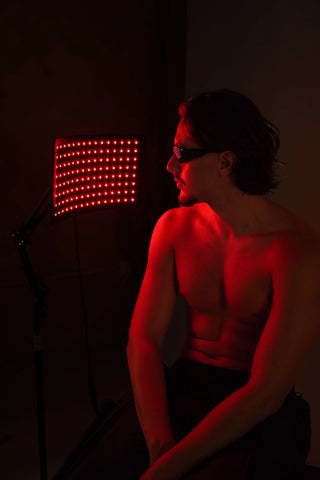
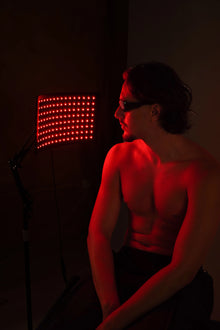
LED light applied to the skin is usually classified as photobiomodulation . At home, it is mainly used for two purposes:
- To soothe and support skin recovery (redness/stress).
- Support anti-aging routines (texture appearance, luminosity) and, in some cases, mild acne.
The AAD explains that red light therapy (red/near-infrared light) is a non-invasive approach and that home devices (including masks) are typically less powerful than those used in clinics. Furthermore, it is usually recommended as a complementary therapy within a treatment plan, not as a substitute for primary care.
In acne, there is evidence in systematic reviews on the use of light (e.g., reviews on blue light or red light in different protocols), but with cautious conclusions: potential, variability between studies and need for more robust trials.
The best time after the gym to use an LED mask
If your goal is for the LED mask to enhance your experience (and not irritate you), the rule of thumb is:
- First, cleanse. Never use LED light on dried sweat, workout sunscreen, or skin with gym grime.
- Wait for your skin to cool down. After intense exercise, a sauna, or a hot shower, wait a few minutes until your skin feels normal (less heat/redness).
- Then LED. The session fits well before thicker creams or potentially irritating active ingredients.
- Finish with simple hydration. A light cream or moisturizing gel is usually sufficient.
Important: The AAD emphasizes that there are still open questions about the optimal “dose” (time/intensity) and that you should follow the device instructions and wear eye protection when indicated.
Signs that today is NOT the day for LEDs
- Very irritated skin , with intense burning or peeling.
- Sunburn or severe inflammatory outbreak.
- If you are using treatments that make you very sensitive (for example, after certain dermatological procedures): it is best to confirm with your dermatologist.
- If you are prone to hyperpigmentation or have skin that is more sensitive to visible light, the AAD recommends consulting a doctor before using devices at home.
Practical protocol: “LED + post-workout” step by step
6-step guide (simple and consistent)
- Shower or facial cleansing with warm water and mild cleanser.
- Pat dry with a clean towel (ideal: exclusively for the face).
- LED mask according to manufacturer's instructions (frequency/time/eye safety).
- Light hydration to reinforce comfort and barrier.
- If it's daytime: sunscreen as the last step.
- Device cleaning (very important): Wipe with a soft cloth and follow the official instructions to avoid residue buildup.
Table: Recommended routine according to your post-gym scenario
| Scenery | Aim | What to do (order) | What to avoid |
|---|---|---|---|
| You leave the gym and you can take a shower | Prevent outbreaks and irritation | Warm shower → gentle cleanser → LED light → light moisturizer | Very hot water; rub hard; stay in sweaty clothes |
| You cannot shower (2–6 h) | Control sweat/residue | Change clothes → gently pat face clean → salicylic acid disc if it works for you → LED light when you get home after cleaning | Applying makeup over sweat; touching your face; reusing a towel |
| You train + sun exposure afterwards | Avoid stains/stress | Cleanser → (LED if it suits you) → moisturizer → sunscreen | Forget SPF; use irritating ingredients right after |
| Reactive or redness-prone skin | Calm and protect the barrier | Very gentle cleansing → wait for the heat to subside → use LED light sparingly → simple hydration | Aggressive post-gym exfoliation; overtreatment due to anxiety |
How Kumo fits into a complete recovery routine (skin + performance)
At Kumo, recovery isn't an extra: it's a habit. If your life is training + work + repetition, you'll want a routine that takes care of your skin and body without adding mental strain.
- For the skin: explore the LED light therapy collection to integrate consistent and well-structured sessions.
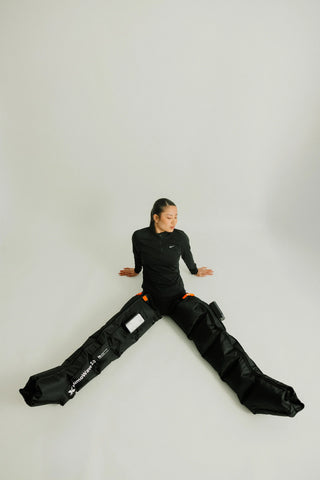
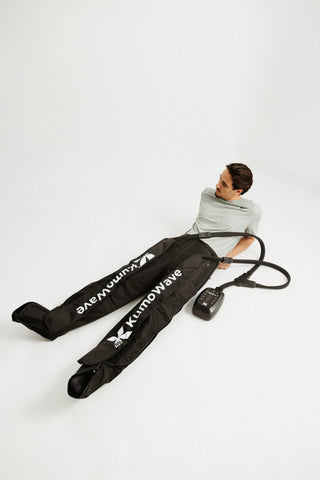
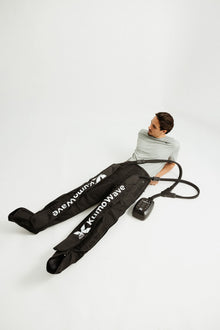
- For tired legs after cardio or strength training: pressotherapy can help you maintain a feeling of lightness within your recovery ritual.
- To relieve muscle tension: a deep and controlled massage with KumoPulse Air fits perfectly into the "after training" routine.
The logic is the same in all cases: consistency, simple protocols, and good execution .
Common mistakes (and how to correct them without wasting energy)
-
Error: using the LED mask with the skin still sweaty or sticky.
Correction: Clean first; the LED is "after hygiene", not "in place". -
Error: rubbing hard to "drag" away the sweat.
Correction: Pat dry; the AAD reminds us that friction can worsen acne. -
Error: accumulating layers of active ingredients after training (acids + retinoids + fragrances).
Correction: Post-gym, prioritize barrier: cleansing + hydration; leave the active ingredients for when your skin is calm. -
Error: ignoring surface and equipment hygiene.
Correction: Clean shared equipment and treat wounds; the CDC recommends hygiene and disinfection as baseline measures in sports facilities.
Frequently Asked Questions (FAQ) about Kumo, gym and LED mask
Can I use a Kumo LED mask right after training?
Yes, but with one condition: hygiene first . After the gym, cleanse your face (ideally in the shower or with a gentle cleanser and lukewarm water), pat dry, and wait for your skin to cool down if you're very hot. Then, use the LED light therapy device following the instructions (including eye safety, if applicable) and finish with a light moisturizer. The AAD reminds us that home devices are best used as a complement to your routine and that consistency is more important than trying to do everything in one day.
Does LED light therapy help with sweat spots and body acne?
It can help in some cases, especially as a support for mild acne, but it's not magic. The AAD explains that light/laser treatments can address papules and pustules (inflamed bumps) and that at-home devices are less powerful than those used in clinics; moreover, there's no way to know which device will work best for you. If your "sweat acne" is heavily influenced by friction/occlusion (tight clothing, helmet), the greatest benefit usually comes from basic habits: quick showers, changing clothes, and gentle cleansing.
What do I do if I'm lazy about my post-gym routine and always put it off?
- change the shirt
- cleanse face/neck by patting
- Shower as soon as you get home. If you want to incorporate LED light therapy, think of it as your end-of-day "signal": cleansing → LED light therapy → moisturizing. The Cleveland Clinic emphasizes that showering after a workout and changing clothes reduces the likelihood of sweat breakouts; that foundation, repeated often makes all the difference. Then, technology adds to the benefits on top of clean, soothed skin.
Is red light safe to use at home with an LED mask?
In general, red light is considered well-tolerated in the short term when used as directed, but there are nuances: Harvard Health points out that it's not like UV radiation (it's not the same as "tanning"), although questions remain about the optimal dose and differences between home devices. The AAD also recommends precautions: follow instructions, consider consulting a dermatologist if you have skin more prone to hyperpigmentation, and wear eye protection if the manufacturer recommends it.
How do I clean my LED mask so it doesn't cause breakouts?
Prioritize one rule: if it touches your face, always clean it . After each session, remove any residue (creams, sebum, residual sweat) with a soft cloth and the method indicated by the manufacturer; avoid wetting or submerging the device if it's not designed for that. Let it dry completely before storing it. And don't share your mask: just like a face towel, it's a personal item. If you still notice breakouts, review the basics: post-gym cleansing, changing clothes, and avoiding friction in the area.
So what now?
If you want to transform your post-gym routine into a complete recovery ritual (skin + body), start with the essentials: quick and consistent cleansing. Then, incorporate technology with intention: discover Kumo's LED light therapy , complement your leg rest with pressotherapy , and release deep tension with KumoPulse Air . If you need guidance, you can contact us through our Contact page .

Facial red light
KumoSkin Mask – LED Facial Mask
★★★★★ 4,8/5 · rated by verified customers
- 250 LEDs in flexible medical silicone
- Red light to boost collagen and glow
- 4 lights: red, infrared, blue and yellow
€299,00€429,00· pay in installments with seQura or Klarna