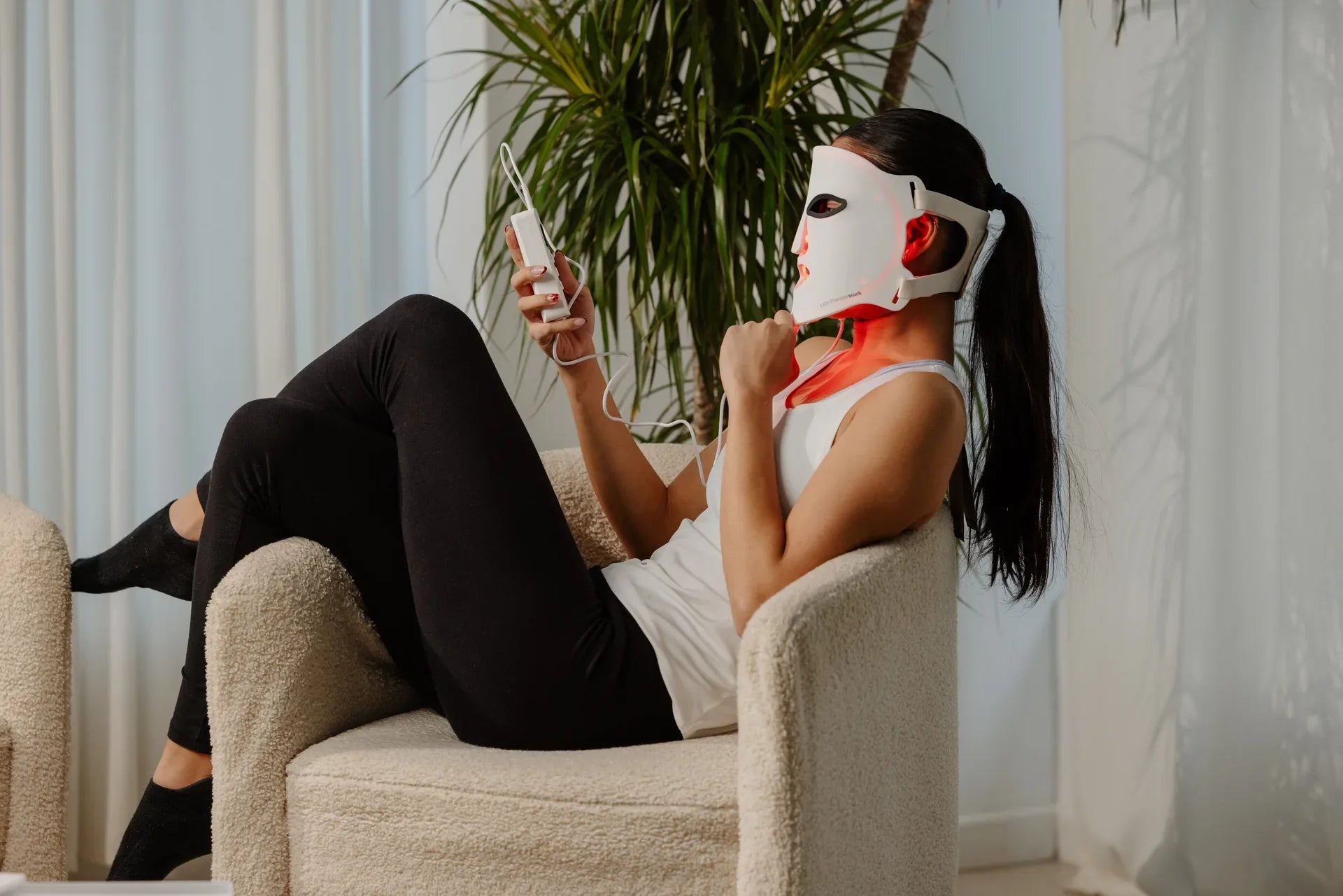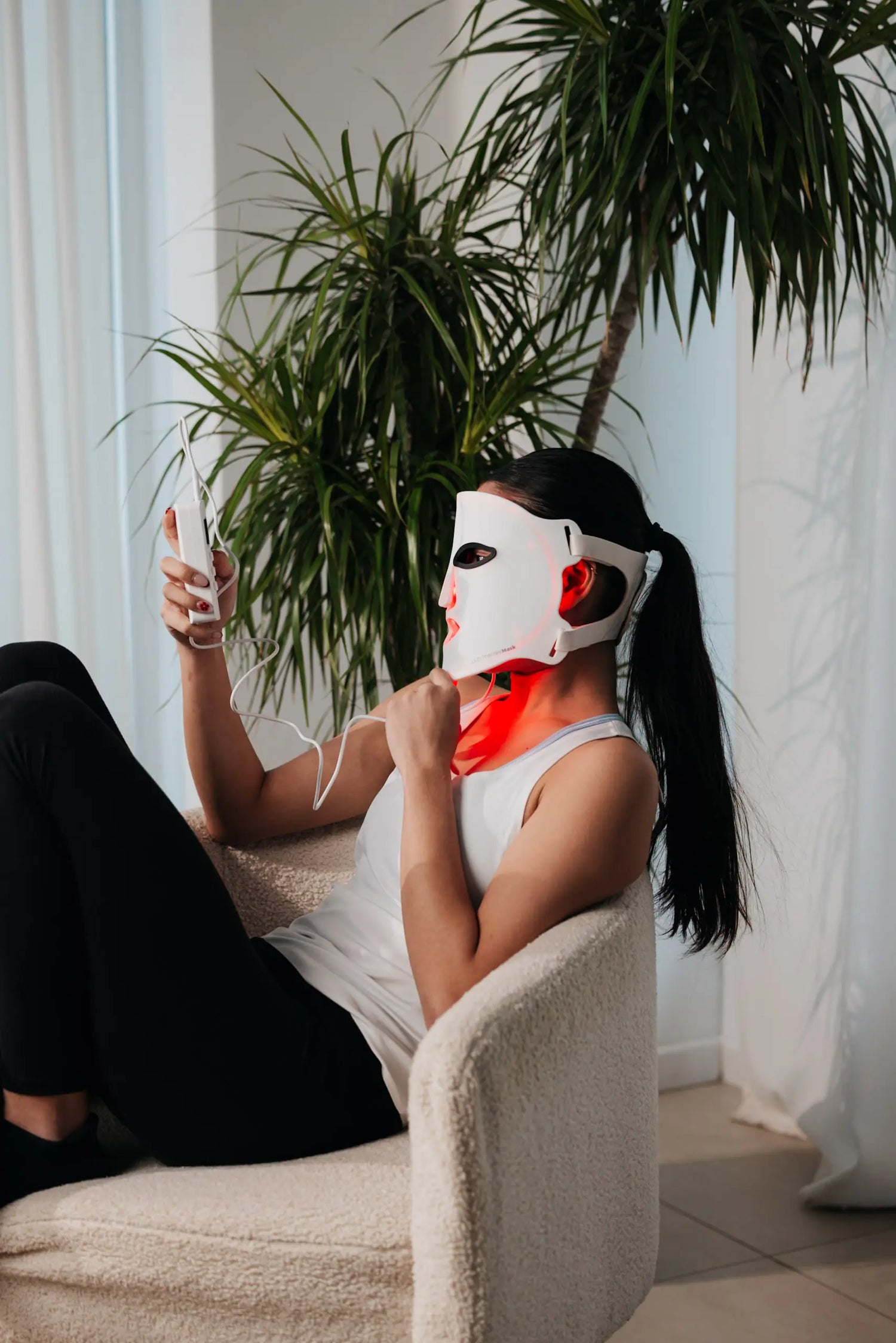
The LED mask doesn't have a magic hour.
If your goal is to improve your skin, consistency outweighs the clock: clinical trials and dermatology guidelines focus primarily on frequency, dosage, and duration, not on demonstrating that a morning session is superior to an evening one. (aad.org)
Red & infrared light
Recover faster, at home
★★★★★ 4,8/5 · rated by verified customers
The KumoLux panel supports muscle recovery with full-body red and infrared light.
- 660 nm red + 850 nm infrared light
- Full-body muscle recovery
- Clinically validated biohacking protocols
€399,00€499,00
−10% on your 1st order when you subscribe to the newsletter

Therefore, the best time slot is usually the one you can repeat with the least friction. In practice, evening often wins for convenience, but morning works just as well if it helps you avoid skipping sessions and follow the device's protocol.
Quick Answer
If you want a single answer: evening is usually more convenient, but morning might give you better results if it helps you maintain the habit. Red light and facial photobiomodulation are studied for their wavelength, dose, and regularity of use; the available literature does not show a clear advantage of "morning" versus "evening" for all cases.
Personalized protocol · included with your purchase
Want us to tell you how to use it in your case?
With your purchase, our experts set up your red and infrared light sessions for your sport and goal.
Message us on WhatsAppOur experts reply · no obligation
The perfect session is the one you do consistently, with clean skin, the correct timing, and the eye protection indicated by the manufacturer.
What the evidence says about facial LED therapy
A 2024 review on photobiomodulation in dermatology summarizes that red light and near-infrared are studied for their ability to modulate inflammation, support tissue repair, and improve signs of skin aging. This same line of research has driven the home use of LED masks in facial care routines.
In published clinical studies with facial masks, typical protocols range from 2 to 3 sessions per week, with sessions lasting about 12 to 21 minutes, and results are evaluated after several weeks of continuous use. For example, a 2023 study used 12 minutes and two weekly sessions for 3 months; another trial compared 2 versus 3 weekly applications for 4 weeks with a 660 nm mask and 21 minutes; and a 2025 multicenter study observed improvements with a 630/850 nm home mask after 16 weeks. (pubmed.ncbi.nlm.nih.gov)
on your first order when you join the newsletter
We send you the code instantly. No spam.
If you want to understand the logic of the treatment first, it will help to review what a facial LED mask is and how it works. This will allow you to better choose your schedule and not confuse consistency with excess.
What is actually repeated in studies
- The most common wavelengths used in facial rejuvenation typically range from 630-660 nm, sometimes combined with near-infrared at 850 nm.
- Sessions are usually short and repeated several times a week, not daily marathons. (pubmed.ncbi.nlm.nih.gov)
- Changes are usually measured in weeks, not days. (pubmed.ncbi.nlm.nih.gov)
If you want a more guided sequence to avoid improvising, you can refer to how to use the facial LED mask step by step.
Morning or night: how to choose without overthinking
The useful comparison is not “light yes or no,” but “which schedule fits best with your life.” This synthesis combines what trials show about frequency and duration with dermatology safety information and the general logic of circadian phototherapy. (nhlbi.nih.gov)
Quick decision table
| Criterion | In the morning | In the evening | Practical reading |
|---|---|---|---|
| Consistency | Very good if you leave in a hurry and want to finish the session before starting the day. | Very good if you like to end the day with a fixed routine. | The best schedule is the one you repeat without extra effort. |
| Clean skin | Works well after cleansing, before SPF and makeup. | Works well after removing makeup and cleansing your skin. | Prior cleansing matters more than the clock. |
| Sleep | Usually interferes less with nighttime rest. | It can be uncomfortable if you leave it too close to bedtime. | If you notice it activates you, do it earlier. |
| Eye protection | Easier to monitor when you're awake and alert. | Easier to neglect if you're already tired. | Never use it while sleeping. |
If you only remember one idea, let it be this: the ideal schedule is one that turns the mask into a sustainable habit, not a pending task.
When it makes sense to use it in the morning
Morning works well if you already have a stable facial routine when you wake up. In that case, the mask becomes an automatic gesture: you cleanse, apply the session, and continue with the rest of your care. If you're someone who runs out of energy at night or skips steps, moving it to first thing in the morning can give you more regularity and, therefore, more chances of seeing results.
It can also be a good option if you take products or medication that increase light sensitivity. The AAD reminds that certain medications and conditions, such as lupus, can make light therapy not the best choice without professional supervision.
When it usually fits better at night
Evening is often the favorite because it fits very well after removing makeup and cleansing the skin, just before finishing the routine. In addition, for many people it is a quieter and easier time to maintain day after day. However, if you put it on too late and notice that the light activates you or makes you uncomfortable, it is advisable to do it earlier. In circadian phototherapy, morning light exposure advances the biological clock, and evening or night light can delay it; although a facial LED mask is not the same as a light box, the general principle helps to understand why it is not worth using it just before bed if it bothers you.
If you also want to know when changes start to become noticeable, check how long it takes to see results.
What matters more than the time
1. Use it on clean, dry skin
Pre-cleansing is one of the most sensible rules for any facial device. Not because the light "doesn't penetrate" the skin, but because it avoids unnecessary barriers, better contact, and a more predictable routine. If you use it haphazardly, with makeup residue or too many products on top, you're most likely complicating the process without gaining results.
2. Respect eye protection
The AAD recommends using eye protection if the device indicates it, and the documentation for an FDA-cleared LED mask describes an eye shield and direct skin contact during the session. In other words: this is not a therapy to improvise half-asleep. If the manufacturer requires goggles or shields, they must always be used.
3. Do not add sessions without criteria
More is not always better. The clinical literature published on facial photobiomodulation usually works with 2 or 3 weekly sessions, not indiscriminate daily sessions. The AAD also emphasizes that therapy should be done regularly and following device instructions, because it is a repeated treatment, not an instant solution.
4. Monitor how your skin responds
The AAD considers that, in the short term, red light therapy appears safe, but reminds that some people may experience mild irritation or not tolerate the treatment well. If you notice persistent redness, itching, burning, or discomfort, reduce the frequency or stop the session. And if you have very reactive skin, it may also help to review the safe use of LED light in rosacea.
5. Consider skin tone and sensitivity
The AAD warns that people with darker skin tones may be more sensitive to visible light, with a higher risk of hyperpigmentation, so it is advisable to consult before incorporating the mask into the routine. This nuance does not mean that LED light is forbidden, but rather that adjusting the protocol is more important than it seems.
If your goal is to customize usage according to what you're looking for, the benefits for each skin guide will help you align expectations with real needs.
The best routine is not the most ambitious, but the one you can repeat without forcing your skin or your schedule.
FAQ
When is it best to use it, in the morning or at night?
There's no strong consensus that one time is objectively superior to the other for everyone. If you're more consistent in the morning, use it then; if you can calmly complete your routine at night, that's often a great option. What you should avoid is leaving it until just before bed if it activates you or makes you uncomfortable, because comfort and eye protection are very important.
How often should I use the LED mask?
It's most prudent to follow the manufacturer's instructions, as each device has its own protocol. Even so, many facial studies work with 2 or 3 sessions per week, not indiscriminate daily use. The idea is to create a stable and sustainable frequency, and to evaluate the skin after several weeks, not to look for changes in a few days.
Can I use the LED mask while sleeping?
Better not. Although some devices are designed for home use, they still require correct placement, supervision, and sometimes eye protection. Sleeping with the mask increases the risk of it shifting, pressing, becoming misaligned, or preventing you from reacting if something irritates you. It's safer to use it while awake and be able to stop the session if you feel discomfort.
What happens if I use the LED mask every day?
Using it more doesn't automatically guarantee more results. Clinical evidence usually works with several weekly sessions, and the AAD insists on following the device's instructions. If the manufacturer allows daily use and your skin tolerates it, it may be valid, but it's not the most supported way to accelerate the process. If irritation or persistent redness appears, it's advisable to reduce the frequency.
How long does each session with the LED mask last?
It depends on the model, but in facial rejuvenation studies, sessions of around 12 to 21 minutes are observed. Some home masks use similar times in protocols lasting several weeks, while other brands adjust the duration by area or program. The important thing is not to exceed the manufacturer's recommended time and to maintain regularity over the weeks.
What now?
If you want to choose the schedule that best fits your routine, start by reviewing KumoSkin Mask, the facial LED mask and, if you need a broader overview of the method, return to the Kumo Balance website. And if you prefer to fine-tune your use step-by-step, also save the home use guide to always have the protocol handy.

Red & infrared light
KumoLux Panel – Red and Infrared LED Panel
★★★★★ 4,8/5 · rated by verified customers
- 660 nm red + 850 nm infrared light
- Full-body muscle recovery
- Clinically validated biohacking protocols
€399,00€499,00· pay in installments with seQura or Klarna