

Good recovery makes all the difference.
If you strength train regularly, the key is not just how much you lift, but how much you recover between sessions. When rest, nutrition, and sleep are well-managed, you can better sustain performance, reduce accumulated fatigue, and approach the next session with higher quality. (pmc.ncbi.nlm.nih.gov)
Red & infrared light
Recover faster, at home
★★★★★ 4,8/5 · rated by verified customers
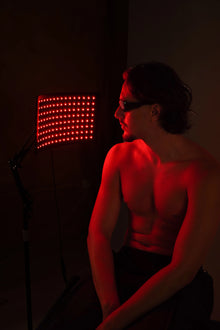
The KumoLux panel supports muscle recovery with full-body red and infrared light.
- 660 nm red + 850 nm infrared light
- Full-body muscle recovery
- Clinically validated biohacking protocols
€399,00€499,00
−10% on your 1st order when you subscribe to the newsletter

What it means to optimize recovery between strength training sessions
Recovery is the interval in which your body restores energy, repairs tissue, and normalizes the nervous system so that the next session can be productive again. A 2024 review on resistance microcycles indicates that lower body, multi-joint exercises with more muscle recruitment, eccentric contractions, or lengthened positions usually require more recovery time; additionally, training to failure can slow the return to the previous level by 24 to 48 hours.
Signs that it's not yet advisable to repeat the same stimulus
The most useful signs are simple: performance drop, DOMS that alters technique, poorer sleep, and persistent fatigue. If several coincide, your body is not yet ready to repeat the same load.
Personalized protocol · included with your purchase
Want us to tell you how to use it in your case?
With your purchase, our experts set up your red and infrared light sessions for your sport and goal.
Message us on WhatsAppOur experts reply · no obligation
- Delay the next heavy session for the same muscle group.
- Turn the next session into technique work, accessories, or gentle mobility.
- First reduce volume before touching the main technique.
Quick guide to rest based on session type
| Situation | Practical Adjustment | Why |
|---|---|---|
| Heavy leg day, multi-joint, eccentrics, or sets to failure. | It is usually prudent to allow 48-72 hours or more before repeating that same pattern. | These stimuli often require more recovery to perform well again. |
| Accessory work or technique session. | Often 24-48 hours are sufficient if the volume was moderate. | The goal is to repeat quality, not to accumulate unnecessary fatigue. |
| Double session or less than 4 hours between sessions. | Use fast carbohydrates and protein to speed up replenishment. | ISSN suggests 1.2 g/kg/h of carbohydrate, or 0.8 g/kg/h of carbohydrate with 0.2-0.4 g/kg/h of protein. (pubmed.ncbi.nlm.nih.gov) |
| Week with short sleep and irregular performance. | Protect 7-9 hours of sleep and reduce load if necessary. | Adults should sleep 7-9 hours and sleeping less than 7 is associated with more problems. (nhlbi.nih.gov) |
The practical conclusion is that the split should protect the quality of the work, not just fill the week with sessions. If a pattern still causes a lot of muscle damage or reduces performance, allow more hours between similar stimuli.
How to plan your split for better recovery
A 2024 meta-analysis found that split and full-body routines do not significantly change strength or hypertrophy when volume is equated. Translated: the label of the split matters less than the actual ability to recover and repeat the work with quality. (pubmed.ncbi.nlm.nih.gov)
Therefore, the best weekly distribution is one that fits your schedule and your fatigue tolerance. A upper/lower split, a three-day full-body, or a push-pull-legs can work very well if you allow the same muscle group to rest and don't chase more sessions due to anxiety.
on your first order when you join the newsletter
We send you the code instantly. No spam.
Three simple ways to split the week
- A three-day full-body if you want short sessions and a frequency that is easy to sustain.
- A four-day upper/lower split if you need a balance between volume and rest.
- A five- or six-day push-pull-legs if you tolerate volume well and don't string together hard leg days too often.
If you want to turn this logic into a coherent week, a weekly recovery protocol with pressotherapy, red light, and massage can serve as a working map.
What to eat for better recovery between workouts
Protein: the foundation of repair
ISSN literature suggests that a useful guideline is to consume 20-25 g of protein at each main meal and allow about 3-4 hours between meals. If you don't feel like eating after training, a protein shake can simply be a convenient way to reach that dose. (pmc.ncbi.nlm.nih.gov)
The important thing is that the muscle receives amino acids several times a day, not concentrating everything in a single meal.
Carbohydrates when recovery is rushed
If you have a double session, a competition, or less than 4 hours between workouts, carbohydrates are key again. ISSN suggests 1.2 g/kg/h of carbohydrate when glycogen needs to be replenished quickly, or 0.8 g/kg/h of carbohydrate along with 0.2-0.4 g/kg/h of protein.
This can translate into an easy-to-digest meal or drink, not improvising with hunger when arriving at the next workout.
Sleep and recovery: the invisible multiplier
Adults should sleep between 7 and 9 hours per night. In 2024, the CDC reported that over a quarter of adults in the United States slept less than 7 hours, a figure that helps explain why so many people train well but don't fully recover.
Furthermore, acute sleep deprivation worsens athletic performance and increases perceived effort. If a strength week feels heavy for no clear reason, before blaming the program, check if you are sleeping less than you think. (pmc.ncbi.nlm.nih.gov)
- Try to maintain regular schedules even on non-training days.
- Reduce screen time and caffeine at the end of the day if you find it hard to sleep.
- Use the night to reduce stimuli, not to continue accumulating mental fatigue.
If you find it hard to unwind at night, a nighttime ritual with red light and relaxation can be a useful reminder to reduce stimuli and protect sleep.
Complementary strategies: compression, red light, and massage
Complementary tools can add up when the basics are already well established. A recent review found that photobiomodulation applied before exercise reduced muscle pain, while post-exercise pneumatic compression did not reduce pain compared to control; furthermore, sports massage does not directly improve performance, although it may somewhat improve flexibility and delayed onset muscle soreness. The practical takeaway is simple: first organize rest and load; then, if it helps, add technological support. (pubmed.ncbi.nlm.nih.gov)
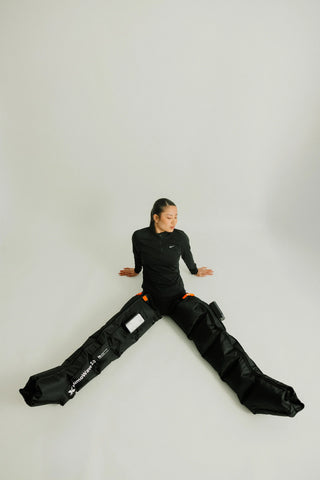
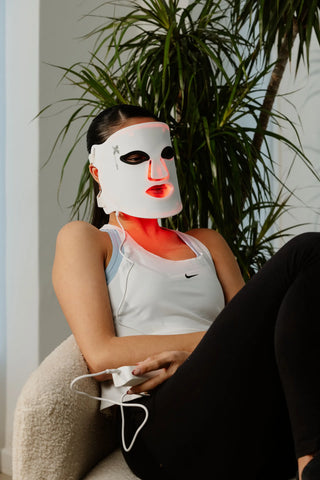
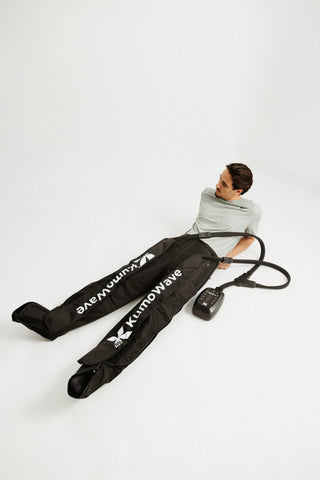
If you are interested in integrating technology at home, KumoWave 2.0 for recovery and circulation can be integrated as a complementary tool, while KumoLux Panel for home photobiomodulation is a way to explore red and infrared light.
For a more manual option, the massage gun guide by muscle group helps organize a brief and more useful self-massage.
In summary, recovery between sessions is not improvised: it is planned. When you adjust your split, food, sleep, and complementary supports, you train hard without paying each week with accumulated fatigue.
Frequently Asked Questions
How long should I wait between strength training sessions to optimize recovery?
The most useful answer is not a fixed number, but a range depending on the session. As a practical rule, very demanding lower body, multi-joint, eccentric, or failure-to-train exercises usually require 48-72 hours or even a little more before repeating the same stimulus. If the session was more technical or with less volume, 24-48 hours may suffice. Also look at performance, soreness, and sleep: if several worsen at once, wait a little longer.
How to plan a bodybuilding split to maximize recovery between strength sessions and avoid overtraining?
If your goal is to maximize recovery and avoid accumulating fatigue, the best split is one that allows you to sustain volume with quality. A 2024 meta-analysis found no clear differences between full-body and split when volume and intensity are equated. Therefore, upper/lower, full-body or push-pull-legs can work equally well if you respect rest between similar stimuli. Start with the easiest option to stick to for weeks, not the most complex one.
What recovery strategies between strength training sessions help improve strength gains and hypertrophy?
The strategies that usually help the most are the most basic ones: intelligently programming load, getting enough sleep, eating protein and carbohydrates according to the time between sessions, and using gentle mobility to reduce the feeling of stiffness. Tools like compression, red light, or massage can add to it, but they don't replace the basic plan. If you notice a drop in performance, the first intervention should be to slightly reduce volume or space out hard work more.
What to eat and what supplements facilitate muscle recovery between strength training sessions?
To recover between strength training sessions, prioritize protein distributed across several meals and, if the next session is soon, add carbohydrates. The ISSN guideline suggests 20-25 g of protein per main meal, with 3-4 hours between meals, and 1.2 g/kg/h of carbohydrate when glycogen needs to be replenished quickly. A protein shake or a carbohydrate drink can be useful if it helps you reach these figures; the important thing is the total, not the format.
How to adapt rest between sets and between days to optimize recovery in strength training?
Between sets, rest should be long enough to maintain technique and quality volume. A 2024 review found that longer rests promote hypertrophy better than very short ones, mainly because they allow for more useful work to be sustained. Between days, think of the same principle: allow more time when the previous session was heavy, with multi-joint exercises or work in an elongated range. If you notice that the bar moves worse, don't cut rest just to stick to the clock. (frontiersin.org)
What now?
If you want to move from theory to a realistic routine, start with the home pressotherapy collection and review Kumo Balance's recovery proposal to fit the plan into your week without adding friction.

Red & infrared light
KumoLux Panel – Red and Infrared LED Panel
★★★★★ 4,8/5 · rated by verified customers
- 660 nm red + 850 nm infrared light
- Full-body muscle recovery
- Clinically validated biohacking protocols
€399,00€499,00· pay in installments with seQura or Klarna