
Your body notices it immediately. After many hours behind the wheel, it's common to feel a stiff lower back and heavy or swollen legs.
The good news is that, in most cases, you can significantly improve with gentle movement, a well-timed break, and a little organization upon arrival. The worst thing you can do is usually going from the car to the couch without giving your body a chance to reset.
Pressotherapy at home
End the day with light legs
★★★★★ 4,8/5 · rated by verified customers
KumoWave pressotherapy boosts circulation and helps drain fluid with sequential compression, in 20-minute sessions at home.
- Boosts circulation and helps drain fluid
- Chamber-based compression, adjustable to you
- Sequential compression that mimics manual drainage
€799,00€999,00
−10% on your 1st order when you subscribe to the newsletter

Stopping, walking for a few minutes, and changing your posture usually provides more relief than enduring until the end of the journey. (hse.gov.uk)
Why a long drive punishes the lower back and legs
As the Mayo Clinic guide on back pain and sitting posture reminds us, spending hours in the same position doesn't help: it's advisable to sit with lumbar support, maintain a neutral pelvis, and change posture frequently. The HSE also recommends a minimum break of 15 minutes every two hours of driving.
Personalized protocol · included with your purchase
Want us to tell you how to use it in your case?
With your purchase, our experts prepare a personalized usage protocol for your case: sport, circulation, fluid retention, pregnancy or lipedema.
Message us on WhatsAppOur experts reply · no obligation
For the legs, the problem is usually different but complementary: the NHS indicates that swelling in the ankles and legs can appear from sitting or standing for too long. Therefore, upon arrival, the first thing should not be to remain still, but to get the circulation moving again. (nhs.uk)
What to do upon arrival to relieve back and leg strain
Think of a simple sequence: get out, walk, release, elevate, and only then sit down again. This order usually makes a real difference when the journey has been long.
- Get out of the car and walk. Take a 5 to 10-minute gentle stroll before sitting down again. The goal is to break immobility and give your back time to "unlock."
- Mobilize ankles, hips, and spine. Circle your ankles, open and close your hips, and perform gentle back extensions if they don't increase pain. The NHS recommends exercises and stretches for back pain.
- Elevate your legs if they feel heavy. Rest them on a chair or pillows for a few minutes to help reduce swelling. The NHS recommends elevating the swollen area and walking to improve blood flow.
- Don't hunch over your phone or laptop. Give your back a neutral posture for at least the first hour after your trip. Changing your posture and not remaining stiff helps prevent discomfort from lingering.
- If you already use pneumatic compression, integrate it as recovery. Compression therapy is used for venous edema and lymphatic disorders, and intermittent pneumatic compression is employed to positively influence venous and lymphatic circulation. (pubmed.ncbi.nlm.nih.gov)
If you want to better understand this approach, what pressotherapy is and how it works explains the basis, and how pressotherapy and lymphatic drainage complement each other helps to see why so many people use it when their legs feel heavy.
on your first order when you join the newsletter
We send you the code instantly. No spam.
How to prepare your car for next time
As the NHS leaflet for drivers on back care reminds us, good lumbar support reduces discomfort, and if necessary, a rolled towel can serve as temporary aid. Mayo Clinic adds that sitting with good lumbar support and changing positions frequently is one of the most useful ways to reduce accumulated tension.
Useful adjustments before starting again
| Adjustment | What to do | Why it helps |
|---|---|---|
| Backrest | Position it so your back is well supported, without reclining too much. | Reduces sustained tension on the lower back and promotes a more neutral posture. |
| Lumbar support | Use a rolled towel or lumbar support if the seat doesn't fill the gap in your back. | Supports the natural arch of the lower back and can reduce postural discomfort. |
| Shoulders and hands | Relax your shoulders and avoid gripping the steering wheel too tightly. | Avoid adding unnecessary muscle tension during a long journey. |
| Stops | Plan a break of at least 15 minutes every two hours of driving. | Breaks immobility and gives legs and back time to recover a little. |
If you're starting gradually with at-home compression, it's worth reviewing how to adjust pressure in mmHg without overdoing it first. Starting comfortably, and not with excessive pressure, is usually the best way to make it a useful routine.
Pressotherapy as post-trip support
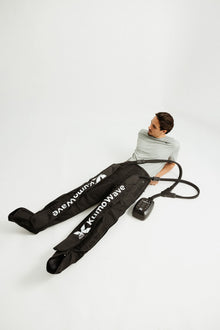
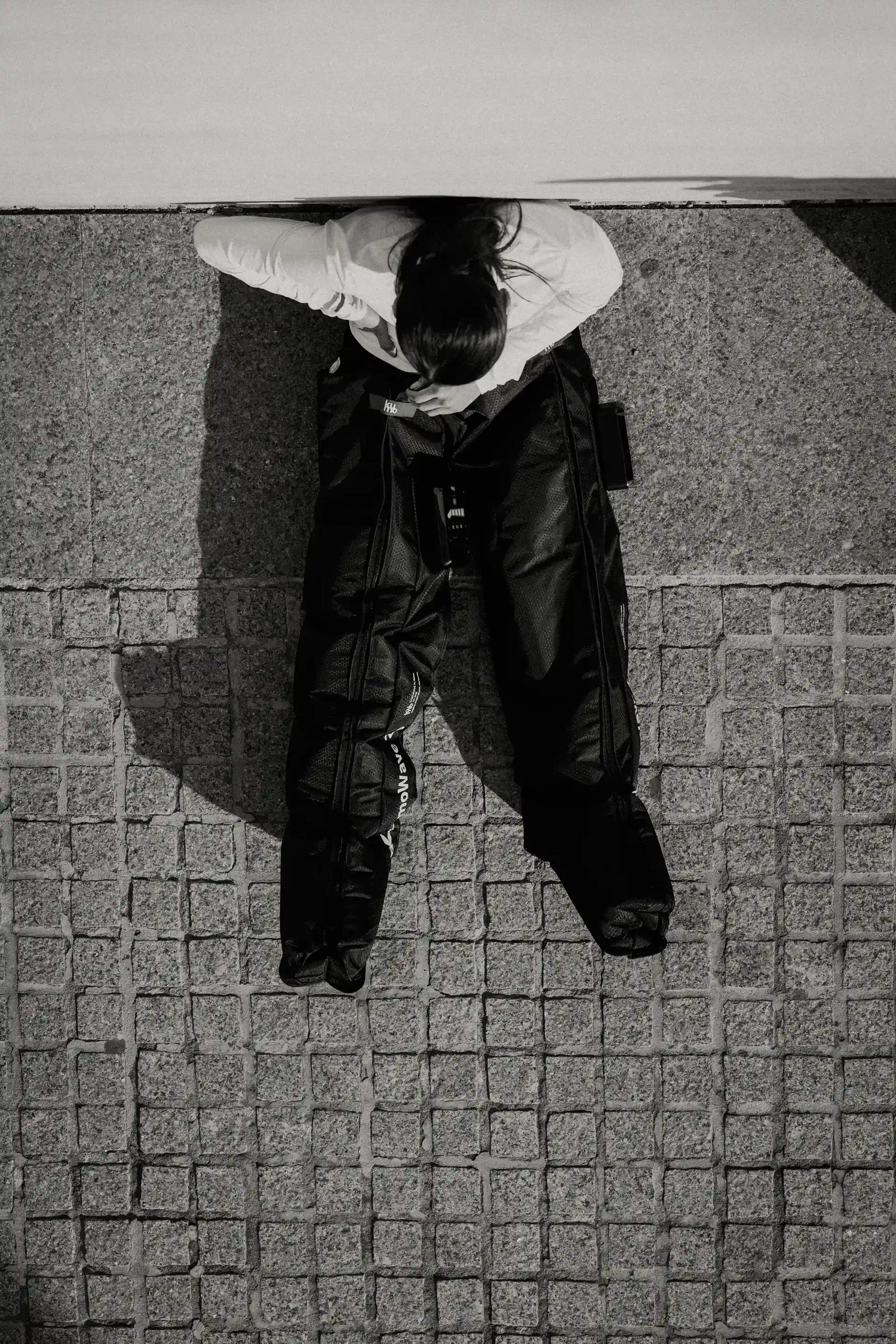
When the main sensation is heavy legs, fluid retention, or general heaviness, pressotherapy can fit as a supportive element within a recovery routine. The value lies in sequential compression, not in "curing" back pain from the trip on its own. If you want a reference for home use, KumoWave 2.0 is specifically designed for this type of home recovery.
If you prefer a broader introduction, the 2025 beginner's guide to home pressotherapy can help you understand when to use it, how to integrate it into your routine, and why many people reserve it for after long days or trips.
When to seek medical help
If the pain pattern changes, doesn't improve, or appears with neurological symptoms, we are no longer talking about simple stiffness. The NHS on back pain and warning signs indicates that it's advisable to seek help if the pain is sudden and very intense, doesn't improve after a few weeks, or started after an accident; Mayo Clinic adds that weakness, tingling, or numbness in the legs also warrant evaluation.
- Pain after an accident or severe blow.
- Weakness, tingling, or loss of sensation in one or both legs.
- Swelling of only one leg, especially if it's red, warm, or painful.
- Shortness of breath, chest pain, or coughing up blood. (nhs.uk)
The idea is simple: if the discomfort improves with movement, you're probably dealing with temporary overuse; if it worsens, becomes unilateral, or is accompanied by other symptoms, it's time to stop and consult.
FAQ about back and leg pain after a long trip
How often should I rest during a long car trip to avoid pain?
The most practical guideline is to stop every two hours and, if possible, dedicate at least 15 minutes to getting out of the car, walking, and moving your body. The HSE, citing the Highway Code, specifically recommends a 15-minute break every two hours of driving. If your back feels strained earlier, don't wait for the exact schedule: take an earlier break. The important thing is not to "endure" longer, but to break immobility before stiffness sets in.
What stretches are most helpful after getting out of the car?
The most useful ones are usually gentle and global: walking for a few minutes, moving your ankles, opening and closing your hips, and doing light lumbar extensions if they don't increase pain. The NHS recommends exercises and stretches for back pain, and the NHS leaflet for drivers suggests thinking about posture, relaxing shoulders, and using lumbar support if needed. Avoid aggressive stretches right after getting out of the car; the idea is to relieve, not force.
Is it normal for my legs to swell after many hours of sitting?
Yes, it can happen. The NHS explains that edema in the ankles, feet, or legs usually appears when you remain seated or standing for too long. In many cases, it improves by walking, elevating the legs, and getting the circulation moving again. The key is to monitor the context: if the swelling is in only one leg, if it's red, warm, or very painful, or if you also experience shortness of breath, it should no longer be viewed as trivial.
When should I consult about back pain after driving?
Consult if the pain doesn't improve after a few days or weeks, if it prevents you from doing your normal activities, if it appears suddenly and very intensely, or if it started after an accident. Mayo Clinic and the NHS also recommend attention if there is weakness, tingling, numbness, or changes in bladder or bowel function. In summary: if the discomfort stops behaving like a temporary overuse, it's advisable to have it evaluated by a professional.
Is pressotherapy only for athletes?
Not necessarily. Although many athletes use it for recovery after exertion, compression therapy is also used in contexts of venous edema and lymphatic disorders. Therefore, it can be suitable for people who spend many hours sitting, travel often, or feel heavy legs at the end of the day. However, it does not replace a medical evaluation if there is unilateral swelling, significant pain, or respiratory symptoms; in such cases, safety comes first.
What now?
If you want to turn these guidelines into a recovery habit, start by visiting the Kumo Balance homepage and review the at-home pressotherapy collection to see which format suits your legs, your rhythm, and the frequency of your trips. If you also want to delve deeper into its use, the information you've read above will serve as a basis for building a more comfortable and consistent routine.
KumoWave pressotherapy
Choose your at-home pressotherapy
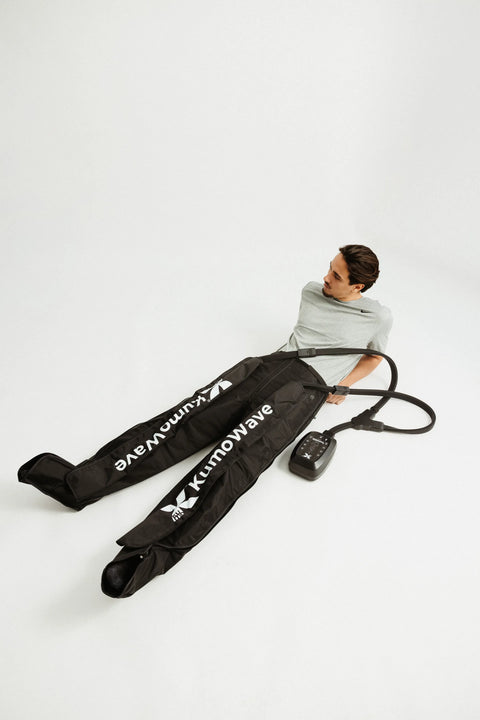
KumoWave Elite – Pressotherapy Pants
Full-coverage trousers. Ideal for lipedema, fluid retention and intensive use.
€799,00 €999,00
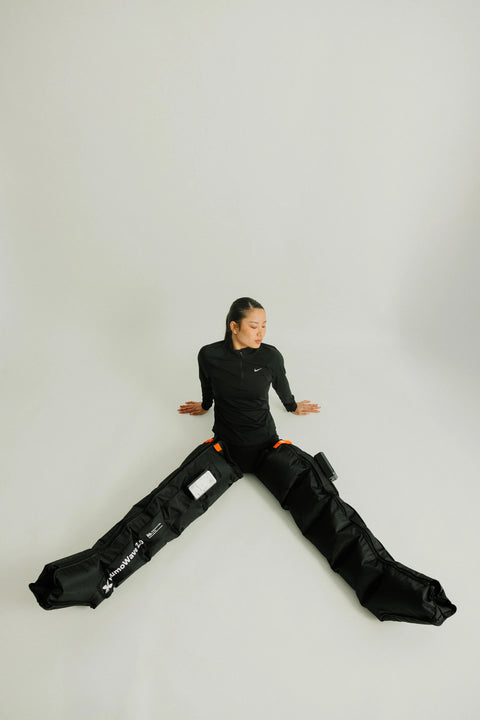
KumoWave 2.0 - Wireless Pressotherapy
Wireless, lightweight boots. Perfect for daily use and recovery.
€499,00 €599,00