
Your legs won't recover on their own.
After many hours of cycling, your body needs a very specific combination: fluids, fuel, and a smart reduction in load. If you handle those first few hours well, it's easier to reduce the feeling of "empty legs," stiffness, and next-day fatigue. (pubmed.ncbi.nlm.nih.gov)
Pressotherapy at home
End the day with light legs
★★★★★ 4,8/5 · rated by verified customers
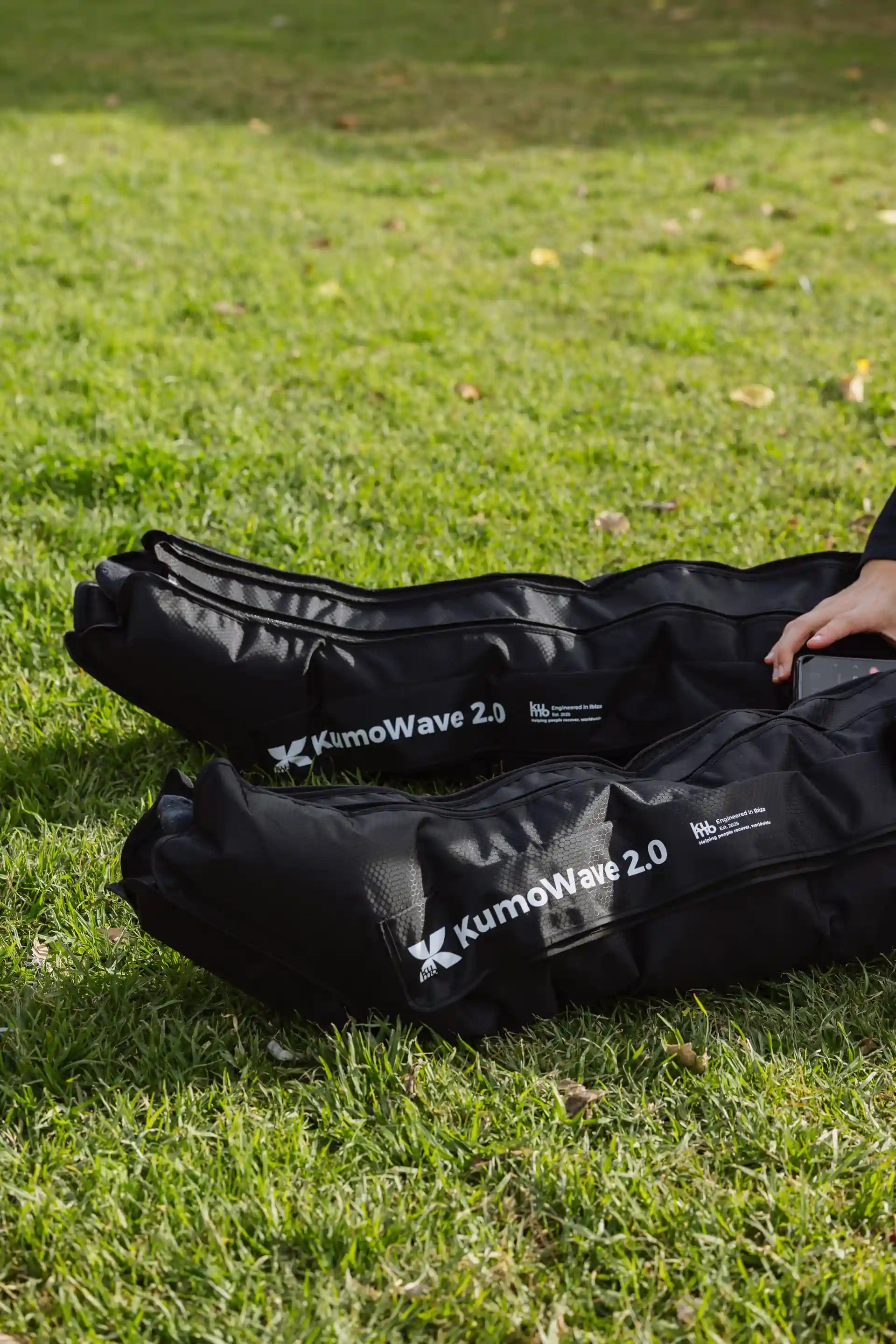
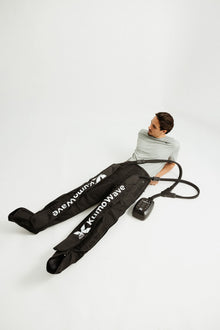
KumoWave pressotherapy boosts circulation and helps drain fluid with sequential compression, in 20-minute sessions at home.
- Boosts circulation and helps drain fluid
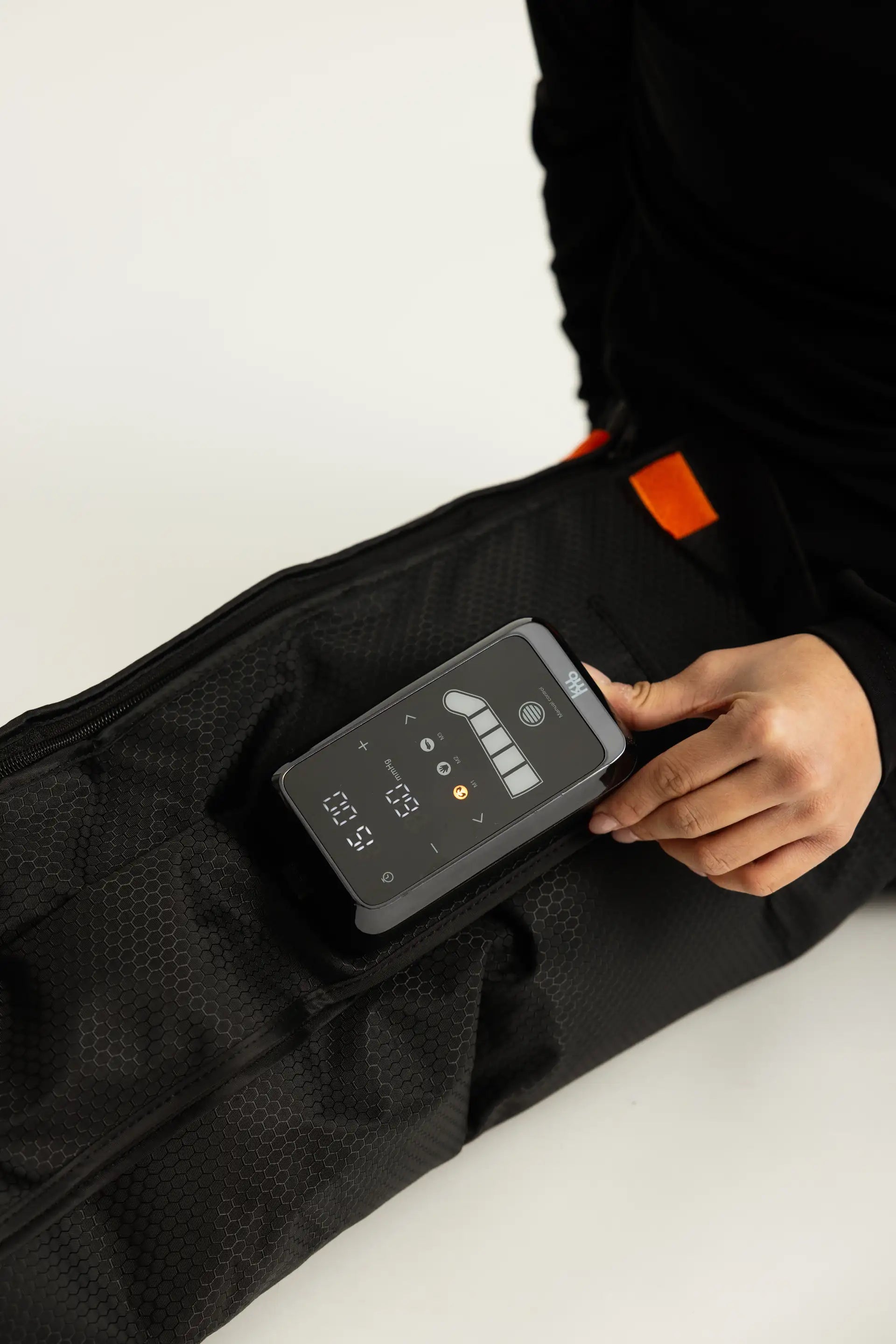
- Chamber-based compression, adjustable to you
- Sequential compression that mimics manual drainage
€799,00€999,00
−10% on your 1st order when you subscribe to the newsletter

What happens to your body after a long ride
A long ride involves several things simultaneously: glycogen depletion, fluid and sodium loss through sweat, muscle micro-damage, and nervous system fatigue. This is why you might feel heavy legs, cramps, a "hollow" sensation, or less spring in your step when going down stairs. Sports recovery literature emphasizes that when the goal is to perform again soon, the priority is to replenish carbohydrates, protein, and fluids, not just to "rest."
The 4 priorities for the first 2 hours
If you could only do four things after finishing, make them these. It's a simple way to manage recovery without overcomplicating things or turning your return home into another training session. (pubmed.ncbi.nlm.nih.gov)
Personalized protocol · included with your purchase
Want us to tell you how to use it in your case?
With your purchase, our experts prepare a personalized usage protocol for your case: sport, circulation, fluid retention, pregnancy or lipedema.
Message us on WhatsAppOur experts reply · no obligation
- Rehydrate intelligently. After prolonged exertion, you don't just lose water; you also lose sodium. Post-exercise hydration guidelines indicate that replenishing fluids with sodium helps better restore water balance and retain what you drink, especially if you've sweated a lot or it's been hot. (pubmed.ncbi.nlm.nih.gov)
- Eat carbohydrates and some protein. If you need to recover quickly because you have another ride, session, or competition coming up soon, a practical guideline is about 1.2 g of carbohydrates per kg per hour in the first few hours, with protein in the range of 0.2–0.4 g/kg/h. If you're not in a hurry, a complete and sufficient meal within the day is usually enough.
- Move your legs a little, but very gently. A walk, light mobility exercises, or a few minutes of easy pedaling can help reduce stiffness without adding more stress. The evidence for active recovery varies for performance, but it can provide a subjective sense of relief and facilitate the transition between exertion and rest. (pubmed.ncbi.nlm.nih.gov)
- Start prioritizing sleep. Recovery also happens when you sleep. Reviews on sleep and sport identify it as an important factor for performance, repair, and overall well-being. After a long cycling tour, a long and regular night's sleep weighs more than any isolated trick.
24-hour plan after a long ride
| Time | Goal | What to do | What to avoid |
|---|---|---|---|
| 0–2 hours | Rehydrate and replenish energy | Drink with sodium, eat carbohydrates and protein, and do a few minutes of easy movement. | Go straight to the couch without eating or drinking, or do another intense session. |
| 2–12 hours | Reduce residual load | Eat normally, walk, move gently, and, if it suits you, use compression as support. | Force aggressive stretching or add extra volume "to loosen up." |
| 12–24 hours | Consolidate recovery | Prioritize a complete dinner, good hydration, and sufficient sleep. | Use fatigue as an excuse to train hard "to see if it goes away." |
| 24–48 hours | Assess true sensations | If you feel good, return with a gentle ride; if you still feel heavy, maintain active recovery or rest. | Confuse normal stiffness with a signal to push harder. |
This outline summarizes what best aligns with recommendations for nutrition, hydration, active recovery, and sleep: first replenish the basics, then add complementary tools.
Think of recovery as a combination: fuel, fluids, gentle movement, and rest. External tools help most when they reinforce this foundation, not when they try to replace it.
What tools can help and what needs clarification
Stretching, yes, but don't expect miracles
Gentle stretching can provide a sense of relief and improve mobility, but systematic reviews do not find clinically significant reductions in muscle soreness from stretching alone. In other words, they can be part of your routine, but they should not be the primary tool for recovering very tired legs. (pubmed.ncbi.nlm.nih.gov)
on your first order when you join the newsletter
We send you the code instantly. No spam.
Foam roller and self-massage: useful, but with realistic expectations
Foam rolling seems to primarily help with range of motion and the perception of recovery. Reviews and meta-analyses published in 2019 and 2020 suggest it can be useful after exercise that causes muscle damage, although its effect is not magical nor does it replace sleeping and eating well. If it provides relief, use it as a brief and convenient supplement. (pubmed.ncbi.nlm.nih.gov)
Compression: mixed evidence, often helpful sensation
Compression garments and systems are popular in cycling because many people report less leg heaviness the next day. However, the evidence is mixed: a 2017 meta-analysis found small benefits in recovery and performance, while another in 2022 did not observe clear effects on preserving strength after exercise. The practical conclusion is simple: it can be a support, but not the foundation of your recovery. (pubmed.ncbi.nlm.nih.gov)
If you are looking for a specific reference to integrate this idea at home, the home pressotherapy collection shows how compression fits into routines for heavy legs, and this article on the benefits of pressotherapy for legs helps you understand when it makes the most sense to use it.
Red and infrared light: promising supplement, not a shortcut
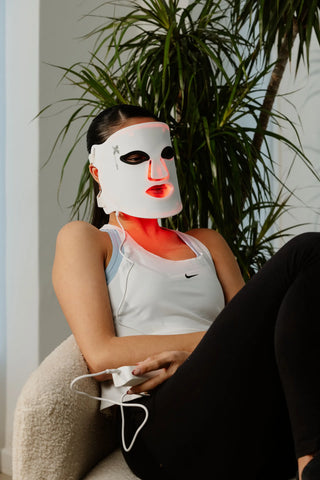
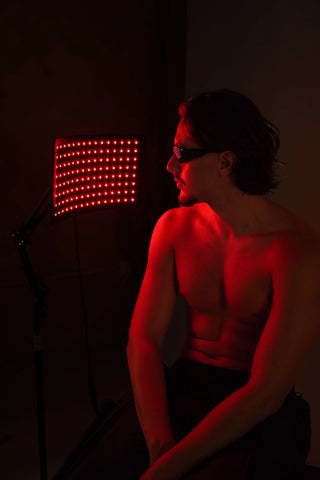
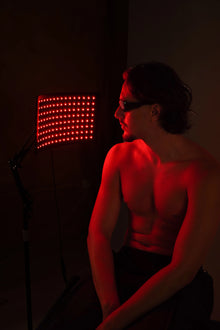
Photobiomodulation is being studied as support for muscle performance and recovery. A 2025 systematic review on whole-body light application and a 2024 meta-analysis on photobiomodulation before exercise suggest promising, but still heterogeneous, results. It is reasonable to view it as another supplement, not a definitive solution. (pubmed.ncbi.nlm.nih.gov)
Massage gun: can provide relief, but doesn't work magic
Percussion massagers can be useful for subjective feelings of relief and comfort, although systematic reviews continue to show variable results regarding objective recovery. If you use one, keep it brief, pain-free, and as part of a broader strategy. (pubmed.ncbi.nlm.nih.gov)
If you want a simple rule, stick with this: first replenish fuel and fluids, then relieve your legs with gentle movement or compression, and let sleep do the rest.
Common mistakes that prolong fatigue
Many cyclists don't recover worse by doing "too little," but by doing too much of the wrong things. Avoiding these pitfalls usually improves recovery more than seeking a miraculous trick.
- Don't turn a recovery session into a demanding ride "because the legs are already there."
- Don't use intense stretching as a substitute for food, water, and sleep.
- Don't drink water indiscriminately without considering sodium if you've sweated a lot.
- Don't normalize a strange, unilateral, or increasingly intense discomfort.
When to go from normal recovery to seeking help
After a cycling tour, a certain degree of pain or stiffness is to be expected. What should not be normalized is very marked swelling, disproportionate pain, intense weakness, significant heat or redness in a single leg, or brown, reddish, or cola-colored urine. These signs can point to something different from typical sports fatigue. (medlineplus.gov)
- Seek medical attention if the pain clearly worsens despite rest and reduced load.
- Seek urgent help if one leg swells significantly, becomes hot, or reddened.
- Consult as soon as possible if you notice dark urine, unusual weakness, or significant general discomfort.
FAQ about leg recovery in cycling
What should I do as soon as I get off the bike to recover better?
The most useful things are simple: drink, eat, and move a little. Rehydrate with fluids that help replenish sodium if you've sweated a lot, consume carbohydrates with some protein, and do a few minutes of very gentle pedaling, walking, or mobility exercises. This combination covers the body's three real needs after a long ride: recover energy, rebalance fluids, and reduce accumulated tension. If you feel like stretching gently or using compression afterwards, that's fine, but as a supplement.
How long do I need to recover before training hard again?
There's no universal number because it depends on the length of the ride, the heat, your training level, and whether you had reserves left. As a practical rule, after a long cycling tour, many people feel better with 24 to 48 hours of recovery before a demanding session. If you still have very heavy legs the next day, only do easy spinning or active rest. Sleep and nutrition make more of a difference than trying to "force" a hard workout too soon.
Is pressotherapy useful after a long ride?
It can serve as a supplement, especially if you like the feeling of lighter and relieved legs. However, the evidence for compression is mixed: some studies show small benefits, while others find no clear improvements in recovered strength. Therefore, it should be seen as an aid, not an obligation or the centerpiece of your recovery. If it's comfortable for you and you integrate it with hydration, food, and sleep, it can fit very well into a realistic routine.
Does stretching relieve muscle soreness after a cycling tour?
Gentle stretching can provide a sense of relief, but it has not been shown to lead to clinically significant reductions in muscle soreness on its own. If you like to stretch, do it briefly and comfortably, without pain or bouncing. To better recover tired legs, it is usually more useful to combine food, fluids, sleep, and, if you like, foam rolling or compression. In short: stretching can add to your well-being, but it should not be the primary strategy.
What now?
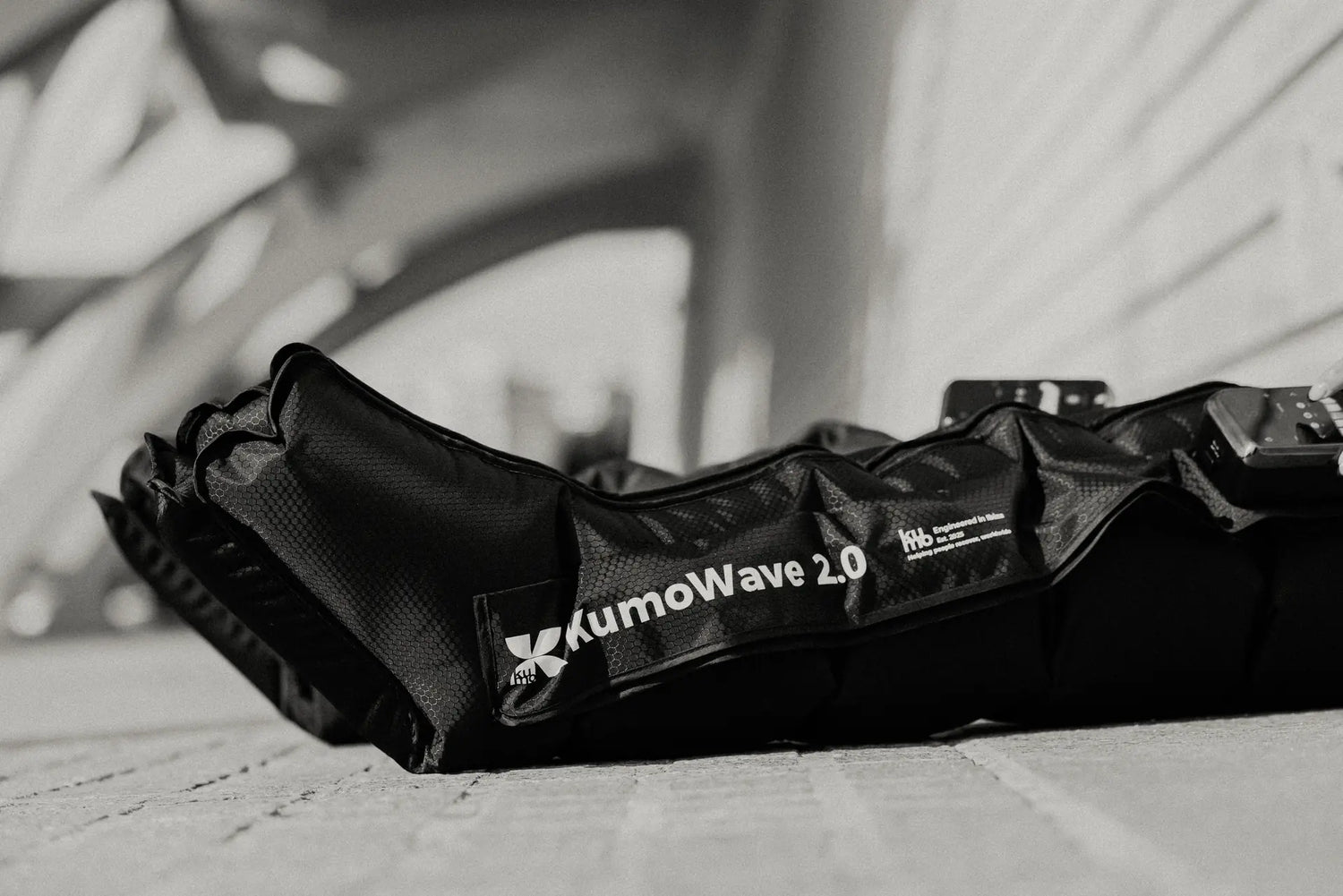
If you want to turn recovery into a true routine, start with an easy-to-maintain tool: review the step-by-step guide for using pressotherapy at home, consider whether an option like KumoWave 2.0 fits your recovery style, and return to the Kumo Balance website to see the complete wellness and recovery approach.
KumoWave pressotherapy
Choose your at-home pressotherapy
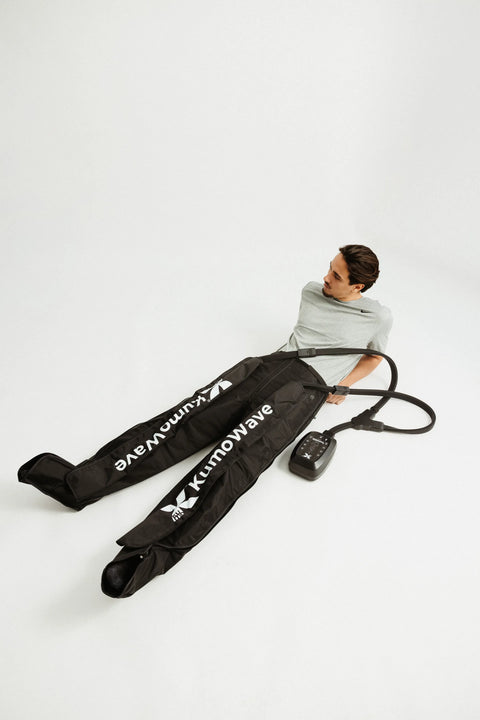
KumoWave Elite – Pressotherapy Pants
Full-coverage trousers. Ideal for lipedema, fluid retention and intensive use.
€799,00 €999,00
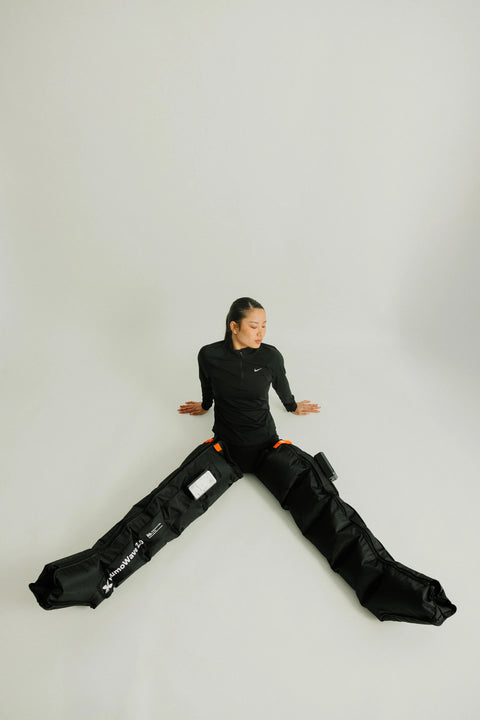
KumoWave 2.0 - Wireless Pressotherapy
Wireless, lightweight boots. Perfect for daily use and recovery.
€499,00 €599,00