

It hurts on the inside. When the pain is located a few centimeters below the inner joint line, pes anserine is one of the causes first considered, although it is not the only one. The AAOS guide on pes anserine bursitis describes it as irritation on the inner side of the knee, near the insertion of three tendons and a small bursa, with local pain and tenderness. (orthoinfo.org)
In practice, the term "pes anserine tendinitis" is often used as an umbrella term for tendinopathy, bursitis, or a combination of both, because those structures are very close to each other. This explains why the pain may resemble that of other knee injuries and why a thorough examination matters more than the exact label. (ncbi.nlm.nih.gov)
Pressotherapy at home
End the day with light legs
★★★★★ 4,8/5 · rated by verified customers
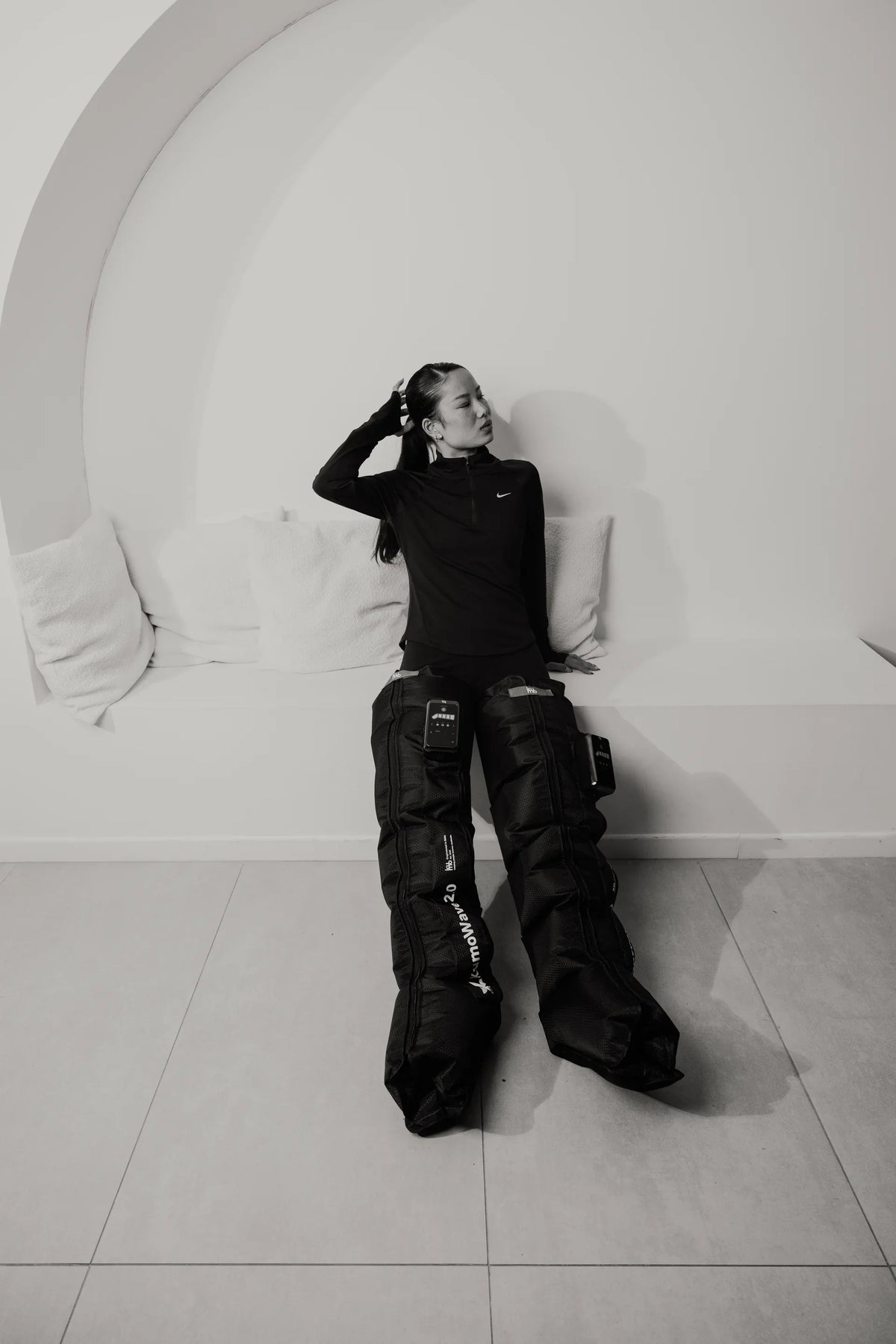
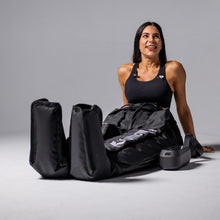
KumoWave pressotherapy boosts circulation and helps drain fluid with sequential compression, in 20-minute sessions at home.
- Boosts circulation and helps drain fluid
- Chamber-based compression, adjustable to you
- Sequential compression that mimics manual drainage
€799,00€999,00
−10% on your 1st order when you subscribe to the newsletter

This text is for informational purposes and does not replace an individual medical assessment.
What exactly is pes anserine
Pes anserine, or the goose foot, is the area where the tendons of the sartorius, gracilis, and semitendinosus converge on the inner part of the tibia. Between those tendons and the bone is a bursa that reduces friction. When that area becomes irritated, pain appears on the inner side of the knee, below the joint line, often with tenderness to touch.
Personalized protocol · included with your purchase
Want us to tell you how to use it in your case?
With your purchase, our experts prepare a personalized usage protocol for your case: sport, circulation, fluid retention, pregnancy or lipedema.
Message us on WhatsAppOur experts reply · no obligation
That is why, in articles and consultations, "pes anserine tendinitis" often does not mean only tendon inflammation, but pain throughout that anserine complex. This anatomical proximity also makes it difficult to always distinguish between bursitis and tendinopathy.
Why the inner side of the knee hurts
The most common cause is mechanical overload. The AAOS points out that the pain is usually related to repeated friction and stress, and it is frequently seen in people who run, swim, or cycle, as well as in sports with changes in direction. It also mentions factors such as tight hamstrings, a sudden increase in training volume, hills, flat feet, genu valgum, and knee osteoarthritis.
The evidence is not identical in all studies. A 2007 case-control study found an association with genu valgum deformity, alone or together with collateral instability, but did not confirm a clear relationship with obesity, osteoarthritis, or diabetes in that sample. In other words, the mechanical pattern seems more solid than a single universal cause.
on your first order when you join the newsletter
We send you the code instantly. No spam.
If the pain appeared after increasing hills, repetitions, or time with the knee flexed, it is advisable to think about the overall load on the joint, not just the exact point of pain. For general context, you can read how to manage muscle tension around the joint, a useful approach to understanding why some overuse discomfort persists.
Symptoms that usually guide the diagnosis
Typically, there is progressive pain on the inner side of the knee, about 5 to 7 cm below the joint line, with tenderness when pressing that area. It usually worsens when going up or down stairs, repeatedly flexing the knee, or sitting for a long time with the knee bent. There may also be slight swelling or a feeling of discomfort at the start of movement.
A practical detail: if the pain is more on the joint line than below it, or if clicking, locking, or significant effusion appears, other causes of medial knee pain should be considered. In a clinical series published in 2005, the most common presentation of pes anserine was even confused with a medial meniscus tear. (pubmed.ncbi.nlm.nih.gov)
How it differs from other knee injuries
Useful differences for initial guidance
| Possible cause | What usually predominates | Why it can be confused |
|---|---|---|
| Pes anserine | Pain and tenderness on the inner side, slightly below the joint line, often with discomfort when climbing stairs. | The area is very close to the meniscus and the medial collateral ligament, so the pain may seem deeper than it really is. |
| Medial meniscus tear | Pain on the joint line, sometimes with locking, clicking, or a catching sensation. | It can cause medial pain very similar to pes anserine, especially when walking or bending over. |
| Medial collateral ligament sprain | Pain after a twisting or valgus movement, often with pain more related to the inner side of the knee. | It shares the location and can coexist with other medial discomforts. |
| Stress fracture | Pain with weight-bearing that tends to increase if the effort is maintained. | The AAOS lists it among the conditions that can mimic this pathology. |
The key idea is simple: the exact location of the pain, what triggers it, and how it started help much more than the name of the diagnosis. That is why, if a medial discomfort does not fit well, it is worth not closing the case too soon.
How it is usually studied in the clinic
The clinical examination usually begins with palpation of the inner side of the tibia and questions about activities that repeatedly bend the knee. The AAOS indicates that the diagnosis is primarily clinical, but also reminds that the symptoms can resemble a meniscal or medial collateral ligament injury. If the presentation is unclear, ultrasound or MRI may be considered to rule out other causes.
It must be remembered that clinical accuracy is not always perfect. A 2021 study on the diagnostic accuracy of this syndrome showed that clinical assessment can fail compared to imaging, something that reinforces the usefulness of a medical review when the pain persists or does not fit the typical pattern. (pubmed.ncbi.nlm.nih.gov)
If there is also an inability to bear weight, a very swollen knee, fever, local heat, or redness, the priority is no longer to label a tendinitis, but to rule out a more serious problem. MedlinePlus and the NHS recommend medical assessment in those cases. (medlineplus.gov)
What conservative management usually includes
In the reference literature, the initial approach is usually conservative: adapting the load, temporarily avoiding movements that trigger the pain, using ice if so indicated by the professional, and considering physical therapy or guided exercises. The AAOS also mentions anti-inflammatories and injections in some contexts, always within a medical assessment. It is not about "forcing" recovery, but about letting the irritation subside while correcting the mechanical factor that maintains it.
If the onset coincided with a sudden increase in mileage, you may be interested in a general overview of runner recovery after a long run, because many overuse discomforts stem from a poorly dosed transition between load and rest.
Prudent measures that are usually part of the conservative approach
- Reduce for a few days the activities that trigger the pain, especially repeated stairs, hills, and sustained knee flexion.
- Apply ice protected with a cloth in short periods if so instructed, without putting ice directly on the skin.
- Ask for a review if the pain does not improve, if swelling increases, or if locking, deformity, or inability to bear weight appears.
- Do not start anti-inflammatories on your own if you are pregnant, breastfeeding, under 18, or have kidney, liver, or heart disease. (medlineplus.gov)
MedlinePlus also reminds that ibuprofen may require special caution in people with heart, kidney, or liver disease, and that during pregnancy it may pose risks from around 20 weeks. That is why, when there are doubts, the decision should be individualized by a doctor or pharmacist.
If you gradually return to exercise, it is also advisable to review the basic habits surrounding recovery. A general guide on that topic is how much water you really need.
FAQ on pes anserine tendinitis
What is pes anserine tendinitis and where exactly is it located in the knee?
It is a practical way to call the pain that appears in the area where the sartorius, gracilis, and semitendinosus insert, on the inner side of the knee. The AAOS places it about 5 to 7 cm below the joint line. The anserine bursa is also in that area, so in practice, tendons and the bursa overlap. That is why sometimes tendinopathy, bursitis, or pes anserine tendinobursitis is mentioned.
What are the most common causes of pain on the inner side of the knee related to pes anserine?
The most common is mechanical overload: running too much, climbing hills, repeating knee flexion, working with tight hamstrings, or making sudden changes in load. The AAOS also mentions flat feet, genu valgum, and knee osteoarthritis as factors that can contribute. Even so, a 2007 study did not confirm obesity or osteoarthritis as associated factors in its sample, which reminds us that there is no single universal cause.
What symptoms are typical of pes anserine tendinopathy in the knee?
It usually appears as progressive pain on the inner part of the knee, tenderness when touching the area, and discomfort when going up or down stairs. Some people notice stiffness or pain after sitting for a long time with the knee bent. The area may be slightly swollen or more "loaded" at the start of activity. If the pain is on the joint line, if there is locking, or if the movement that causes it was a clear twist, other causes should be considered.
How is pes anserine tendinitis diagnosed and what professional should you consult?
The diagnosis usually begins with a clinical examination, so it is reasonable to first consult a family doctor or an orthopedic surgeon. The professional palpates the area, asks about the training load, and assesses if the pattern fits. If the presentation is doubtful or does not improve, they may order an ultrasound or MRI to rule out meniscus, medial collateral ligament, or other injuries. The NHS also reminds that knee pain that does not improve in a few weeks deserves a review.
How is recovery from pes anserine tendinitis usually approached?
Clinical reference points to a conservative approach: reducing the load that causes pain, adapting the training, using ice if indicated, and working on mobility or strength with a professional. In some cases, medications or injections are considered, but that always depends on the clinical situation and should not be improvised. If there is pregnancy, breastfeeding, kidney, liver, or heart disease, or if you take other medications, prudence dictates consulting a doctor or pharmacist beforehand.
And now what?
If you want to keep reading about overuse discomfort and smart recovery, start with Kumo Balance and continue with this guide on muscle tension around the joint. If the pain changes, increases, or significant swelling appears, the right thing to do is seek medical assessment and not keep training as if nothing happened.
KumoWave pressotherapy
Choose your at-home pressotherapy
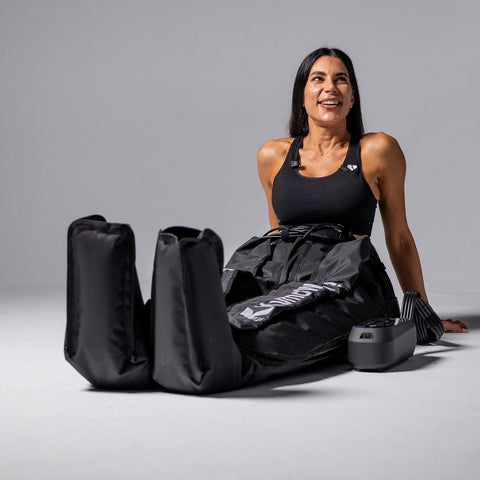
KumoWave Elite X – Pressotherapy Pants
Full-coverage trousers. Ideal for lipedema, fluid retention and intensive use.
€799,00 €999,00
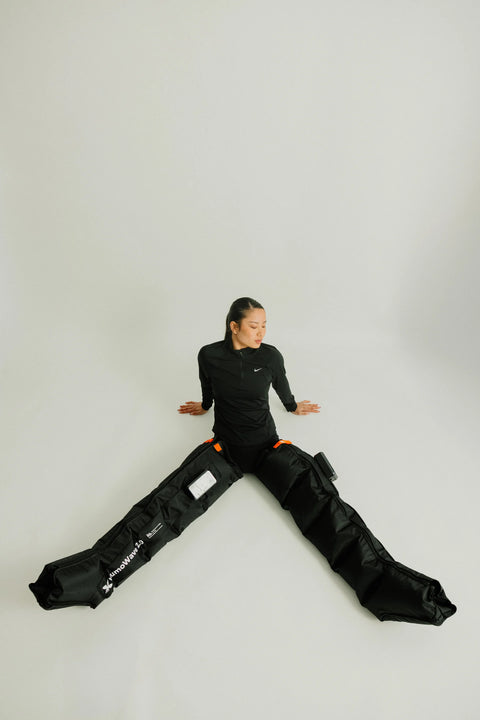
KumoWave 2.0 - Wireless Pressotherapy
Wireless, lightweight boots. Perfect for daily use and recovery.
€499,00 €599,00