

There is no magic number. If your legs swell, what usually helps most is moving often and avoiding long blocks of sitting still. The general recommendation for adults is to add up regular activity across the week, not to chase a perfect step count in a single moment. (who.int)
Walking activates the calf muscle pump and supports venous return, which is why legs tend to feel lighter when you alternate movement and active rest. When you stay still for too long, that return flow works less well and the heavy feeling shows up sooner. (nhs.uk)
Pressotherapy at home
End the day with light legs
★★★★★ 4,8/5 · rated by verified customers
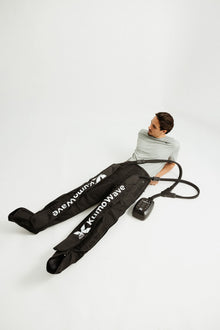
KumoWave pressotherapy boosts circulation and helps drain fluid with sequential compression, in 20-minute sessions at home.
- Boosts circulation and helps drain fluid
- Chamber-based compression, adjustable to you
- Sequential compression that mimics manual drainage
€799,00€999,00
−10% on your 1st order when you subscribe to the newsletter

The short answer
If you need a practical benchmark, think of 7,000 steps a day as a rough starting point for general health, not as a medical rule for edema. A 2025 review linked 7,000 steps a day with better overall health compared with 2,000, and a 2024 umbrella review placed broad benefits at around 8,000 to 10,000 steps in younger adults, with 6,000 to 8,000 in older people.
A practical benchmark for your day
What matters is not only how many steps you take, but how you spread them out. The WHO recommends between 150 and 300 minutes of moderate activity per week, and the NHS advises cutting sitting time with regular movement. Translated into real life, that means mini walks count too, and they count a lot.
Personalized protocol · included with your purchase
Want us to tell you how to use it in your case?
With your purchase, our experts prepare a personalized usage protocol for your case: sport, circulation, fluid retention, pregnancy or lipedema.
Message us on WhatsAppOur experts reply · no obligation
| Situation | Rough target | What matters most |
|---|---|---|
| Normal day, no persistent symptoms | 7,000 to 10,000 steps spread across several blocks | Ending the day with less heaviness, not with more fatigue |
| Office work | Standing up and walking several times a day, even for short stretches | Not spending long periods seated without moving |
| Hot days or mild fluid retention | More short, gentle walks rather than one long walk | Notice whether the swelling goes down by the end of the day |
| One-sided, painful or sudden swelling | Do not set a step target | Get medical advice as soon as possible |
Why walking helps so much
When you walk, the calf muscles squeeze the veins and push blood upward. That action lowers venous pressure in the legs and helps fluid build up less easily in the ankles and feet. That is why, in people prone to heaviness, regular walking usually feels more useful than staying still for hours.
The important idea is this: your goal is not to “take steps for the sake of taking steps”, but to break up stillness. A day with fewer steps but frequent breaks can help you more than a day with many steps packed into a single walk followed by several hours seated. That logic fits venous return, and the prevention of functional swelling, much better. (pmc.ncbi.nlm.nih.gov)
Which daily routine works best
If you work seated, the NHS recommends standing up and moving every 30 minutes. In practice, that can mean walking to get water, taking a short lap around your home or workplace, going up and down a flight of stairs if it feels good, or making two or three short trips across the day. (nhs.uk)
on your first order when you join the newsletter
We send you the code instantly. No spam.
- Take short, repeated active breaks instead of waiting for one single free moment.
- Walk after meals if you notice your legs feel heavier in the afternoon.
- Elevate your legs when you rest, especially at the end of the day.
- Avoid very tight clothing at the ankles, knees or waist if you notice it digs in and bothers you.
If you want to turn that idea into a fuller plan, you can build on the daily at-home self-care routine for heavy legs, go through the step-by-step guide to lymphatic drainage at home and get a better sense of how pressotherapy and lymphatic drainage complement each other. These are informational resources for organizing habits, not a replacement for medical advice.
When walking is not enough
Swelling that is new, one-sided, painful, warm or red, or that shows up alongside fever, shortness of breath or chest pain, needs medical assessment. Mayo Clinic also warns that swelling that persists after sitting for a long time can be a sign of a clot or another cause you should not overlook. (mayoclinic.org)
If you are considering compression, do not use it on your own when peripheral arterial disease or decompensated heart failure is suspected, or when there is a significant skin lesion. In those cases a professional should prescribe it and adjust its use to your specific situation. (ncbi.nlm.nih.gov)
And if you are pregnant, have had surgery recently or have a circulatory, kidney or heart condition, do not force a step target without checking with a health professional first. In those contexts the cause of the swelling may be different, and so is the right strategy. (nhs.uk)
Frequently asked questions
How many steps a day really help keep legs from swelling?
There is no universal number that works the same for everyone. As a general benchmark, 7,000 steps a day can be a useful target for overall health, but for swelling what is decisive is not piling up too many hours sitting still. If you are coming from a very sedentary life, starting to move more across the day is already a meaningful change, even before you reach a high figure. Consistency and distribution matter more than chasing a perfect number.
Does sitting all day make 8,000 steps useless?
No, but it depends on how you spread them out. If you take 8,000 steps in a single block and then spend hours motionless, the benefit for your legs can be smaller than if you split the walking across several moments of the day. The NHS recommends standing up and moving every 30 minutes, and studies on breaking up sedentary time show that those pauses can help slow lower-leg swelling. In an office job, mini walks count for a lot.
How do I adapt walking when it is hot or I am retaining fluid?
When it is hot, it helps to lower the intensity, walk earlier or later and spread the effort out better. The NHS notes that heat can make you feel worse and advises avoiding activity that makes you hotter than you can already handle. If you also notice the swelling does not improve within a few days, or you do not know why it appears, do not treat it as normal and check with a professional. Sometimes heat only aggravates something that was already there. (nhs.uk)
What other simple habits round out walking to avoid swollen legs?
Elevating your legs when you rest, drinking regularly and avoiding overly tight clothing usually round out walking well. If a professional has recommended compression, it can help, but it is not an automatic solution for everyone. It has to be assessed first whether there is arterial disease, decompensated heart failure or a skin lesion. And if the swelling is new, one-sided or painful, the right move is not to add more steps, but to ask for a medical review.
Is the priority walking more or taking more frequent breaks?
For legs prone to swelling, both matter, but frequent breaks are usually the first win. Taking a short walk, getting up from your desk and moving your ankles or calves several times a day helps activate the muscle pump and keeps blood from staying too long in the lower legs. After that, if you feel good, you can increase your total step volume. The ideal sequence is move, pause, move again.
What now?
If your swelling is new, one-sided, painful or worrying you, see a health professional. If you want to keep learning how to care for your legs with supportive habits, go back to the Kumo Balance home page and look through the starter guide to pressotherapy at home to expand your informational routine calmly and sensibly.
KumoWave pressotherapy
Choose your at-home pressotherapy
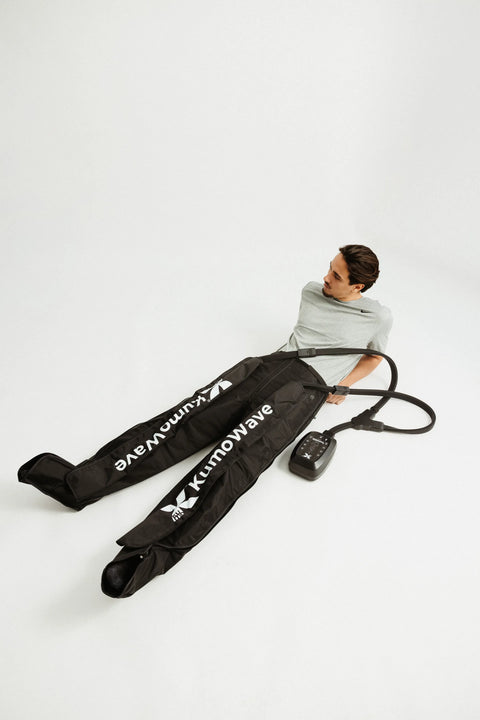
KumoWave Elite – Pressotherapy Pants
Full-coverage trousers. Ideal for lipedema, fluid retention and intensive use.
€799,00 €999,00
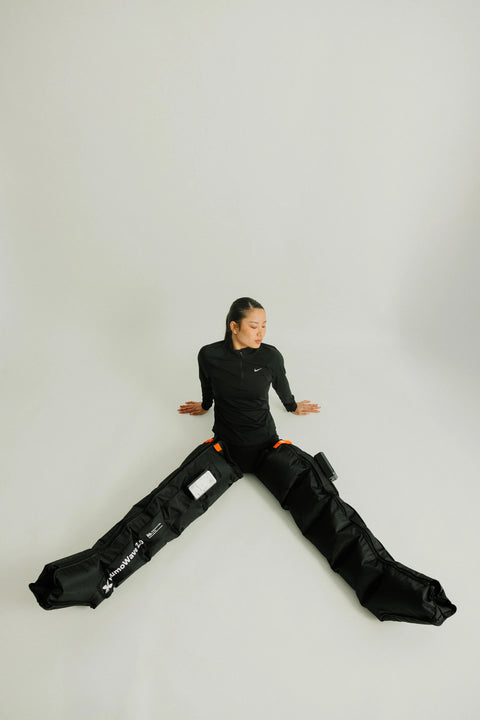
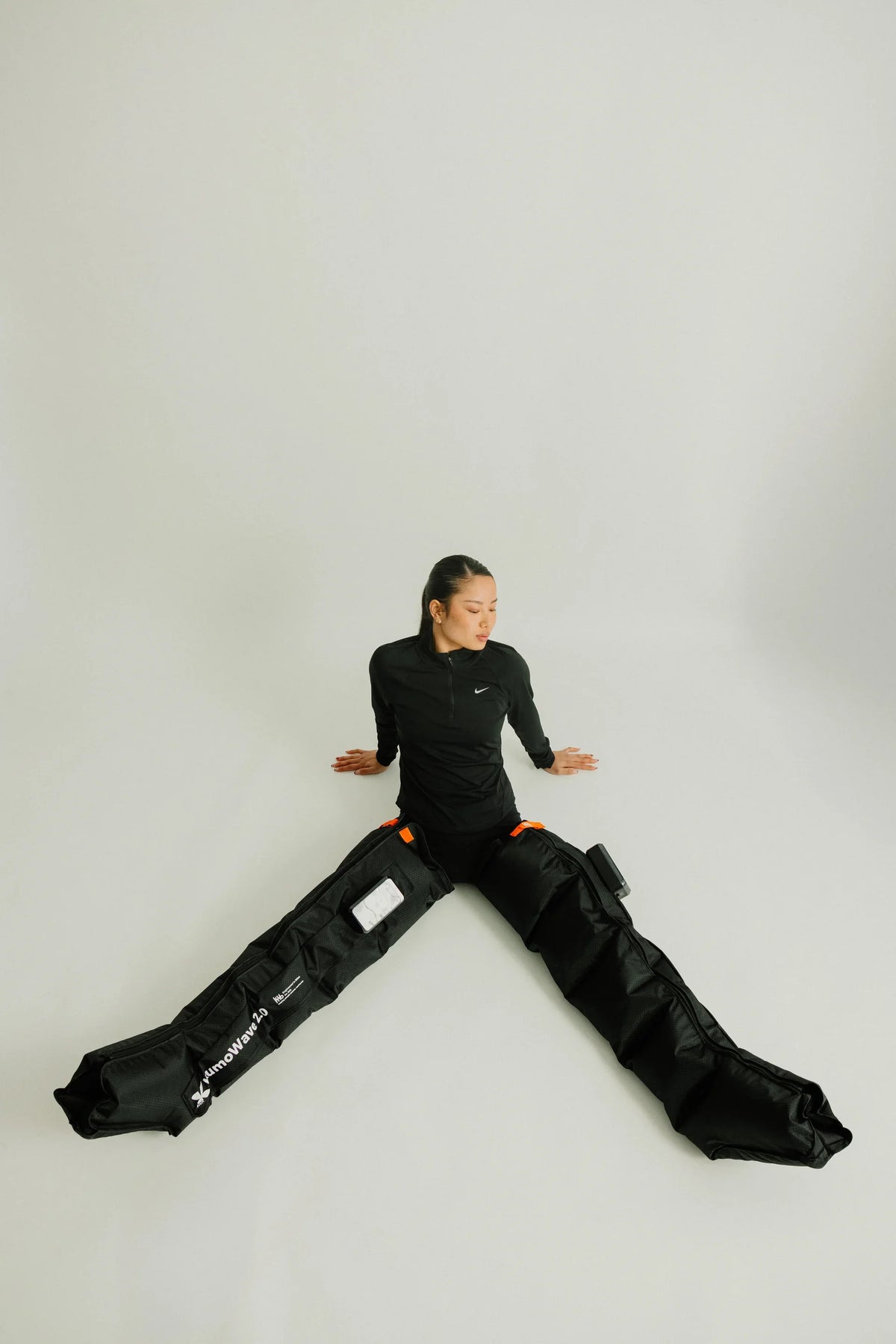
KumoWave 2.0 - Wireless Pressotherapy
Wireless, lightweight boots. Perfect for daily use and recovery.
€499,00 €599,00