
Compression helps, but it is not something you improvise.
Before using stockings, bandages, or a pneumatic device at home, it is worth confirming the diagnosis and checking the skin and the circulation. Swelling is not always lymphedema, because it can also come from an infection, clots, heart failure, kidney disease, or venous problems. (mayoclinic.org)
Pressotherapy at home
End the day with light legs
★★★★★ 4,8/5 · rated by verified customers
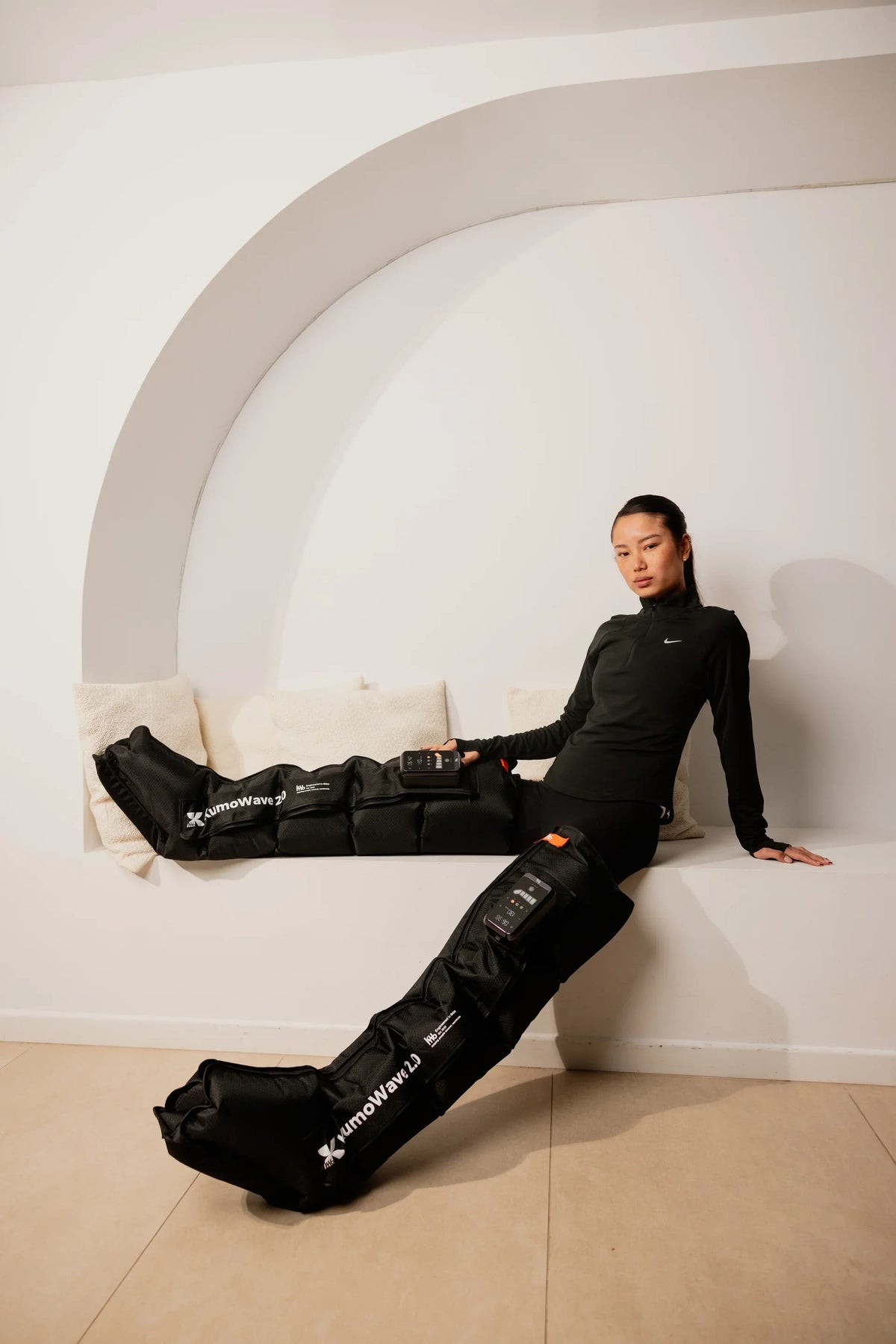
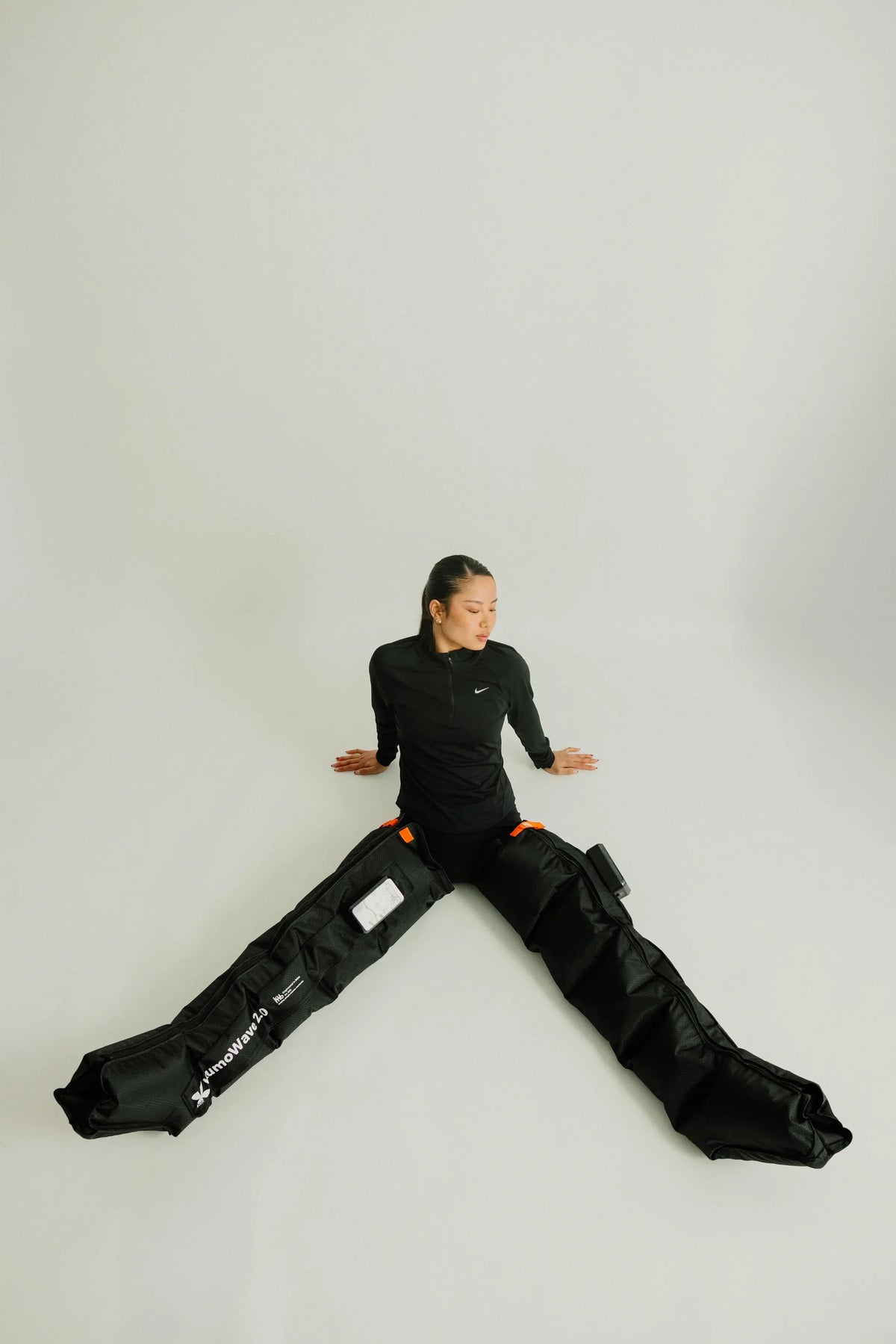
KumoWave pressotherapy boosts circulation and helps drain fluid with sequential compression, in 20-minute sessions at home.
- Boosts circulation and helps drain fluid
- Chamber-based compression, adjustable to you
- Sequential compression that mimics manual drainage
€799,00€999,00
−10% on your 1st order when you subscribe to the newsletter

When compression is genuinely indicated, it works better if it fits into a plan with exercise, skin care, and professional follow-up. The NHS notes that combining compression and movement favors drainage, while the American Cancer Society insists that garments must be prescribed and properly fitted by a professional. (nhs.uk)
What to check before using compression at home
If the goal is to reduce heaviness, control volume, or maintain results, the first question is not how tightly it squeezes, but whether that type of compression is really right for your case. To understand the general context, you may also find it useful to read what pressotherapy is and how it works and the benefits and contraindications of pressotherapy at home.
Personalized protocol · included with your purchase
Want us to tell you how to use it in your case?
With your purchase, our experts prepare a personalized usage protocol for your case: sport, circulation, fluid retention, pregnancy or lipedema.
Message us on WhatsAppOur experts reply · no obligation
Quick checklist before you compress
| Check | What you should look at | What to do |
|---|---|---|
| Diagnosis | Not all swelling is lymphedema. It can come from an infection, clots, the heart, the kidneys, or the veins. | Confirm the cause with a professional before you start. |
| Skin | Look for wounds, cracks, warmth, redness, oozing, or local pain, because they can point to an infection. (nhs.uk) | Do not start compression on your own if there are signs of infection. |
| Circulation | Compression may not be appropriate with arterial problems in the legs and in other high-risk situations. | Ask for an assessment if you have pain when walking, cold feet, or known poor circulation. |
| Fit | Garments must be prescribed, measured, and adapted by a professional. The wrong size can make things worse. (cancer.org) | Do not use generic garments or rely on an approximate size. |
| Follow-up | Compression at home must come with clear instructions on pressure, wear time, and monitoring. (cms.gov) | Start only when you know exactly how, when, and how much to use it. |
When you should not start without supervision
In the 2020 international consensus on compression therapy, the main contraindications include advanced peripheral arterial disease, decompensated heart failure, venous septicemia or septic phlebitis, and phlegmasia cerulea dolens. The same document warns of added risk in advanced neuropathy, weeping skin lesions, and sensory problems. (pmc.ncbi.nlm.nih.gov)
If new discomfort appears during use, do not try to put up with it to see whether it passes. Remove the compression and ask for a review if you notice any of these signals:
- Pain that increases instead of improving, because it can point to excessive pressure or a poorly adapted garment.
- Blue, white, or cold fingers, since they suggest inadequate compression or a vascular problem.
- Tingling, numbness, or loss of sensation, which can appear when the pressure affects superficial nerves.
- Shortness of breath, sweating, or a general feeling of being unwell, because they call for a quick assessment.
- Skin that is hot, red, and painful, especially with fever or chills, since it may be cellulitis.
- A sudden worsening of the swelling, because it can mean the cause is not well controlled or the compression is not the right one.
How to start safely once you have the green light
If your health professional has already confirmed that compression is appropriate, the goal is not to squeeze harder but to keep a useful, tolerable pressure. If you want to place yourself better in the process, these reads on the starter guide to pressotherapy at home and how pressotherapy and lymphatic drainage complement each other help explain why compression goes hand in hand with movement and follow-up.
on your first order when you join the newsletter
We send you the code instantly. No spam.
- Take up-to-date measurements and use a prescribed garment or a device set up by a professional. The ACS stresses that size and pressure distribution matter as much as the type of garment.
- Start with the prescribed time and pressure, without raising the intensity on your own. At home, precise instruction and supervision are part of correct use.
- Check the skin before and after. If you see deep marks, irritation, or pain, adjust the plan with professional help.
- Combine compression with gentle movement, elevation, and simple exercises, because the muscle acts as an auxiliary pump for fluid return.
- Measure again or refit the garment if the volume or shape of the limb changes. The ACS recommends reassessing the fit periodically.
Movement, drainage, and compression in lymphedema
Movement is not an extra, it is part of the plan. The NHS explains that the lymphatic system has no central pump like the heart, so it depends heavily on muscle work to move fluid. That is why walking, mobilizing ankles, wrists, and fingers, and doing gentle, regular activity is usually part of the maintenance approach.
If you alternate compression with self-massage or drainage, you may find this guide on safe steps and mistakes in lymphatic drainage at home useful. The idea is simple: less friction, less roughness, and more consistency.
- Walk regularly if your care team considers it appropriate, because it helps activate the muscle pump.
- Move ankles, knees, hands, or elbows several times a day if the affected area allows it.
- Do gentle, progressive exercises, especially if you have been inactive for a while. (dchft.nhs.uk)
- Use compression during exercise only if you have been told to, because the right fit helps make the movement more useful. (leedsth.nhs.uk)
- Avoid sudden efforts or extreme heat on the affected area if you notice they make the swelling or the skin worse.
Common mistakes worth avoiding
Many problems do not appear because compression is used, but because it is used badly. If you want to go deeper into the practical side, you can also read the contraindications and risks of pressotherapy at home and the benefits and contraindications of pressotherapy at home.
- Using an approximate or hand-me-down size, because a poorly fitted garment can make lymphedema worse.
- Squeezing harder in search of fast results, since excessive pressure can cause pain, skin injury, or nerve damage.
- Ignoring red, hot, or painful skin, because it can be the start of an infection that needs treatment.
- Continuing to use compression if you notice numbness or color changes, because those signals mean stopping and checking the fit.
Frequently asked questions
What precautions should you take before starting compression therapy for lymphedema at home?
First, confirm that the swelling really is lymphedema and not another cause, such as an infection, a thrombosis, or a cardiovascular or kidney problem. Then check the skin, because wounds, warmth, redness, or fever can point to cellulitis. It is also worth checking the circulation, especially if there is arterial disease or a vascular history. The garment must be prescribed and properly measured, and the plan must include clear instructions on duration, pressure, and follow-up.
How do you choose and fit a compression garment when you stay at home?
The best option is not the tightest one, but the one that matches your measurements and your clinical situation. The American Cancer Society recommends that garments be fitted by a professional and that pressure be distributed properly. If the garment leaves deep marks, slips, hurts, or causes tingling, it is not fitted correctly. In addition, if the volume of the limb changes over time, the size has to be reassessed. It is better not to buy on instinct or use borrowed garments.
Which activities and movements should you avoid or favor at home?
In general, gentle, regular, adapted movement is recommended, such as walking, mobilizing joints, and doing progressive exercises. The goal is to activate the muscle pump without irritating the area. It is better to avoid sudden efforts, long sessions that leave you sore, and extreme heat if you notice it increases the swelling. If compression is prescribed to accompany exercise, use it exactly as it was explained to you. If you alternate with self-massage, do it with a gentle technique and without pain.
Which warning signs mean you must stop compression and seek advice quickly?
You must stop if increasing pain, numbness, tingling, a change in finger color, very hot or cold skin, shortness of breath, or sweating appear. You should also seek advice quickly if the area becomes red, hot, and painful, or if fever or chills appear, because it may be cellulitis. If the swelling increases suddenly or the garment no longer fits, do not keep going on your own. It is better to have the case reviewed than to insist on compression that is no longer safe.
So what now?
If you already have a confirmed diagnosis and there are no warning signs, the next step is to confirm with your professional which modality, pressure, and wear time suit you. To keep organizing the information, you can read the starter guide to pressotherapy at home and the list of contraindications and risks of pressotherapy at home. If you want to see the general approach of the site, the Kumo Balance website brings together more content on compression and recovery. And if fever, significant pain, hot skin, or a sudden change in color appear, do not start or continue on your own and seek medical assessment.
KumoWave pressotherapy
Choose your at-home pressotherapy
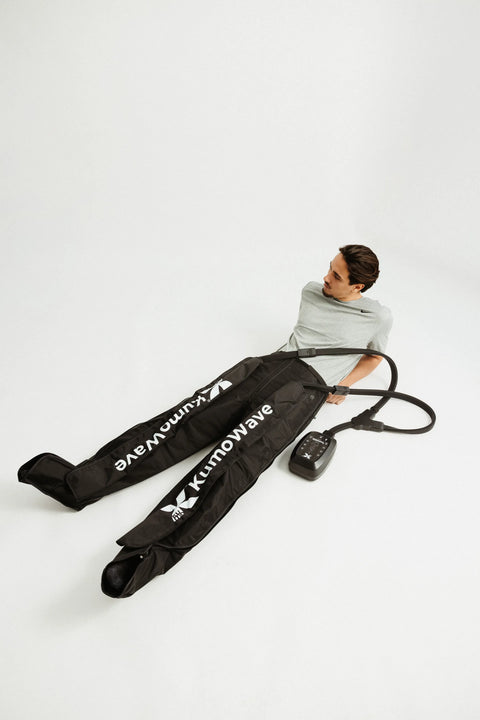
KumoWave Elite – Pressotherapy Pants
Full-coverage trousers. Ideal for lipedema, fluid retention and intensive use.
€799,00 €999,00
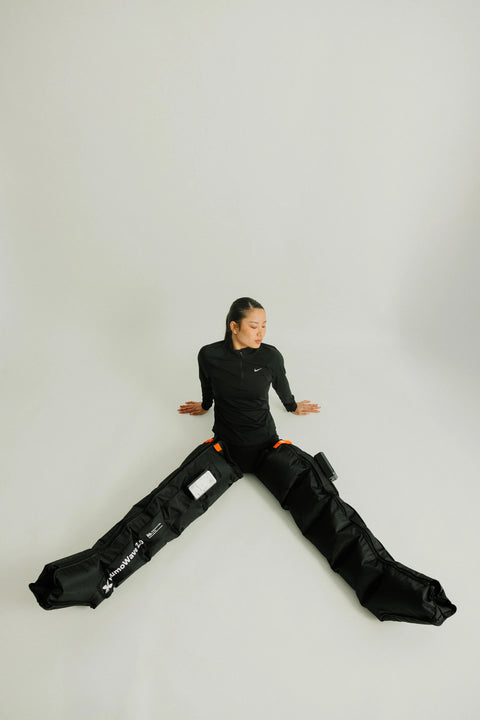
KumoWave 2.0 - Wireless Pressotherapy
Wireless, lightweight boots. Perfect for daily use and recovery.
€499,00 €599,00