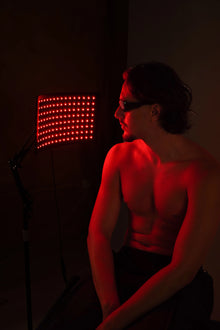

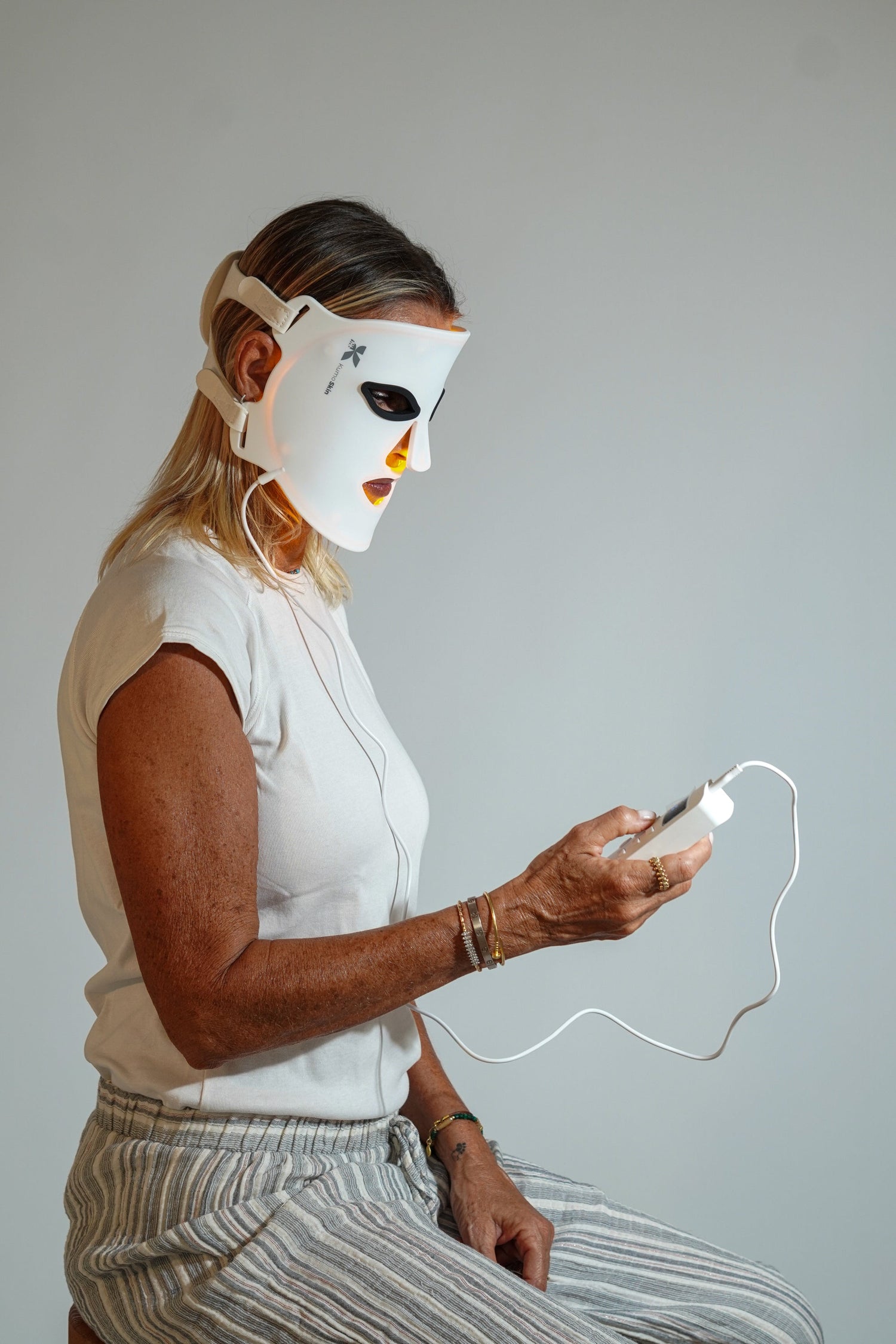
Photobiomodulation for the skin has real benefits.
It is a non-invasive light therapy that primarily works with red and near-infrared light; in dermatology, most studies use wavelengths between 630 and 950 nm, but there is no universal protocol, and the dose is adjusted according to the objective, the device's power, and the treated area. (pmc.ncbi.nlm.nih.gov)
Red & infrared light
Recover faster, at home
★★★★★ 4,8/5 · rated by verified customers
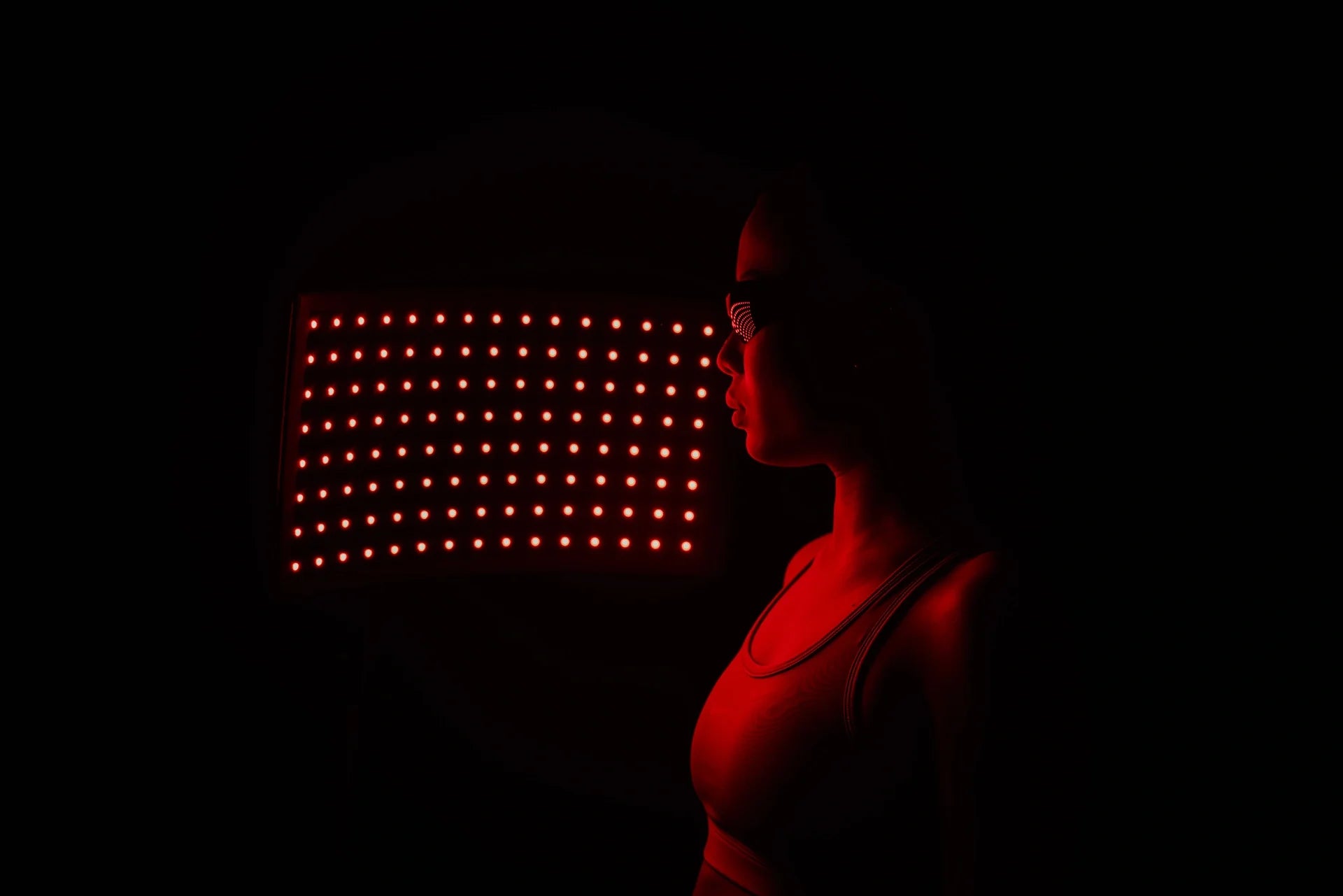
The KumoLux panel supports muscle recovery with full-body red and infrared light.
- 660 nm red + 850 nm infrared light
- Full-body muscle recovery
- Clinically validated biohacking protocols
€399,00€499,00
−10% on your 1st order when you subscribe to the newsletter

What is Cutaneous Photobiomodulation?
Simply put, the skin receives a gentle light signal that aims to stimulate favorable biological responses without resorting to aggressive techniques. This is why it is so interesting for aesthetic routines and as a supportive protocol for more uniform and better-cared-for skin.
If you are starting from scratch, the essential guide for beginners on light therapy can help you better understand concepts such as wavelength, irradiance, and fluence.
Personalized protocol · included with your purchase
Want us to tell you how to use it in your case?
With your purchase, our experts set up your red and infrared light sessions for your sport and goal.
Message us on WhatsAppOur experts reply · no obligation
Benefits of Photobiomodulation for the Skin
Photoaging, Fine Lines, and Texture
In a randomized trial from 2007, 36 people received 9 sessions over 5 weeks, and a statistically significant improvement in wrinkles was observed; in addition, microscopic analysis showed thicker collagen fibers. (pubmed.ncbi.nlm.nih.gov)
Translated into practical terms, the goal is for the skin to look smoother, more even, and somewhat firmer with consistent use, not with a single isolated session.
Mild Acne and Acne-Prone Skin
Photobiomodulation has also been studied for acne: a 2013 double-blind trial with 35 patients used a home device with 420 nm blue light and 660 nm red light, 2.5 minutes twice a day for 4 weeks, and found that inflammatory and non-inflammatory lesions decreased significantly, with good tolerance and no severe adverse reactions. (pubmed.ncbi.nlm.nih.gov)
on your first order when you join the newsletter
We send you the code instantly. No spam.
Therefore, for mild acne, it is usually better understood as a complementary support rather than an isolated solution.
If you want to expand your approach with cases and results, the reading on real results and studies of cutaneous photobiomodulation provides extra context.
What Results to Expect and What Not to Expect
Improvement is usually progressive and depends on consistency. If you are looking for an abrupt change in a single session, photobiomodulation is not the right tool. However, if you want to add a gentle light signal to a stable routine, it can make sense.
- It does not replace a dermatological evaluation when there is significant inflammatory acne, active dermatitis, or suspicious lesions.
- It does not compensate for irregular use or an improvised protocol.
- It does not require pain or heat to be useful.
Guideline Protocol: How to Organize a Routine
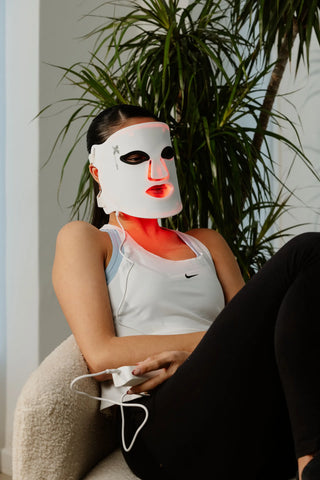
The best way to use light is to think in terms of protocol, not intuition. A controlled trial from 2025 compared two application frequencies with a 660 nm LED mask for facial rejuvenation and shows how the response changes when consistency is precisely adjusted. (pubmed.ncbi.nlm.nih.gov)
Example of a Protocol Studied in 2025
| Group | Wavelength | Irradiance | Fluence | Time per session | Frequency |
|---|---|---|---|---|---|
| Facial Photorejuvenation | 660 nm | 6.4 mW/cm² | 8.02 J/cm² | 21 min | 2 times per week for 4 weeks |
| Facial Photorejuvenation | 660 nm | 6.4 mW/cm² | 8.02 J/cm² | 21 min | 3 times per week for 4 weeks |
The idea is not to copy it literally, but to understand that session time, dose, and frequency form a whole. If your device manual specifies another guideline, that is the reference that should take precedence.
- First, define your objective: wrinkles, texture, redness, or mild acne.
- Use the device's guidelines and maintain the same frequency for several weeks.
- Do not increase minutes on your own to compensate for an irregular routine.
- Take comparable photos to assess real changes and not rely solely on memory.
To integrate all of this into a daily routine, at-home photobiomodulation with safe uses and practical tips helps to organize steps and expectations.
At-Home Use and Safety
Safety is one of the reasons photobiomodulation has gained ground: a 2023 systematic review on skin rejuvenation found no relevant clinical data linking it to new cancer or relapse, and in the analyzed trials, only mild and transient effects, such as temporary erythema in a very small number of cases, were described. (pmc.ncbi.nlm.nih.gov)
In addition, a 2022 review of home dermatological devices compiled 37 clinical trials and concluded that the literature is promising, although more controlled research is still needed to refine usage recommendations. (pubmed.ncbi.nlm.nih.gov)
- Follow the manufacturer's instructions and do not extend sessions based on intuition.
- Protect your eyes when required by the device.
- Discontinue use if you notice persistent irritation and seek professional advice.
FAQ
Is photobiomodulation for the skin effective for wrinkles?
It is often one of the most interesting applications when seeking to improve texture, smoothness, and the appearance of fine lines. The key is regularity: the skin responds better to a consistent routine than to an isolated session. If your goal is facial rejuvenation, the most sensible approach is to follow a stable routine, measure changes with comparable photos, and not expect an immediate plumping effect.
How many weekly sessions are reasonable?
The short answer is: as many as your equipment or professional indicates, but always with a coherent and sustainable frequency. In practice, the important thing is not to "do more," but to repeat the protocol correctly and evaluate the evolution after several weeks. If you change devices or objectives, it is advisable to return to a prudent routine and not improvise time increases.
Can it be used at home without complications?
Yes, as long as the device is designed for home use and you integrate it into a simple routine. Ideally, you should have a fixed time of day, apply the session to clean skin, and avoid compensating for missed days with more minutes. The simpler the habit, the easier it will be to maintain and assess whether it truly provides benefits.
What should I do if I have sensitive skin?
Start cautiously, observe your tolerance, and prioritize short, regular sessions before thinking about intensity. If you notice redness that lasts too long, itching, or repeated discomfort, it is advisable to stop and review your routine. For sensitive skin, less improvisation and more consistency usually yield better results than trying to speed up the process.
Can it complement a normal facial routine?
Yes, that is precisely where it fits best: as a support for an already established routine of cleansing, moisturizing, and sun care. It does not replace the basics, but it can add an interesting layer of work if you are looking to improve the overall appearance of your skin. Think of it as a supportive habit, not as the sole pillar of facial care.
What Now?
If you want to move from theory to a simple routine, start with advanced LED light therapy at home and, if you prefer a broader view, return to Kumo Balance's homepage to explore how photobiomodulation fits into a more comprehensive recovery.

Red & infrared light
KumoLux Panel – Red and Infrared LED Panel
★★★★★ 4,8/5 · rated by verified customers
- 660 nm red + 850 nm infrared light
- Full-body muscle recovery
- Clinically validated biohacking protocols
€399,00€499,00· pay in installments with seQura or Klarna