
Choosing well changes the outcome.
Recovery boots can help reduce the feeling of heavy legs and improve readiness for your next session, but evidence points to small or modest benefits, not a miracle cure. A meta-analysis review of 17 studies and 319 participants found trivial to small improvements in muscle function and trivial to moderate effects on pain and discomfort; another review published in 2024 emphasizes that there is still a lack of scientific basis for a definitive answer. (pmc.ncbi.nlm.nih.gov)
Pressotherapy at home
End the day with light legs
★★★★★ 4,8/5 · rated by verified customers
KumoWave pressotherapy boosts circulation and helps drain fluid with sequential compression, in 20-minute sessions at home.
- Boosts circulation and helps drain fluid
- Chamber-based compression, adjustable to you
- Sequential compression that mimics manual drainage
€799,00€999,00
−10% on your 1st order when you subscribe to the newsletter

Therefore, when choosing them, the fit between your sport, your tolerance, and the type of use you seek matters more than the most striking number on the spec sheet. Furthermore, these tools work best as a complement to natural recovery—sleep, nutrition, and load management—rather than as a substitute for everything else, and the results are not the same for all athletes.
What recovery boots are and how they work
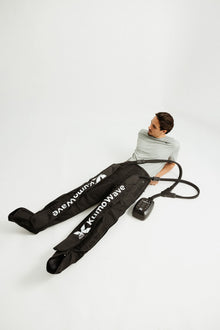
These boots use intermittent pneumatic compression: a pump inflates air chambers sequentially from the most distal part upwards to promote venous return and fluid movement. In practice, this can help reduce the feeling of swelling and improve how you perceive recovery after exertion, although the exact response depends on the protocol and the individual. (pmc.ncbi.nlm.nih.gov)
Personalized protocol · included with your purchase
Want us to tell you how to use it in your case?
With your purchase, our experts prepare a personalized usage protocol for your case: sport, circulation, fluid retention, pregnancy or lipedema.
Message us on WhatsAppOur experts reply · no obligation
If you want to see the mechanism in more detail, the 2024 meta-analysis on sports recovery with pneumatic compression and the comprehensive review on its use after exercise are two good external references to understand why the results are promising but still modest.
For a more practical and everyday-use oriented explanation, the internal guide on what pressotherapy boots are and how they work can also help you.
How to choose them without making a mistake
The evidence on IPC shows that cuff design, inflation time, and pressure matter, but there is no universal formula. Therefore, it is advisable to compare chambers, pressure level, session duration, actual fit, and safety before looking at any other details. (pubmed.ncbi.nlm.nih.gov)
on your first order when you join the newsletter
We send you the code instantly. No spam.
Key criteria before deciding
| Criterion | What to look for | Why it matters |
|---|---|---|
| Number of chambers | 4, 6 or 8, with sequential compression | More segments usually provide a more progressive and localized pressure sensation |
| Adjustable pressure | Adjustable range, not just "maximum" | Tolerance and objective dictate more than an extreme value |
| Duration | Sessions easy to repeat consistently | Recovery improves when use fits into your real routine |
| Fit and size | Good seal without pain or excessive marks | Pressure distribution changes significantly if the boot does not fit well |
| Safety | Respect for contraindications and warning signs | Compression is not a neutral accessory for all bodies |
The logic of more segmented compression is better seen in multi-chamber systems, which is why it's worth reviewing the explanation of 5-chamber compression and its more uniform effect if you're unsure about configurations. (pmc.ncbi.nlm.nih.gov)
1. Number of chambers: 4, 6 or 8
By practical inference, more chambers usually allow for more segmented and progressive compression, while fewer chambers simplify the equipment and may suffice if you are looking for occasional use. Clinical literature shows that the number of chambers and the cycle influence the outcome, but it does not demonstrate universal superiority of a specific number in athletes. (pubmed.ncbi.nlm.nih.gov)
If you train frequently or exert yourself for long periods, a useful takeaway is this: 4 chambers may be sufficient for simple use; 6 chambers offer a reasonable balance; 8 chambers typically provide a more refined sequential feel. That last sentence is a practical recommendation, not a scientific law. The 2025 science and evidence guide delves into these types of nuances.
2. Adjustable pressure: a comfortable range is better than an aggressive maximum
In clinical literature, sequential IPC programs typically operate between 30 and 60 mmHg for 45–60 minutes, while the 2024 sports meta-analysis found that around 20–30 minutes and close to 80 mmHg were commonly used protocols. This does not mean there is a "perfect" pressure; rather, it indicates that the best choice depends on the objective, tolerance, and manufacturer's protocol. (journals.sagepub.com)
As a practical criterion, prioritize a model with adjustable pressure and start with a comfortable level: if the compression is uncomfortable, the session becomes unsustainable, and actual recovery worsens. To fine-tune the correct sensation, the guide on 7 signs to know if the pressure is adequate can serve as an internal reference.
3. Duration and frequency of use
In sports recovery, 20 to 30-minute sessions frequently appear in recent literature, while in other clinical contexts, longer sessions are described. Therefore, for an athlete, the question is not usually "how much more, the better?", but rather "what duration fits my training load and my tolerance?".
If you use them after intense workouts, a tournament, or a week with accumulated fatigue, they tend to make more sense than during light sessions. However, if you find that you can only tolerate them for a short time, a short and consistent protocol is usually more useful than a long and forced session.
4. Real fit, size and leg coverage
A good fit matters more than it seems. Studies on compression show that pressure distribution is not always uniform along the leg, and that inflation time and anatomy influence tissue response. In other words: if the boot doesn't hug your leg well, the result will be worse even if the device has good specs. (pmc.ncbi.nlm.nih.gov)
This is especially relevant if you have large calves, differences between legs, or are looking for a very specific recovery routine. In that case, it is advisable to carefully read the technical specifications and prioritize comfort, ease of placement, and a sense of continuous sequence above any grandiloquent promises.
5. Safety and contraindications
IPC boots are also used in hospitals, and Cleveland Clinic describes them as inflatable devices designed to promote circulation while the person is immobile. Even so, the international consensus on medical compression mentions rare risks such as pressure injury, nerve damage, cardiac decompensation, or spread of infections, and advises caution in severe peripheral arterial disease and other risk situations.
If you have a history of thrombosis, unusual pain, a clearly swollen leg, or any known vascular condition, do not use them as if they were a simple fitness accessory. In such cases, a medical consultation is the correct decision, because the goal is better recovery, not added risk. The Johns Hopkins guide on IPC and thrombosis prevention summarizes its medical use well.
Are they worth it for an athlete?
The short answer is: yes, for some goals; no, if you expect a revolution. The 2024 review of 17 studies and 319 participants observed small improvements in muscle function and discomfort, but another comprehensive review concluded that the evidence remains limited and with divergent responses. Translated into real life: they can be worthwhile when you're looking for comfortable and repeatable assistance, especially during tough weeks, but they don't replace rest or good load planning.
Furthermore, the results are not always positive: in recent research with young international soccer players, pneumatic compression did not improve neuromuscular, biochemical, or perceptual recovery after the match. This does not invalidate its use, but it does confirm that the effect is variable and that context matters. (link.springer.com)
If your goal is to accelerate your return to training with a simple tool, the internal guide on recovery with pressotherapy boots for athletes complements this reading with a more practical approach.
Quick checklist before deciding
If you want to turn all of the above into a quick decision, use this list as a final filter. The model doesn't have to be the most powerful; it has to fit your actual recovery.
- Choose the number of chambers based on the level of segmentation you're looking for, not by inertia.
- Check that the pressure is adjustable and comfortable from the start.
- Consider a session duration that you can maintain consistently.
- Prioritize a stable fit in the calves, ankles, and thighs.
- If you have a vascular history or medical concerns, seek professional advice before using it.
FAQ about recovery boots for athletes
Recovery boots for athletes: what pressure should each chamber have and how much influence does it have on recovery?
There is no single perfect pressure. In clinical literature, sequential IPC programs typically operate between 30 and 60 mmHg, while the 2024 sports meta-analysis indicates that around 20–30 minutes and close to 80 mmHg frequently appear in recovery protocols. This suggests that pressure influences, but doesn't determine everything: fit, session time, and your tolerance also matter. If compression is uncomfortable, the quality of use decreases and the potential benefit is reduced.
Are pressotherapy boots worth it for reducing muscle fatigue after long workouts?
Yes, they can be worthwhile as a complement, especially if you are looking for a feeling of lighter legs after long loads or competitions. The best current evidence points to small or modest benefits regarding pain, discomfort, and muscle function, but not a spectacular or consistent improvement for everyone. There are also reviews that find mixed or insufficient results to assert clear superiority. In short: they are useful if you value comfortable, repeatable, and easy-to-integrate help, not if you expect them to replace rest, sleep, or nutrition.
Differences between recovery boots with 4, 6 or 8 chambers: which one is suitable for my level and discipline?
There is no universal winner. By practical inference, more chambers usually distribute compression in a more segmented and progressive way, while fewer chambers simplify the system. Clinical literature indicates that the number of chambers and the cycle do influence the outcome, but it does not demonstrate that a specific number is always superior for athletes. As a simple guide, 4 chambers may suffice for occasional use, 6 chambers for a balanced middle ground, and 8 chambers for those seeking a finer sequence and a more uniform compression sensation.
In which cases should they be avoided or medical advice sought?
It is advisable to seek professional advice if you suspect thrombosis, have an unexplained swollen leg, severe peripheral arterial disease, decompensated heart failure, active infection, or relevant neurological problems. The international consensus on medical compression also mentions rare risks such as pressure injury, nerve damage, and worsening of certain pathologies. Therefore, even though they are safe tools for many people, they should not be used automatically if there is a history of vascular issues or abnormal pain. (pmc.ncbi.nlm.nih.gov)
Can they be used daily or only after training?
They can be used with some regularity if they are comfortable for you and you have no contraindications, but the key is not maximum frequency, but real utility. In sports recovery, short and repeatable sessions usually fit better than long and forced uses. If you use them daily, it should be because they are part of a routine that genuinely helps you perform better in your next training session, not out of obligation. If you notice discomfort, increased swelling, or an odd sensation, reduce use and check the size, pressure, or suitability of the model.
What now?
If you want to move from theory to a real routine, start with the 2025 home use guide and, if you'd like to see the brand's overall approach, visit the Kumo Balance homepage to understand how recovery fits into daily life.
KumoWave pressotherapy
Choose your at-home pressotherapy
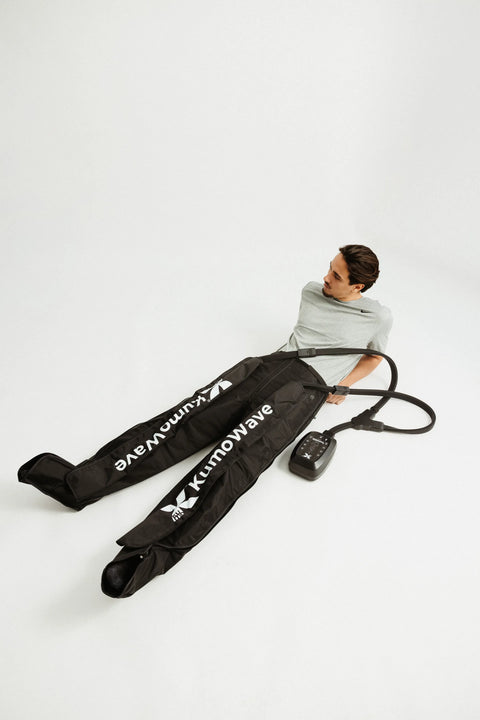
KumoWave Elite – Pressotherapy Pants
Full-coverage trousers. Ideal for lipedema, fluid retention and intensive use.
€799,00 €999,00
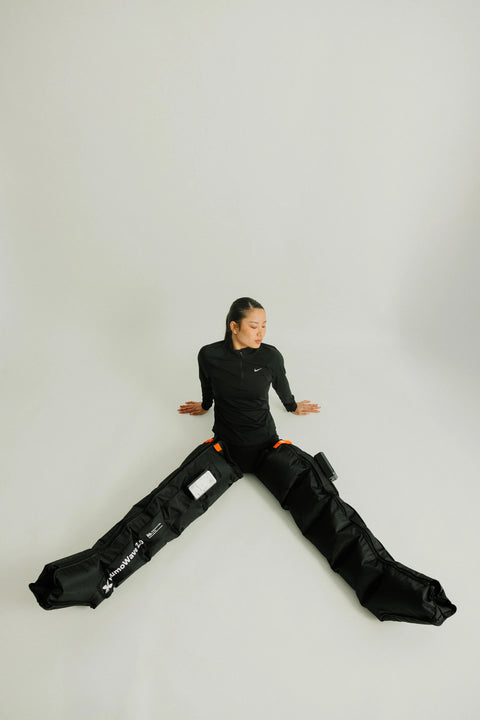
KumoWave 2.0 - Wireless Pressotherapy
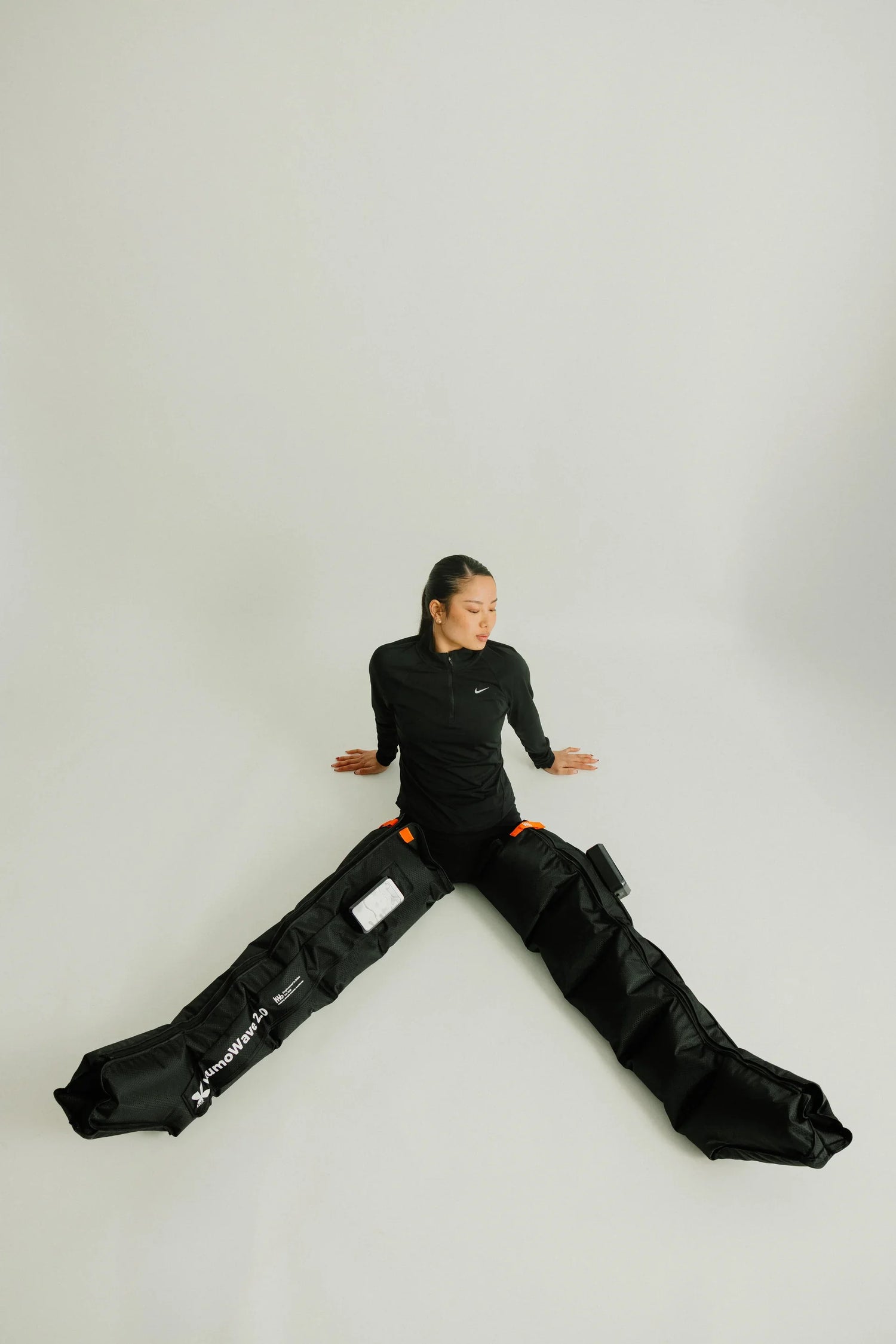
Wireless, lightweight boots. Perfect for daily use and recovery.
€499,00 €599,00