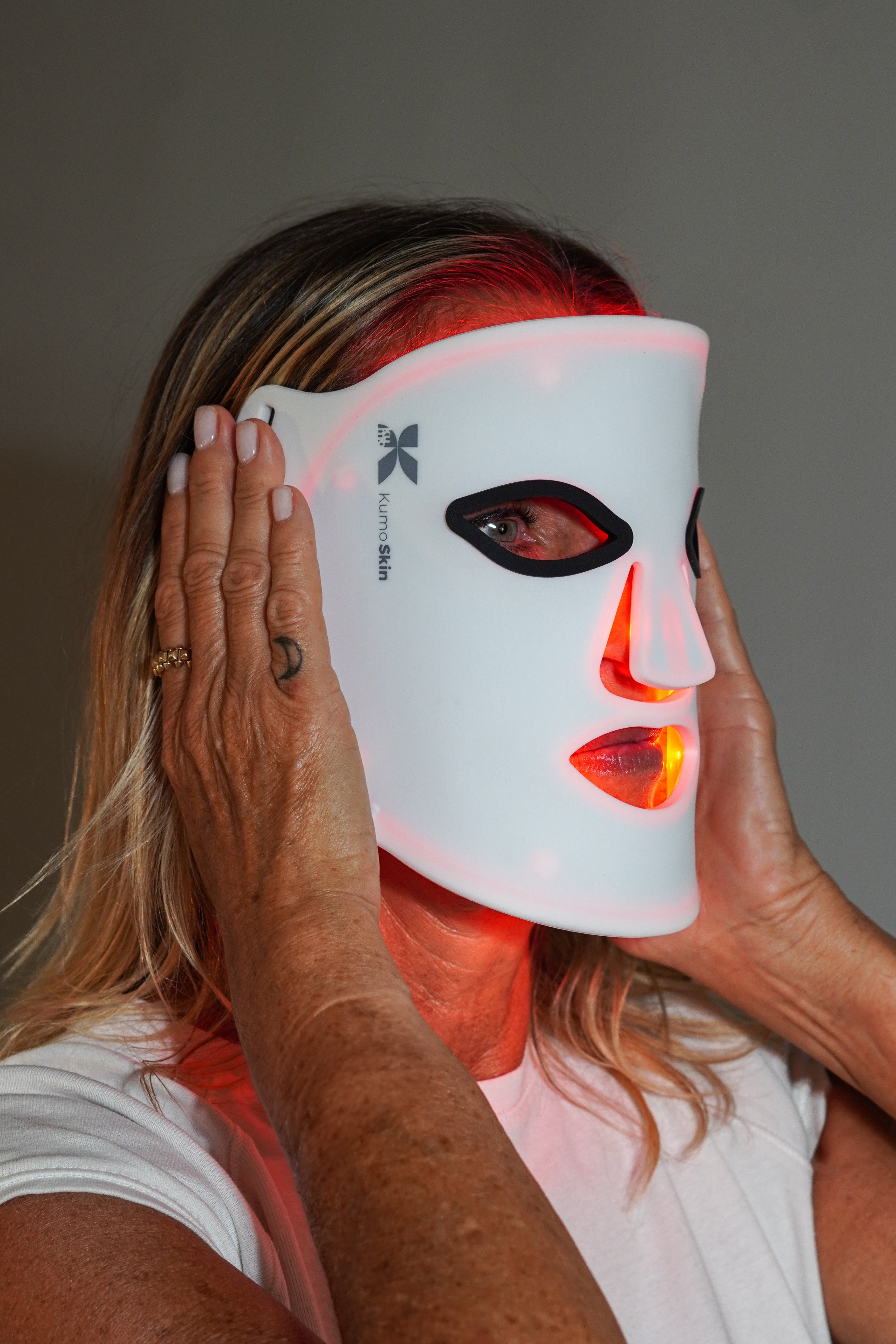

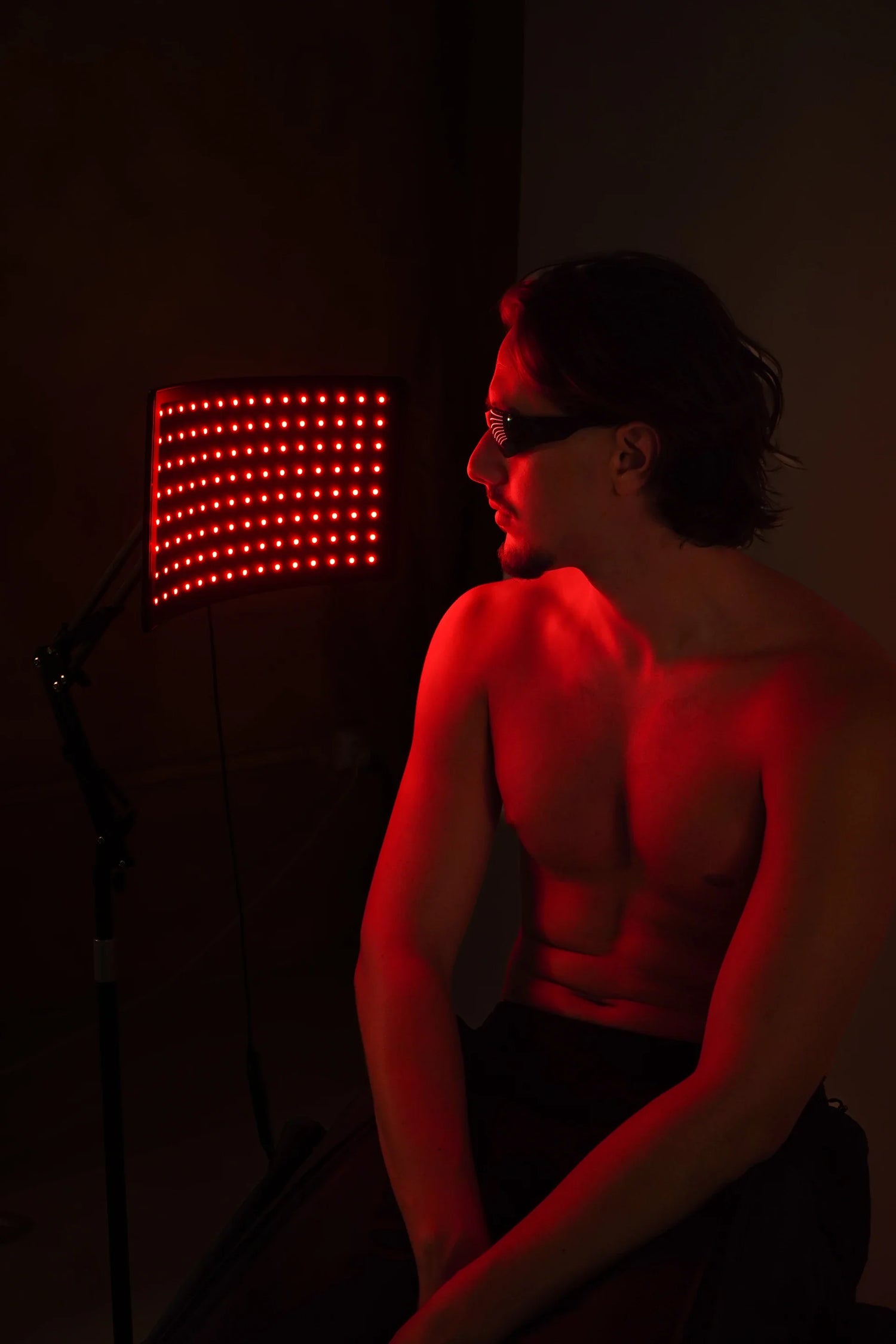
Red light can also take care of your hair.
In this article you will discover how red light therapy can help strengthen hair, what science says, who can benefit, and how to safely integrate it into your hair care routine.
Red light therapy (also called photobiomodulation or low-level light therapy, LLLT) uses specific wavelengths of visible light to stimulate biological processes in the skin and scalp. In the context of hair care, its aim is to improve hair follicle health, promote hair thickening, and support the treatment of hair loss , especially in androgenetic alopecia.
Red & infrared light
Recover faster, at home
★★★★★ 4,8/5 · rated by verified customers
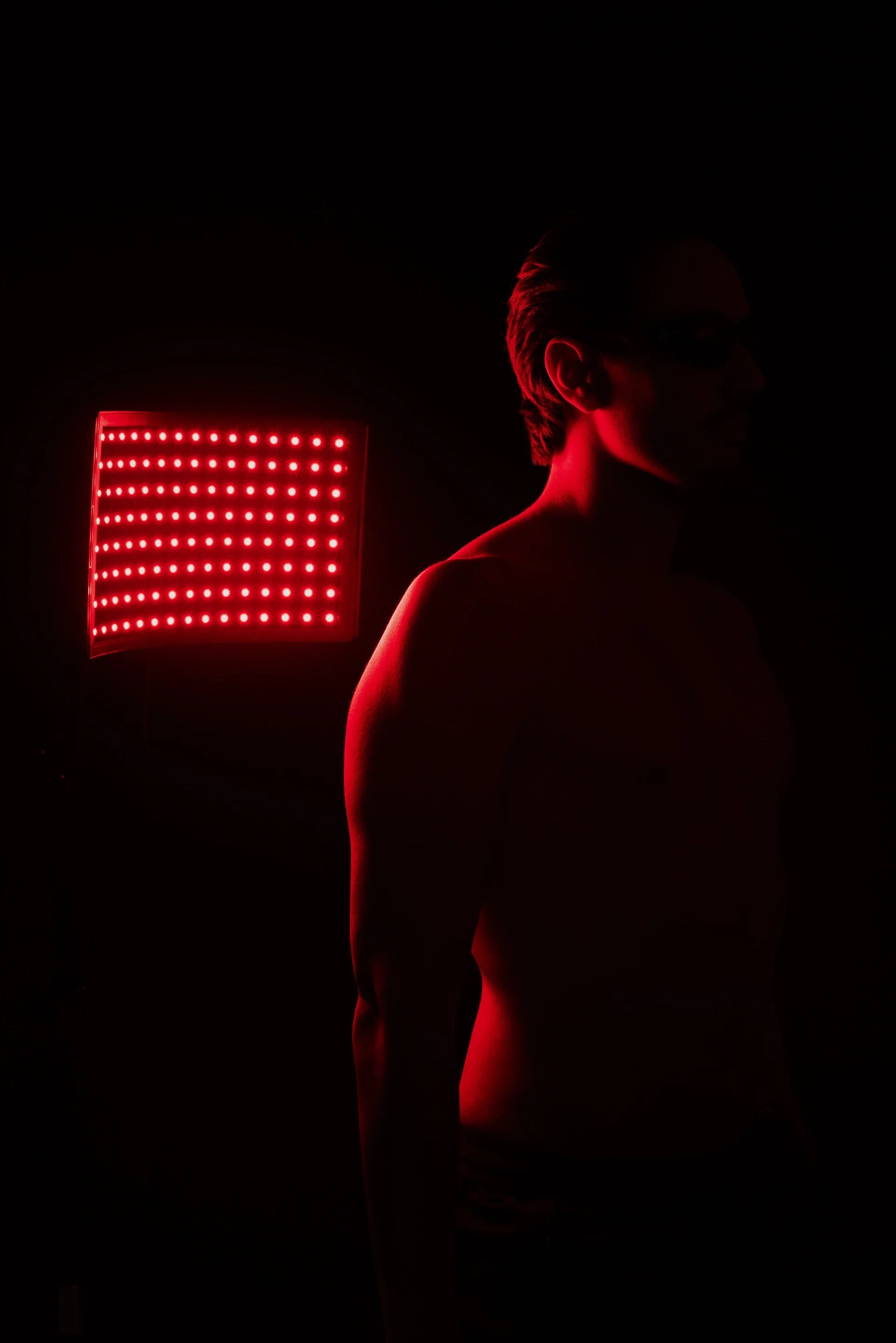
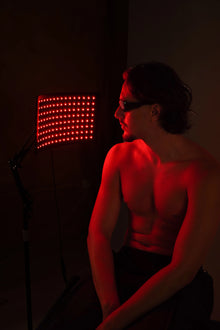
The KumoLux panel supports muscle recovery with full-body red and infrared light.
- 660 nm red + 850 nm infrared light
- Full-body muscle recovery
- Clinically validated biohacking protocols
€399,00€499,00
−10% on your 1st order when you subscribe to the newsletter

What is red light therapy applied to hair?
Photobiomodulation: how light “talks” to your cells
Photobiomodulation involves applying low-intensity red or near-red light (generally between 630 and 680 nm) to the skin. This light is absorbed by cellular structures such as mitochondria, which can increase energy (ATP) production, modulate inflammation, and improve local microcirculation.
On the scalp, this stimulus is directed at the hair follicles , which are living structures highly sensitive to hormonal, inflammatory, and circulatory factors. The hypothesis is that by optimizing the follicle environment, a healthier hair cycle is promoted and the hair miniaturization typical of some types of alopecia is reduced. ( pubmed.ncbi.nlm.nih.gov )
Personalized protocol · included with your purchase
Want us to tell you how to use it in your case?
With your purchase, our experts set up your red and infrared light sessions for your sport and goal.
Message us on WhatsAppOur experts reply · no obligation
Proposed mechanisms in the scalp
Several in vitro studies have observed that red light around 655 nm can: (pubmed.ncbi.nlm.nih.gov )
- Stimulate the Wnt/β-catenin pathway , key in the formation and growth of the hair follicle.
- Prolong the anagen phase (growth phase) and delay the catagen phase (regression phase).
- To increase hair shaft elongation in human follicle culture models.
- Reducing local inflammatory markers, which could be relevant in certain inflammatory alopecias.
Although these mechanisms are still being investigated, they support the idea that red light not only “heats” the scalp, but also acts at a cellular and molecular level .
What science says about red light therapy and hair loss
Evidence in androgenetic alopecia
Androgenetic alopecia (common baldness) is the most frequent form of hair loss in men and women. Several meta-analyses of clinical trials have concluded that low-intensity light therapy (laser or red LED) can significantly increase hair density compared to placebo devices, in both adult men and women. (pubmed.ncbi.nlm.nih.gov)
on your first order when you join the newsletter
We send you the code instantly. No spam.
In a recent systematic review that included more than 3,000 patients with different types of alopecia, red light showed a significant increase in hair density in androgenetic alopecia, with results observed after several weeks of continued treatment. (pubmed.ncbi.nlm.nih.gov)
Results of clinical trials with helmets and LED devices
Controlled clinical trials with LED or red laser helmets (around 655 nm), used at home for several months, have shown:( pubmed.ncbi.nlm.nih.gov )
- Significant increase in hair count in treated areas compared to placebo.
- Improvements in both men and women with mild or moderate androgenetic alopecia.
- Good tolerance , with no serious adverse effects reported.
A study in women described an approximately 37% increase in hair growth in the group treated with red light compared to the placebo group, with at-home sessions every two days for 16 weeks. ( pubmed.ncbi.nlm.nih.gov )
Combination with classic treatments such as minoxidil
A meta-analysis published in 2025 compared topical minoxidil alone versus minoxidil combined with LLLT in androgenetic alopecia. The combination achieved: (pubmed.ncbi.nlm.nih.gov)
- Greater increase in hair density .
- Slight but significant increase in average hair diameter .
- Greater patient satisfaction , with no more adverse effects than the use of minoxidil alone.
This suggests that red light therapy may work as an adjunct to other medical treatments, not necessarily as a substitute.
In summary: the evidence is promising, especially for mild to moderate androgenetic alopecia, although results vary between individuals and longer-term studies are still needed.
Potential benefits for strengthening hair
Without promising “miracles”, scientific literature and clinical experience point to several possible benefits of red light therapy for hair:
- Increased density (more hairs per cm²) in thinning areas. (pubmed.ncbi.nlm.nih.gov)
- Thickening of the hair shaft , so that the hair appears fuller and better supported. (pubmed.ncbi.nlm.nih.gov)
- Prolongation of the hair growth phase . ( pubmed.ncbi.nlm.nih.gov )
- Improved scalp microcirculation , which promotes nutrient delivery. ( americanhairloss.org )
- Potential reduction of local inflammation , relevant in certain types of alopecia. (pubmed.ncbi.nlm.nih.gov)
It is most commonly used in people with diffuse hair loss or progressive thinning , before the area is completely bald. Therefore, it is recommended to consult a dermatologist as soon as abnormal hair loss is detected.
What is a red light therapy session for the scalp like?
Most commonly used types of devices
In practice, red light therapy for hair is usually performed with:
- LED/laser helmets or caps : cover the entire head and allow for home treatments.
- Combs or light bands : they are moved across the scalp.
- Clinical equipment : similar in concept, but applied under medical supervision in consultation.
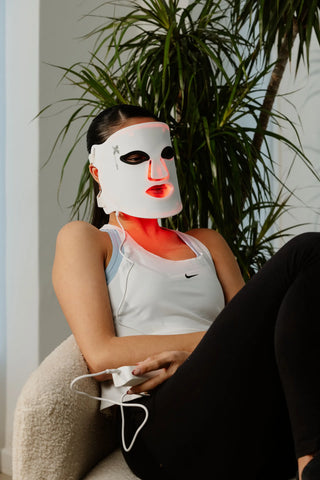
Although KUMO focuses on high-performance recovery technologies for skin, sleep and muscles (such as its range of LED light therapy ), the same photobiomodulation principles are applied in devices specifically designed for the scalp.
Duration, frequency and consistency
The exact parameters depend on the device and the specialist's protocol, but clinical trials with red LED helmets are around: ( pubmed.ncbi.nlm.nih.gov )
- Wavelength : around 650–660 nm (visible red).
- Duration per session : 10 to 30 minutes.
- Frequency : several times a week (e.g., every other day).
- Total treatment duration : minimum 3–6 months before rigorously assessing results.
The key is consistency . Photobiomodulation requires repeated stimuli over time, and early discontinuation usually results in modest outcomes.
Table: usual parameters in capillary red light therapy
Indicative summary of parameters in red light capillary devices
(Specific values should always follow the manufacturer's or dermatologist's instructions.)
| Parameter | Typical range in studies | Comment |
|---|---|---|
| Wavelength | 630–680 nm (visible red) | 655 nm is one of the most studied. ( pubmed.ncbi.nlm.nih.gov ) |
| Font type | LED or low-power laser | Both have shown similar efficacy in androgenetic alopecia. (pubmed.ncbi.nlm.nih.gov) |
| Power / flow | Low intensity, few J/cm² per session | Sufficient to activate cellular processes without damaging tissues. ( pubmed.ncbi.nlm.nih.gov ) |
| Session duration | 10–30 minutes | It depends on the device; it is usually used at home. ( pubmed.ncbi.nlm.nih.gov ) |
| Weekly frequency | 2–4 times/week | Alternate days is a common schedule. ( pubmed.ncbi.nlm.nih.gov ) |
| Minimum time to assess effect | 12–24 weeks | Most trials assess results starting from 3–6 months. (pubmed.ncbi.nlm.nih.gov) |
Who is suitable for red light therapy for the scalp?
The evidence is stronger in:
- Men and women with mild or moderate androgenetic alopecia .(pubmed.ncbi.nlm.nih.gov)
- People seeking to complement medical treatments such as minoxidil or finasteride. (pubmed.ncbi.nlm.nih.gov)
- Patients who cannot tolerate certain medications and need non-invasive , low-risk options. ( americanhairloss.org )
In other forms of hair loss (alopecia areata, sequelae of chemotherapy, telogen effluvium, etc.) research is more limited and the results are variable. (pubmed.ncbi.nlm.nih.gov)
In any case, a prior medical evaluation is essential for:
- Identify the type of alopecia.
- Discover treatable causes (nutritional deficiencies, thyroid diseases, drugs…).
- Design a global strategy in which the red light, if indicated, has a defined role.
Risks, side effects and contraindications
One of the advantages of red light therapy is its favorable safety profile when approved devices are used and instructions are followed. Reviews and specialist associations consider it a non-invasive and well-tolerated option for hair loss. ( americanhairloss.org )
The described side effects are usually mild:
- A sensation of heat or temporary reddening of the skin.
- Mild scalp discomfort or headache in some sensitive users.
- Irritation may occur if improperly combined with harsh topical products.
It is not usually associated with burns or eye damage when used correctly, but it is advisable to avoid looking directly at light sources and to use eye protection if the manufacturer indicates it.
Common contraindications and precautions :
- History of skin cancer or suspicious scalp lesions .
- People with photosensitivity (due to illness or medication).
- Pregnancy and breastfeeding: insufficient data; requires individual medical opinion.
- Use of devices that are not certified or do not have regulatory marking.
How to integrate red light therapy into a comprehensive hair care routine
360° Focus: Beyond the Device
Hair health depends on more than just light. To maximize results, it's advisable to integrate red light therapy into a more comprehensive approach:
- A balanced diet rich in protein, iron, zinc, and B vitamins.
- Stress and sleep management are key in many cases of diffuse hair loss.
- Use gentle hair products, avoiding excessive heat and pulling (very tight ponytails, etc.).
- Gentle scalp massage to stimulate microcirculation.
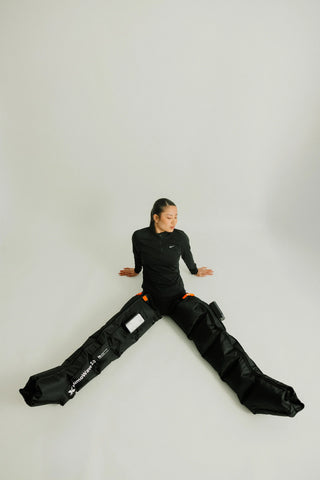
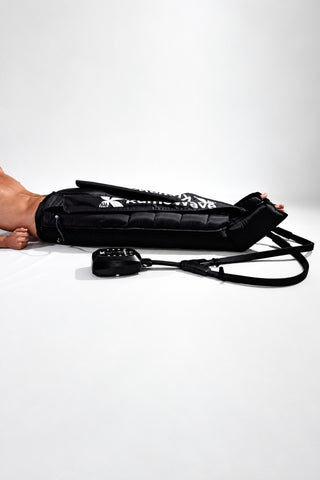
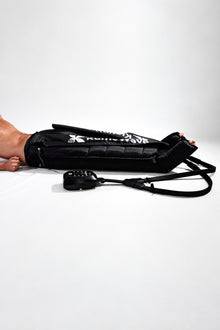
KUMO offers a holistic vision of well-being where recovery and daily performance go hand in hand. Devices like compression boots can support overall circulation and a feeling of lightness in the legs , while LED light therapy and high-end massage tools are designed to integrate technology into your self-care routine.
Synergies with muscle recovery and stress management
Chronic stress and poor sleep are recognized factors that worsen hair loss. Recovery techniques that improve sleep, relax muscles, and reduce overall tension can have a positive indirect impact on hair health.
- A massage gun like KUMOPULSE AIR helps release tension in the neck and shoulders, areas where many people accumulate stress.
- Photobiomodulation applied to the skin and body contributes to a feeling of relaxation and well-being , which facilitates healthier habits.
The goal is not only to treat the symptom (the hair loss), but to take care of the terrain : your body as a whole.
Frequently asked questions about red light therapy for hair
How long does it take to see the effect of red light therapy on hair?
Most clinical studies evaluate the results of red light therapy between 12 and 24 weeks of consistent use. (pubmed.ncbi.nlm.nih.gov)
In many patients, the first changes are subtle: hair loss decreases, the hair appears less fine, and there is a noticeable increase in overall volume. Significant increases in density are usually confirmed with standardized photographs or hair counts performed by a specialist.
Therefore, it is recommended to commit to the treatment for at least 3–6 months before drawing conclusions, always following the instructions of the dermatologist and/or the device manufacturer.
Does red light therapy work for all types of hair loss?
No. The strongest evidence is for androgenetic alopecia in adults, in both men and women. (pubmed.ncbi.nlm.nih.gov)
In other types of alopecia (areata, scarring, telogen effluvium, drug-related hair loss, etc.) studies are scarcer and the results less predictable.
Furthermore, hair loss is a symptom , not a diagnosis: it can be caused by hormonal imbalances, nutritional deficiencies, systemic diseases, or mechanical factors. Therefore, before investing in a red light device, a medical evaluation is essential to identify the cause and determine if this therapy is appropriate or if other priority interventions are needed.
Is red light therapy or minoxidil better?
It's not so much a question of "better or worse," but rather which patient profile and in what combination . Topical minoxidil is a standard treatment with strong evidence for androgenetic alopecia. Red light therapy, on the other hand, is a non-pharmacological option that has been shown to increase hair density compared to placebo and can enhance the effect of minoxidil when used together. (pubmed.ncbi.nlm.nih.gov)
For patients who don't tolerate topical medications well, red light therapy may be an alternative. In others, the dermatologist may recommend combining both strategies. The ideal decision is always personalized, taking into account expectations, type of alopecia, budget, and lifestyle.
Does red light therapy have side effects on the scalp?
In clinical trials and systematic reviews, red light hair loss devices have a favorable safety profile , with no serious adverse effects when used as directed. ( americanhairloss.org )
The most frequently reported side effects are mild: a sensation of warmth, temporary redness, slight discomfort, or headache in some users. These generally subside when the duration or frequency of the sessions is adjusted.
However, as with any health technology, it is important to use only certified equipment , avoid direct eye exposure, and consult a specialist if you have a history of skin cancer, photosensitivity, or other dermatological conditions.
So what now?
If you're interested in integrating red light therapy into a broader recovery and wellness strategy, the next step is to research it thoroughly and seek professional advice. Start with an evaluation by your dermatologist to understand the cause of your hair loss and assess whether photobiomodulation might be helpful in your case.
In parallel, you can explore how KUMO's high-performance recovery technology—such as LED light therapy , compression therapy , or advanced massage tools like KUMOPULSE AIR —can help you build a consistent and sustainable self-care routine. Discover more about our holistic wellness philosophy on the KUMO homepage or contact us directly through the contact page with any questions.

Red & infrared light
KumoLux Panel – Red and Infrared LED Panel
★★★★★ 4,8/5 · rated by verified customers
- 660 nm red + 850 nm infrared light
- Full-body muscle recovery
- Clinically validated biohacking protocols
€399,00€499,00· pay in installments with seQura or Klarna